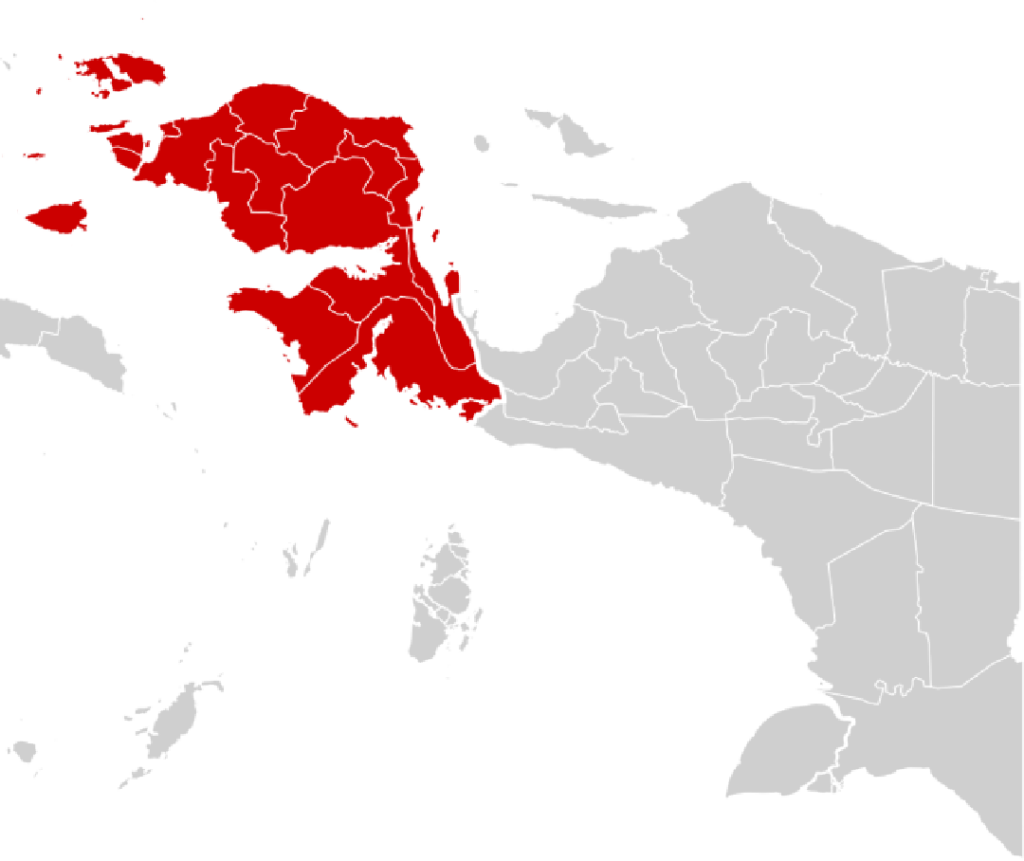
From the mining town below, the mountains still look unchanged.
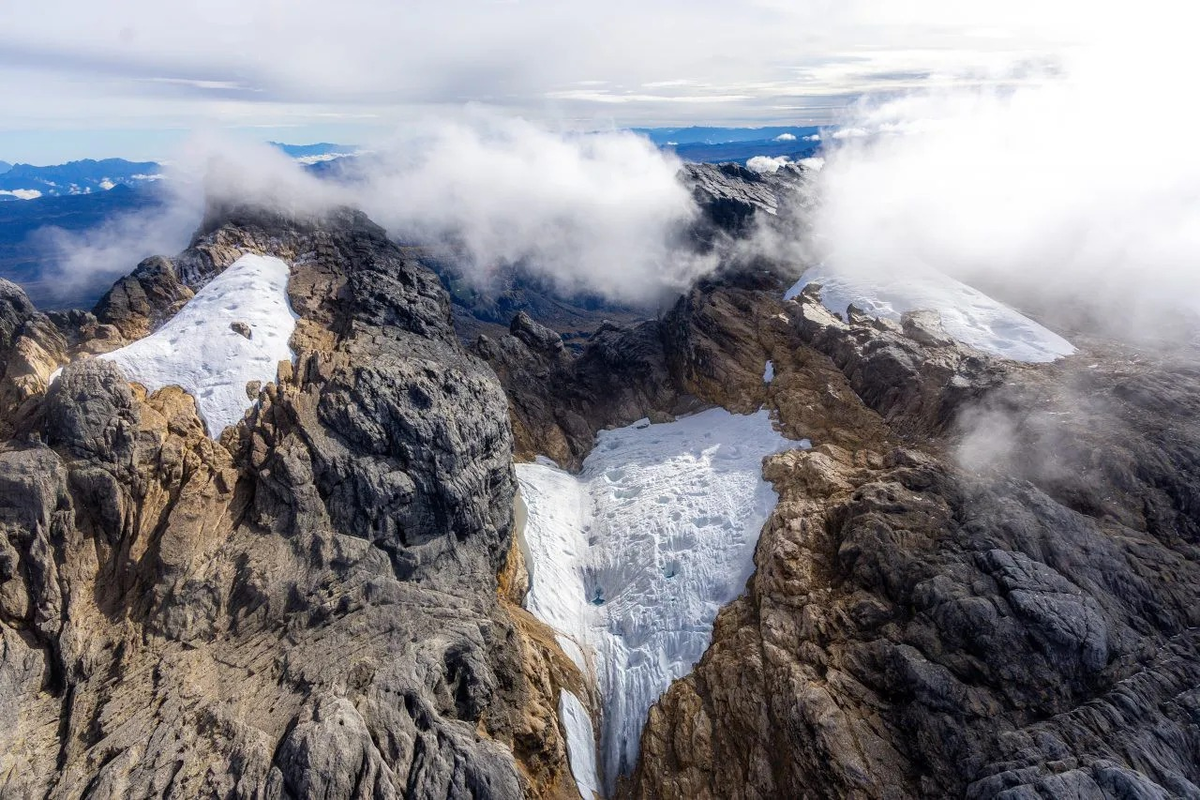
Clouds continue moving across sharp limestone ridges. Rain still arrives almost every afternoon. When weather conditions permit, climbers approaching the highlands of Papua’s Puncak Jaya can still spot patches of white ice near the summit.
Researchers studying those same mountains describe a different picture.
The ice is getting smaller.
Again.
And faster.
By late May 2026, scientists and climate researchers were once again warning that Indonesia could soon lose something few countries on Earth still possess.
A tropical glacier.
Researchers Say the Remaining Ice Is Shrinking Faster
Recent Observations Show Continued Ice Loss
Scientists monitoring conditions at Puncak Jaya spent recent months comparing newer observations with older measurements.
The result did not surprise researchers.
It worried them.
Reports published during May showed continued shrinkage across remaining glacier areas.
Researchers cited by several scientific and media reports explained that visible reductions can now be watched even within relatively short observation periods.
One researcher from Denmark involved in glacier observations presented updated visual comparisons showing sections of ice that had visibly retreated compared with earlier years.
Researchers increasingly describe the remaining ice as fragmented rather than continuous.
Scientists Are Discussing Years Instead of Decades
Several years ago, projections about Papua’s glacier often used longer timelines.
Recent estimates sound different.
Researchers cited in recent publications warned that remaining tropical ice in Papua may disappear before 2030.
Some estimates are even shorter.
Several scientists explained that rapid melting means prediction windows continue changing.
Four of Papua’s six historical glaciers have already disappeared according to researchers studying the region.
What remains today represents only a fraction of earlier conditions.
One climate researcher quoted during recent discussions described the glacier as entering a stage where relatively small environmental changes now produce larger impacts.
Why Scientists Blame Warming Temperatures and El Nino
Around Puncak Jaya, snow and ice survive only because temperatures remain low enough at extreme elevation.
Researchers say this balance has become increasingly fragile.
Average temperatures continue increasing.
Longer warm periods increase melting.
At the same time, scientists say snowfall accumulation no longer compensates for ice loss.
Researchers from Indonesian universities studying glacier retreat repeatedly pointed toward global warming as the primary explanation.
But researchers say another factor recently intensified pressure.
El Nino.
El Nino Created Additional Stress
Scientists explained that El Nino brought warmer and drier conditions across Indonesia.
For glaciers already losing volume, these conditions created additional pressure.
Less moisture.
Less snow accumulation.
More exposure.
Researchers described this combination as particularly damaging because glaciers weakened by long-term warming become more vulnerable during extreme climate events.
Several researchers said recent El Nino conditions accelerated processes already underway.
Papua’s Glacier Matters Far Beyond Papua
For many Indonesians, permanent ice near the equator still feels unusual.
Scientists argue its significance extends beyond symbolism.
Researchers frequently describe tropical glaciers as climate indicators because they respond rapidly to temperature changes.
What happens at Puncak Jaya therefore provides clues about broader environmental trends.
Several researchers also highlighted ecological consequences.
Mountain ecosystems surrounding glacier areas evolved under particular conditions.
Changing temperatures may gradually affect those systems.
Scientists also emphasize scientific value.
Very few tropical glaciers remain worldwide.
Losing them means losing future opportunities for research.
Researchers Race Against Time to Record What Remains
Recent years have brought increased monitoring activities involving Indonesian researchers and international partners.
Scientists expanded drone surveys.
Satellite monitoring increased.
Field measurements continue.
Researchers say documentation itself has become urgent because physical changes occur rapidly.
Several scientists involved in monitoring activities explained that repeated measurements help improve climate models and future projections.
One researcher described the work more simply.
“We are trying to understand what is disappearing while it still exists.”
Indonesia Expands Climate and Conservation Efforts
Discussions surrounding Papua’s glacier increasingly overlap with broader climate policies.
Indonesia continues expanding forest conservation programs, emission reduction commitments, renewable energy development, and carbon reduction initiatives.
Researchers repeatedly stress that preserving glaciers ultimately depends on global temperature trends.
Still, scientists argue local actions remain important.
Protecting surrounding ecosystems.
Supporting conservation.
Reducing environmental pressure around mountain regions.
Researchers say these efforts cannot stop glacier retreat completely but may help preserve surrounding ecological systems.
Future Generations May See Something Different
Mountaineers who visited Papua decades ago describe larger ice fields.
More snow.
Broader white surfaces visible from greater distances.
Recent expeditions increasingly report exposed rock replacing ice.
Smaller snowfields.
Shorter routes across glacier surfaces.
Scientists repeatedly emphasize that these changes are occurring within human lifetimes.
Not geological timescales.
That may explain why glacier disappearance has become easier to notice.
Conclusion
By afternoon, clouds usually return to Puncak Jaya.
The remaining ice becomes hidden again.
From below, little appears different.
Researchers looking at measurements see something else.
Thinner ice.
Less surface area.
Shorter timelines.
Whether Papua ultimately loses Asia’s last tropical glacier will depend partly on local conservation efforts.
Scientists argue the larger answer lies elsewhere.
In temperatures rising far beyond Papua’s mountains.
And in how quickly the world responds.