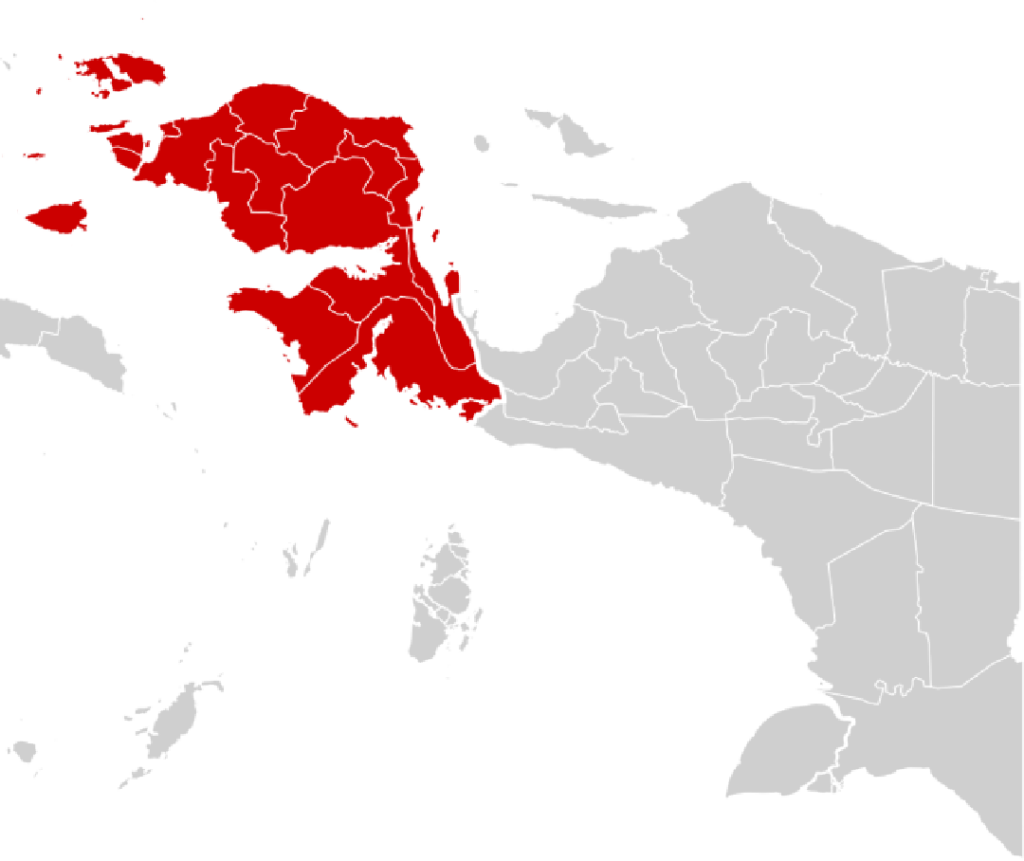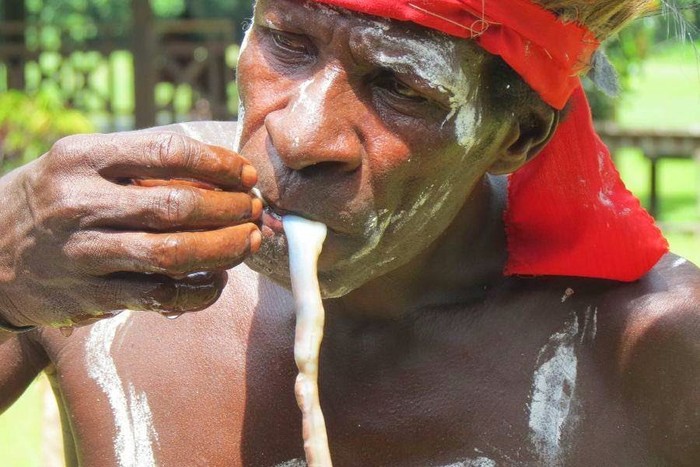
One of Papua’s most unique traditional foods among the diverse culinary traditions is Tambelo Papua. Tambelo is not a familiar food for many international visitors, but for generations it has been prized by Indigenous coastal communities as a nutritious natural food and as an important part of their cultural heritage.
In Indonesia, it is often called a “tambelo worm.” The organism is known locally as tambelo. Scientifically, however, it is a member of a group of marine bivalve mollusks, commonly called shipworms, which naturally inhabit decaying mangrove logs in coastal ecosystems.
For communities living along the shores of Waropen, Teluk Cenderawasih and several other coastal areas of Papua, tambelo is more than just a strange culinary experience. It demonstrates a close relationship between Indigenous people and nature, showing how traditional ecological knowledge has enabled communities to sustainably use local natural resources for generations.
Today, with growing worldwide interest in Indigenous food systems and sustainable gastronomy, tambelo is increasingly recognized as not only a traditional source of nutrition but also as part of Papua’s rich cultural identity.
A Traditional Protein Source from Papua’s Mangrove Forests
The story of tambelo starts in the vast mangroves of Papua.
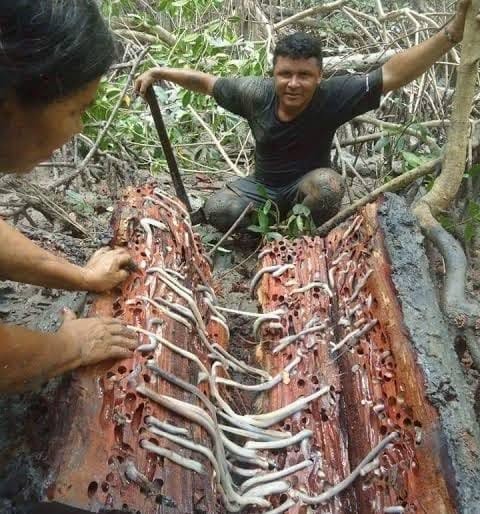
Tambelo is found in naturally decaying mangrove wood in tidal coastal environments, not like earthworms or fresh water worms. Indigenous harvesters have intimate knowledge of the sites of suitable mangrove logs and of how to identify those likely to contain tambelo.
Harvesting is a very experience based thing.
The soft-bodied mollusks are removed by hand after collectors carefully break up parts of rotting mangrove trunks. It’s not large scale commercial harvesting, it’s a process that reflects generations of environmental knowledge passed down within local communities.”
Indigenous families have long depended on tambelo as a valuable source of nutrition, especially in coastal areas where mangrove ecosystems provide a variety of food sources.
Scientific observations have shown that tambelo is relatively rich in protein, essential amino acids and other nutrients, and has long been an important traditional food source, long before its value was recognized by modern nutritional science.
Tambelo is not commercially cultivated, but rather is collected directly from natural ecosystems. As a consequence, harvesting practices have historically been tightly linked to local environmental knowledge and seasonal conditions.
Indigenous Knowledge Preserved Across Generations
Tambelo also represents the deep Indigenous ecological knowledge that has shaped Papuan society for centuries.
Through direct observation over many generations, communities have gained detailed understanding of mangrove ecology, tidal cycles, wood decomposition and coastal biodiversity.
This knowledge enables harvesters to find suitable spots without causing unnecessary damage to the surrounding ecosystems.
Complementing cultural values that encourage respect for nature and responsible use of natural resources, parents and elders have traditionally introduced younger generations to the practice of tambelo harvesting through family activities that pass on practical skills.
Such traditions are often described by anthropologists as examples of traditional ecological knowledge, in which environmental management practices develop through long term interaction between communities and their surrounding ecosystems.
These skills are still passed down not through manuals but through oral traditions, through direct experience and through participation in the community.
To many Papuan communities, these traditions are a vital aspect of maintaining cultural identity and ensuring the connection between younger generations and their ancestral environment.
Nutrition Rooted in Nature
Well before nutrition was a global science, Indigenous communities understood that tambelo was an energy dense food that would fuel the daily activities.
Traditionally, tambelo is often eaten fresh, just after harvesting, and may be seasoned with local condiments such as lime, chilli or other natural ingredients depending on local customs.
Locals generally enjoy tambelo for its smooth texture and mild flavor, but tourists unaccustomed to the culinary traditions of Papua may be shocked by its look.
Researchers studying Indigenous diets are finding that many traditional foods have valuable nutritional benefits, and also show sustainable relationships between people and their local ecosystems.
Tambelo is an example of natural protein sources used by traditional societies to support balanced diets adapted to their surrounding environments using biodiversity for a long time.
Health experts also point out that keeping traditional knowledge about food helps preserve dietary diversity, an issue that is becoming more important as many communities around the world are seeking healthier and more sustainable eating patterns.
Culinary Traditions Reflect Cultural Identity
Food is one of the most visible expressions of cultural identity, and tambelo fills a special place in Papua’s rich culinary landscape.
Tambelo, along with other famous Papuan specialties such as papeda, grilled fish from Manokwari, sago grubs, and fresh seafood, demonstrates the incredible diversity of traditional foods that have been created in the various ecosystems of Papua.
The preparation and sharing of traditional foods often strengthens family relationships and preserves cultural practices associated with hospitality, customary gatherings and community celebrations for local communities.
These traditions prove that culinary heritage is more than just recipes.
It includes history, local knowledge, responsibility for the environment, and social values that continue to shape community life today.
As the world’s appetite for authentic Indigenous cuisines grows, Papua’s traditional foods are now increasingly in a position to introduce international audiences to the province’s extraordinary cultural richness while also encouraging greater appreciation of its diverse heritage.
Traditional Food Systems and Sustainable Living
The continued use of tambelo also echoes broader notions of sustainable living practiced by many Indigenous communities.
Traditional harvesting methods tend to rely on taking only what is needed and allowing the ecosystem to regenerate naturally, rather than heavily exploiting natural resources.
This balance between human needs and environmental protection has allowed mangrove ecosystems to sustain coastal communities for long periods of time.
According to an increasing number of environmental specialists, modern sustainability efforts can often learn valuable lessons from Indigenous food systems.
The traditional knowledge on seasonal harvesting, biodiversity conservation and ecosystem management continues to influence discussions on responsible use of natural resources globally.
Tambelo, therefore, is not just a culinary tradition, but a practice of Indigenous peoples’ continuing relationships with coastal ecosystems over generations of experience. In Papua, tambelo is thus much more than a local cuisine.
Mangrove Conservation Protects Papua’s Culinary Heritage
For Tambelo Papua, the future depends on the health of Papua’s mangrove forests.
Mangroves are among the most productive coastal ecosystems on Earth, providing habitat for fish, crustaceans, mollusks, birds and countless other species that support local food security and biodiversity. For Indigenous peoples in Papua, these forests also underpin traditional livelihoods, cultural practices and food traditions developed over centuries.
“Tambelo is naturally found in decaying mangrove wood,” he said. “So the conservation of healthy mangrove ecosystems is crucial for the continued existence of this unique traditional food. Over time, environmental degradation, illegal logging, coastal erosion and unsustainable land use could gradually diminish the range of natural tambelo habitat.
That’s why conservation experts are highlighting that protecting mangrove forests is not only an environmental issue, but an investment in the preservation of Indigenous culture and traditional knowledge.
Customary resource management, based on respect for nature and sustainable harvesting, has long been practiced by local communities across Papua. Indigenous harvesters are not intensive exploiters of forests. Tambelo is typically collected in a way that allows natural regeneration of ecosystems to occur.
This age old equilibrium between people and nature has safeguarded coastal biodiversity and assured that generations to come will continue to derive benefits from the same natural resources.
With the growing awareness of climate resilience and ecosystem conservation globally, Papua’s mangrove forests are being increasingly recognized for their ecological importance as well as their cultural value.
Traditional Cuisine Supports Cultural Tourism
Papua’s culinary diversity is an increasingly attractive part of the province’s tourism sector.
The international traveler wants more than just pretty scenery. Today, many are traveling to experience authentic local cuisine, Indigenous traditions and cultural heritage that can’t be found anywhere else.
In this regard, Tambelo is one of the most unique gastronomic experiences of Papua.
Its appearance may surprise first-time visitors, but for many travelers interested in Indigenous cultures, traditional foods are an opportunity to discover more about local history, environmental knowledge and daily life.
Tourism experts say culinary experiences tend to encourage longer stays and create more income for local communities through restaurants, cultural festivals, local markets, handicrafts and ecotourism activities.
Traditional foods like tambelo, along with destinations such as Cenderawasih Bay National Park, Biak Island, Raja Ampat and Papua’s coastal villages, can contribute to visitors’ appreciation of the province’s remarkable cultural diversity.
Importantly, responsible culinary tourism also provides incentives for the preservation of Indigenous traditions rather than their replacement by standardized commercial products.
Communities can also encourage cultural preservation and sustainable economic development by promoting authentic local food in respectful and culturally appropriate ways.
Traditional Food and Sustainable Development
There is increasing recognition by governments and international organizations worldwide of the role of traditional food systems in supporting sustainable development.
The Food and Agriculture Organization of the United Nations (FAO) has repeatedly emphasized the value of Indigenous food knowledge for the conservation of biodiversity, nutrition, climate resilience and sustainable livelihoods.
Many of these principles are found in the culinary traditions of Papua.
Tambelo, along with other traditional foods, is an example of how local communities have adapted to their natural environment through observation, innovation and commitment to the environment over generations.
Unlike highly industrialized food production systems, Indigenous food practices are more likely to be rooted in local biodiversity, seasonal harvesting, and balanced ecosystem management.
These strategies help to preserve cultural identity and biodiversity as well as ensure food security.
As the world increasingly talks about sustainable diets and resilient food systems, Papua’s Indigenous culinary heritage provides insights that extend beyond the region.
Traditional knowledge in the province demonstrates how cultural heritage and environmental protection can complement each other as we work to build healthier and more sustainable communities.
Papua’s Culinary Heritage Gains International Recognition
The food of indigenous peoples is attracting increasing attention from international researchers, chefs, nutritionists and travelers.
The foods that were once exotic to communities outside their place of origin are increasingly being appreciated as important cultural resources to be preserved and studied.
Tambelo has entered the bigger conversation.
It is being valued more and more, not simply as a curious food, but as an expression of Indigenous identity, environmental knowledge and cultural resilience.
The story it tells mirrors Papua’s incredible diversity, where forests, rivers, mountains and coastal ecosystems have inspired unique traditions that remain alive today.
Government institutions, cultural organizations, tourism stakeholders and Indigenous communities all play vital roles in documenting, preserving and promoting these traditions for future generations.
These initiatives can contribute to the wider promotion of Papua’s cuisine, while respecting the cultural values and traditional knowledge of local communities.
Looking Ahead
With Papua continuing to promote sustainable tourism, cultural preservation and community based economic development, traditional foods such as tambelo will likely become increasingly important. Continued protection of mangrove ecosystems, support for Indigenous communities and responsible promotion of local culinary traditions will help to preserve this unique heritage and at the same time create new opportunities for education, research, tourism and local livelihoods. Papua proves that cultural identity and environmental sustainability can work together by appreciating traditional knowledge as much as modern development.
Conclusion
Tambelo is much more than a rare traditional delicacy. It is the millennia of Indigenous ecological knowledge, sustainable engagement with nature and the rich cultural heritage of Papua’s coastal communities. Tambelo, harvested sustainably from mangrove ecosystems and prized as a natural source of protein, demonstrates how traditional food systems can simultaneously support nutrition, biodiversity conservation, and cultural identity. As the world’s attention to Indigenous gastronomy and sustainable food systems grows, the culinary traditions of Papua offer important lessons about the nexus of people, culture and environment. So to preserve tambelo is to preserve not only a unique food, but the knowledge, history and living traditions that have shaped Papuan society for generations.