The development of skilled human resources is a priority in Indonesia’s agenda for development in Papua. In addition to expanding formal education, the government is also investing more in vocational training programs, which are designed to equip local communities with useful skills that directly enhance employment opportunities and promote entrepreneurship.
One recent initiative that exemplifies this approach is a partnership between the Directorate of Courses and Training of the Indonesian Ministry of Primary and Secondary Education (Kemendikdasmen) and the CIA Course and Training Institute (LKP CIA) in Jayapura.
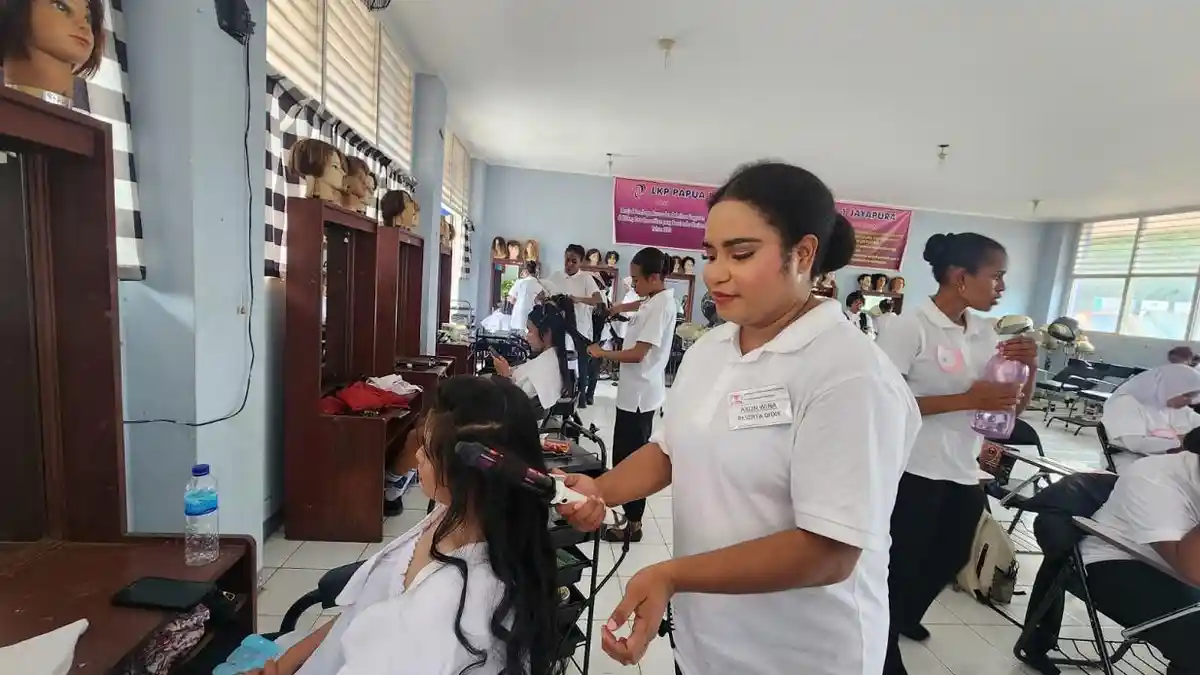
The program gave 20 Indigenous Papuan (OAP) participants (mainly women) intensive beauty therapy and professional hairdressing training over 28 days (200 hours of instruction). The course ended with a national competency test to measure the participants’ professional skills based on the Indonesian vocational standards.
The officials see the initiative as more than a training course. It is an investment in human capital that can generate opportunities for self-employment, build local entrepreneurship, and increase Indigenous Papuan workforce participation.
For many participants, nationally recognized certification opens the possibility to enter the beauty industry, to establish independent businesses, or to continue professional development in one of Indonesia’s fastest-growing service sectors.
A Partnership That Connects Education With Employment
The partnership between Kemendikdasmen and LKP CIA Jayapura is an example of vocational education that directly caters to the needs of the labor market.
Competency-based vocational education is different from traditional academic programs in that it focuses on the acquisition of practical skills that can be immediately utilized by participants in professional environments.
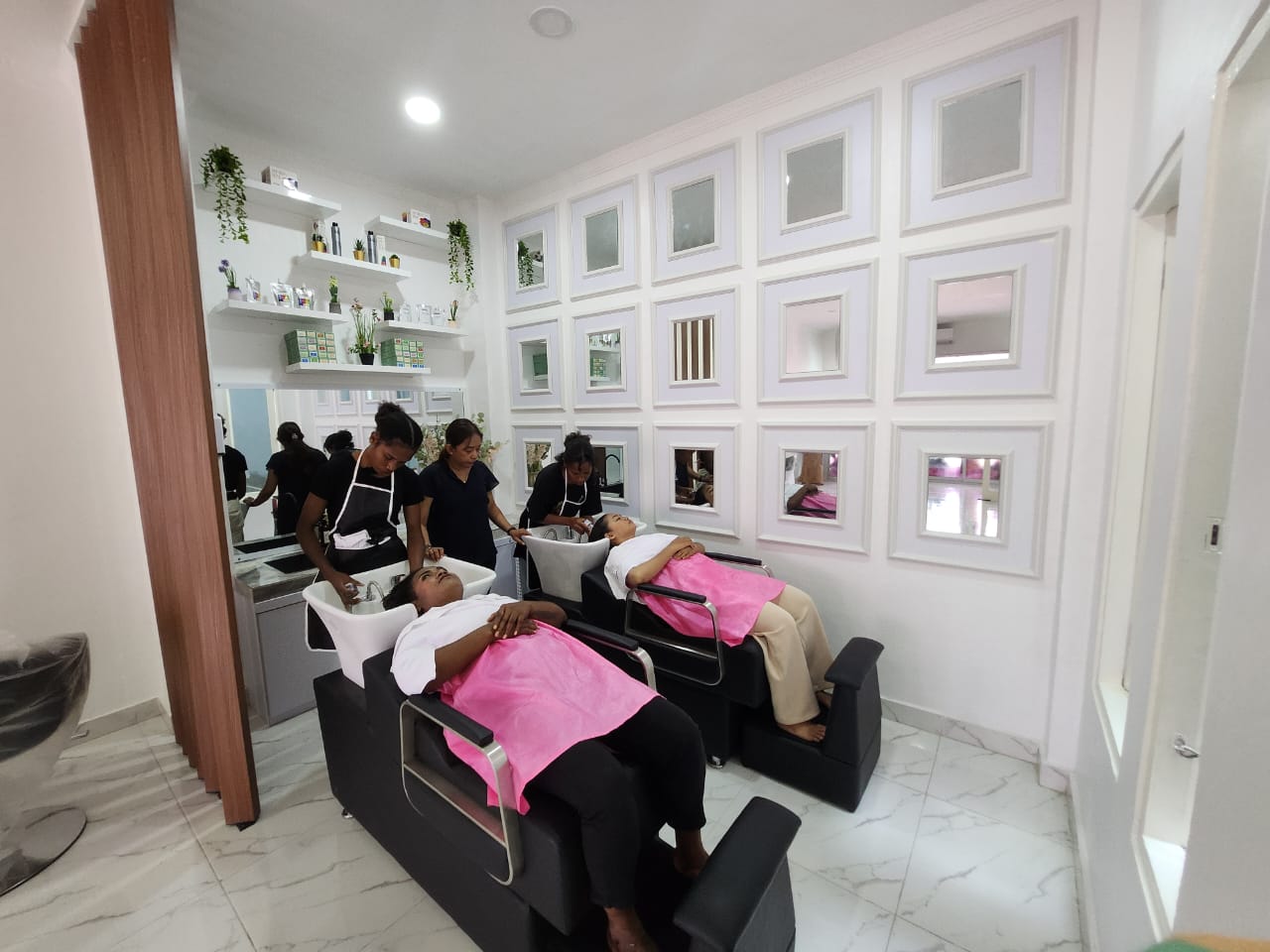
The curriculum included classroom instruction and extensive hands-on practice in modern hair care techniques, haircutting, styling, salon hygiene, customer service, workplace ethics, and basic business knowledge.
The participants were trained by experienced instructors according to nationally standardized competency requirements developed by the vocational education framework of Indonesia.
All participants underwent a professional competency examination at the end of the training following national certification procedures.
Certification is an assurance to employers and customers that graduates have measurable technical skills that meet recognized industry norms, officials said.
The certification gives professional value to independent salons in the eyes of future customers.
Practical Skills Create New Economic Opportunities
The Indonesian beauty and personal care industry is growing with increasing demand for skilled professionals in both urban and regional markets.
Vocational education is seen by officials as an avenue to equip Indigenous Papuans with practical skills linked to employment opportunities, allowing them to be more engaged in this growing sector.
In hairdressing and beauty services, businesses generally have relatively low initial investment requirements compared with many other industries.
Graduates can choose to work in established salons as freelance workers; offer mobile beauty services; or slowly build up their own small businesses.
Entrepreneurship is an alternative path to economic independence, especially in communities where formal job opportunities may be limited.
Officials of the Jayapura City Government hope that participants can develop businesses that can generate income for themselves, their families, and the surrounding community through the newly acquired competence.
Well-performing graduates might even create more jobs as time goes on by employing assistants, training younger apprentices, or growing into bigger businesses.
Empowering Indigenous Papuan Women
A major feature of the initiative is the focus on empowering indigenous Papuan women through vocational education.
Women entrepreneurs are playing an increasingly important role in many developing economies to support household incomes, strengthen local economies, and expand community welfare.
The program aims at improving women’s economic participation and enhancing their financial independence by providing participants with certified professional skills.
For many women, the option to own a salon or to provide beauty services is a flexible form of employment that allows for family duties but also provides sustainable income.
“Vocational education should not only prepare individuals to be employees but also inspire them to be business owners who can create opportunities for others,” officials said.
The training thus included not only technical skills but also discussions on professionalism, customer relations, discipline at the workplace, and entrepreneurial thinking.
Participants were encouraged to view their certification as a start to a longer professional journey rather than an end point.
Competency-Based Education Supports Workforce Readiness
One of the most important aspects of the initiative is that it focuses on empowering Indigenous Papuan women by providing them with vocational education.
Women entrepreneurs are playing an increasingly important role in supporting household incomes, strengthening local economies, and expanding community welfare in many developing economies.
The program aims to boost women’s economic participation by equipping them with certified professional skills that can lead to greater financial independence.
Many women can use owning a salon or beauty services as a way to work flexibly around their family responsibilities and generate a sustainable income.
They said vocational education should not only train individuals to become employees but should also train them to become business owners who can create opportunities for others.
Thus, training included not only technical skills but also discussions on professionalism, customer relations, work discipline, and entrepreneurial thinking.
Participants were encouraged to think of their certification as the beginning of a longer professional journey, not the end.
Investing in Human Capital for Long-Term Development
As evidence grows that sustainable development depends not only on physical infrastructure but also on investments in people, provincial and municipal leaders are increasingly aware of this fact.
Roads, telecommunications, health care facilities, and public services provide important foundations for economic growth, but ultimately long-term prosperity depends on the knowledge, skills, creativity, and productivity of local communities.
Thus, vocational education supports broader government programs to improve education, increase digital access, increase small businesses, and improve community welfare throughout Papua.
Policymakers hope to invest in indigenous human capital to make Papuans active participants in the ongoing economic transformation of the province, rather than just beneficiaries of development programs.
National Certification Enhances Professional Competitiveness
Following 200 hours of instruction in a 28-day training program, participants sat a national competency assessment to measure their technical skills against Indonesian vocational education standards.
Unlike traditional graduation ceremonies, competence certification evaluates practical skills rather than solely theoretical knowledge. Participants were tested on various professional skills, including haircutting techniques, hair styling, customer consultation, workplace hygiene, salon safety procedures, and service quality.
“This will give graduates more credibility when entering the labor market or establishing independent businesses through nationally recognized competency certificates,” officials from the Directorate of Courses and Training explained.
For employers in the beauty industry in Indonesia, certification is objective evidence that job applicants have standardized professional competencies.
The certificate provides the future entrepreneur with an additional level of confidence when building customer confidence, expanding business networks, and pursuing future professional development.
Officials also pointed out that the competency certification is part of Indonesia’s wider efforts to improve Technical and Vocational Education and Training (TVET) by making sure that graduates have skills that meet the needs of the industry, not just academic credentials.
The program is designed to improve workforce readiness and increase job opportunities for Indigenous Papuans by combining practical training and nationally recognized certification.
The Beauty Industry Creates New Opportunities for Entrepreneurship
Beauty and personal care have become one of the world’s fastest-growing service industries, driven by growing consumer demand, expanding middle-class markets, and growing interest in professional grooming services.
Small beauty businesses have become important sources of employment in Southeast Asia, particularly for women entrepreneurs seeking flexible and sustainable income opportunities.
With urban development and economic growth boosting demand for professional beauty services, officials believe Papua will continue to see similar opportunities grow.
Graduates are expected to be ready to follow several career pathways with the competencies they will gain in the Jayapura training program.
Some may choose to work in existing salons; others may develop home-based beauty services, mobile salons, or independent businesses serving neighborhoods and surrounding communities.
It’s this relatively low barrier to entry to the hairdressing business that makes it so attractive to first-time entrepreneurs.
With proper planning, simple equipment and professional accreditation, graduates can slowly build a loyal customer base and grow their businesses over time.
Officials from the Jayapura City Government expressed hope that participants will become job creators rather than job seekers, contributing to local economic growth while helping reduce unemployment among Indigenous Papuans.
Successful entrepreneurs go on to employ more staff, mentor younger trainees, and stimulate wider business activity in their communities.
Human Capital Development Remains Central to Papua’s Future
The vocational training program is part of a wider strategy to boost human capital development in Papua.
Both the national and regional governments have recently increased investment in education, scholarships, vocational training, online literacy, health care, and entrepreneurship programs to improve workforce quality and expand economic opportunities.
Programs catering to Indigenous Papuans are increasingly oriented towards practical skills that can be directly applied in local labor markets.
Vocational education is also another avenue to improving long-term economic participation in addition to scholarship initiatives like the MACE Scholarship Program, educational exchanges via the ADEM Program, agricultural development projects, digital connectivity expansion, and youth sports academies.
Development experts often note that sustainable regional development depends on more than physical infrastructure; it requires a skilled workforce capable of adapting to economic shifts.
Vocational education thus complements larger investments in transportation, telecommunications, healthcare, and business development by ensuring that local communities have the knowledge and skills to benefit from those investments.
Strengthening indigenous human resources is one of the most important foundations for inclusive and sustainable development in Papua.
Investing in Women Means Investing in Communities
The emphasis on women participants also underscores the growing awareness of the vital role women play in community development.
International development organizations have found over and over again that when women get more access to education, vocational training, and entrepreneurship, household incomes go up, children get a better education, families are healthier, and local economies become more resilient.
The training program provides Indigenous Papuan women with marketable professional skills that will benefit their individual career development as well as the wider well-being of the community.
Many of the participants are expected to share what they have learned with family, friends, and younger generations, multiplying the long-term benefits of the initiative.
Officials hope that the newly certified professionals will be role models to inspire more young Papuans to take vocational education and entrepreneurship as viable career options.
Looking Ahead
This cooperation between the Ministry of Primary and Secondary Education and LKP CIA Jayapura is an example of how competency-based vocational education can contribute to the long-term development goals of Papua. It is expected that the authorities will extend such training to other sectors so that more Indigenous Papuans can obtain nationally recognized professional qualifications. Vocational education is expected to continue to be a significant pillar in Papua’s human capital development strategy while generating wider economic opportunities for local communities by enhancing practical skills, fostering entrepreneurship, and boosting workforce competitiveness.
Conclusion
The beauty and hairdressing competency program was completed by 20 Indigenous Papuan women, demonstrating the increasing contribution of vocational education to inclusive economic development throughout Papua. The participants were trained in practical skills, gained national competency certification, and acquired useful entrepreneurial skills that can support independent careers in the beauty industry through cooperation between the Ministry of Primary and Secondary Education, the Directorate of Courses and Training, LKP CIA Jayapura, and the Jayapura City Government. In addition to preparing graduates for employment, the initiative is a demonstration of a broader commitment to strengthening Indigenous human capital, encouraging women’s economic empowerment and creating sustainable livelihoods. Papua is investing in education and workforce development, and competency-based vocational programs are expected to play an increasingly important role in fostering entrepreneurship, decreasing unemployment, and supporting long-term regional prosperity.