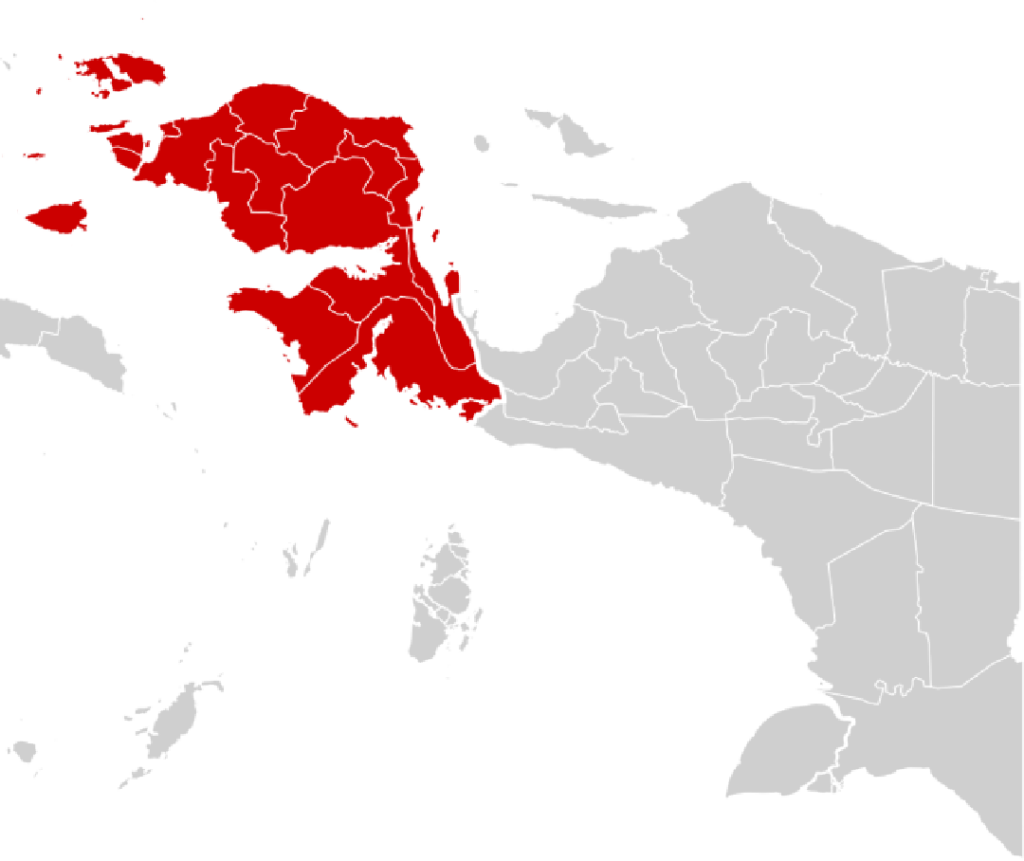
As food security is becoming a more important strategic issue across the globe, Merauke in Papua Selatan (South Papua) Province is slowly carving its name as one of Indonesia’s brightest prospects for agriculture. With large-scale government investment, the expansion of agricultural infrastructure, and strong participation from local communities, the regency is expected to become the main food hub of Merauke, serving Eastern Indonesia.
But the initiative is about much more than simply producing more rice. It is part of Indonesia’s long-term strategy to strengthen national food resilience, boost regional economic development, and maximize Papua’s agricultural potential through the implementation of modern, sustainable farming practices.
Officials of the national government, Papua Selatan Provincial Government, and the Merauke Regency administration are optimistic that the region has the natural resources, available land, and human capital to become one of the country’s most important food-producing areas.
Meanwhile, local farmers and Indigenous communities continue to play a key role in ensuring that agricultural transformation remains strongly connected to community well-being and sustainable land management.
The program demonstrates the potential for coordinated investment in agriculture, infrastructure, and rural development to generate wider economic opportunities while contributing to Indonesia’s long-term food security goals.
Merauke’s Strategic Role in National Food Security
The city of Merauke is situated in the southeastern frontier of Indonesia, and its geographical characteristics are quite different from most other parts of the country.
Its vast plains, relatively favorable climate, and extensive agricultural areas offer considerable possibilities for increasing food production on a sustainable basis.
Having known these benefits, the government of Indonesia has appointed Merauke as one of the priority regions for agricultural development in the country, capable of supporting food supplies not only for Papua but also for broader national needs.
The area has been dubbed a future food and energy hub for Eastern Indonesia, reflecting broader efforts to diversify agricultural production and strengthen the region’s economic resilience.
As climate change, population growth, and global supply chain disruptions continue to impact food systems across the globe, increasing domestic production capacity has become an increasingly important national priority.
Thus, Merauke is strategically located within Indonesia’s broader effort to develop resilient food systems that can underpin long-term economic stability.
Significant Government Investment Accelerates Agricultural Transformation
To turn Merauke into a modern agricultural center, major investments will be needed in infrastructure, technology, and support services for agriculture.
To fast-track this process, the Ministry of Agriculture of Indonesia has allocated some Rp13 trillion to strengthen agricultural transformation across the region.
The investment supports several areas at the same time, such as preparation of land, development of irrigation, agricultural machinery, farm roads, logistics systems, availability of seed, and other supporting infrastructure needed for large-scale farming.
Officials see the combination of modern agricultural technology and improved infrastructure as a way to increase productivity and reduce the cost of production for farmers.
The program also aims to increase farming efficiency through mechanization, better water management, and improved crop management practices, rather than just increasing the area under cultivation.
This is in line with Indonesia’s overall agricultural modernization strategy, which aims to raise productivity and ensure sustainability over the long term.
More Rice Fields Ready for Cultivation
Progress is already visible on the ground.
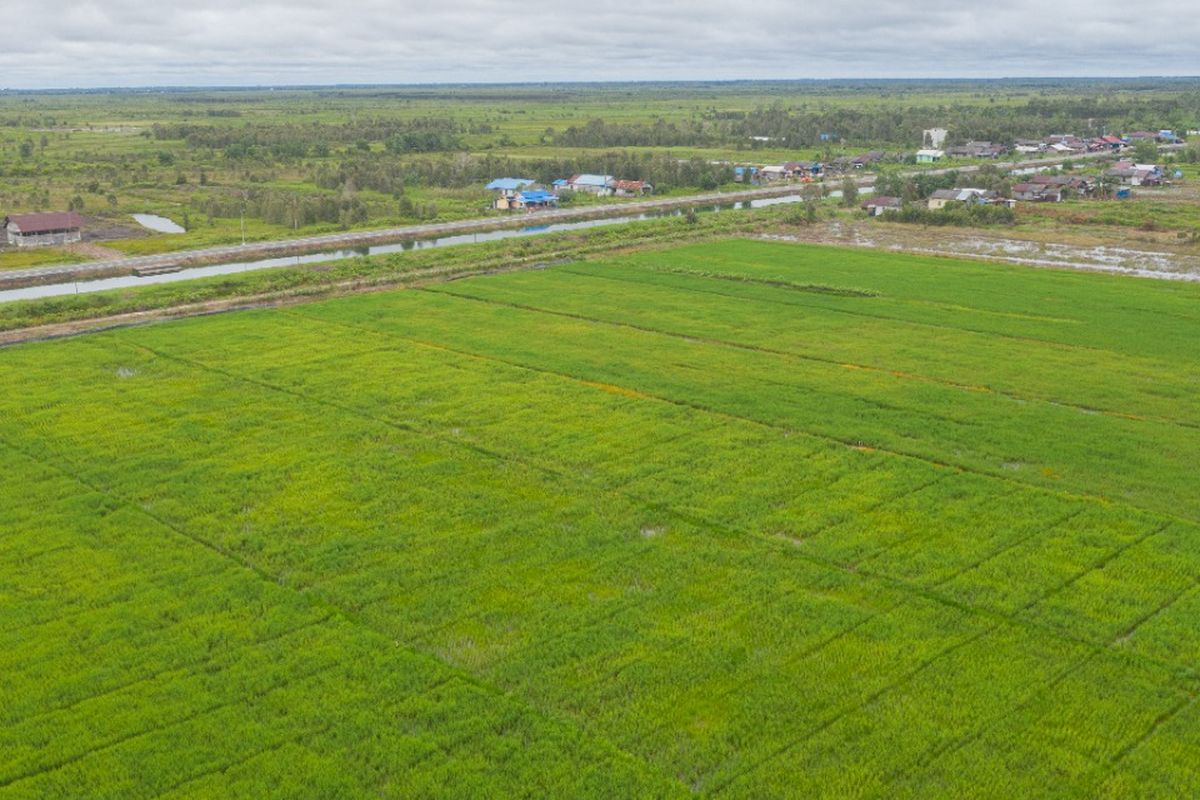
Local officials confirmed that roughly 1,654 hectares of rice fields are ready for simultaneous planting under the fast-track food production program.
The synchronized planting schedule is expected to improve irrigation management, optimize harvest timing, and improve overall agricultural productivity.
“Planting systems that are coordinated often have multiple benefits,” agricultural experts say.
Synchronized cultivation can reduce pest risks, improve water use efficiency, facilitate mechanization, and simplify post-harvest management, in addition to improving production planning.
For farmers, these improvements may mean more stable harvests and higher production efficiency.
The officials hope the newly prepared farmland will be one of the early indicators of Merauke’s readiness to support larger-scale food production in the years to come.
Plans for a major rice harvest later this year are expected to attract national attention and further illustrate the government’s confidence in the agricultural potential of the region.
Local Government Prioritizes Agricultural Infrastructure
The national investment is the foundation, but the regional authorities know that long-term success depends on strengthening local agricultural infrastructure.
Therefore, the Merauke Regency Government has proposed additional improvements to assist farmers along the production process.
Among the priorities singled out by local officials are the expansion of irrigation networks, the improvement of roads giving access to farms, the increase in storage facilities, the strengthening of logistics systems, and the provision of additional agricultural machinery.
“Reliable infrastructure is essential to reducing transportation costs and moving harvested crops to market efficiently.
Officials also stress the importance of post-harvest facilities that can preserve product quality and reduce losses prior to distribution.
The investments complement broader provincial development efforts that focus on creating integrated agricultural ecosystems, not isolated farming projects.
Merauke seeks to enhance infrastructure across the entire agricultural value chain to contribute to improved competitiveness and encourage private sector participation to carry on.
Local Communities Remain Central to Agricultural Development
While government investment is vital, officials regularly note that it is still the local communities that are the catalyst for Merauke’s agricultural transition.
Thousands of farmers in Papua Selatan still cultivate rice, horticulture, and other agricultural commodities that directly support the region’s food production.
Indigenous Papuan communities also have a wealth of local knowledge about land management, seasonal conditions, and environmental responsibility developed over generations.
Increasingly, development planners have come to recognize that combining this traditional knowledge with modern agricultural technology may result in more resilient and sustainable farming systems.
Community participation is therefore considered important during planning, implementation, and long-term management of agricultural programs.
Local governments have promoted close coordination between farmer groups, agricultural extension officers, community leaders, cooperatives, and provincial institutions so that development initiatives are sensitive to local needs.
The participatory approach is anticipated to have increased community ownership while maximizing the long-term benefits of agricultural modernization.
Building an Integrated Agricultural Ecosystem
Rather than being solely focused on rice production, policymakers see Merauke as developing into a full-fledged agricultural ecosystem that can support multiple sectors.
The future development plans include better logistics, more food processing businesses, stronger farmer cooperatives, easier access to agricultural loans, and support for industries that create higher-value products.
Officials hope to build stronger regional supply chains to serve domestic consumption and future commercial opportunities by integrating production, processing, storage, transportation, and marketing.
Such integration also provides greater economic resilience by reducing dependence on single commodities and encouraging wider rural economic activity.
Papua views the development of integrated agricultural systems as an important opportunity to diversify the regional economy and create sustainable employment for local communities.
Food Security Strengthens Eastern Indonesia’s Economy
The transformation of Merauke into a big center for food production is expected to yield benefits far beyond the agricultural sector. While increasing rice production is still a major goal, food security is seen by policymakers as closely linked to regional economic development, employment creation, investment, and social welfare.
Agriculture remains one of the largest sources of livelihoods across Papua Selatan. As production increases, ancillary sectors such as transportation, warehousing, agricultural equipment services, food processing, logistics, wholesale trade, and financial services are also expected to continue to grow.
More farming activity means new business opportunities for local companies along the supply chain. Small enterprises can add value to the chain by undertaking activities that add value before agricultural products reach consumers, such as machinery maintenance, fertilizer distribution, seed production, packaging services, transportation, and food processing.
This is often referred to as the multiplier effect of agricultural development, where gains in one sector lead to growth in many other sectors.
Improved agricultural productivity may result in more stable incomes for households, more purchasing power, and increased economic resilience, especially in rural communities where farming is still the dominant source of employment.
Merauke Reflects Indonesia’s Long-Term Agricultural Vision
The Merauke development is an example of Indonesia’s wider drive to modernize agriculture and improve long-term food resilience.
Indonesia has been focusing on boosting domestic food production recently through investment in irrigation, mechanization, improved seed technology, digital agriculture, research, and farmer capacity building.
Merauke has a very important position in this strategy, because it has a large area of agricultural land and is strategic in the east of the country.
Provincial leaders say they are confident Papua Selatan has the natural resources to become one of Indonesia’s leading agricultural regions and play a big part in national food availability.
The provincial government is still working closely with the Ministry of Agriculture, the Merauke Regency Government, agricultural universities, technical experts, and local farming communities to ensure that the development is carried out in accordance with sustainable agricultural principles.
Officials have also stressed that the expansion of agriculture must be accompanied by careful management of the environment, efficient use of land, and responsible management of the water resources so that long-term productivity is preserved.
Instead of just rapid growth, authorities are looking more and more at building resilient agricultural systems that can cope with changing climate conditions and future food demand.
Community Participation Remains Essential
“Big investment is an important momentum, but officials always admit success in the agricultural transformation of Merauke depends on the active participation of local communities.
Thousands of farmers throughout the regency still serve as the backbone of agricultural production through their daily work in rice cultivation and other food crops.
Farmer groups, village cooperatives, agricultural extension officers, Indigenous community leaders, and local governments all have a role to play to ensure agricultural development meets community needs while supporting sustainable livelihoods.
Indigenous Papuan communities are particularly important participants because many of them have a wealth of traditional knowledge about local ecosystems, seasonal cycles, and land management, built up through generations of experience.
Increasingly, development planners are recognizing that the integration of this local knowledge with scientific farming methods and modern agricultural technology creates stronger and more resilient production systems.
This model of partnership encourages collective accountability and ensures that development results create broad-based economic benefits rather than creating opportunities in narrow sectors.
Building Food Security Through Collaboration
The Merauke initiative has been marked by a high degree of collaboration across multiple levels of government.
The national government provides policy guidance, funding, technical expertise, and programs for the modernization of agriculture.
The Papua Selatan Provincial Government coordinates regional planning and facilitates infrastructure development to connect agricultural production with wider markets.
Meanwhile, the Merauke Regency Government is strengthening local implementation through improvements in irrigation, farm roads, agricultural services, and direct engagement with farming communities.
This integrated model of governance allows different institutions to play their role according to their respective responsibilities while keeping a common objective, which is to strengthen food security.
This collaborative approach, officials say, increases the efficiency of implementation and ensures investments will provide long-term benefits to local communities.
Sustainable Agriculture Creates Opportunities for Papua
The issue of sustainable agricultural development is becoming more and more important in the global dialogue on food security.
International organizations such as the Food and Agriculture Organization (FAO) have long called for future food systems to be able to deliver increased productivity, environmental protection, efficient resource use, and community participation.
Many of these principles are reflected in Merauke’s agricultural transformation.
The initiative is not only focused on production targets but also on infrastructure development, farmer empowerment, technological innovation, and institutional strengthening.
Investments in irrigation, mechanization, logistics, storage facilities, and agricultural training are aimed at increasing productivity while underpinning long-term sustainability.
Officials also say the ongoing modernization will help to attract younger generations into agriculture by showing them that farming can be an innovative, technology-driven profession with promising economic opportunities.
Such developments contribute not only to the production of food but also to the overall transformation of the region through the promotion of entrepreneurship, strengthening of rural economies, and expansion of employment.
Governments around the world are focusing more on regional food production centers to reduce dependence on imported commodities and improve resilience to climate change, geopolitical uncertainty, and global supply chain disruptions. Australia, Brazil, and India have poured money into modern agricultural corridors that combine infrastructure, technology, logistics, and farmer empowerment to boost productivity.
Merauke’s development is also on the same strategic track, combining public investment, local participation, and sustainable farming practices to create a resilient agricultural ecosystem. This wider perspective situates Papua’s agricultural transformation within the framework of the worldwide movement for increased food security and sustainable rural development.
Looking Ahead
With more farmland coming on stream, major government investment continuing, and coordinated support from national, provincial, and local authorities, Merauke is gradually consolidating its position as one of Indonesia’s most important agricultural regions. Further productivity increases are expected in the coming years because of planned improvements to irrigation, logistics, mechanization, and farmer support services. The expected rice harvest later this year will mark another important milestone in assessing progress and further strengthening Merauke’s role in supporting food security for all of Eastern Indonesia.
Conclusion
One of the most ambitious regional agricultural development programs in Indonesia is turning Merauke into a food barn for eastern Indonesia. It is expected that the program will enhance food security and promote sustainable economic growth with the support of approximately Rp13 trillion in government investment, the construction of agricultural infrastructure, 1,654 hectares of rice fields ready for synchronized planting, and strong partnerships between the national government, the Papua Selatan Provincial Government, the Merauke Regency Government, and local farmers. The initiative is targeted at boosting agricultural production, creating jobs, improving rural incomes, expanding logistics networks, and promoting long-term regional development. Merauke’s success story demonstrates how collaborative investment, community participation, and sustainable farming can enhance food security and create new opportunities for the future of Papua as the world shifts its focus to resilient food systems.