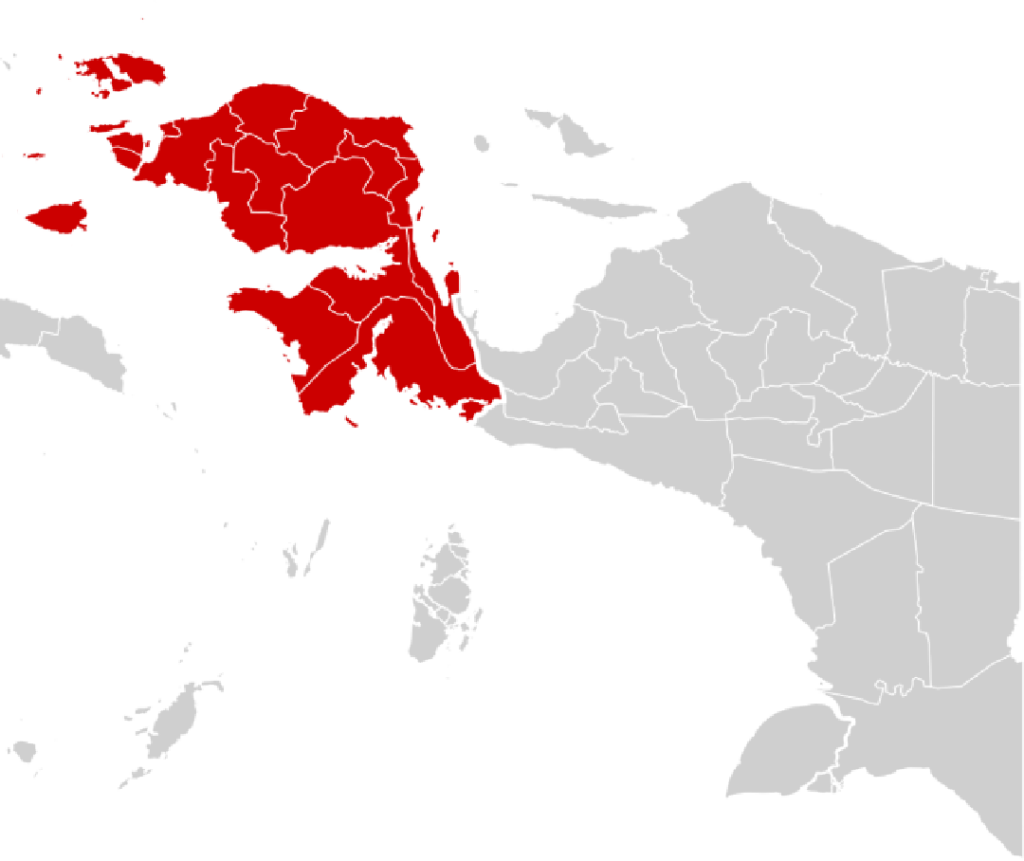
Twelve extraordinary high school students were selected as the Central Paskibraka 2026 candidates, giving Papua a strong presence in Indonesia’s upcoming 81st Independence Day Ceremony at the State Palace, Jakarta on 17 August 2026. The six provinces in Papua have won one of the highest youth awards in the country.
Their feat comes after a rigorous national selection process by Indonesia’s Pancasila Ideology Development Agency (BPIP), which selected a total of 76 of the country’s best students from around 119,000 prospective students representing all 38 provinces.
For Papua, the achievement is more than a success in a highly competitive national program. This reflects the province’s continued investment in education, character building, leadership development and youth empowerment.
This selection also shows that there are still talented young Papuans who continue to emerge in various fields, including academics, sports, arts, culture, and civic leadership.
The announcement was welcomed by officials, educators and community leaders as an encouraging milestone to show Papua’s growing contribution to Indonesia’s next generation of leaders.
A Prestigious National Selection Process
Every year, Central Paskibraka Program attracts thousands of high achievers from all over Indonesia.
The program is widely known as one of the most prestigious youth leadership programs in the country, combining physical endurance, discipline, integrity, teamwork, leadership and civic responsibility.
Candidates undergo a multi-stage selection process starting from district and municipal level, followed by provincial selection and finally to the national level by BPIP.
Physical fitness, marching sharpness, leadership potential, academic record, psychological profile, health examination, communication skills and character assessment are all part of the evaluation process.
Finally, only one male and one female representative from each province is chosen to be a Central Paskibraka candidate.
The highly competitive process saw 76 outstanding students selected in 2026, including 12 representatives from Papua’s six provinces, making the region one of Indonesia’s strongest contributors to this year’s national delegation.
Officials said months of preparation, determination and performance at every stage of the selection process are required to reach the national level.
Representing the Six Provinces of Papua
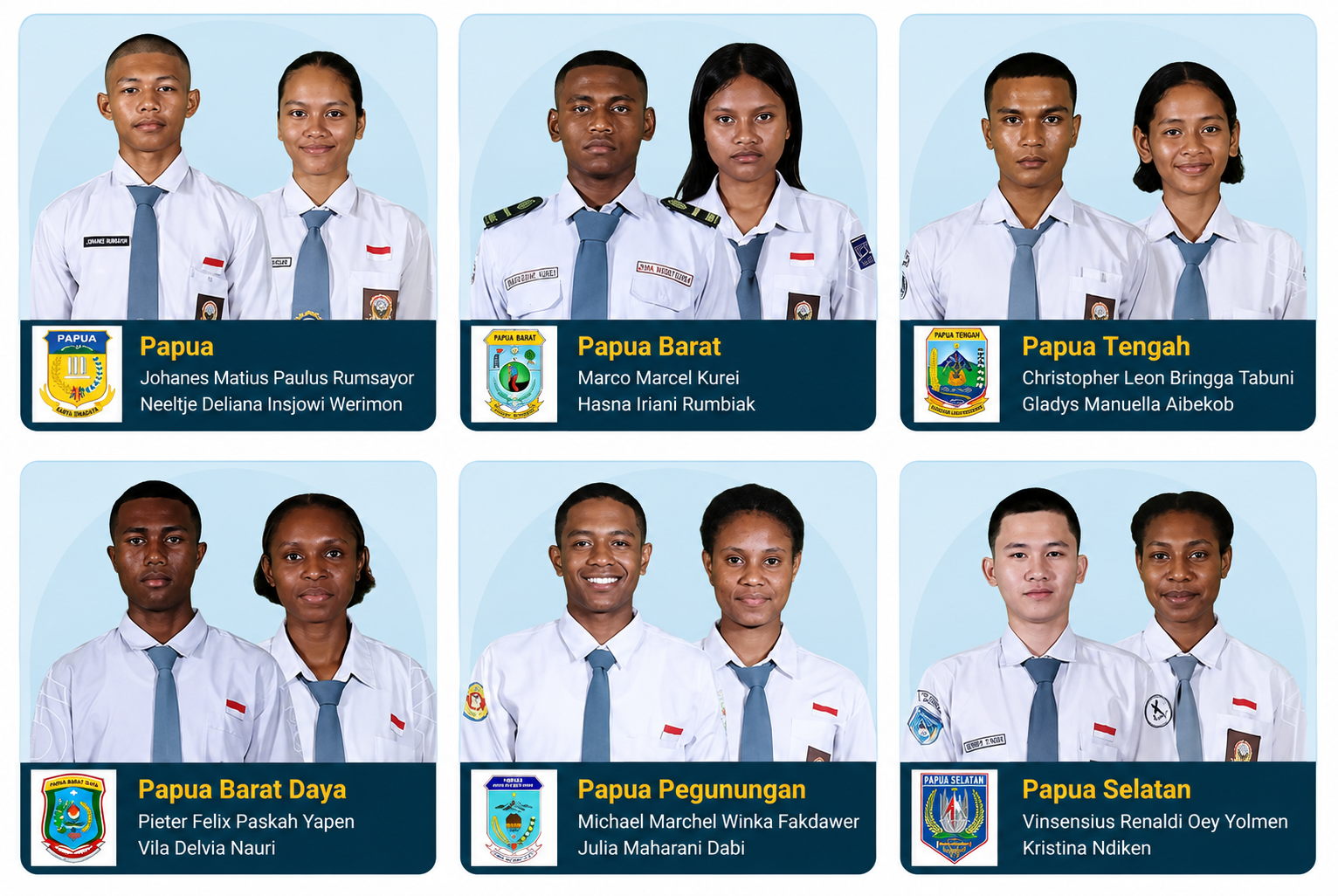
The twelve students selected for the Central Paskibraka 2026 program represent every province in Papua, reflecting both the region’s diversity and its growing pool of talented young leaders. According to the official announcement by the BPIP, the representatives are:
1. Papua Province
a. Johannes Matthew Paul Rumsayor (male)
b. Neeltje Deliana Insjowi Werimon (Female)
2. Papua Tengah (Central Papua) Province
a. Christopher Leon Bringga Tabuni (M)
b. Gladys Manuella Aibekov (Female)
3. Papua Pegunungan (Papua Highlands) Province
a. Michael Marchel Winka Fakdawer (M)
b. Julia Maharani Dabi (Female)
4. Papua Selatan (South Papua) Province
a. Vinsensius Renaldi Oey Yolmen (Laki-Laki)
b. Kristina Ndiken (F)
5. Papua Barat Daya (Southwest Papua) Province
a. Pieter Felix Paskah Yapen (Laki-laki)
b. Vila Delvia Nauri (Female)
6. Papua Barat (West Papua) Province
a. Marco Marcel Kurei (Male)
b. Hasna Iriani Rumbiak (Female)
The twelve students come from different schools, cultural backgrounds and communities but will join hands in one of the most important national ceremonies in Indonesia, representing Papua.
Their participation is a reflection of the growing opportunities for young people across Papua as access to education, leadership programs and talent development initiatives continue to grow across the region.
Provincial officials said all representatives were chosen on the basis of merit, dedication and outstanding results in the selection process.
Their accomplishments also show that greatness can come from all corners of Papua—including remote areas where students regularly rise to the challenge of significant geographic and logistical barriers to accessing educational and extracurricular opportunities.
Preparing for Service at the State Palace
The 12 chosen students will receive intensive training at the national level before being assigned to their ceremonial duties at the State Palace.
Training includes military style marching drills, ceremonial procedures, physical conditioning, leadership development, teamwork exercises and character education.
Paskibraka or the Flag Raising Troop has a meaningful symbolic meaning in Indonesia.
As part of the Independence Day ceremony, selected students are given the job of hoisting and lowering the national flag in front of the President, senior government officials, diplomats, military leaders and millions of viewers watching across the nation.
The ceremony is among the most important annual state events in the country.
Serving as a member of the Central Paskibraka is a defining experience for participating students, often shaping future leadership opportunities in higher education, public service, professional careers, and community organizations.
Many former Paskibraka members have gone on to become successful professionals, military officers, academics, entrepreneurs and public officials.
Character Building Beyond Ceremony
Although it is popularly known for the flag raising ceremony itself, the Central Paskibraka program has a much wider educational purpose.
The officials describe the initiative as a leadership development program that stresses integrity, discipline, responsibility, teamwork, respect and service to society.
Participants live and train together with students from all provinces, learning to cooperate despite differences of language, culture, religion and regional background.
This experience promotes mutual understanding and strengthens the friendships of young Indonesians from different communities.
Participation provides Papua’s representatives with valuable opportunities to share ideas, broaden perspectives and develop national networks beyond the ceremonial event itself.
Such experiences, educational specialists say, can help to boost an individual’s development in positive ways, including communication skills, emotional maturity, resilience and self-confidence.
These qualities are often useful long after participants have finished their service as members of the Central Paskibraka.
A New Generation of Papuan Leadership
The success of the twelve students is indicative of the overall progress of youth development in Papua.
Papuan students have increasingly earned national recognition in recent years through scholarships, academic competitions, sports, cultural festivals, leadership initiatives and vocational training.
These achievements have been realized by continued investment in education and human resource development, providing more opportunities for talented young Papuans to compete successfully in the national platforms.
Teachers and community leaders hope the success of this year’s representatives will inspire younger students to strive for excellence through dedication, discipline and continuous learning.
Through their participation in Indonesia’s most prestigious state event, the twelve students are not only ambassadors for their respective provinces, but also the hopes and potential of Papua’s youth.
Their story is a lesson in how education, determination and character building can open doors far beyond the classroom.
Papua’s Youth Continue to Demonstrate National Excellence
The success of the twelve Central Paskibraka candidates is an indication of the larger trend in the development of Papua’s youth. In recent years, students from the region have been more and more recognized in national programs in education, sports, culture, science and leadership.
Young footballers from Papua have been recruited for Indonesia’s national youth teams; students have won competitive scholarships; and Papua has been represented in national choir programmes such as Gita Bahana Nusantara, as well as in academic competitions and vocational skills programmes. These achievements show the increasing ability of Papuan youth to compete with their peers from all over Indonesia.
Education officials say these achievements stem from continued cooperation among schools, families, local governments and community organizations that are still investing in human resource development.
For younger students in Papua, seeing their fellow Papuans in nationally recognized programs gives them tangible examples that success is possible through hard work, discipline and dedication.
Hence, the twelve paskibraka candidates are not only ceremonial representatives but also role models whose accomplishments may motivate other students to follow suit in their respective fields.
Civic Education Shapes Future Leaders
Although the public often links Paskibraka with the Independence Day flag raising ceremony, educators say its greatest value is in leadership development.
During the national training period, trainees receive intensive instruction that blends ceremonial preparation with character building.
Students are encouraged to develop values such as responsibility, integrity, discipline, teamwork, respect, and public service, and to learn to work effectively with peers from diverse cultural, ethnic, and religious backgrounds.
These experiences lead to personal growth that far exceeds the ceremony itself.
Leadership experts often point to programs that blend physical discipline with civic education as a way to help young people build resilience, confidence, and decision making skills that remain valuable throughout higher education and professional careers.
Participation also gives Papua’s delegates the chance to share ideas with top students from all provinces, growing friendships and professional networks that might serve them well long after the program ends.
Officials hope the experience will inspire participants to return to their communities as future leaders who can make a positive impact on education, public service, entrepreneurship and social development.
National Representation Encourages Shared Identity
The involvement of students from all six provinces in Papua in the Central Paskibraka program exemplifies the inclusive nature of Indonesia’s national youth development efforts.
All provinces are given equal opportunities to nominate their best students through a transparent merit based selection process.
Bringing together participants from all over the country, the program encourages mutual understanding among young Indonesians while fostering appreciation for the country’s cultural diversity.
For the twelve Papuan students, serving with peers from Aceh to Papua is a special chance to share their regional identity and build friendships across provincial boundaries.
According to education specialists, such exchanges are an important component of civic education, as they promote dialogue, cooperation and respect among young people of different backgrounds.
Collaborative national programs focus on shared aspirations related to education, leadership, and community service, rather than differences.
Papua’s strong presence at the national level also reinforces the message that young people from the region continue to make active contributions to Indonesia’s educational, cultural and civic institutions.
Investing in Human Capital Through Youth Development
Indonesia has given high priority to the development of human capital as the core of its long term national strategy.
Beyond investments in schools, universities, vocational education, scholarships, sports academies, and cultural programs, youth leadership initiatives like Paskibraka are intended to prepare future generations to take on greater responsibilities in society.
For Papua, this investment is especially important as it builds on current work to improve access to education, lift the quality of teaching, boost digital learning and create more opportunity for young people across the province.
Government officials have repeatedly stressed that sustainable development depends not only on physical infrastructure but also on capable, well educated and socially responsible citizens.
Programs that promote leadership, discipline, and civic engagement thus play an important role in preparing young Papuans to participate in regional and national development.
The choice of twelve students for Central Paskibraka shows the increasing trust in Papua’s youth as active participants in Indonesia’s future.
International Perspectives on Youth Leadership Programs
In many countries, there are national youth leadership programs that blend ceremonial duties with character development.
Singapore Ceremonial Guard Programs National Youth Leadership Council Various European Countries Youth Civic Leadership Initiatives Australia and Canada Governments are investing in the future leaders of their countries by providing structured educational experiences such as these programs.
Each program reflects its own national traditions, but they share common goals of promoting responsibility, teamwork, public service, and civic engagement.
The Central Paskibraka Program in Indonesia is based on the same idea of providing opportunities for talented students from each province to represent their regions during one of the country’s most important national ceremonies.
For international readers, Papua’s involvement is an example of how programs for youth development can build leadership capacity and promote more understanding among diverse communities within a large, multi-cultural nation.
Looking Ahead
As preparations continue toward the 81st Independence Day Ceremony on 17 August 2026, Papua’s twelve representatives will undergo intensive national training before carrying out one of Indonesia’s most respected ceremonial responsibilities. Their participation also signifies the strengthening of youth development in Papua and is anticipated to motivate more students to take up leadership roles through education, sports, culture, science, and public service. Continued investment in human capital will remain vital to guarantee that future generations possess the skills, confidence and character to contribute to Papua’s long term development.
Conclusion
Papua’s six provinces have produced twelve outstanding students who will serve as Central Paskibraka 2026 candidates, a major achievement for the region’s young people. The students were selected through a rigorous national selection process organized by BPIP and will serve as the representatives of Papua at the 81st Independence Day Ceremony of the Republic of Indonesia at the State Palace in Jakarta on 17 August 2026. Their achievement, beyond the honor of being part of one of the most important national events in the country, reflects the ongoing progress in the education system, leadership development and youth empowerment initiatives in Papua. Increased participation and success of Papuan students in national programs in education, sports, arts, and civic leadership, among others, not only strengthens the province’s increasing contribution to Indonesia’s human capital, but also inspires future generations to pursue excellence through dedication, discipline, and public service.