
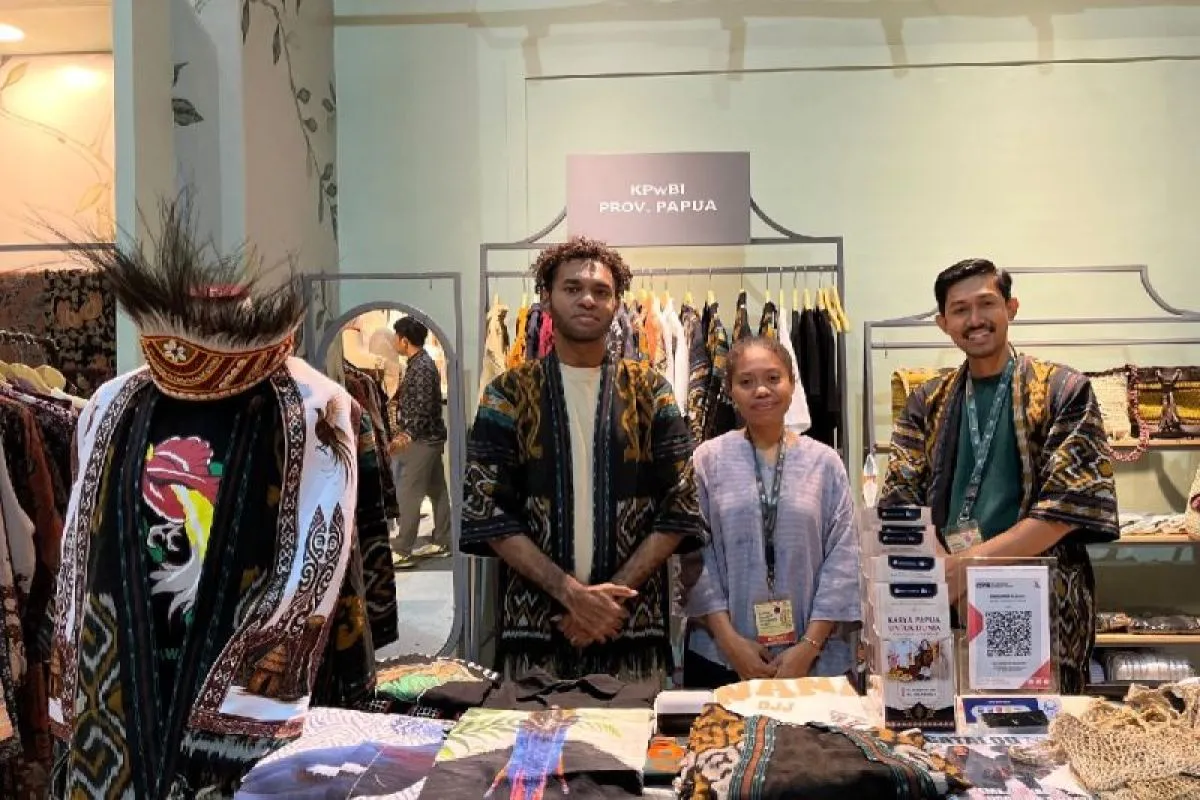
For many small businesses in Papua, reaching customers beyond their immediate community has traditionally been difficult. Distance, transportation costs, and limited access to wider markets can make even a good local product difficult to scale. Papua’s MSMEs’ digital transformation is beginning to change that equation, with Bank Indonesia expanding programs designed to help businesses use e-commerce, digital payments, financial technology, and data-based farming.
The effort is part of a broader push by Bank Indonesia’s Papua representative office to improve productivity, expand market access, and help micro, small, and medium enterprises move into a more competitive stage of development. Recent data show that 54 Papua-based MSMEs successfully completed onboarding to various e-commerce platforms between 2020 and 2025. The program has been expanded in 2026, with another 50 businesses participating from sectors including crafts and fashion, food and beverages, and coffee.
For Papua, where geography remains an important economic factor, the shift has implications that go beyond technology. It is about giving local entrepreneurs more ways to connect with consumers, improve their products, and potentially build businesses that can compete outside their traditional markets.
Digitalization Becomes a New Route for Papua’s MSMEs
Bank Indonesia’s strategy extends beyond simply putting businesses online.
According to David Sipahutar, Acting Head of the Bank Indonesia Representative Office in Papua, digital transformation has become an important strategy for improving the competitiveness of MSMEs. The institution is pursuing three main approaches: e-farming, e-commerce, and e-financing.
Each addresses a different challenge.
E-commerce provides a route to consumers beyond conventional markets. E-financing focuses on better financial records and access to finance. E-farming brings digital technology into agriculture, helping farmers improve production efficiency and planning.
Together, the three approaches form a broader digital ecosystem rather than treating technology as simply another marketing tool.
That distinction matters for Papua’s economy. A business may successfully sell a product online, but sustained growth requires reliable production, proper financial management, and the ability to meet customer demand. Digital transformation becomes meaningful when those elements develop together.
From local products to wider markets
The progress of Papua MSMEs on e-commerce platforms illustrates the potential.
Bank Indonesia recorded 54 MSMEs that completed onboarding to various e-commerce platforms from 2020 to 2025. These businesses operate in sectors such as handicrafts and fashion, food and beverages, and coffee. In 2026, the program was expanded to include 50 additional MSMEs.
The objective is not merely to increase the number of online sellers.
Bank Indonesia expects participation in digital platforms to encourage businesses to improve product quality, packaging, and business management while opening access to broader markets.
For international observers, the initiative is one of the more significant aspects of Papua’s digital economic development. The region has products with strong local identity, including coffee, handicrafts, and agricultural commodities. Connecting those products to digital consumers can potentially reduce some of the limitations imposed by geographical distance.
It does not eliminate logistical challenges, but it can change how businesses find customers.
QRIS Is Expanding the Digital Economy
The transformation is also visible in how consumers pay.
Bank Indonesia reported that during the first quarter of 2026, the Quick Response Code Indonesian Standard (QRIS) transactions in Papua and the New Autonomous Regions reached Rp2.61 trillion, representing annual growth of 7.84 percent. The number of QRIS merchants also increased by 12.98 percent year-over-year.
QRIS, or the Quick Response Code Indonesian Standard, allows merchants to accept digital payments using a standardized system.
For a small business, digital payment infrastructure can have practical advantages. It can make transactions easier, reduce reliance on cash, and connect merchants more closely with the wider digital financial ecosystem.
The growth also provides an indication that digital payments are becoming increasingly familiar among consumers and business owners in Papua. Data from Bank Indonesia indicates that the transition extends beyond large commercial centers.
At the national level, the scale is considerably larger. By June 2026, QRIS had reached 65.77 million users and 44.86 million merchants, with 96.68 percent of those merchants classified as MSMEs.
Papua’s experience is therefore part of a much larger transformation taking place across Indonesia.
E-Farming Brings Technology into Rural Production
Digital transformation in Papua is not restricted to urban entrepreneurs.
Bank Indonesia is also working with farmer groups through digital farming initiatives. The program has been implemented with several groups, including Poktan Arpat Jaya, Ponpes Latifah Mubarokah, Poktan Kaipoa, Poktan Karya Makmur, Poktan Maju Jaya, and Ponpes Al Munawwaroh.
The purpose is straightforward: use information and technology to make agricultural production more efficient.
The program helps farmers plan planting based on weather information and apply fertilizer more precisely. According to Bank Indonesia, the program can reduce production costs and make harvest results more stable.
One example comes from Merauke.
In 2024, Bank Indonesia provided a drip irrigation system to the Maju Makmur farmer group in Marga Mulya Village, Semangga District, through its regional economic development social program. The system reduced water use by up to 50 percent. Chili productivity increased from four tonnes per hectare to five tonnes per hectare, while harvests became more stable, including during the dry season.
The example demonstrates why digitalization should not be understood only as smartphone applications or online shopping.
For Papua’s rural economy, technology can also mean better use of water, better agricultural planning, and more efficient production.
Financial Records Can Open the Door to Financing
Another part of the strategy involves e-financing.
Bank Indonesia promotes the use of SIAPIK, or the Information System for Financial Recording Application, to help MSMEs improve financial record keeping and strengthen their ability to access financing.
For many small businesses, financial administration is not always a priority during the early stages of operation. Owners tend to focus on production, sales, and daily cash flow. Yet poor financial records can make it harder to understand whether a business is genuinely profitable and can complicate efforts to obtain financing.
Digital financial records can help address that problem.
The objective is therefore not simply to make bookkeeping more modern. It is to help businesses develop a stronger foundation for expansion.
This is particularly relevant when MSMEs begin moving from informal or household-scale operations toward more structured businesses. Better records can support decisions about inventory, investment, pricing, and financing.
Cooperation Between Institutions Is Becoming More Important
Bank Indonesia’s program also reflects a broader institutional approach to digital economic development.
The Karya Kreatif Indonesia 2026 Innovation Talk, held in Jakarta on August 21, brought together representatives from government institutions, supported MSMEs, academics, and financial institutions. Bank Indonesia said the event was designed around the theme of accelerating MSMEs’ digital transformation through integrated digital innovation.
The institution also highlighted the role of the Indonesia Digital Innovation Center, or PIDI, which connects talent, innovators, industry, government, and strategic partners.
Bank Indonesia describes PIDI as part of cooperation involving Bank Indonesia, the Financial Services Authority, and other strategic partners to accelerate digital innovation and develop digital talent.
For Papua, institutional cooperation is particularly important because digital transformation involves several different areas at once.
A business may need payment infrastructure from the financial system, digital skills from training programs, logistics support from the government, market access through e-commerce platforms, and financing from financial institutions.
No single institution can solve all of these challenges independently.
Papua’s Local Identity Can Become an Economic Asset
One of the opportunities created by digital transformation is the ability to connect economic development with local identity.
Papua’s coffee industry provides an example.
Bank Indonesia’s Papua office facilitated business matching for Papua Global Spices and supported the 2026 Papua Coffee Festival. The festival generated MSMEs transaction turnover of Rp1.13 billion, QRIS transactions worth Rp706.73 million, and business matching valued at Rp2.46 billion, with approximately 14,000 visitors.
These figures illustrate how physical events and digital tools can work together.
A festival can introduce a product to consumers and potential buyers. QRIS can facilitate transactions. Business matching can connect producers with larger commercial partners. E-commerce can then allow the relationship with customers to continue after the event ends.
The combination creates a pathway from local visibility to longer-term market development.
For Papua, that could be important for products whose value comes partly from their regional identity.
The Remaining Challenge Is Scale
The progress is encouraging, but digital transformation should not be mistaken for a completed process.
Getting an MSMEs onto an e-commerce platform is only the beginning. Businesses still need reliable internet access, competitive logistics, consistent production, attractive packaging, financial literacy, and the ability to maintain product quality.
The 54 MSMEs that entered e-commerce platforms between 2020 and 2025 and the 50 additional participants in 2026 represent meaningful progress, but the larger question is how many businesses can successfully remain active and grow after onboarding.
That will depend partly on the quality of continued mentoring.
A digital platform can provide access to customers, but it cannot by itself guarantee sales. Businesses must understand pricing, customer service, branding, inventory management, and digital marketing. They also need the capacity to deliver orders efficiently.
This is why Bank Indonesia’s emphasis on an integrated approach is significant.
A Broader Economic Role for Digital Papua
Digitalization also has implications for employment and regional economic development.
As MSMEs become more competitive, their needs can expand. A growing coffee business may require additional workers. A craft producer may need designers, packers, and logistics partners. A food business selling online may require additional production capacity.
The effect can extend through local supply chains.
In that sense, digital transformation is not simply about replacing traditional commerce with online commerce. It can create additional connections between producers, consumers, financial institutions, and service providers.
For policymakers, the challenge is to ensure that those benefits reach communities beyond the largest urban centers.
Papua’s geography makes the issue especially important. Digital access can help reduce some barriers to market information, but physical connectivity remains essential for moving products.
Technology and infrastructure therefore need to develop together.
Internal Perspective: Papua’s Digital Economy Is Expanding
The developments described by Bank Indonesia fit into a wider story of economic change in Papua.
Readers interested in the region’s economic transformation can also explore related reporting on Papua’s coffee industry and MSMEs’ development, as well as coverage of local agricultural production and the growth of digital payments in Papua. These developments show that the digital economy is increasingly being connected with traditional sectors rather than replacing them.
The important point is that Papua’s economic future does not have to be framed as a choice between local traditions and modern technology.
Digital platforms can instead become tools for strengthening locally produced goods and services.
Conclusion
Bank Indonesia’s efforts to accelerate Papua’s MSMEs digital transformation point to a gradual shift in how local businesses can participate in Indonesia’s wider digital economy. The combination of e-commerce onboarding, QRIS adoption, digital farming, and improved financial recording creates a more complete pathway for MSMEs seeking to grow.
The figures already provide signs of progress. Fifty-four Papua MSMEs entered e-commerce platforms between 2020 and 2025, with another 50 businesses joining the 2026 program. QRIS transactions in Papua and the New Autonomous Regions reached Rp2.61 trillion in the first quarter of 2026, while the number of QRIS merchants grew 12.98 percent year on year.
The next stage will be more demanding. The real test will be whether digital access translates into sustained sales, stronger productivity, better financing, and higher incomes for businesses across Papua.
For the Indonesian government and Bank Indonesia, continued cooperation with local governments, financial institutions, technology providers, universities, and business communities will be essential. For Papua’s entrepreneurs, meanwhile, digitalization offers something equally important: a chance to take products that have long been known locally and introduce them to customers far beyond their immediate surroundings.
That could make digital transformation more than a technology program. It could become one of the practical foundations for a more connected, competitive, and locally driven Papua economy.

