
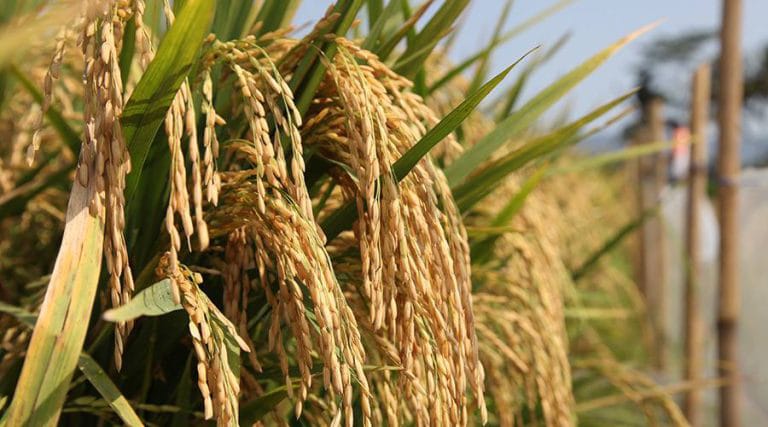
For a rice seed that has long been associated with the agricultural heritage of Kalimantan Selatan (South Kalimantan), the journey to Papua represents something larger than a transfer of agricultural material between two provinces.
The Siam Madu Murakata rice variety is now being prepared for cultivation in Papua after officials from the Papua Provincial Agriculture Agency travelled to Kalimantan Selatan to learn how the local variety is cultivated and developed. The initial shipment includes 50 kilograms of seed, with an initial planting area of about two hectares planned in Papua.
The move is being presented by the two provincial governments as an effort to strengthen agricultural production and food security. It also carries a distinctly social dimension because a significant consideration behind the initiative is the presence of people from Kalimantan Selatan who live and work in Papua and retain a connection with food traditions from their home region.
What began as a local variety in Hulu Sungai Tengah, Kalimantan Selatan, is therefore entering a new chapter. Its performance in Papua will now be observed under a different environment, while farmers and agricultural officials assess whether it can contribute to broader local production.
From Kalimantan Selatan to Papua
The October 2 Agricultural Visit
The latest step began on Friday, October 2, 2026, when a delegation from the Papua Provincial Agriculture Agency visited the Balai Benih Tanaman Pangan dan Hortikultura, or BBTPH, of Kalimantan Selatan.
Papua Agriculture Agency Head Lunanka V.M.L. led the delegation, accompanied by Papua Public Works and Housing Agency Head Natirmalus D. Renyaan.
They were received by BBTPH Kalimantan Selatan Head Sigid Sarsanto, together with Iwan Ary Buwono, head of the agency’s Section for Development of Food Crop Seed Production and Distribution Technology, and operational services staff member Huda.
The visit had a practical purpose.
Rather than simply receiving seed and sending it to Papua, Papua’s agricultural officials sought to learn how Siam Madu Murakata is cultivated and how its seed can be maintained and developed.
That distinction matters because successful movement of a rice variety from one region to another requires more than transportation. Farmers need to understand cultivation techniques, seed quality, environmental requirements, and the process of maintaining the characteristics of the variety.
The visit consequently became the first visible step in a planned agricultural trial in Papua.
Why Siam Madu Murakata?
Siam Madu Murakata is a local variety associated with Hulu Sungai Tengah Regency in Kalimantan Selatan.
Its development has been supported through the regional seed system, with BBTPH Kalimantan Selatan continuing to multiply source seed for the variety.
According to Sigid, Siam Madu Murakata has been registered under Plant Variety Registration No. SK 2009/PVL/2023. The development program seeks to preserve its local characteristics while ensuring that seed quality meets agricultural standards.
The variety had already attracted attention in Kalimantan Selatan before the Papua initiative.
Earlier in 2026, the BBTPH’s Sungai Tabuk Seed Production Unit planted Siam Madu Murakata on 1.5 hectares as part of a two-hectare seed certification program. The remaining 0.5 hectare was planted with Siam Barambai.
At that stage, officials said demand for Siam Madu Murakata was already strong, with farmers in Hulu Sungai Tengah placing orders even before the seed had reached harvest.
That earlier experience provides part of the background to why Papua is now interested in the variety.
A Variety Moving Beyond Its Home Region
Quality Before Quantity
The Kalimantan Selatan government has not described the program simply as a way of distributing more seed.
Sigid said the development of Siam Madu Murakata was intended to preserve the taste associated with the Banjar community while ensuring that the seed meets quality standards capable of supporting farmers’ productivity.
He said certified seed is expected to maintain quality, show tolerance to environmental conditions, withstand crop pests and diseases, and retain high yield potential.
That approach is important for Papua.
Agricultural development is not simply about finding a variety that performs well somewhere else. A seed that succeeds in one location may respond differently when exposed to another combination of soil, rainfall, temperature, water availability, and farming practices.
The planned two-hectare planting area offers an opportunity to observe the variety under Papua’s conditions before considering any broader expansion.
This is one reason the initial scale remains relatively modest.
The program can begin with observation and evaluation, rather than assuming that a variety proven in Kalimantan Selatan will automatically deliver identical results in Papua.
A Four-Ton Per Hectare Reference
Previous reporting from Hulu Sungai Tengah provides an indication of why the variety has attracted interest.
In 2024, local officials working with the National Research and Innovation Agency, or BRIN, reported that field testing of Siam Madu Murakata had produced approximately four tonnes per hectare. The same officials also noted that consumers preferred the rice because of its distinctive texture and taste, describing it as neither too soft nor too hard.
Understand that this figure serves as a reference from testing in its home region, not as a guarantee for Papua.
Actual productivity in Papua will depend on local growing conditions and management. The upcoming planting will therefore provide a more relevant test of how the variety responds outside Kalimantan Selatan.
This cautious approach is particularly important when discussing food security. Higher yields can contribute to greater food availability, but sustainable production also depends on reliable seed supply, water management, farmer knowledge, post-harvest handling, and market access.
Papua’s Food Security Agenda
Agriculture as a Long-Term Investment
The Papua government has been looking for ways to increase agricultural production as part of its broader effort to strengthen food security.
The introduction of Siam Madu Murakata is one example of that approach.
According to Papua Agriculture Agency Head Lunanka V.M.L., the provincial government continues to encourage higher agricultural production and is exploring superior local varieties from other regions that could be developed in Papua.
The initiative therefore fits into a broader idea: Papua does not necessarily have to rely exclusively on varieties developed within the province.
Indonesia’s geographical diversity gives provincial governments access to a large pool of agricultural resources and experience. Regions can collaborate to test successful local varieties, farming techniques, and seed-development practices in other areas.
The Papua and Kalimantan Selatan cooperation demonstrates how such an exchange can work at the provincial level.
It also gives Papua’s agricultural authorities an opportunity to learn directly from an established seed-development system rather than starting from zero.
From Seed Transfer to Local Production
The 50 kilograms of seed being taken to Papua is intended for an initial planting area of approximately two hectares.
That makes the first stage more than a simple distribution program. It is also a starting point for local multiplication and evaluation.
If the variety performs well, a successful production cycle could eventually provide seed for wider cultivation.
The process is familiar in agricultural seed systems. Source seed is multiplied under controlled conditions, followed by further development into seed that can eventually be used more broadly by farmers.
Kalimantan Selatan has been following a similar model.
Earlier this year, Sigid explained that the seed planted at the Sungai Tabuk production unit was a source seed that would later be multiplied by seed growers into seeds available for farmers. The production cycle was estimated at 120 days from planting to harvest.
That experience could become useful for Papua as officials assess how the variety can be developed locally.
Food Security with a Cultural Connection
More Than a Crop
One of the most distinctive elements of the Papua initiative is its cultural dimension.
The introduction of Siam Madu Murakata is partly intended to respond to the needs of people from Kalimantan Selatan who now live and work in Papua.
For these communities, rice is not simply an agricultural commodity. Food can carry memories of home, family, and regional identity.
Lunanka said the development of the variety in Papua could help meet the desire of Kalimantan Selatan communities living there for a food product associated with the taste of their home region.
That makes the initiative unusual in a useful way.
A program designed around agricultural productivity is also creating a small bridge between two regions of Indonesia that are separated by thousands of kilometers.
The seed travels from the landscapes of Kalimantan Selatan to Papua, but it also carries knowledge and a familiar food tradition.
For Papua, meanwhile, the potential benefit is broader. If the variety proves suitable to local conditions, the program could provide another option for farmers and contribute to a more diversified agricultural system.
Why Seed Certification Matters
The journey from Kalimantan Selatan to Papua also involves regulatory safeguards.
The distribution of agricultural seed between islands must comply with Indonesia’s quarantine regulations.
The reports cited Law No. 21 of 2019 on Animal, Fish, and Plant Quarantine and Government Regulation No. 29 of 2023 as the relevant regulatory framework. Seed transported between regions must undergo the required inspection and laboratory procedures before being moved to the destination.
This process serves an important agricultural purpose.
Plant material can carry pests or diseases that may affect another region. Quarantine procedures thus protect agricultural production and preserve the quality and identity of the distributed seed.
For Papua, this is particularly relevant as the program enters its first cultivation phase.
The objective is not simply to move seed quickly but to ensure that the material reaching farmers and agricultural facilities meets the necessary requirements.
Building on Kalimantan Selatan’s Experience
The Papua initiative would not have been possible without the seed-development work that preceded it in Kalimantan Selatan.
Siam Madu Murakata has been the subject of continued cultivation and seed multiplication in the province.
In April 2026, the BBTPH’s Sungai Tabuk unit planted 1.5 hectares of the variety as part of a certified local seed program. Officials said demand was already strong, with farmers expressing interest before harvest.
That demand reflects two characteristics that have helped the variety gain attention.
The first is its agricultural potential.
The second is its identity as a local variety with a distinctive taste.
Locally developed varieties can still play an important role in an era when agricultural production increasingly focuses on standardization and efficiency. They can offer characteristics valued by consumers while contributing to the diversity of agricultural resources.
The challenge is ensuring that local varieties can meet modern standards of seed quality and production.
Kalimantan Selatan’s current program attempts to combine both objectives.
What Papua Will Need to Watch
The next stage will be critical.
Planting Siam Madu Murakata in Papua will allow agricultural officials to evaluate its performance under local conditions. The initial two-hectare area should provide an early indication of how the variety responds to the environment and farming practices in its new location.
Several questions will naturally follow.
Will its productivity approach the results recorded in Kalimantan Selatan? How will the crop respond to local soil and weather conditions? Can farmers reproduce the desired characteristics consistently? Can the seed be multiplied locally while maintaining quality?
The answers cannot be known in advance.
That is why the initial development should be viewed as an agricultural trial and cooperation program rather than an immediate promise of higher yields across Papua.
If the results are positive, however, the potential is significant.
The variety could become another component of Papua’s agricultural diversification efforts, while the experience gained through the program could help strengthen local seed-management capacity.
A Broader Model of Interprovincial Cooperation
The Siam Madu Murakata program also illustrates a broader feature of Indonesia’s agricultural system.
Food security is increasingly being approached as a shared national challenge rather than something that each province must address entirely on its own.
Kalimantan Selatan has agricultural varieties and seed-development experience. Papua has land, farmers, and communities with different agricultural needs. Cooperation allows knowledge and resources to move between the two.
The arrangement also creates a more practical form of interprovincial cooperation.
The relatPapua’s New Rice Fields Aim to Feed Communitiesionship is expressed through a tangible commodity: rice seed, rather than solely through formal agreements.
The visit by Papua officials to BBTPH Kalimantan Selatan allowed both sides to discuss the technical aspects of cultivation directly. The subsequent transfer of 50 kilograms of seed gives the cooperation a concrete next step.
That is where the program’s significance may ultimately lie.
Looking Beyond the First Harvest
Agricultural authorities will closely monitor the first harvest in Papua.
If the variety adapts well, the program could move toward larger-scale seed multiplication and cultivation. Officials will have a chance to pinpoint which aspects require modification before contemplating expansion if the performance is mixed.
Either outcome would provide useful information.
Agricultural development rarely happens in a single planting season. It is built through repeated testing, learning, and adaptation.
For Papua, the arrival of Siam Madu Murakata offers an opportunity to add another variety to its agricultural portfolio while learning from Kalimantan Selatan’s experience in maintaining and multiplying local seed.
For Kalimantan Selatan, the program demonstrates that a variety originating from Hulu Sungai Tengah can find relevance beyond its traditional home.
And for Banjar communities living in Papua, the initiative offers something more personal: the possibility of seeing a familiar rice variety cultivated closer to where they now live.
Conclusion
The arrival of Siam Madu Murakata rice seed in Papua is a small but potentially meaningful development in Indonesia’s broader food security effort.
The process began with practical cooperation. On October 2, Papua Agriculture Agency officials visited the Kalimantan Selatan BBTPH to learn how the variety is cultivated and managed. The delegation was led by Lunanka V.M.L. and accompanied by Natirmalus D. Renyaan, while BBTPH Head Sigid Sarsanto and his team provided information on the variety and its seed-development process.
The next step is the cultivation of 50 kilograms of seed on approximately two hectares in Papua.
The program has three intertwined objectives. The first is agricultural, through efforts to increase production and strengthen access to quality seed. The second is food security, by exploring another potentially productive rice variety for Papua. The third is social and cultural, through providing a familiar food variety for communities from Kalimantan Selatan living in Papua.
Siam Madu Murakata already has a track record in Kalimantan Selatan, where officials have reported strong farmer interest and production of around four tonnes per hectare in local testing.
But Papua will provide a new test.
Its real value will become clearer only after the first growing cycles reveal how the variety performs under local conditions. If the results are encouraging, the initial two hectares could become the foundation for wider seed multiplication and cultivation.
For now, the journey of Siam Madu Murakata from Kalimantan Selatan to Papua represents a practical example of how Indonesia’s regions can share agricultural resources, knowledge, and cultural traditions.
A bag of rice seed may appear modest. Yet for communities seeking stronger food security, farmers looking for productive options and families carrying the tastes of home across the country, it can represent the beginning of something considerably larger.
Read Also
Papua Targets Rice Self-Sufficiency by 2028
Fakhiri Opens New Market for Senggi Rice Farmers
Papua’s New Rice Fields Aim to Feed Communities

