Papua’s push for rice self-sufficiency by 2028 is taking shape through a combination of new farmland, higher productivity and modern agricultural technology. The provincial government is targeting 6,500 hectares of newly developed rice fields this year, while agricultural officials are promoting mechanisation and improved cultivation methods to increase output.
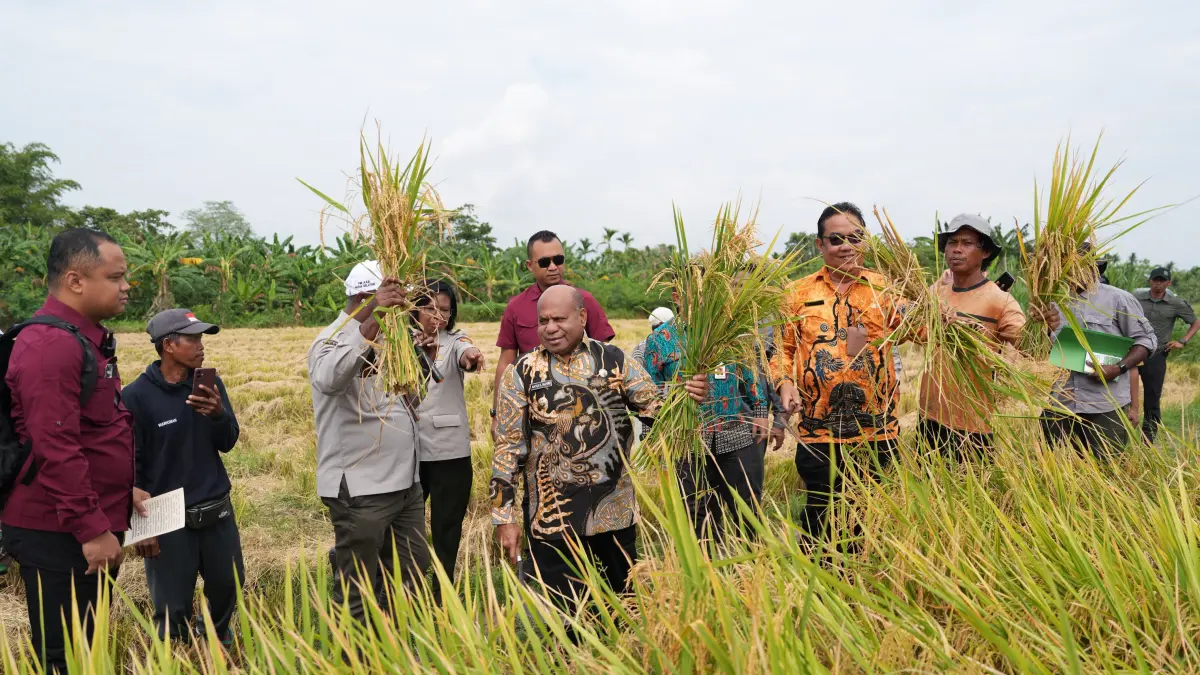
The ambition was underscored on October 1, 2026, when Papua Governor Matius D. Fakhiri joined a rice harvest in Koya Timur, Muara Tami District, Jayapura. The event offered a practical illustration of the province’s agricultural potential, as officials discussed production gains and the work still needed to turn local harvests into a reliable supply for communities across Papua.
For a province where geography and infrastructure shape the movement of goods, the target is about more than growing rice. It also involves making farmland productive, improving water management and connecting agricultural development with the needs of consumers.
A 2028 Target Takes Shape
The Papua provincial administration has set 2028 as its target for achieving rice self-sufficiency. Fakhiri said the plan combines the opening of new rice fields, rehabilitation of previously unused agricultural land and efforts to improve yields on existing farms.
The government’s stated programme includes the development of 6,500 hectares of new rice fields in 2026, alongside the rehabilitation of land that has been left idle. The initiative aims to increase the cultivated area while optimising the use of existing farmland.
Fakhiri described the initiative as part of the province’s contribution to Indonesia’s broader food security and self-reliance agenda under President Prabowo Subianto. The provincial government has also linked agricultural development to its ambition to diversify the regional economy and strengthen sectors beyond mining.
The scale of the challenge, however, means that increasing the area planted is only one part of the equation. The land must be suitable for cultivation, supplied with water and supported by the equipment and expertise needed to sustain production over time.
Productivity Offers an Early Indication of Potential
At the October 1 harvest in Koya Timur, agricultural officials reported a yield of eight tonnes per hectare from a two-hectare rice field. The result was above the average production level in Papua, as cited by the provincial agricultural research and modernisation agency.
Aser Rouw, head of the Agricultural Research and Modernisation Centre (BRMP) in Papua, said the agency was working to introduce modern farming systems to increase both plant populations and productivity.
According to Rouw, average rice production in Papua is currently around five tonnes per hectare. He said the use of improved seeds, measured fertiliser application, technology and mechanisation could create opportunities to raise yields to between 10 and 12 tonnes per hectare.
The governor has also cited production of up to 12.8 tonnes per hectare in some areas, particularly in Keerom Regency. He said average productivity in the province had exceeded eight tonnes per hectare, although results vary between locations and farming conditions.
These figures point to the potential for higher output, but they represent different measurements and locations. The eight-tonne harvest in Koya Timur, the province-wide average reported by Fakhiri and the higher yields cited in Keerom should not be treated as interchangeable indicators. Sustained progress will depend on consistent results across growing seasons and a wider range of farms.
Modern Agriculture and the Role of Mechanisation
BRMP Papua is promoting an approach known as the Pertanian Modern Advanced Agriculture System, or PMAAS. The programme aims to improve cultivation through technology, more precise fertiliser use and methods designed to increase the number of productive plants.
Rouw said the agency was continuing to provide farmers with information and education about modern agricultural practices. The effort reflects a recognition that technology alone cannot transform production if farmers do not have the knowledge and support to use it effectively.
Mechanisation is another central part of the provincial plan. Fakhiri has called for machinery to support multiple stages of rice cultivation, from land preparation and planting to fertilising and harvesting.
The goal is to shorten the time needed for farm operations and expedite field preparation for the next planting cycle. Faster turnaround could help farmers make fuller use of available land, provided that water, labour, equipment maintenance and other inputs are reliably available.
For farmers, the practical value of modernisation will depend on whether the equipment and techniques are accessible, affordable and suited to local conditions. Training, maintenance services and coordination between agricultural agencies will therefore be important alongside the introduction of machinery.
Irrigation and Three Harvests a Year
Papua’s government is also seeking support from the central government to develop and repair irrigation infrastructure. Fakhiri has identified irrigation systems and water pumps as important requirements for maintaining production and enabling more frequent planting.
The provincial target is for farmers to plant and harvest rice three times a year. Fakhiri has said the government is not setting a target of four planting cycles but is focusing on three harvests as a practical objective.
Achieving that schedule will require more than a higher-yielding seed or faster machinery. Reliable water supplies, suitable planting calendars, soil management and the ability to prepare fields between harvests will all influence whether farmers can sustain multiple cycles.
The October harvest in Koya Timur has provided a visible example of production potential. The larger test will be whether similar gains can be maintained across different areas and seasons, including locations where agricultural infrastructure and access to services may differ.
Existing Farmland and the Expansion Programme
BRMP Papua estimates that the province has around 1,807 hectares of established rice fields, excluding land currently undergoing development. Rouw said that optimising these existing fields could potentially produce more than 5,000 tonnes of rice.
That existing area provides a starting point for the self-sufficiency plan, while the proposed 6,500 hectares of new fields would represent a substantial expansion of the cultivated area if completed and brought into productive use.
The two figures describe different stages of the programme: established rice fields and a planned area for new development. The eventual contribution of the new fields will depend on implementation, land suitability and the ability to provide the necessary infrastructure and agricultural support.
BRMP has stressed that achieving self-sufficiency will require coordination among the agency, provincial and district governments, Statistics Indonesia (BPS), the state logistics agency Bulog and other agricultural stakeholders. Such cooperation will be important for aligning production data, farm support, distribution and the management of rice supplies.
From Coastal Production to the Highlands
Fakhiri has said that rising rice production should not only serve communities in coastal areas. The provincial government hopes that stronger output could also help supply rice to communities in Papua’s mountainous regions.
This ambition brings distribution to the centre of the food security discussion. Increased production does not automatically guarantee that rice will reach consumers in every part of the province. Transport links, storage, handling and the cost of moving goods across difficult terrain can all affect the relationship between farm output and food availability.
The government’s plan therefore has two connected dimensions: producing more rice and improving the capacity to make that rice accessible. The sources describing the programme do not provide a detailed distribution timetable or quantify the volume needed to meet demand in each region. Those figures will be important for assessing how close the province is to its 2028 objective.
A Possible Regional Market, After Domestic Needs
Papua has also begun communicating with neighbouring Papua New Guinea about possible opportunities for rice market development. Fakhiri said the discussions could include the possibility of exports if domestic production is sufficient to meet local needs.
The sequence matters. The provincial government has presented exports as a potential opportunity after local requirements have been met, rather than as a substitute for the immediate goal of strengthening domestic supply.
Papua’s location makes the prospect of cross-border trade relevant to its longer-term agricultural planning. But any future export activity would depend on production volumes, quality, logistics, market demand and the ability to maintain a dependable supply for consumers within the province.
For now, the immediate measure of progress remains whether new fields can be developed, existing farmland made more productive and harvests sustained throughout the year.
The Test Between Ambition and Delivery
Papua’s 2028 rice self-sufficiency target brings together several elements of agricultural development: land expansion, improved yields, modern farming methods, irrigation and coordination among institutions. The October 1 harvest in Koya Timur has given officials an opportunity to highlight reported productivity gains while setting out the next steps.
Yet the target will ultimately be judged by sustained production and reliable access, not by a single harvest or a planned acreage figure. The 6,500-hectare expansion must translate into productive farmland, while the ambition of three harvests a year will depend on water management and the practical capacity of farmers.
The province’s agricultural officials have stressed the importance of collaboration and farmer education. Those priorities will remain central as the programme moves from planning and demonstrations to wider implementation.
If the expansion and productivity measures deliver consistent results, Papua could strengthen its ability to meet local rice needs and reduce its dependence on supplies from outside the province. The 2028 deadline provides the administration a clear objective, but the decisive work will take place season by season, field by field, and through the systems that connect farmers with the people who rely on their harvests.
Conclusion
Papua’s ambition to achieve rice self-sufficiency by 2028 will depend on turning agricultural potential into consistent, year-round production. The provincial government’s plan to develop 6,500 hectares of new rice fields, modernise farming methods, improve irrigation and increase harvest frequency provides a framework for reaching that goal. However, lasting progress will require sustained coordination, farmer training and reliable distribution networks so that higher production translates into affordable and accessible rice for communities across Papua.
Read Also
Fakhiri Opens New Market for Senggi Rice Farmers
Papua’s New Rice Fields Aim to Feed Communities