Because there are long stretches of forest and steep terrain that often separate villages in the highlands of Puncak, news travels slowly. But when it does, it is very important. This time, it was a word of fire.
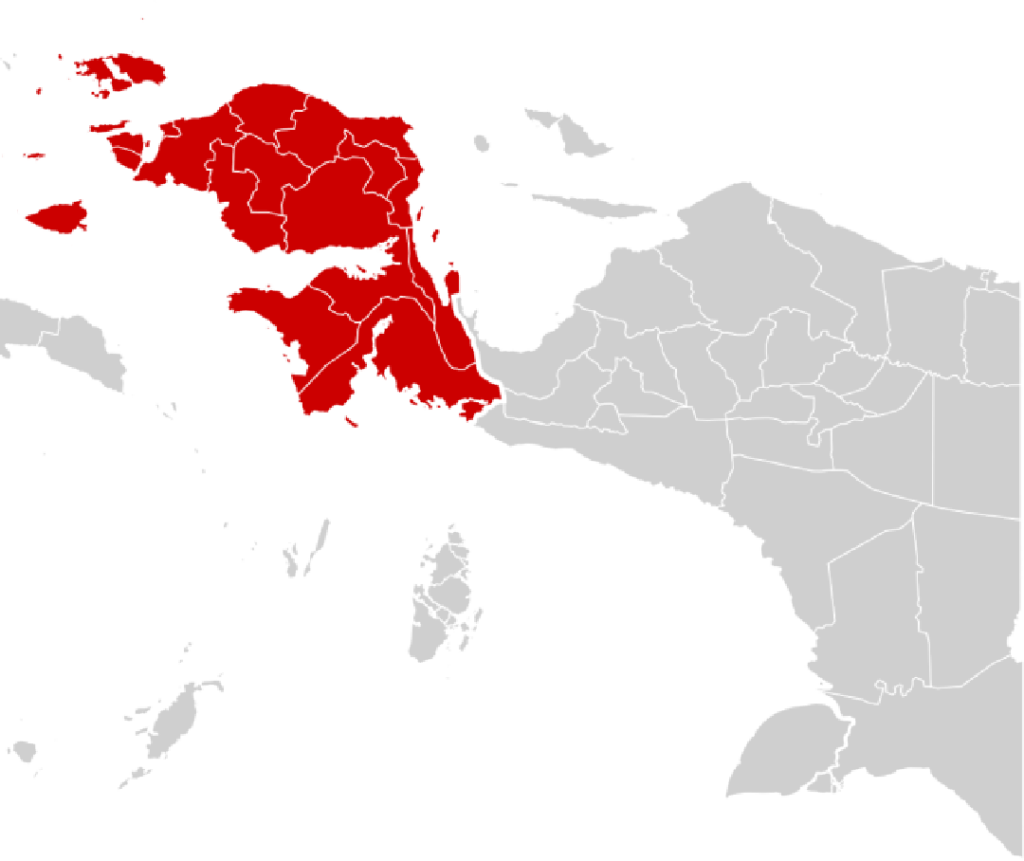
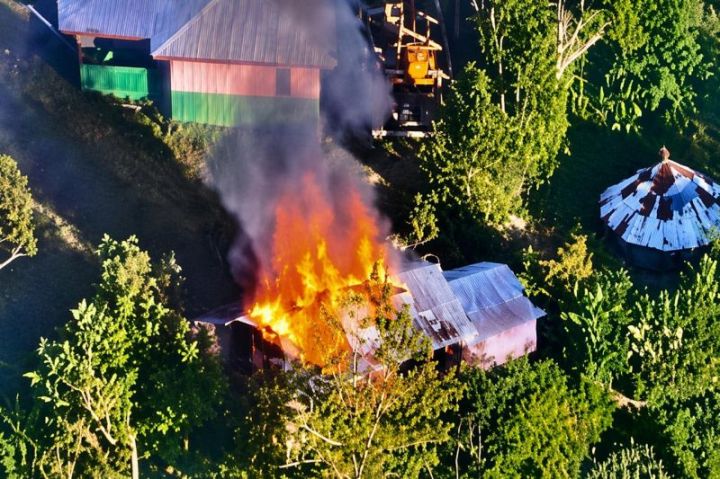
On April 13, 2026, in the morning, several houses in Kampung Muara, Distrik Pogoma, Puncak Regency, Papua Tengah (Central Papua) Province were set on fire. Authorities say this was the work of an armed group connected to the Free Papua Movement (OPM). The Puncak arson attack forced people to leave almost right away. Some went into the woods, while others looked for safety wherever they could find it.
A lot of people didn’t have time to think. Just time to move.
The Moment Everything Changed
People who were in the village that day describe confusion more than anything else.
There was no warning.
The group, identified by authorities as part of the West Papua National Liberation Army (TPNPB) of OPM under the command of Lekagak Talenggen, moved into the area and set houses on fire. Flames spread quickly through buildings that were not built to withstand them.
Within minutes, the village began to empty.
Some residents tried to save belongings. Most did not.
“You don’t think about things,” one resident said later. “You just run.”
The fires had consumed parts of the settlement by the time they died down.
What It Means for Those Who Left
In places like Pogoma, a house is almost always more than a structure.
It is where families gather, where food is stored, where daily life unfolds. When it is lost, the impact is immediate and difficult to measure.
For those who fled, the first concern was safety.
The second came quickly after.
Where to go.
Some families moved to nearby areas they considered safer. Others stayed in temporary shelters, relying on whatever support they could find.
Children were among those displaced.
Their routines, already limited by geography, were interrupted again, leading to further disruptions in their education and social interactions.
Living With Uncertainty
Displacement in Papua often comes with uncertainty that lingers.
There is no clear timeline for return.
Security conditions must be assessed. The area must be considered safe. In the meantime, daily life is paused.
A local community figure described it quietly.
“Even after the fire is gone, people are still afraid.”
That fear can last longer than the incident itself.
A Familiar Pattern in Remote Areas
Incidents like these do not happen everywhere in Papua.
But in certain areas, they are not entirely new.
Remote districts with limited access and natural cover provide a haven for armed groups. Their movements are difficult to predict, and their presence can shift quickly from one location to another.
For civilians, such activity creates a sense of unpredictability.
Life continues.
But with caution.
Security Forces Move In
Not long after the attack, Indonesian security personnel entered the area.
Their presence was visible.
Patrols increased. The area around the village was secured. Efforts began to track those responsible.
Officials said the immediate focus was on protecting residents and preventing further incidents.
Operations in regions like Pogoma are not simple. The terrain slows movement. Communication is not always reliable.
Even so, authorities have indicated that pursuit efforts are ongoing.
Why Civilian Targets Matter
Burning homes does not carry the same meaning as a direct confrontation.
It is not about territory in the conventional sense.
It sends a different kind of message.
Security observers note that attacks on civilian property often aim to create fear or pressure communities in specific areas, thereby undermining social cohesion and instilling a sense of vulnerability among residents.
For those affected, the intention matters less than the outcome.
What remains is loss.
Impact on Stability
When civilians are displaced, the effects extend beyond individual families.
Economic activity slows. Movement becomes more limited. Access to services becomes more difficult.
Over time, repeated incidents can affect broader development efforts.
In Papua, where progress depends heavily on stability, this connection is particularly clear, as ongoing instability can hinder economic growth, education, and healthcare access.
The Larger Picture in Papua
Papua is often described through contrasts.
There are ongoing development projects. Roads are being built. Access to services is gradually improving in some areas.
At the same time, security incidents continue to occur in certain regions.
Both realities exist together.
Understanding that balance is important.
It avoids oversimplifying a region that is still in transition.
What Happens Next
For now, residents of Kampung Muara remain displaced.
Authorities are working to ensure that the area is secure before any return can take place.
That process may take time.
In the meantime, support for affected families becomes critical.
Shelter.
Food.
A sense of stability, even if temporary.
Conclusion: A Quiet Village, Interrupted
As the situation begins to settle in Puncak, the physical signs of the attack are only part of the story.
The deeper impact is less visible.
Families adjusting to displacement.
Communities reconsidering their sense of safety.
A village that, for a moment, became a place people had to leave behind.
The Puncak arson attack is one incident among many challenges in Papua.
But for those who experienced it, it is not just part of a larger narrative.
It is personal.
And recovery, like the journey back home, will take time.