The documentary itself runs for only a limited time.
The arguments surrounding the documentary, however, continue to evolve.
Over recent weeks, discussions about Pesta Babi have moved from screenings and social media posts into police reports, public statements, requests for legal protection, and increasingly emotional debates about who gets to represent Papua.
What changed the conversation again this week was not another screening.
It was Yasinta Moiwend.
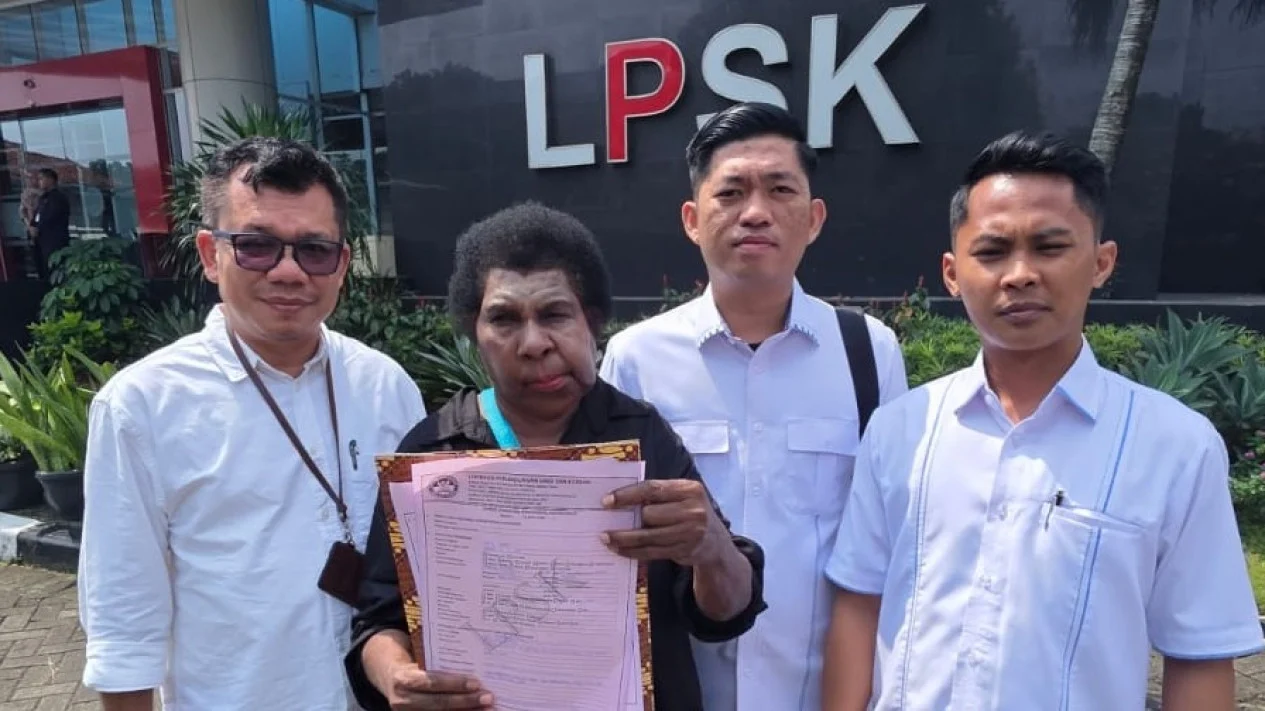
The indigenous figure from Merauke, known publicly as Mama Sinta, announced she had requested protection from Indonesia’s Witness and Victim Protection Agency (LSPK) after claiming she experienced intimidation, pressure, and defamatory accusations following the documentary controversy.
The request immediately shifted attention away from the film itself and toward something else.
Its consequences.
Mama Sinta Says The Situation Became Bigger Than The Film
For Mama Sinta, the dispute did not suddenly appear.
It developed gradually.
First came criticism surrounding how her appearance inside the documentary was presented.
Then public arguments online.
Then accusations.
Then personal pressure.
Speaking publicly on June 5, 2026, she explained that the decision to seek protection came after growing concern about intimidation and attacks directed toward her personally.
People close to the situation describe the atmosphere around the controversy as increasingly tense.
Not because everyone agrees about the film.
Because almost nobody does.
Request For Protection Adds New Dimension
The involvement of witness protection institutions changes the character of the dispute.
Film criticism usually stays within public debate.
Requests for protection move discussions toward legal and security concerns.
Several local observers note that controversies involving Papua frequently become more sensitive once personal security concerns emerge.
That appears to be happening now.
Documentary Debate Moves Into Legal and Public Arena
The dispute surrounding Pesta Babi has already produced multiple reactions.
Some groups defended the documentary.
Others questioned production methods.
Several people focused instead on consent and representation.
The result is a debate happening simultaneously across several spaces.
Social media.
Legal institutions.
Community discussions.
Political conversations.
This partly explains why the controversy continues expanding rather than fading.
Online Reactions Often Arrive Faster Than Clarification
Much of the argument developed online.
Short clips circulated.
Screenshots spread.
Individual scenes were reposted independently from their wider context.
People formed conclusions quickly.
Clarifications arrived later.
Local officials and several community figures increasingly warned communities not to rely entirely on fragments circulating through social media because shortened content frequently removes context.
Experts Raise Questions About Narrative And Political Interests
Several experts interviewed by national media recently raised another question.
Why was this documentary produced now?
Some analysts suggested that films discussing sensitive Papua issues frequently exist within wider political environments rather than isolated cultural spaces.
One expert publicly questioned whether documentary narratives can sometimes become instruments for shaping public perception.
Others expressed concern that emotionally charged content surrounding Papua may unintentionally deepen distrust between communities and institutions.
Even the Free Papua Movement’s (OPM) figures, including Benny Wenda and Sebby Sambon, used the film to rally public and world support for the separatist agenda in Papua.
Claims About Political Motives Remain Part Of Public Debate
Some commentators went further.
They suggested certain actors could potentially use controversial narratives for political mobilization.
Papua has historically attracted competing narratives from multiple actors.
For that reason, some analysts argue audiences should evaluate political claims carefully regardless of source.
At the same time, accusations regarding hidden agendas remain difficult to prove conclusively.
What remains clearer is something else.
The documentary has already sparked political discussions, regardless of whether that was its intention.
Why Representation Remains Sensitive In Papua
Papua rarely fits inside simple narratives.
Different regions experience different realities.
Communities hold different priorities.
Development itself remains debated.
That complexity partly explains why representation questions quickly become emotional.
Some viewers argue documentaries expose neglected realities.
Others argue single narratives risk oversimplifying complex situations.
Neither side appears willing to abandon those positions easily.
Local Officials Call for Restraint
Regional officials and security stakeholders increasingly emphasized one message.
Avoid escalation.
Several local figures argued public disagreement should not create wider social tension.
Authorities repeatedly encouraged communities to prioritize verification and dialogue rather than reacting immediately to emotionally charged content.
Their concern appears straightforward.
Once polarization expands, controlling misinformation becomes harder.
The Debate No Longer Belongs Only To Filmmakers
Perhaps the most significant shift is the audience.
Filmmakers no longer control the controversy.
Or participants.
Or critics.
It now belongs to everyone discussing it.
That includes activists.
Officials.
Community leaders.
Social media users.
Ordinary residents.
Each new statement produces another response.
Each response creates another argument.
Conclusion
The documentary remains unchanged.
What changed instead is everything that surrounds it.
A participant now seeks protection.
Legal discussions continue.
Political interpretations multiply.
Social media keeps amplifying fragments faster than explanations do.
For many people in Papua, the question may no longer be whether Pesta Babi is a beneficial documentary or a detrimental one.
The bigger question is whether societies already divided by competing narratives can still argue without making those divisions deeper.