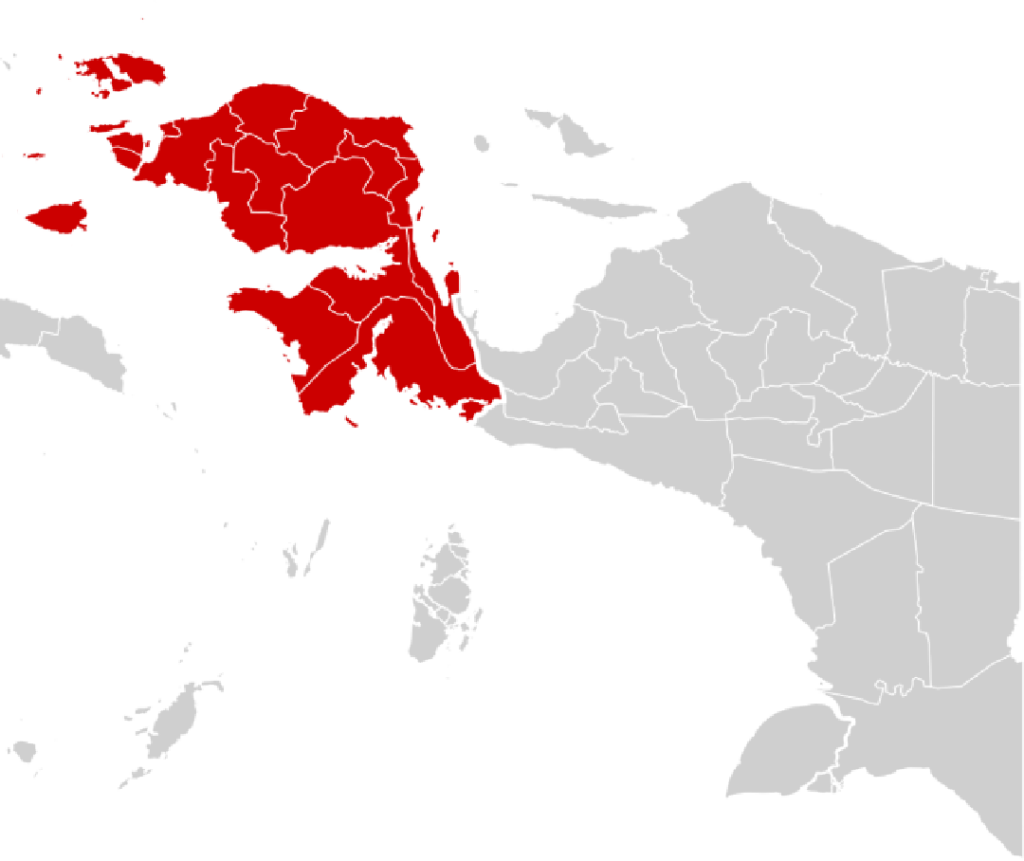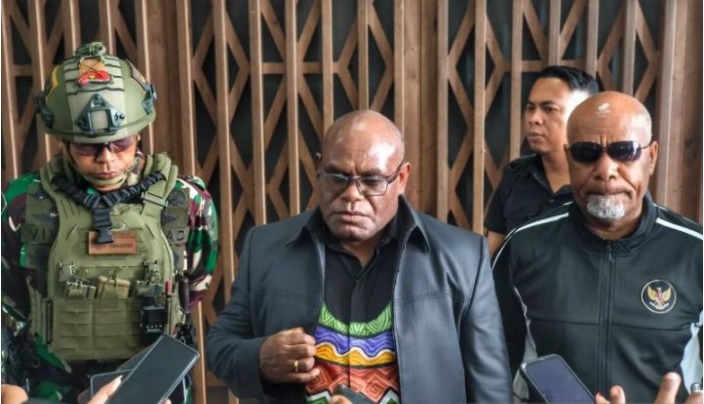
The Papua clash investigation did not begin in a courtroom. It began in the aftermath of confusion, fear, and unanswered questions in the highlands of Puncak.
On April 14, 2026, in Kampung Tenoti and Kampung Kumikomo, Distrik Kembru, a confrontation between security forces and West Papua National Liberation Army (TPNPB), armed faction of Free Papua Movement (OPM) ended with nine civilians dead, including a five-year-old child. In a region where information often arrives slowly, the sequence of events has taken time to reconstruct.
What is emerging now is a clearer, though still incomplete, picture.
How the Situation Escalated
The days leading up to the incident were already tense.
On April 13, 2026, violence broke out in Kampung Muara, Distrik Pogoma. Houses were burned, forcing residents to flee. The attack was linked to an armed faction of TPNPB OPM under the command of Lekagak Telenggen, further unsettling communities across Puncak.
Security forces began pursuing those believed responsible.
That movement would later bring them toward Kembru.
Confusion Over Separate Incidents
According to explanations later provided by Indonesian military authorities, the events in Puncak were not a single continuous incident but a series of encounters that occurred in different locations and moments.
Officials stressed that some reports circulating early on had merged separate moment into one narrative, making it difficult to distinguish between direct combat situations and other circumstances.
One such clarification involved the death of a child, which authorities said occurred in a different context from the main firefight, underscoring how fragmented information can shape public perception in remote areas.
A Confrontation in Civilian Space
As operations continued, security forces encountered TPNPB OPM in Kampung Tenoti and Kampung Kumikomo.
According to official accounts, the armed group moved within or near civilian areas. This tactic has been noted in previous incidents and is widely seen as increasing the risk to non-combatants.
When contact occurred, it did not happen in isolation.
It happened where people lived.
Gunfire broke out.
Civilians Among the Victims
By the time the situation subsided, nine civilians had died. Their identities were later confirmed, including Wundilina Kogoya, Kikungge Walia, Pelen Kogoya, Tigiagan Walia, Ekimira Kogoya, Daremet Telenggen, Inikiwewo Walia, Amer Walia, and a toddler, Para Walia.
In a place like Kembru, these are not distant names.
They are part of the community.
Loss is shared.
Government Response Focused on Clarity
Indonesia’s Minister of Human Rights, Natalius Pigai, responded by calling for a full and independent investigation.
The emphasis has been on understanding what happened in detail.
Not only the sequence of events.
But also the conditions under which they unfolded.
Officials have stressed that incidents involving civilian casualties must be addressed transparently, even in areas affected by armed conflict.
Emergency Measures on the Ground
At the same time, the governor of Papua Tengah, Meki Nawipa, moved to establish an emergency response team.
The focus was immediate.
Assisting victims’ families.
Coordinating medical support.
Documenting casualties.
These steps are meant to stabilize the situation while investigations continue.
Complexity Behind the Incident
Security analysts often point to one recurring issue in Papua.
Armed groups operating close to civilian populations.
This approach complicates any response. It reduces clear lines between combatants and residents, increasing the likelihood that civilians will be affected.
In Kembru, that dynamic appears to have played a role.
Geography Shapes the Outcome
Puncak’s terrain adds another layer of difficulty.
Villages are remote. Access is limited. Communication is inconsistent.
These conditions affect how quickly information is verified.
They also explain why early reports can differ significantly from later clarifications.
Understanding what happened requires time.
Competing Narratives After the Incident
In the days following the incident, statements from the United Liberation Movement for West Papua (ULMWP), led by Benny Wenda, called for an international investigation and framed the event primarily as a human rights violation.
Such responses are part of a broader effort to influence international perception of Papua.
However, they often focus on outcomes without fully addressing the sequence of events leading up to them.
Emphasis on Context from Authorities
Indonesian officials have responded by stressing context.
The earlier arson attack in Pogoma.
The pursuit of armed perpetrators.
And the conditions in which contact occurred.
This does not lessen the gravity of civilian casualties.
But it adds necessary detail to how the incident is understood.
The Human Impact Remains
Beyond official statements and competing narratives, the reality on the ground is unchanged.
Families are grieving.
Communities are adjusting.
In small villages, loss is not abstract.
It is immediate.
Support efforts continue, though recovery will take time.
A Broader Pattern in Papua
Papua remains a region of contrasts.
Development continues.
Infrastructure improves.
Access to services expands.
At the same time, localized violence persists in certain areas.
Both realities exist together.
Understanding Papua requires holding that balance.
What Happens Next
The investigation will be central to what follows.
It will determine how the incident is officially understood.
It will shape future responses.
At the same time, efforts on the ground will continue.
Stabilizing communities.
Providing assistance.
Preventing escalation.
Conclusion: Clarity in a Complex Situation
The Papua clash investigation is still ongoing, but for residents of Puncak, attention remains on recovery.
What happened cannot be reversed.
What can still be shaped is the response.
In regions like this, where information moves slowly and conditions are difficult, clarity becomes essential.
Not only to assign responsibility.
But to ensure that future incidents can be prevented.
For now, the highlands are quieter.
But the questions remain.