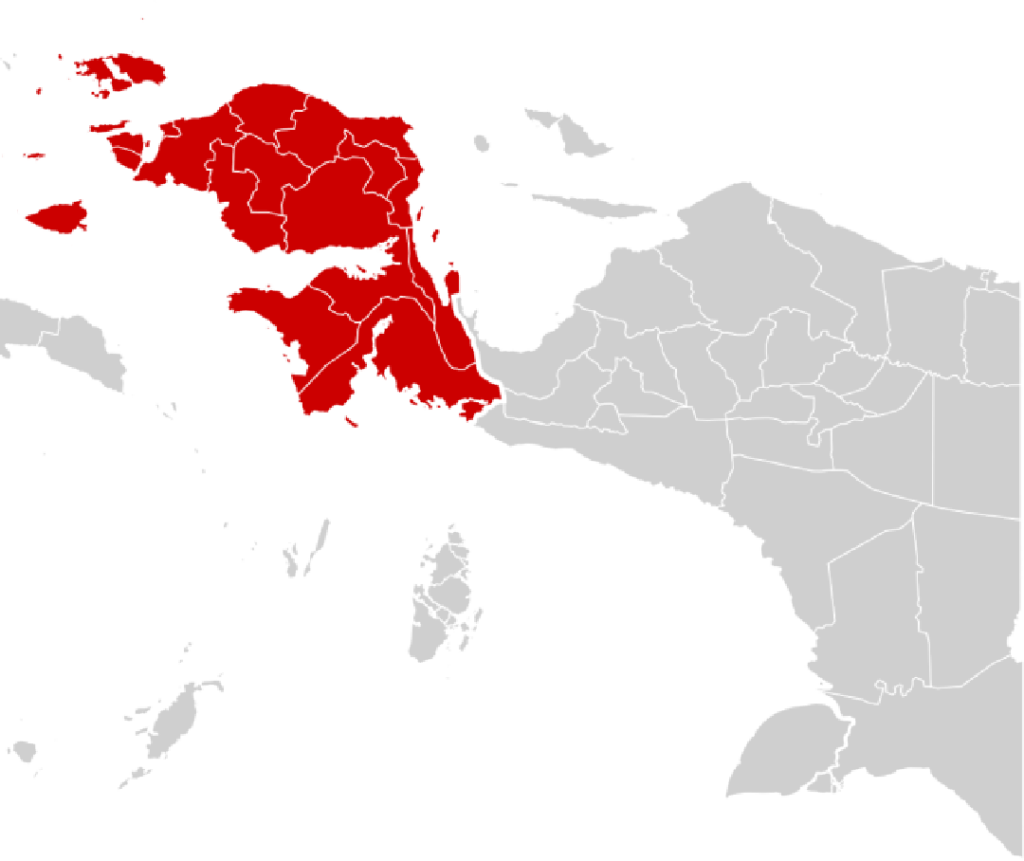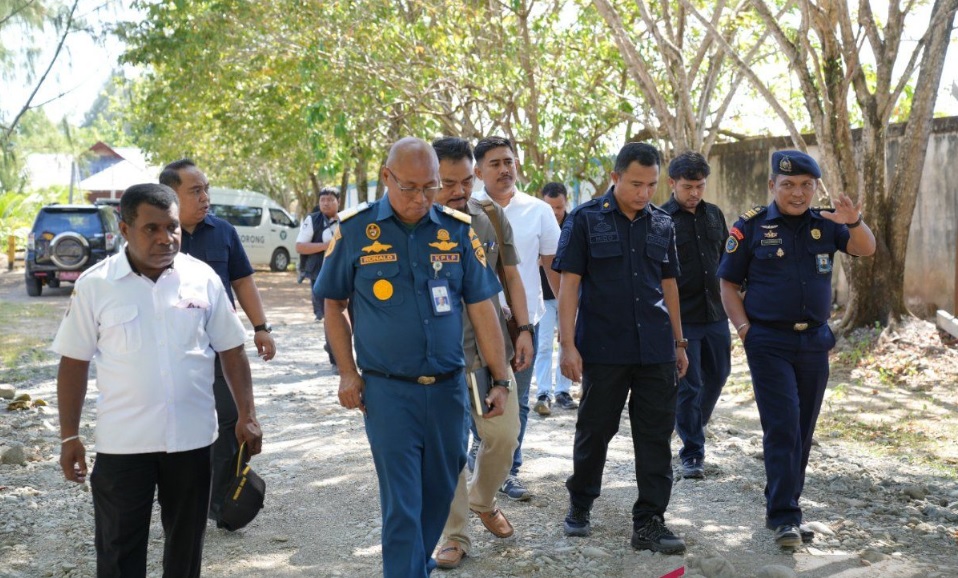
The enforcement of Papua Barat Daya (Southwest Papua) immigration has entered a new phase after a series of coordinated actions from the immigration authorities to improve the oversight of foreign nationals operating in the province. The initiative received new attention when officers of Class II Immigration Office at Sorong Immigration Checkpoint (TPI Sorong) found three Chinese nationals at a fish warehouse in Sorong who, according to immigration officers, failed to produce valid immigration documents in an inspection.
The case surfaced during a coordination meeting of the Foreigner Monitoring Team (TIMPORA) in Papua Barat Daya, where immigration officers, law enforcement officials, local government bodies, and other stakeholders met to discuss ways to improve the supervision of foreigners in the province.
Officials stressed that the operation was part of routine immigration enforcement by Indonesia and was not intended to target any particular nationality. The objective is to ensure that all foreign nationals entering or engaging in activities in Indonesia are complying with applicable immigration laws and administrative requirements.
“Continuous immigration supervision is essential to maintaining legal certainty, public order, and national sovereignty while promoting a safe environment for international cooperation and investment,” authorities said.
Three Foreign Nationals Found Without Valid Immigration Documents
At a fish warehouse in Sorong, the Sorong Immigration Office officers found three foreigners during an inspection.
The individuals could not provide valid immigration documents when asked during the inspection, said immigration officials. The three were subsequently detained by authorities for further investigation under Indonesia’s immigration procedures.
“The purpose of the administrative examination is to confirm the immigration status of each individual, to determine whether the person’s presence and activities are lawful, and to ascertain whether any violations of immigration regulations have been committed,” they said.
The case was handled per legal procedures, and the individuals’ identities were not released, except that they were confirmed as foreigners.
All foreign nationals in Indonesia were required to have valid travel and residence documents and to abide by the conditions of their visa or permit, immigration officials said.
The authorities also said that administrative enforcement measures are carried out in accordance with Indonesian immigration law and with respect to the legal procedures and the rights of individuals under examination.
TIMPORA Strengthens Coordination Across Government Agencies
The immigration case was revealed during the meeting of the Foreigner Monitoring Team (TIMPORA) in Papua Barat Daya, which is part of the government’s wider efforts to improve coordination of the institutions in charge of monitoring foreign nationals.
TIMPORA is a forum for representatives of immigration offices, regional governments, police, the Indonesian National Armed Forces, customs authorities, prosecutors, and other relevant agencies to share information and coordinate responses to immigration oversight.
Officials at the meeting stated that effective supervision requires close cooperation because foreign nationals can engage in activities in various sectors, such as tourism, fisheries, investment, education, humanitarian activities, and business.
The authorities aim to enhance the early detection of immigration violations by improving information sharing and institutional coordination, while also ensuring that legitimate international activities can continue to operate within Indonesia’s legal framework.
The meeting also discussed ways to enhance field inspections, administrative monitoring, and communication between the agencies responsible for immigration enforcement across Papua Barat Daya.
Interagency coordination remains vital to address increasingly dynamic international mobility patterns, officials said.
Immigration Enforcement Supports National Sovereignty
Indonesian officials stressed immigration enforcement as an important part of protecting national sovereignty.
Like many other countries in the world, Indonesia has immigration regulations that foreign nationals must follow for their entry, residence, employment, and other activities within its territory.
Officials said that effective immigration monitoring helps to ensure legal certainty while supporting public security, orderly administration, and respect for national laws.
As such, routine inspections are not only conducted based on suspected violations but also as preventive measures to promote compliance with immigration requirements.
Strong law enforcement in Indonesia benefits not only Indonesian society but also foreign nationals who abide by the law, authorities stressed, saying it creates a transparent legal environment that is conducive to responsible international activities.
Given that provinces such as Papua Barat Daya are still attractive to foreign visitors and economic activities because of their strategic geographical position and natural assets, immigration management has become important in keeping the area open while maintaining effective legal oversight.
Legal Compliance Benefits International Cooperation
“Strong immigration governance also supports Indonesia’s wider engagement with international partners,” officials also stressed.
A clear legal framework promotes responsible investment, helps legitimate business to grow, and builds confidence among foreign partners operating in Indonesia.
Immigration compliance therefore contributes not only to security objectives but also to good governance and sustainable economic development.
Authorities reiterated that Indonesia welcomes lawful international cooperation in areas such as trade, fisheries, tourism, education, research, and investment.
At the same time, they emphasized that all activities involving foreign nationals are to be in accordance with Indonesian laws and immigration rules.
To safeguard fairness, transparency, and public confidence in the country’s legal system, immigration authorities seek to guarantee equal application of the law to all persons irrespective of their nationality.
TIMPORA Strengthens Interagency Coordination
But officials said that effective supervision of foreign nationals requires good coordination among government institutions beyond the individual immigration case. This was one of the main topics of discussion at the recent meeting of the Foreigner Monitoring Team (TIMPORA) in Papua Barat Daya.
TIMPORA is an inter-agency coordination mechanism involving immigration authorities, the Indonesian National Armed Forces (TNI), the National Police, customs officials, prosecutors, regional governments, and other relevant agencies. Its goal is to improve information sharing, improve coordination on the ground, and make sure immigration rules are applied consistently across the province.
“The strategic position of Papua Barat Daya as a gateway to eastern Indonesia and the Pacific means that the effective management of the immigration process is ever more important,” officials said. The province welcomes legitimate international visitors, investors, business representatives, researchers, humanitarian workers, and tourists. Therefore, government agencies continue to develop monitoring systems to ensure that foreign nationals are performing their activities in accordance with the Indonesian laws and immigration regulations.
The coordination meeting also discussed preventive approaches, such as public awareness, institutional cooperation, and regular inspections, to reduce potential immigration violations before they develop into more serious legal cases.
Balancing International Cooperation and National Sovereignty
“Immigration enforcement should be understood as part of responsible international engagement, not restrictions to international mobility,” Indonesian officials stressed.
Indonesia is committed to an open environment for legal investment, tourism, education, fisheries, and international cooperation. At the same time, each sovereign state has the right and the duty to regulate the entry, residence, and activities of foreigners within its territory.
Immigration laws, officials said, offer legal certainty for both Indonesians and foreigners involved in legitimate activities in the country.
Routine document checks, administrative verification, and coordinated monitoring are therefore common practices adopted by many countries to ensure compliance with national legislation.
Immigration authorities say that applying the law fairly and consistently regardless of nationality builds confidence in Indonesia’s legal system and supports a predictable environment for international cooperation.
Rule of Law Supports Good Governance
Authorities also stress that immigration enforcement is part of Indonesia’s commitment to rule of law and good governance.
All administrative actions taken by immigration officers are done through procedures based on immigration law in Indonesia, covering document checks, interviews, administrative examinations, and, if necessary, further legal processing.
Officials said foreign nationals going through immigration examination continue to be afforded procedural protections guaranteed under Indonesian law while authorities determine whether immigration violations have occurred.
Legal experts say transparent immigration administration is in the interests of both governments and foreign visitors because it sets clear standards for visas, residence permits, employment authorization, and permitted activities.
Immigration agencies help manage migration smoothly and reduce chances of document misuse, illegal work, or other rule-breaking by making sure these rules are followed.
The recent operation in Sorong is a common application of immigration law and not an extraordinary security measure.
Supporting a Stable Investment Climate
The province’s authorities say the effective management of immigration also helps the economy develop.
West Papua is increasingly being noticed internationally for its fisheries, marine resources, tourism potential, and strategic location linking eastern Indonesia with the Pacific region.
As economic activity grows, government institutions are endeavoring to maintain a transparent legal environment for responsible investment and the protection of national interests.
Clear immigration procedures benefit investors and international companies, as they provide legal certainty for businesses operating in Indonesia, officials said.
Consistent law enforcement also helps to prevent unfair competition by making sure that all foreign nationals are subject to the same legal standards covering employment and commercial activities.
As a result, authorities see immigration oversight as an important component of broader governance reforms to support sustainable economic growth.
Looking Ahead
The recent immigration operation and the TIMPORA coordination meeting demonstrate the ongoing efforts of Papua Barat Daya to enhance institutional collaboration in the management of international mobility.
Routine inspections, interagency coordination, and information sharing will continue as part of ongoing efforts to improve immigration governance across the province, authorities said.
Similarly, officials reiterated Indonesia’s commitment to welcome legitimate international cooperation while ensuring that all foreign nationals respect the relevant immigration laws.
The economy is expected to keep growing, and international connections in Papua Barat Daya are likely to increase, so managing immigration effectively remains crucial for ensuring legal clarity, protecting the country’s sovereignty, and building public trust in government institutions.
Conclusion
The finding of three new foreigners without valid immigration documents in Sorong and the subsequent coordination meeting of the Papua Barat Daya Foreigner Monitoring Team (TIMPORA) underscore Indonesia’s continuous efforts to improve immigration governance. Authorities stressed that the operation was carried out as part of routine law enforcement to ensure compliance with national immigration regulations while protecting sovereignty and maintaining legal certainty. Meanwhile, officials reiterated that Indonesia remains open to lawful international cooperation in trade, investment, education, tourism, and research. Papua Barat Daya aims to combine sound law enforcement with interagency coordination to create a transparent legal environment that supports responsible international mobility, public security, and sustainable regional development.