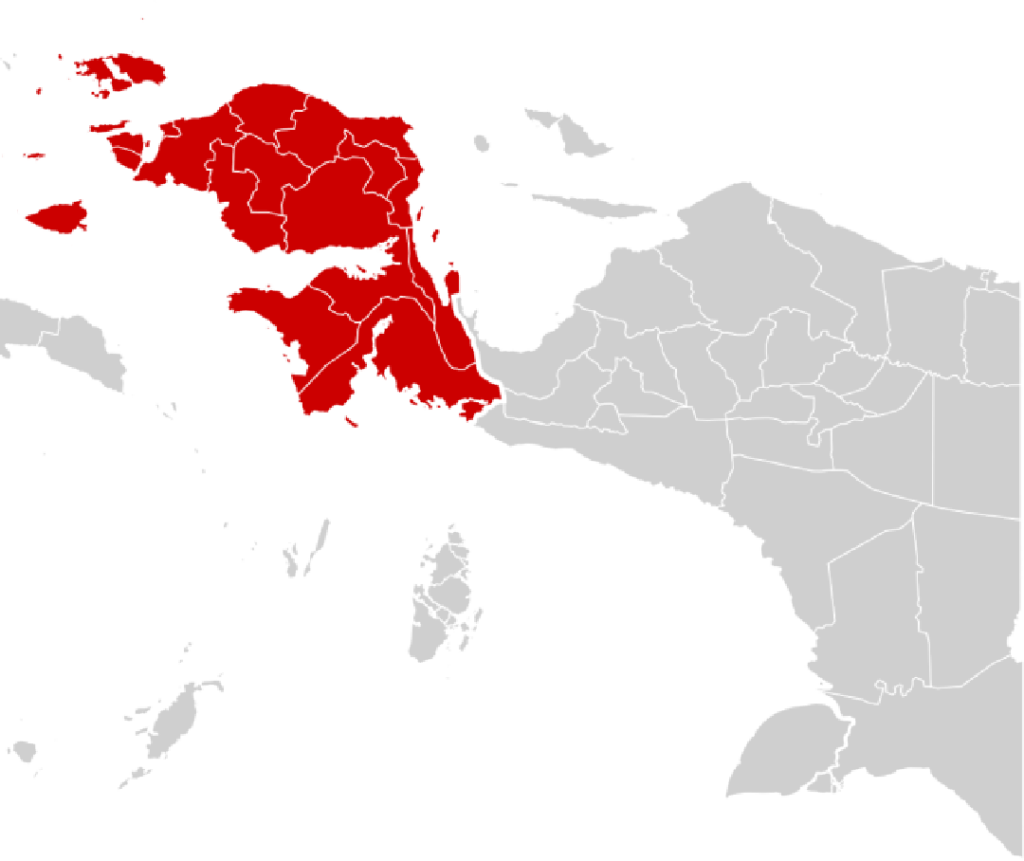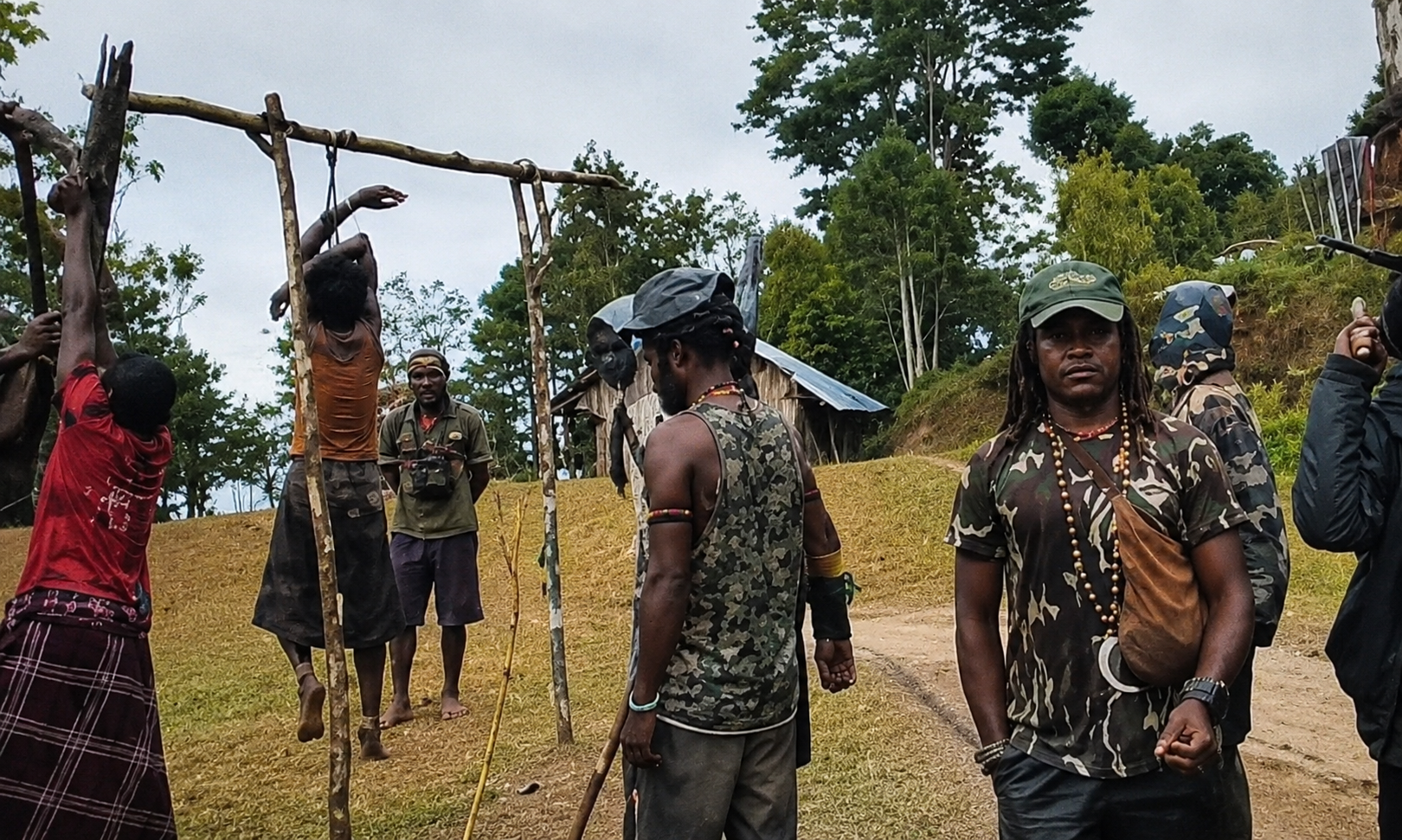
A video that has gone viral on Indonesian social media has drawn renewed attention to the safety of civilians in conflict-affected areas of Papua after apparently showing the severe abuse of several Indigenous Papuan women.
The authenticity of the video and the full details of the incident have not been independently verified. But the military authorities are studying the material while strongly condemning any acts of violence against civilians, statements issued by the Joint Regional Defense Command Task Force (Koops Habema) of the Indonesian National Army (TNI) said.
The advent of the video has provoked widespread concern, for women and other civilians are protected by Indonesian law and international humanitarian principles.
Such a move would be a serious breach of humanitarian norms and undermine efforts to improve security and stability across Papua if civilians were deliberately targeted, military officials said.
The incident has also re-ignited the debate on the wider humanitarian consequences of armed violence on communities living in remote areas where security challenges continue to impact daily life.
Video Circulates Widely Across Social Media
The West Papua National Liberation Army of the Free Papua Movement (TPNPB OPM)’s violence video against civilians in Papua was quickly shared on several social media pages, leading to a broad public discussion and concern.
The video seems to show Indigenous Papuan women being physically abused as accusations are hurled at them. Social media users shared the accompanying footage, saying the victims had been accused of acting as informers for Indonesian security forces and spreading poison in local communities.
These allegations have not been independently verified, and the exact location, date, and identities of those involved are unknown.
Analysts warned that with such uncertainties it was too early to draw definitive conclusions until official investigations had established the facts surrounding the incident.
Yet humanitarian observers say even unverified reports of possible abuse of civilians should be taken seriously because of their potential implications for public safety and community confidence.
The circulation of graphic material has also highlighted the growing importance of social media in documenting events in remote areas, which are often inaccessible to independent observers in a timely manner.
Koops Habema Condemns Alleged Abuse
In reaction to the viral footage, Koops Habema issued a statement condemning what officials said was the apparent mistreatment of civilians in the video.
Initial evaluations by military officials suggested that the conduct depicted in the video seemed to contravene humanitarian norms and would be indefensible if civilians were deliberately attacked.
“Women, children, elderly persons, and other noncombatants should never be the victims of violence no matter the security situation around them,” officials underlined.
Koops Habema also said authorities were still trying to determine the circumstances around the video and were coordinating with relevant institutions to get additional information.
Military officials said ensuring the safety of civilians remained a main objective of ongoing security operations across Papua.
Authorities also emphasized that law enforcement activities are meant to improve public safety and facilitate access to education, healthcare, transportation, and other essential public services.
Civilian Protection Remains a Humanitarian Priority
Humanitarian law provides special protection for civilians who are not directly participating in hostilities.
All violence, intimidation, torture, hostage taking, and other abuse of civilians are prohibited by the principles of international humanity.
The protections apply regardless of political affiliation, ethnicity, religion, or perceived association with any party to a conflict.
Legal experts often stress that protecting civilians is one of the most fundamental duties in the presence of armed violence.
Civilian protection continues to be an important aspect of the overall security picture in Papua to maintain public confidence and facilitate normal social life, especially for many communities living in geographically isolated areas affected by periodic security incidents.
Teachers, health workers, religious leaders, traders, farmers, women, and children all rely on the stability of security conditions to go about their day-to-day activities without fear of violence.
Humanitarian Consequences Extend Beyond Individual Victims
Alleged incidents of violence against civilians often have repercussions that extend far beyond the direct victims.
Reluctance to travel, attend school, seek health care, or engage in local economic activity may arise in communities experiencing insecurity.
Humanitarian organizations also face greater difficulties in providing assistance to remote villages experiencing heightened tensions.
Development specialists point out that prolonged insecurity can also slow down infrastructure projects, deter private investment, disrupt transportation networks, and weaken local economic resilience.
Women are often particularly vulnerable in times of instability, as they are the key providers of family life, agricultural life, traditional market life, and community life.
Hence, the safety of women has to be maintained for the benefit of the community as a whole.
Such humanitarian concerns explain why international organizations constantly stress the need to prevent violence against civilians, no matter who is responsible.
Conflict Continues Affecting Daily Life in Papua
Security problems in several districts of Papua continue to disrupt the daily lives of local communities.
Government agencies, humanitarian organizations, religious institutions, and community leaders have repeatedly stressed the need to keep schools open, healthcare services running, transportation routes open, and markets functioning normally despite periodic security disruptions.
Officials say that providing for the safety of the public is the condition for delivering education, expanding health care, upgrading infrastructure, and fostering regional economic development.
And, meanwhile, humanitarian agencies continue to emphasize that sustainable stability requires the protection of civilians and the respect of legal and humanitarian standards.
The recent video’s circulation has therefore revived the wider debate on the need to protect vulnerable groups in the face of continued security threats.
Protection of Civilians Key to Sustainable Stability
Security experts and humanitarian practitioners generally agree that the protection of civilians is fundamental to achieving lasting stability in any area affected by armed violence. When communities are safe, children can go to school, health services work well, and local economies have more opportunities to grow.
Indonesian authorities have repeatedly said that the protection of civilians remains one of the main goals of security operations in Papua. Koops Habema said the security patrols are meant to help protect villages, transportation routes, schools, healthcare facilities, places of worship, and other public infrastructure that support daily life.
Military officials also said that any allegations of violence against civilians, whoever may be responsible, must be taken seriously and followed up with the appropriate investigative procedures.
Better security is often seen as a prerequisite for education, health care, markets, and government services for many residents of the mountainous regions of Papua. These vital services require a setting in which civilians can go about their daily lives free from fear of, or exposure to, violence.
Protecting women is also especially meaningful in Papuan society, observers say. Indigenous Papuan women are integral to family life, agriculture, traditional markets, and community leadership. Any violence against them has repercussions that go beyond the individual victims, impacting families and communities more broadly.
Violence Against Civilians Undermines Development
Violence against civilians, say development specialists, can roll back or reverse social and economic progress.
Communities affected by insecurity may face disrupted schooling, delayed health care, curtailed transport, and diminished commerce. The problems can be particularly serious in remote districts, where basic services are already dependent on complicated logistical networks.
For Papua, the maintenance of a stable security environment remains inextricably linked to wider government efforts to expand education, health care, telecommunications, transportation infrastructure, food security, and local economic development.
Officials say allowing teachers, doctors, humanitarian workers, engineers, and civil servants to do their jobs safely is key to a successful rollout of these programs.
Likewise, humanitarians observe that communities that live in fear or uncertainty are often harder to reach, and so the effects of aid programs designed to improve welfare are limited.
Many analysts consider civilian protection not only a legal and humanitarian obligation but also an important prerequisite for sustainable regional development.
International Humanitarian Law Emphasizes Civilian Protection
International humanitarian law makes it clear that civilians are safe during armed conflicts.
The Geneva Conventions and the corresponding humanitarian principles forbid acts of violence, torture, cruel treatment, hostage taking, and intimidation against civilians or individuals not actively taking part in hostilities.
These protections are guaranteed regardless of political affiliation, ethnicity, religion, or perceived association with any party to a conflict.
The International Committee of the Red Cross (ICRC) and other international organizations constantly remind the belligerents in any armed conflict of their obligations to distinguish between civilians and combatants and to restrict injury to the former to a minimum.
Similarly, human rights law prohibits torture and other cruel, inhuman, or degrading treatment.
For international audiences, these principles provide important context for why allegations of abuse against civilians are treated with special seriousness and why credible allegations should be subject to scrutiny through lawful and impartial investigative processes.
Responsible Information During Conflict
Social media has changed the way the public receives information from conflict-affected areas through the circulation of videos.
Digital platforms can highlight events that might otherwise go unnoticed, but they can also accelerate the spread of unverified claims, edited video, or incomplete information.
For this reason, journalists, researchers, humanitarian groups, etc. usually suggest careful checking before making assumptions about the details of any particular event.
Responsible reporting means distinguishing between what is independently verified, what has been said by official sources, and what is still under investigation.
This approach helps to safeguard public trust while lowering the risk of misinformation in heightened times of tension.
Authorities have acknowledged the circulation of the footage from Papua and publicly condemned any violence directed at civilians while continuing efforts to clarify the circumstances surrounding the incident.
Looking Ahead
Authorities said the relevant institutions will continue coordination in efforts to clarify the circumstances surrounding the viral video. Officials in Indonesia have reiterated that protecting civilians remains a priority in ongoing security operations and broader efforts to maintain stability in Papua.
Government agencies also continue to implement development programs aimed at improving education, health care, transportation, telecommunications, and economic opportunities throughout the region. The tighter security is designed to support those programs while allowing communities to benefit from public services without interruption, officials say.
Observers say lasting stability will require not just effective law enforcement but also continued dialogue, community engagement, respect for legal standards, and sustained investment in human development.
Conclusion
A video purporting to show the abuse of Indigenous Papuan women has been circulated, reigniting concerns about civilian protection in conflict-affected areas of Papua. The authenticity of the footage and the identities of those involved have not been independently confirmed, but the incident prompted a strong public reaction from Koops Habema, which condemned any violence against civilians and said the matter was under further examination. The case highlights the broader humanitarian importance of protecting noncombatants, particularly women and vulnerable groups, during periods of insecurity, beyond the immediate incident. Indonesian authorities have continued to emphasize that the goal of improving security is to enable civilian protection and allow education, healthcare, transportation, and economic development to continue across Papua. In the long term, accountability for any proven abuses and sustained efforts to improve public services and community resilience will be key to long-term stability and public confidence.