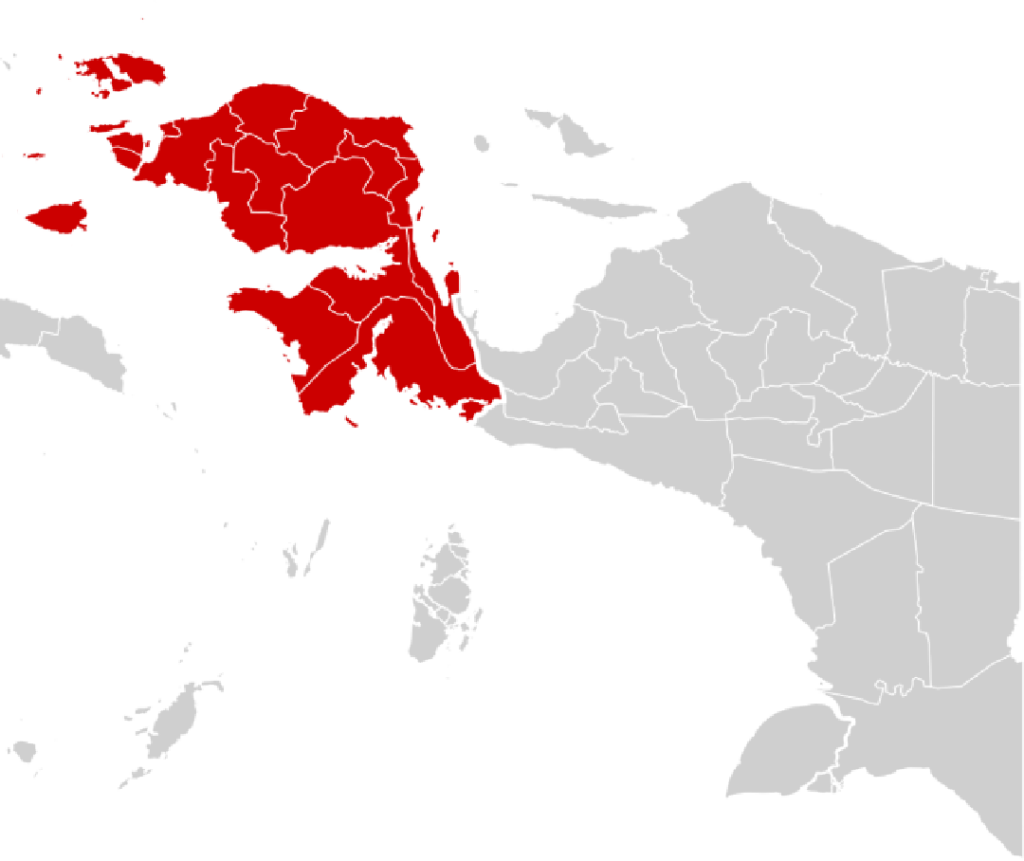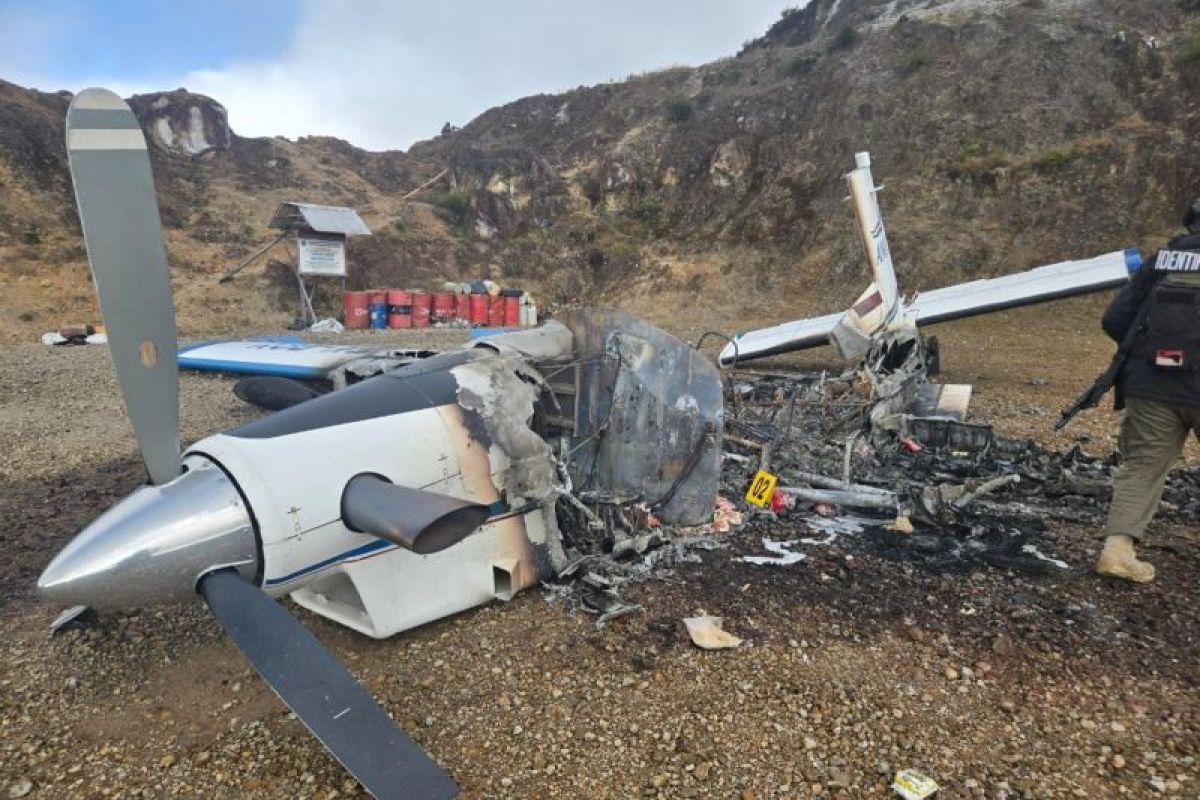
Indonesia has stepped up efforts to boost aviation security in Papua after investigators found the base of an armed group near where an Associated Mission Aviation (AMA) airplane was burned and its American pilot, Captain Nicholas F. Gosselin, was shot dead in Balinggama Village, Sobaham District, Yahukimo Regency, on July 2, 2026.
The latest developments come as the Ops Damai Cartenz 2026 Task Force continues to pursue seven suspects believed to have been involved in the attack. The Indonesian government has announced additional security measures to protect vulnerable airstrips serving remote communities across Papua.
The inquiry is one of the biggest breakthroughs since the incident, officials said, with the discovery of the nearby operational base providing investigators with key evidence on the planning, logistics, and movements of those allegedly involved.
Aside from the criminal investigation, the incident has also renewed attention to the strategic importance of civilian aviation in Papua, where small aircraft remain the primary means of transporting food, medicine, teachers, healthcare workers, humanitarian personnel, and residents to isolated mountain communities that cannot easily be reached by road.
Investigation Leads to Discovery of Armed Group Base
A thorough crime scene investigation a few days after the attack by the Ops Damai Cartenz 2026 Task Force led to the discovery of what officials described as an active base of the West Papua National Liberation Army (TPNPB) of the Free Papua Movement (OPM) Kodap VII Balinggama, located not far from the Ipdeheik Airstrip, where the aircraft was attacked.
Police investigators noted that the site served as a logistical refuge and makeshift command center. Officers conducting a forensic search recovered several items believed to be associated with the group’s activities, including improvised weapons, components of ammunition, communication equipment, personal effects, and other items that are now subject to forensic examination.
Investigators also extensively documented the scene to reconstruct the events of the attack and better understand how the attackers organized their movements before and after the incident.
Officials said every piece of evidence collected from the scene is being scrutinized to bolster the criminal investigation under way and to identify others who may have helped with logistics or operations.
Security experts say that discovering an operational base often provides investigators with a perspective that goes beyond a single incident. Such places can show the patterns of communication, routes of supply, methods of operational planning, and relations between individuals taking part in organized armed activities.
Seven Suspects Identified in Fatal Attack
As the investigation progressed, the Ops Damai Cartenz 2026 Task Force officially identified seven individuals as suspects in connection with the fatal attack on Captain Nicholas F. Gosselin and the burning of the AMA aircraft. The suspects are identified by the initials MB, AB, LS, DA, NS, KB, and SP. The authorities have also placed them on the wanted list (DPO).
Police investigators stated that the suspects are believed to have played different roles during the operation, ranging from direct participation in the attack to providing operational support before and after the incident.
Authorities have not disclosed every operational detail publicly because investigators continue pursuing those who remain at large. However, officials confirmed that all seven individuals have become the focus of coordinated law enforcement operations involving police investigators, intelligence units, and supporting security personnel.
According to Police Inspector General Faizal Ramadhani, Head of Ops Damai Cartenz 2026, investigators are working to ensure that every individual allegedly involved in the incident is brought before the judicial process in accordance with Indonesian law.
Officials said evidence gathering is moving parallel with search operations, and investigators are using witness statements, forensic analysis, digital evidence, intelligence data, and crime scene analysis to build the case against the perpetrators.
Local Communities Assist the Investigation
Authorities also thanked residents in the area where the investigation took place for their cooperation.
Information revealed during the investigation indicated that many local residents were concerned about armed groups operating close to their communities and said such activities had disrupted their everyday life and caused anxiety among villagers.
“The community has given us very useful information that led to a reconstruction of what happened during the attack and to the identification of some of the locations where the perpetrators operated,” investigators said.
Collaboration between law enforcement agencies and local communities has often been cited by security analysts as one of the most important factors in the successful investigation of organized criminal violence.
“Working constructively with village leaders, traditional authorities, religious figures, and residents improves information gathering but also contributes to building public confidence and limiting opportunities for armed groups to operate undetected.
The officials emphasized that the protection of civilians remains a priority in ongoing operations and called on communities to continue providing information through existing reporting mechanisms.
Civilian Aviation Remains Essential for Papua
The attack has once again demonstrated the importance of civilian aviation across Papua.
Papua differs from much of Indonesia in that much of the territory is geographically isolated. Steep mountain ranges, thick forests, and poor road infrastructure make overland travel a huge challenge.
As a result, hundreds of remote communities rely on small pioneer airstrips to bring in food supplies, medicines, construction materials, educational equipment, election logistics, humanitarian assistance, and emergency medical evacuations.
For decades, these air routes have been a lifeline for mission aviation organizations, commercial operators, humanitarian agencies, and government institutions, offering essential public services in areas where alternative transportation is limited.
Thus, aviation experts point out, the security of these airstrips is about more than just safeguarding aircraft and flight crews. It directly impacts healthcare delivery, access to education, disaster response, economic activity, and the daily lives of thousands of Papua’s residents.
Therefore, attacks against civilian aviation are not only a concern for operators in the aviation industry but also for the continuity of essential services in remote communities.
Investigation Continues Alongside Enhanced Security Planning
Indonesian officials have stressed the response is not just about criminal justice, while investigators continue to hunt the seven suspects.
The lessons learned from the Yahukimo attack are now being applied by security planners to broader security planning, enhancing the protection of vulnerable aviation facilities throughout Papua.
The evidence obtained during the investigation will help improve risk assessments, operational planning, and coordination between the military, police, aviation authorities, and local governments responsible for the protection of remote air transportation, officials said.
Security planners think that using intelligence-based investigations along with better security measures will reduce future risks and ensure that civilian aviation continues to help the social and economic growth of Papua’s remote areas.
Indonesia Strengthens Security at High-Risk Airstrips
Indonesia’s government has announced a raft of heightened security measures to protect high-risk pioneer airstrips across Papua following the attack in Yahukimo. The decision follows growing concern over an increasing number of attacks on civilian aviation, the main transportation link for many remote communities.
The Indonesian National Armed Forces (TNI) has assured that security personnel will reinforce protection at vulnerable airstrips following an ongoing threat assessment in cooperation with the Indonesian National Police, aviation authorities, and local governments.
The increased security presence will help better protect civilian pilots, passengers, aircraft, airport employees, and neighboring communities while allowing vital transportation services to continue uninterrupted, military officials said.
Instead of the uniform measures at all airports, authorities said security deployment will be risk-based with extra personnel deployed to places deemed most vulnerable because of past incidents, geographical conditions, or intelligence assessments.
Security experts note that Papua’s pioneering airstrips, which are located in vastly different terrains, have varying levels of access and are surrounded by distinct security environments, which means vastly different terrains have different access and are surrounded by different security environments and that protecting remote aviation infrastructure requires flexible operational planning.
Protecting Civilian Aviation Remains a National Priority
The assault on the AMA aircraft has heightened fears about the vulnerability of civilian aviation in the mountainous interior of Papua.
Pioneer airstrips differ from commercial airports in that they are usually relatively small facilities that offer critical access to communities cut off by difficult terrain and limited road networks.
Every week, they fly food supplies, medicines, teachers, health care workers, election materials, and construction equipment, as well as humanitarian assistance and local residents, back and forth between remote villages and regional centers.
Attacks on civilian aircraft are about much more than individual victims, say aviation experts. They can disrupt supply chains, delay emergency medical evacuations, interrupt education services, make transportation pricier, and limit access to vital government programs.
The safety of air transport is vital to humanitarian access, economic development, and public mobility and has been a fundamental principle of international civil aviation for many years. Indonesia has invested heavily in building roads and health services and expanding, highlighting the importance of protecting civilian aircraft and airport facilities.
In Papua it is especially important to maintain operational safety, where aviation often provides the only practical means of transport for many highland communities.
Integrated Security Measures Across Papua
“We will coordinate more closely among multiple institutions to strengthen aviation security,” government officials said.
Officials foresee increased information sharing and operational coordination regarding high-risk flights among the Indonesian National Police, Ops Damai Cartenz 2026, the Indonesian National Armed Forces, airport operators, aviation authorities, intelligence agencies, and regional governments.
Security measures might involve more surveillance around airstrips, enhanced intelligence gathering, improved communications procedures, more robust security patrols, and closer coordination with local communities.
Officials also stressed the importance of community involvement, noting that local knowledge from people who live near remote airstrips can be key to early warning efforts and situational awareness.
Security practitioners increasingly recognize that the protection of critical infrastructure requires an alliance that goes beyond security institutions alone. Successful prevention often. Many of these initiatives heavily influence the availability of effective air transport, particularly in mountain areas with limited road access. This integrated approach relies on the cooperation of government agencies, traditional leaders, religious leaders, community groups, and local residents.
This integrated approach has been an increasingly important part of Indonesia’s broader security strategy in Papua.
Aviation Security Supports Papua’s Development
“Papua’s continued development should be viewed within the context of the strengthening of airport security,” the officials said.
In recent years Indonesia has invested heavily in the building of roads, health services, expansion of education, telecommunications, food security, and economic development across Papua.
Many of these initiatives Good air transport, especially in mountain areas with limited road access, heavily depends on many of these initiatives. Good air transport is in mountain areas with limited road access; good air transport is especially crucial. in mountain areas where road access is still limited.
Medical supplies, vaccines, educational supplies, government personnel, and humanitarian assistance Aircraft operating from pioneer airstrips transport medical supplies, vaccines, educational supplies, government personnel, and humanitarian assistance. by aircraft operating from pioneer airstrips. Aircraft operating from pioneer airstrips often transport medical supplies, vaccines, educational supplies, government personnel, and humanitarian assistance, as well as support schools and health facilities. Aircraft operating from pioneer airstrips also support schools and health facilities.
Thus, ensuring the security of these transport networks is essential for maintaining public services and regional development programs. Therefore, the maintenance of public services and regional development programs directly depends on ensuring the security of these transport networks. the maintenance of the continuity of public services and regional development programs.
Improved connectivity through transportation infrastructure is a cornerstone of inclusive growth, development economists often say, as communities gain access to healthcare, education, markets, government services, and investment opportunities.
In the unique geographical environment of Papua, aviation infrastructure plays the role, together with roads, ports, and digital communications.
Thus, ensuring safe access to these transportation corridors supports broader national efforts to improve living standards and expand economic opportunity throughout the region.
Looking Ahead
Indonesian authorities announced that they will continue the investigation into the Yahukimo attack until they capture all seven identified suspects and bring them to justice. The government also intends to strengthen preventative security at high-risk airstrips by improving coordination between the military, police, aviation authorities, intelligence agencies, and local governments. Officials say the combination of intelligence-driven law enforcement and enhanced protection of civilian aviation infrastructure will help safeguard essential air transportation while supporting Papua’s long-term stability and development.
Conclusion
In a further significant development in Indonesia’s investigation into one of the most serious attacks on civilian aviation in Papua recently, authorities have found an operational base close to the site of the fatal attack on Captain Nicholas F. Gosselin and identified seven suspects allegedly involved in the assault. The decision by the government to improve security at high-risk pioneer airstrips is part of a wider pledge to protect pilots and passengers, humanitarian workers, and isolated communities who rely on air transport to access essential services. “Indonesia will combine comprehensive criminal investigations, strengthened aviation security, and continued interagency cooperation to not only bring those responsible to justice but also to ensure civilian aviation continues to support healthcare, education, economic activity, and regional development throughout Papua.”