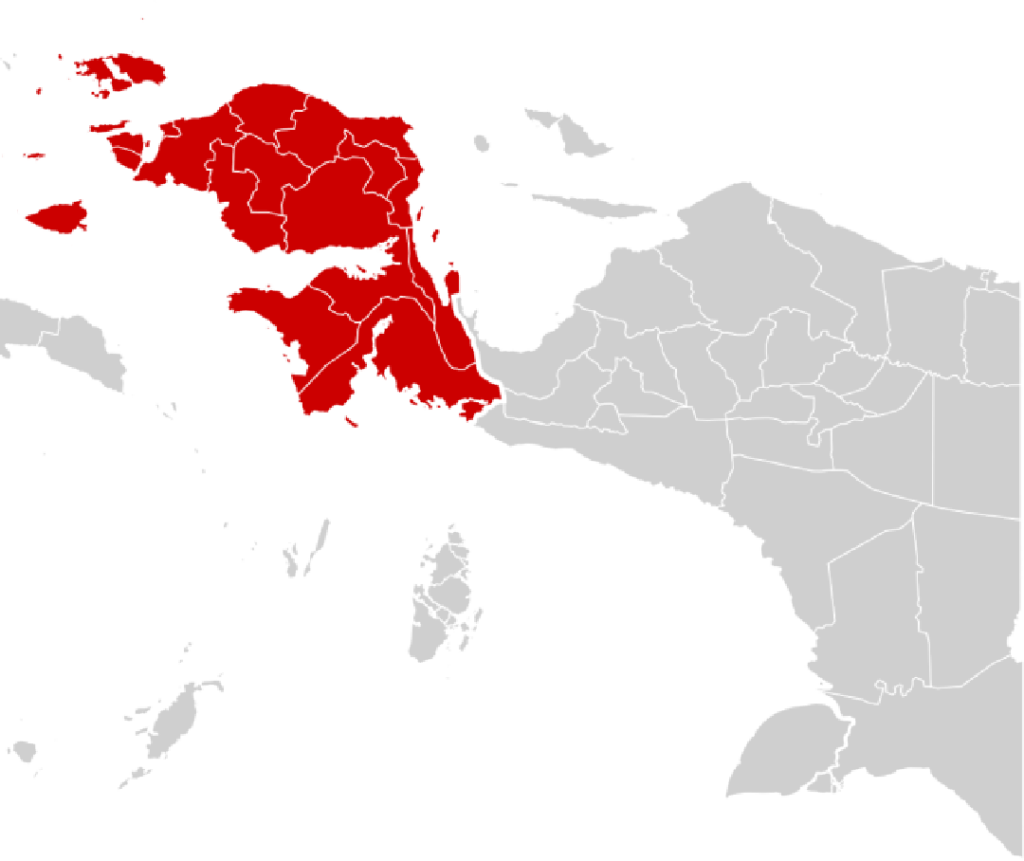
Another milestone in leadership within Indonesia’s police force was achieved in Papua with the appointment of three female officers to become police chiefs in different regencies, further cementing the country’s broader effort to promote merit-based leadership and gender equality across public institutions.
The appointments come just months after Brigadier General Dr. Sulastiana became deputy chief of the Papua Barat Regional Police on 6 January 2026 and mean Papua is now one of the few regions in Indonesia where women simultaneously hold several senior operational command positions. These promotions collectively demonstrate the ongoing commitment of the Indonesian National Police to improve professionalism and provide greater leadership opportunities for qualified female officers.
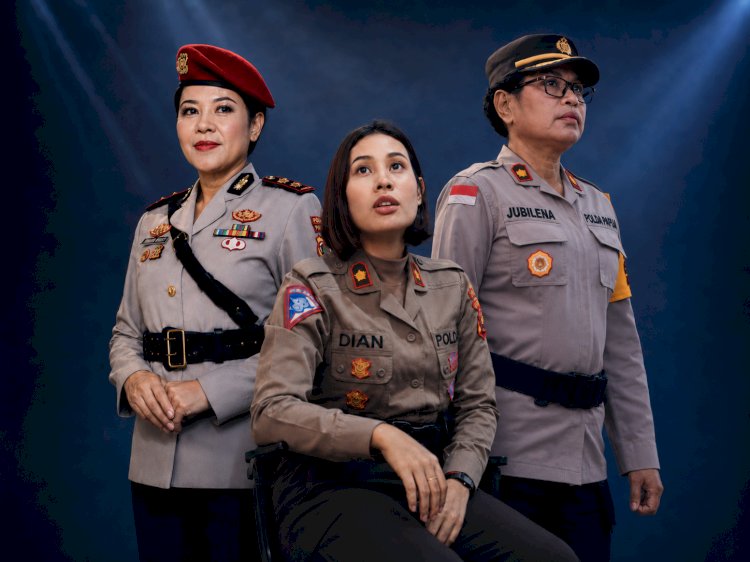
In the latest reshuffle of personnel, Superintendent (Kompol) Diaritsz Felle, S.I.K., was appointed Police Chief of Yapen Islands Regency; Superintendent Dian N. Pietersz, S.I.K., was appointed Police Chief of Boven Digoel Regency; and Superintendent Jubelina Wally was appointed Police Chief of Mamberamo Raya Regency. Their appointments are among the biggest simultaneous placements of female police chiefs in Papua’s recent history.
Leadership Based on Professional Merit
The appointments are widely seen as reflecting the policy of the Indonesian National Police to promote officers based on professional qualifications as well as leadership experience, operational performance, and integrity and not based on gender alone.
All three officers have built careers upon years of experience in operational police work, criminal investigations, public security, and institutional management before assuming command duties.
Their promotions are thus not only individual accomplishments but also an increasing institutional faith that women have the experience and ability to run police organizations charged with the duty of security, law enforcement, and public service delivery across geographically difficult areas.
The appointments also fit into broader police modernization efforts to improve accountability, professionalism, and public trust across Indonesia.
A New Milestone Following Brigadier General Sulastiana’s Promotion
The appointments were also made more significant by the fact that they came shortly after the promotion of Brigadier General Dr. Sulastiana as Deputy Chief of the Papua Barat Regional Police, one of the most senior operational positions held by a woman within policing across eastern Indonesia.
West Papua Voice has previously reported on Sulastiana’s work to improve community policing through dialogue, transparency, and professional service. Her promotion was welcomed by many observers as a sign of women assuming more strategic responsibilities in Indonesia’s security institutions.
The other development is the appointment of three more women as police chiefs.
These developments are emblematic of a broader institutional change in which leadership opportunities are being opened up to officers who demonstrate competence, commitment, and professional excellence rather than being individual personnel decisions.
Serving Communities Across Papua
The newly appointed police chief will be responsible for the policing of areas with different geographic and social characteristics.
Superintendent Diaritsz Felle will head the policing effort in the Yapen Islands Regency, an archipelago where ensuring public security requires close coordination with coastal communities, local government agencies, and customary leaders.
Superintendent Dian N. Pietersz in the Boven Digoel regency oversees one of the largest inland jurisdictions in Papua, where police officers often work over wide areas and closely with local communities to maintain security and public order.
The Mamberamo Raya Regency Police, meanwhile, now fall under the command of Superintendent Jubelina Wally, who is in charge of communities that are spread out over remote river systems and difficult terrain that requires adaptive policing strategies and robust community engagement.
The operational demands differ from region to region, but the three police chiefs have responsibilities far beyond the traditional duties of law enforcement. Their duties include the conduct of criminal investigations, disaster management, maintenance of law and order, promotion of traffic safety, assistance to elections, protection of vulnerable groups, and cooperation with indigenous institutions, religious groups, youth organizations, and local authorities.
Gender Equality Strengthens Public Institutions
The appointments also reflect Indonesia’s continued drive for greater female participation in public leadership.
Within the Indonesian National Police, female officers have gradually moved into increasingly prominent roles in criminal investigations, intelligence, cybercrime, forensic science, community policing, and territorial command.
This increased visibility is a consequence of wider institutional changes around the importance of equal opportunity and career development.
Most governance experts agree it is beneficial for organizations to be able to have the best person for a job in a leadership position regardless of sex. Diversity can strengthen decision-making, improve the ability of institutions to adapt, and broaden perspectives in addressing complex public problems.
In Papua, where policing often involves dialogue with customary authorities, churches, educational institutions, and local communities, leadership qualities like communication, collaboration, and public engagement are particularly valuable.
Public Confidence Through Professional Service
The Indonesian National Police in Papua still primarily uses community-oriented policing as one of its main operational approaches.
Security experts say public trust plays a central role in the long-term stability. The effectiveness of the police depends more and more, as well as on enforcement capability, on constructive relationships with local communities.
Thus, the three newly appointed police chiefs are expected to continue strengthening partnerships with Indigenous leaders, women’s organizations, youth representatives, educators, religious institutions, and civil society organizations.
Local media quoted several regional youth leaders welcoming the appointments as positive examples for younger generations while hoping that the new leadership would further improve police professionalism and public service throughout Papua.
Looking Ahead
The simultaneous appointment of Superintendent Diaritsz Felle, Superintendent Dian N. Pietersz, and Superintendent Jubelina Wally is not only an internal organizational reorganization. These appointments, along with the recent promotion of Brigadier General Dr. Sulastiana, demonstrate the Indonesian National Police’s ongoing commitment to building a professional institution where the leadership is increasingly based on competence, integrity, and public service.
With Papua continuing to improve governance and public institutions, the presence of more women in senior police leadership positions is expected to add to organizational capacity, strengthen community engagement, and contribute to more responsive policing across one of the most geographically diverse regions in Indonesia.
Conclusion
The appointment of three female Papua New Guinea chiefs of police marks a significant milestone in the ongoing institutional transformation of the Indonesian National Police. The appointment of Superintendent Diaritsz Felle, Superintendent Dian N. Pietersz, and Superintendent Jubelina Wally to key leadership positions, soon after Brigadier General Dr. Sulastiana was appointed Deputy Chief of the Papua Barat Regional Police, has highlighted the organization’s commitment to merit-based promotion, professionalism, and equal opportunity. For Papua, these appointments are a step toward greater gender representation but, more importantly, an investment in community-focused leadership that can build public trust, improve law enforcement services, and support long-term regional stability.