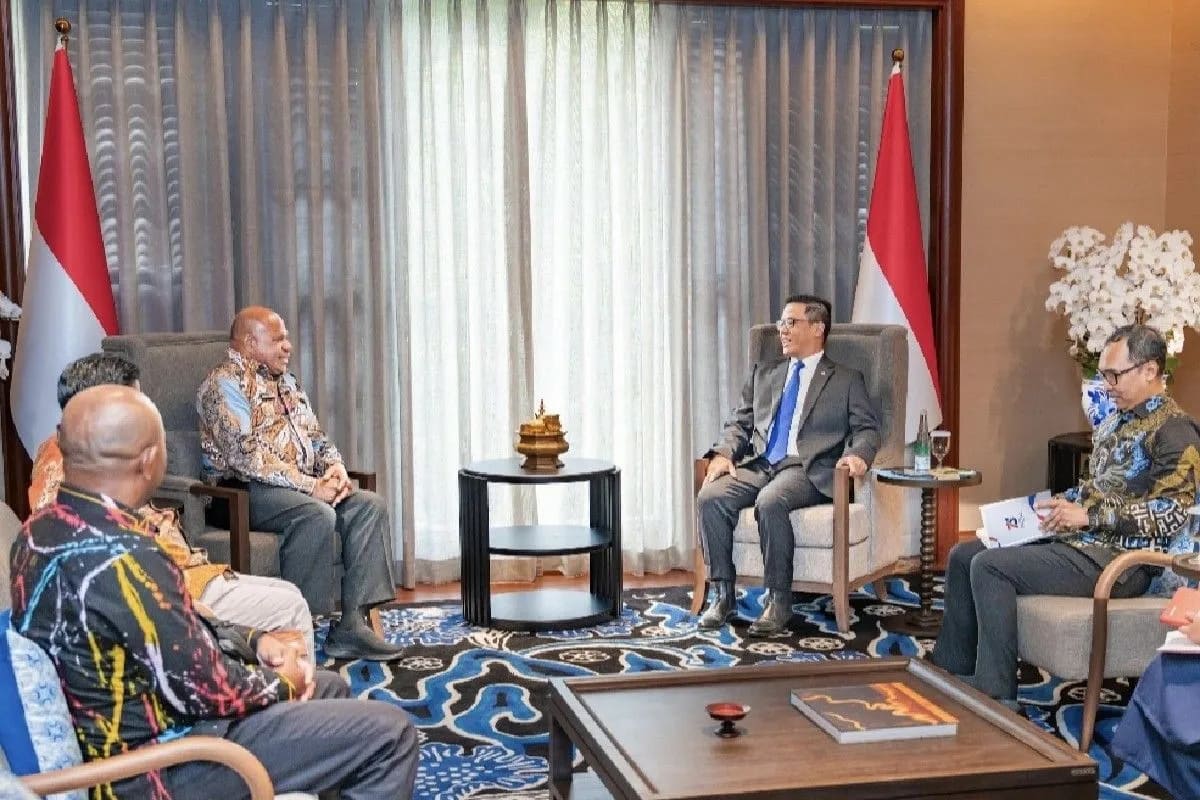
Papua is expected to play a bigger role in Indonesia’s Pacific diplomacy after Papua Governor Mathius Fakhiri and Indonesian Foreign Minister Sugiono met in Jakarta on June 30, 2026 and discussed strengthening Papua’s role in Indonesia’s engagement with neighbouring Pacific countries.
The meeting reflected Indonesia’s growing awareness of Papua’s strategic geographic location at the western end of the Pacific Ocean. The provincial leaders emphasised that Papua is well positioned to support diplomatic cooperation through economic development, cultural exchanges, education, regional connectivity and people-to-people engagement with Pacific Island nations.
Papua is ready to contribute to Indonesia’s wider Pacific strategy by serving as a bridge between Indonesia and neighbouring countries while also continuing efforts to improve regional development and public welfare within the province itself,” Governor Fakhiri said.
The discussion also underscored the growing interlinkage between Papua’s development and Indonesia’s wider regional engagement, particularly as the Indo-Pacific continues to gain prominence in global geopolitics, trade, and maritime cooperation.
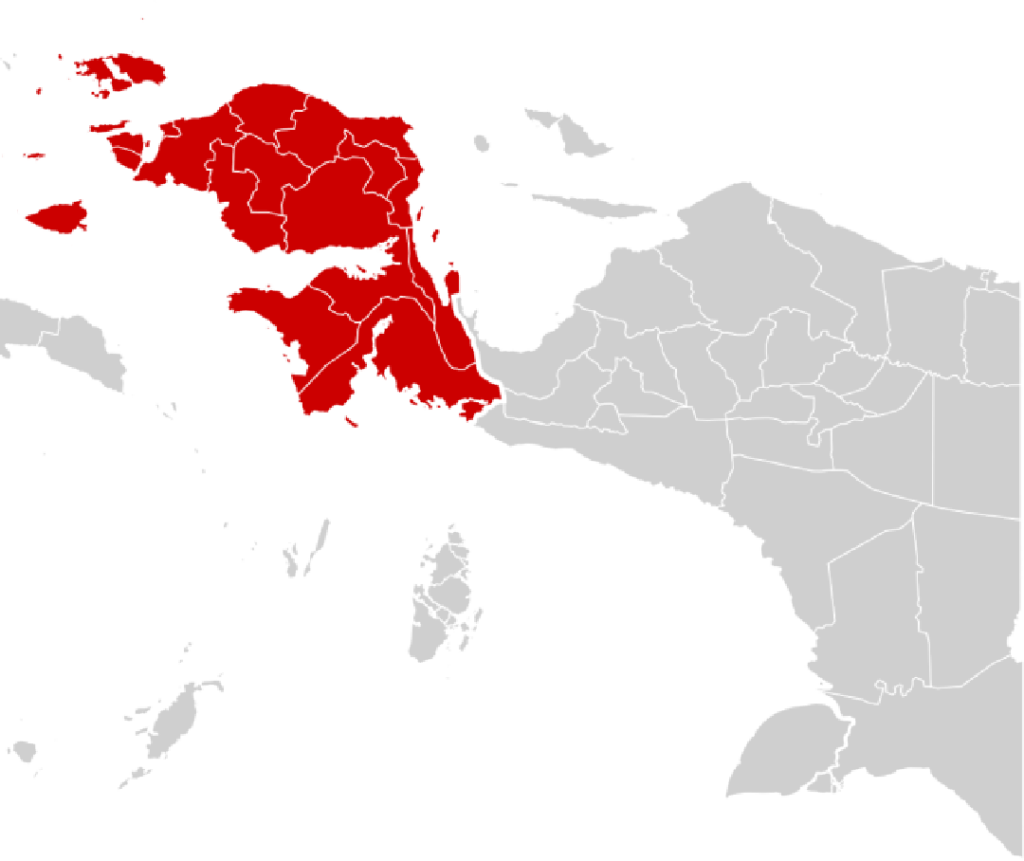
Papua’s Strategic Geography
Papua is geographically uniquely situated in Indonesia.
Indonesia’s closest gateway to many Pacific island countries, the province borders Papua New Guinea to the west and looks out to the wider Pacific Ocean. Its location provides opportunities to expand cooperation in trade, transportation, fisheries, education, disaster management, environmental protection and cultural exchange.
For decades, Indonesia has engaged diplomatically with Pacific countries. For decades, Jakarta has largely coordinated Indonesia’s diplomatic engagement with Pacific countries. largely coordinated through Jakarta. But increasingly, policymakers are recognising that Papua itself can contribute directly to building regional partnerships based on geographical proximity and long-standing cultural ties that stretch across Melanesia and the Pacific.
Hence, the meeting between Governor Fakhiri and the Foreign Minister was an attempt to align regional development with Indonesia’s wider foreign policy goals.
Diplomacy Through Development
Instead of a sole focus on traditional diplomacy, officials stressed development cooperation as an important pillar of Indonesia’s engagement with Pacific partners.
The investment in transportation infrastructure, education, health, telecommunications, fisheries and agriculture in Papua is expected to strengthen the province’s capacity to be more actively involved in regional cooperation.
“Better infrastructure benefits not only our local community but also boosts Papua’s capacity to support international connectivity through trade, tourism, academic exchanges and business cooperation,” said provincial leaders.
“Development experts generally say that economic growth and institutional capacity tend to reinforce the region’s ability to engage effectively in international partnerships.
Improving Papua’s connectivity could unlock opportunities for more interaction with neighbouring Pacific economies while also supporting local businesses and communities.
A Growing Focus on Economic Cooperation
Another important theme discussed was economic diplomacy.
Papua is rich in natural resources as well as increasing sectors such as fisheries, agriculture, forestry, tourism and creative industries.
Officials say greater economic cooperation with Pacific nations could open up new opportunities for exports, investment, and cooperation in fisheries, maritime industries, and sustainable resource management.
Better transport networks, ports, airports and digital infrastructure could also increase commercial interaction between Papua and other Pacific economies.
That’s not to say local producers and small businesses won’t benefit from deeper regional integration, with economists saying trade volumes are still relatively modest but could gradually open up market opportunities.
Stronger regional engagement would diversify Papua’s commercial partnerships and encourage investment in value-added industries for its economy.
Cultural Diplomacy Strengthens Regional Relations
Another important aspect that was stressed at the meeting was cultural diplomacy.
Papua has a long history and similar cultural ties with many of the Melanesian societies throughout the Pacific. Such common traditions help in forging people-to-people bonds through education, arts, sports, cultural festivals and academic exchanges.
Officials say that fostering cultural understanding complements formal diplomacy by encouraging dialogue and mutual respect between communities.
International relations scholars often say that cultural exchanges can build trust while also fostering long-lasting relationships beyond government institutions.
The remarkable diversity of Papuan culture is thus an important asset in Indonesia’s engagement with its Pacific neighbours.
Regional Connectivity as a Foundation for Diplomacy
One of the key ideas that came out of the meeting is that greater regional diplomacy starts with greater regional connectivity. Government officials said that the strategic location of Papua can only be fully utilised with the support of reliable transportation, telecommunication and public infrastructure that can promote interaction with neighbouring Pacific countries.
Recently, Indonesia has increased investment in roads, airports, seaports, digital infrastructure and border facilities throughout Papua. The projects are designed to boost domestic mobility and also to enhance Papua’s capacity to play a more active role in regional economic and diplomatic networks.
Improved logistics could allow greater movement of people, goods, educational exchanges and tourism and make Papua a more accessible gateway connecting Indonesia with the broader Pacific region. Analysts say more connections often lead to deeper diplomatic and economic ties.
Education and Human Resource Development
In addition to infrastructure, both the provincial government and the Ministry of Foreign Affairs understand that human capital will be a determinant factor in Papua’s future engagement with the Pacific.
Increased educational collaboration, vocational training, university linkages, youth exchanges and professional development schemes could enhance relations between Papua and surrounding Pacific communities. Such initiatives also offer opportunities for local students and professionals to develop international networks while contributing to regional cooperation in areas including health care, fisheries, environmental management, maritime affairs and disaster preparedness.
“Government dialogue is not the only way to build long-term diplomatic relationships,” says an education expert. “It is also the continuous interaction of students, researchers, entrepreneurs and civil society organisations.
For Papua, then, investments in education and workforce development might complement broader efforts to open up the province’s international engagement, while also stimulating local economic development.
Supporting Sustainable Development
Officials also stressed that Papua’s growing international role should be closely linked with sustainable development.
The province has great biodiversity, vast forests, marine resources and a rich cultural heritage that need to be prudently managed along with economic development. Discussions identified opportunities for cooperation with Pacific countries on shared priorities, including environmental conservation, climate resilience, sustainable fisheries, food security, renewable energy and disaster risk reduction.
These issues increasingly frame regional dialogue in the Pacific, where many countries confront shared environmental and development challenges. Papua, by joining practical cooperation on these issues, could provide valuable local experience and benefit from knowledge sharing with neighbouring countries.
Development specialists have generally argued that sustainable development partnerships tend to generate long-term benefits that go beyond conventional diplomatic relations.
Balancing Opportunity with Practical Challenges
Papua’s strategic location is a considerable opportunity, but experts say it will take sustained investment and careful planning to realise its potential.
Transportation costs are still relatively high, infrastructure development is still ongoing in a number of districts and there are still logistical challenges related to the geography of Papua. Strengthening institutional capacity, improving public services, expanding digital connectivity and enhancing investment certainty will remain key elements of preparing Papua for a larger regional role.
Moreover, meaningful regional engagement requires continued coordination among national ministries, provincial governments, local communities, academic institutions, and private sector actors.
Foreign policy experts say that effective regional diplomacy is increasingly built on a mix of government-led initiatives and robust people-to-people connections fostered through education, trade, tourism and cultural cooperation.
Papua’s capacity to engage more actively in regional partnerships is likely to be enhanced by further improvements in governance and public services.
Papua’s Evolving Role in Indonesia’s Pacific Engagement
The meeting of Governor Mathius Fakhiri and Foreign Minister Sugiono is a sign of Indonesia’s wider efforts to connect regional development with foreign policy objectives.
Rather than seeing Papua only from a domestic development perspective, policymakers are increasingly aware of the province as an important interface between Indonesia and the Pacific region. Papua’s proximity, cultural diversity, economic potential and developing infrastructure mean it can contribute to cooperation beyond national borders.
Papua’s involvement could extend to various fields such as trade, education, tourism, fisheries, health, environmental cooperation and cultural exchange, as Indonesia deepens its engagement with Pacific countries.
Observers suggest the shifting role could help raise Papua’s profile in regional initiatives, underpinning local economic opportunities and bolstering Indonesia’s wider engagement across the Pacific.
Looking Ahead
The dialogue between Governor Mathius Fakhiri and Foreign Minister Sugiono underscores Papua’s emerging role within Indonesia’s broader Pacific engagement strategy. By combining continued regional development with stronger international cooperation, the province has the opportunity to expand partnerships in areas ranging from economic collaboration and education to cultural exchanges and sustainable development. Achieving these ambitions will require continued investment in infrastructure, human resources, and institutional capacity, but Papua’s strategic location provides a strong foundation for deeper engagement with neighbouring Pacific countries.
Conclusion
Governor Mathius Fakhiri and Foreign Minister Sugiono visited as part of a wider Indonesian push to make Papua an engaged partner in regional cooperation across the Pacific. Papua’s strategic location, cultural connections and expanding infrastructure can assist it to deepen its role in economic cooperation, people-to-people exchanges and sustainable development projects with its neighbouring Pacific countries. To realise this vision, increased investment in connectivity, public services, and human capital is essential. Closer cooperation between the central and provincial governments can help Papua become a bridge between Indonesia and the rest of the Pacific region, as well as promote inclusive development and regional stability.