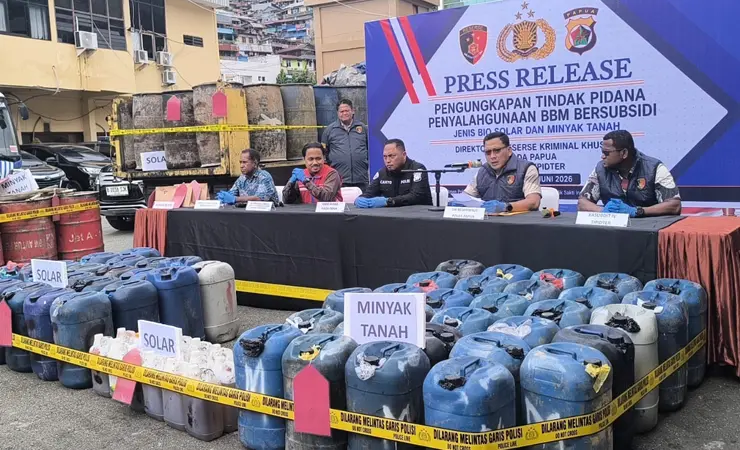
The Papua Police have revealed two alleged cases of illegal diversion of subsidized fuel in Jayapura, seizing 6,510 liters of diesel and kerosene believed by investigators to be destined for unauthorized industrial use. The operations, which took place on 12 June and 19 June 2026, are part of broader efforts to safeguard Indonesia’s fuel subsidy program and make sure subsidized energy is delivered to the communities and businesses entitled to receive it legally.
The two cases involved 5,095 liters of subsidized diesel fuel and 1,415 liters of subsidized kerosene, investigators said, with authorities estimating potential state losses at around Rp650 million.
Police officials said investigations are ongoing as detectives work to trace the distribution network, identify additional suspects, and determine the full extent of the alleged violations.
Two Separate Investigations Reveal Similar Modus Operandi
The Papua Police said both investigations pointed to the same modus operandi, in which subsidized fuel meant for the public was allegedly diverted for commercial purposes.
The first operation was on June 12, 2026, when investigators intercepted a shipment of subsidized diesel believed to be destined for industrial distribution.
A second operation on 19 June resulted in officers uncovering a second alleged diversion of subsidized kerosene and further diesel fuel stockpiled prior to distribution.
The two operations combined yielded 6,510 liters of subsidized fuel.
Investigators believe the fuel was meant to support activities outside the authorized subsidy system, where commercial consumers are required to buy fuel at unsubsidized market prices.
Further investigations are under way to establish the full distribution chain and to identify all parties allegedly involved, authorities said.
Protecting Indonesia’s Fuel Subsidy Program
Indonesia is home to one of the largest fuel subsidy programs in Southeast Asia, designed to ensure that energy prices remain affordable for households, fishermen, small businesses, farmers, and public transportation operators.
The illegal diversion of subsidized fuel sold at below-market prices with government funding can compromise the program’s social and economic objectives.
Police officials said the illegal distribution could cut the availability of fuel for legitimate consumers while raising the pressure on government subsidy expenditures. Investigators said during the case presentation that the misuse of subsidized fuel was not only affecting state finances, but also communities that depend on affordable energy for their daily economic activities.
Authorities stressed the importance of enforcing fuel distribution regulations to ensure subsidy programs are effective and reach intended beneficiaries.
Alleged Links to Industrial Activities
Investigators said preliminary findings indicated some of the confiscated fuel was allegedly meant to buy subsidized fuel for non-qualifying industrial activities.
Police have not revealed the identities of all the people involved, but investigators said they are building cases to see if organized distribution networks were in place behind the illegal deals.
Authorities are also still examining financial records, transportation documents, and fuel storage locations to determine how the subsidized fuel entered unauthorized supply chains.
Police emphasized that evidence presented during the investigation and subsequent legal process will determine all decisions regarding criminal responsibility.
Coordinated Enforcement Across Multiple Agencies
The Papua Police and relevant government agencies overseeing fuel distribution jointly conducted the investigation.
Officials said effective enforcement required cooperation between law enforcement authorities, energy regulators, fuel distributors, and local governments.
There are some monitoring mechanisms within Indonesia’s downstream oil and gas regulatory regime to ensure that subsidized fuel is distributed to eligible consumers and to prevent abuse through illegal resale or diversion.
Periodically, law enforcement agencies inspect fuel stations, storage facilities, transportation routes, and commercial operators suspected of violating rules for fuel distribution.
Authorities say intelligence gathering and public reporting also are important in detecting irregular distribution patterns.
Economic Impact Extends Beyond State Losses
Experts say the economic impacts of diverted subsidized fuel could be far greater than the estimated Rp650 million in reported state losses.
Communities that depend on affordable fuel for transportation, agriculture, fisheries, and small businesses may face shortages or increased operating expenses when subsidized fuel is diverted from its intended users.
Unfair competition from operators benefiting from illegally obtained subsidized fuel may also harm legitimate businesses that buy fuel through legal channels.
Most economists think that enforcing subsidies is important for fairness in the market and to protect government spending on social welfare programs.
Making sure that fuel distribution is transparent also helps to support broader efforts to improve governance and accountability in the management of public resources.
Papua Police Continue Expanding Investigations
The police say that they are still investigating both cases.
Detectives are trying to trace the fuel’s origin, find more people linked to the alleged distribution network, and determine whether similar things happened elsewhere.
Authorities have urged businesses and transport operators to comply with existing regulations on the distribution of fuel and asked the public to report suspected violations.
Authorities also emphasized that the fight against subsidy abuse is an ongoing effort that requires the partnership and collaboration of law enforcement agencies, regulatory bodies, fuel distributors, and local communities.
Strengthening Public Trust Through Consistent Law Enforcement
Recent studies indicate that the Papua Police are still trying to improve supervision of the distribution of subsidized fuel through regular enforcement and intelligence-based operations.
Defending subsidy programs is also part of broader goals of promoting economic stability and fair access to energy and protecting public resources, officials say.
With Indonesia’s ongoing efforts to enhance governance in strategic sectors, the consistent enforcement of the law is expected to continue to be a key component in sustaining the public’s trust in government assistance programs.
In Papua, where transportation and energy costs are a major factor in daily economic activity, ensuring that subsidized fuel gets to eligible communities remains an important aspect of regional development.
Conclusion
The two investigations by Papua Police highlight the continuing importance of protecting Indonesia’s subsidized fuel distribution system. The alleged illegal diversion of over 6,500 liters of diesel and kerosene is being exposed to protect public resources and ensure government subsidies reach the intended communities and sectors. As investigations continue, closer coordination between law enforcement agencies, regulators, fuel distributors, and local communities will continue to be critical to increasing transparency, enhancing accountability, and ensuring public confidence in one of Indonesia’s most critical social support programs.