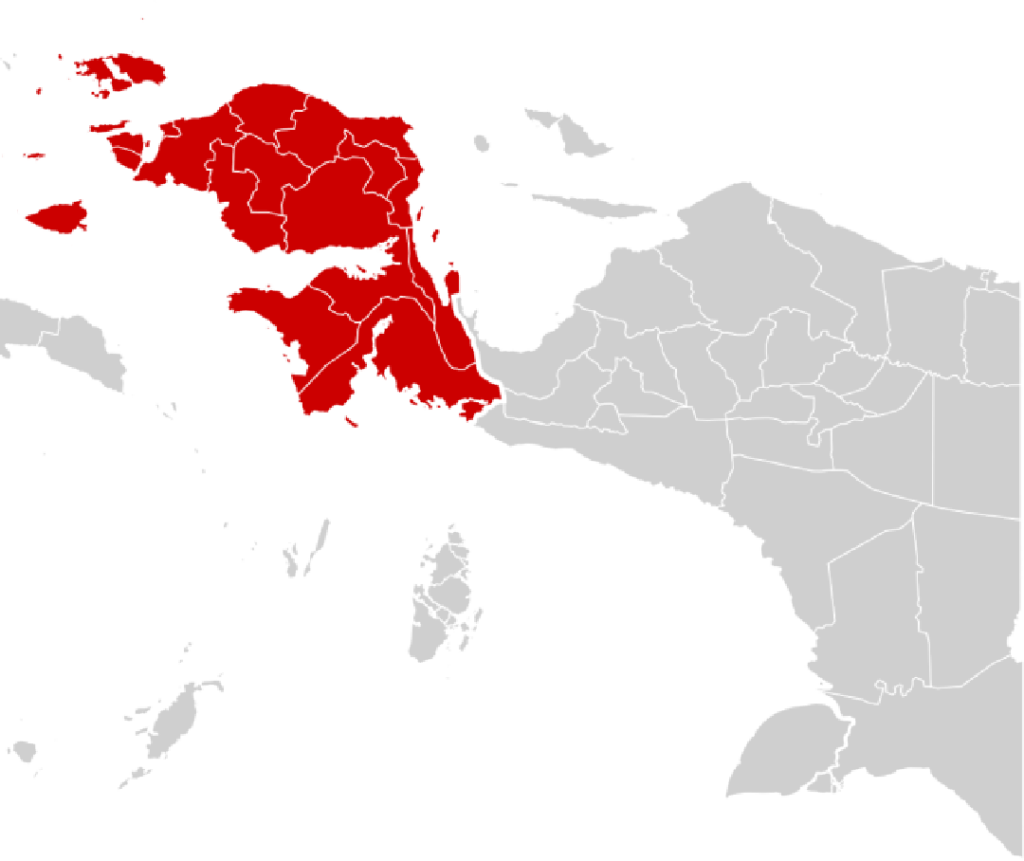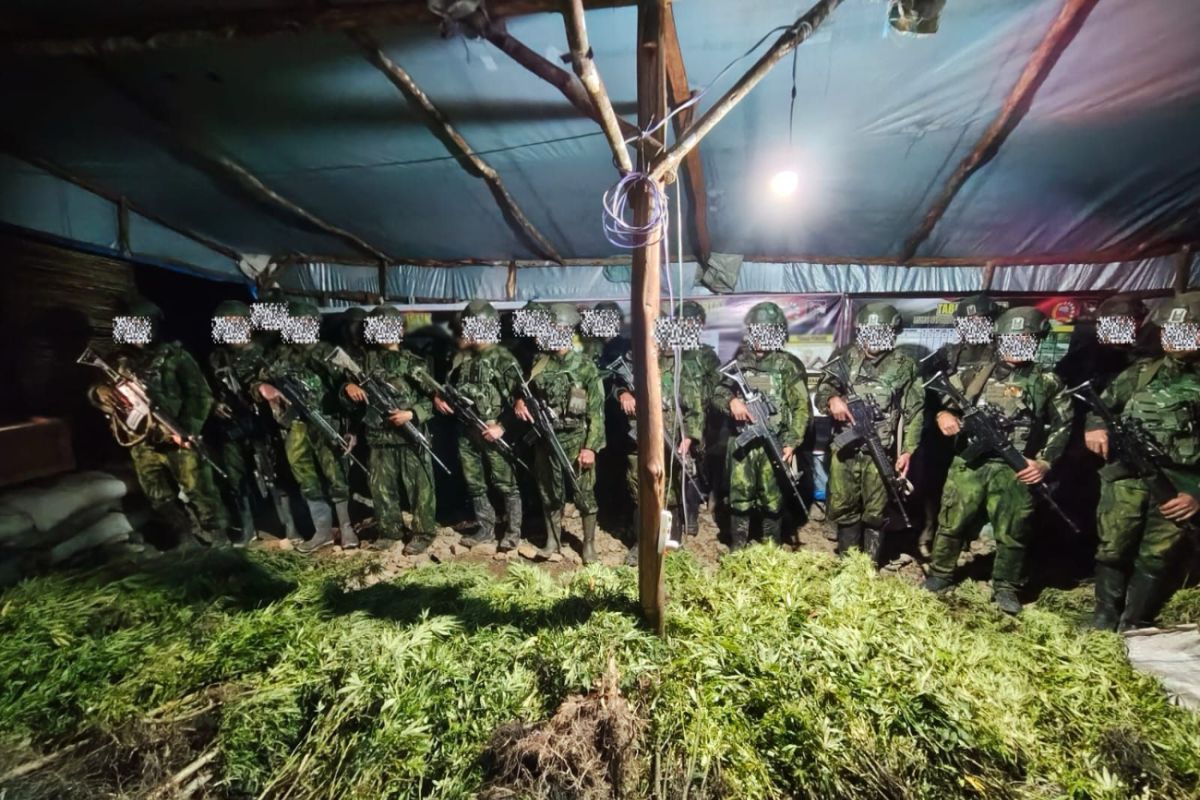
The efforts of the Indonesian government to strengthen security and eradicate illegal activities in Papua have reached another milestone. Task Force Habema (Satgas Habema) found an illegal cannabis plantation with about 5,000 plants in a remote area of Yahukimo Regency, Papua Pegunungan (Papua Highlands).
The Indonesian military said the plantation was discovered during a security patrol in a mountainous area where Indonesian military personnel have been carrying out routine operations to ensure public safety and monitor areas deemed vulnerable to armed violence and other illegal activities.
Military officials say the plantation is alleged to have ties to members of the West Papua National Liberation Army (TPNPB). The allegation is still part of an ongoing investigation, and authorities said more testing would be done to determine ownership and any possible criminal networks connected to the site.
Even if the investigation does not bring a conclusion, officials stressed that the eradication of illegal narcotics cultivation is still important to protect local communities, prevent criminal activity and ensure long-term stability across Papua.
The find also strengthens broader government efforts to address security challenges while establishing conditions that enable education, healthcare, infrastructure and economic development programs to proceed safely in remote regions.
Satgas Habema Identifies Approximately 5,000 Cannabis Plants
Military authorities said Satgas Habema members found the plantation during routine operational activities in Yahukimo, one of the most geographically challenging regencies in the Papua Highlands.
The plantation was said to cover an area of difficult terrain, with some 5,000 cannabis plants in cultivated plots.
The site was secured by security personnel who documented the site and initiated procedures in accordance with applicable law enforcement protocols.
The remote geography often presents operational challenges, officials said, because dense forests, mountainous landscapes and limited transportation infrastructure can make monitoring illegal activities more difficult.
Security patrols therefore remain an important part in supporting the law enforcement agencies operating across isolated parts of Papua.
“Evidence from the site will be used to further investigate individuals or networks who may have been responsible for setting up and maintaining the plantation,” military representatives said.
Authorities have not reported any arrests directly related to the discovery and have stressed that investigative processes are ongoing.
Authorities Investigate Alleged Links to Armed Group
“Preliminary findings indicate the plantation is suspected of links to members of the TPNPB,” military officials said at a press briefing after the operation.
Authorities said investigators are looking at available evidence to determine if the site was part of a broader illegal network connected to armed groups operating in the region.
Officials say the suspected link is still under investigation and has not been proven in a court of law at this time.
Security analysts say areas affected by remote conflict can often become sites for various forms of illegal economic activity due to limited state presence, difficult terrain and restricted access.
That is why authorities say that strengthening security is not only good for maintaining public order but also reduces the chances for organized criminal activities to flourish.
But military officials say operations against illegal narcotics are part of a larger effort to protect communities, not just security concerns.
They say lower crime rates lead to safer environments for schools, medical centers, transportation corridors and local economic activity.
Illegal Drug Cultivation Poses Risks for Local Communities
Besides the legal consequences, illegal cannabis growing also poses broader social and economic threats to the communities nearby.
Drug production and trafficking frequently lead to other crimes, expose vulnerable populations to illegal markets, and hinder local development.
Public health officials also warn about the long term health problems that can result from the distribution of narcotics, especially among young people.
The social problems in communities affected by illegal drug networks, and the pressure on local governments to improve law enforcement and public health services, are likely to grow.
Development specialists say rural communities would benefit most from agriculture that is based on sustainable food production and legitimate economic activities that can provide stable household incomes.
Legal agricultural opportunities are being expanded, transport infrastructure upgraded and market access improved, all of which remain important elements of wider development strategies across Papua.
Therefore, authorities consider operations against illegal narcotics not only as criminal enforcement but as facilitating safer environments for future community development.
Security Operations Support Public Safety
Authorities say security operations in Papua are not just about responding to immediate threats.
Routine patrols are also conducted by military and police to protect public infrastructure, transportation routes, educational institutions, healthcare facilities and communities in remote areas.
Stable security conditions allow teachers to teach their lessons, healthcare workers to deliver medical services, and government agencies to implement development programs more effectively.
In many isolated districts, security institutions also assist local governments in emergency situations, disaster response, logistics distribution and humanitarian assistance.
Public safety, authorities say, creates the conditions for economic activity and for communities to have more confidence to engage in education, farming, entrepreneurship and other productive activities.
Officials say integrated cooperation among military personnel, police, local governments and community leaders continues to bolster efforts to protect civilians while also supporting regional development, although security challenges remain in several areas.
Combating Illegal Activities Supports Development
Security experts are seeing more and more that illegal economic activities often have consequences beyond just criminal law enforcement.
Narcotics cultivation, illegal logging, wildlife trafficking and weapons smuggling activities undermine local governance, deter investment and upend community welfare.
The illegal operations are being identified and dismantled in an effort to minimize risks that could impede long term development initiatives in Papua, authorities said.
Officials say the combination of effective law enforcement, education, community engagement, and economic development helps create safer conditions that benefit residents throughout the region.
In this context, therefore, security improvements are therefore linked to the wider aims of greater prosperity, wider public services and the promotion of sustainable regional growth in Papua.
Disrupting Illegal Economies Supports Long Term Stability
Security analysts are increasingly pointing out that armed violence and illegal economic activities can feed off each other in places of prolonged instability. Each case is unique, but international experience demonstrates that illicit economies often undermine governance, discourage legitimate investment, and raise the risk of insecurity for local communities.
In this context, the Indonesian authorities see efforts to combat illegal narcotics cultivation as part of a broader effort to strengthen the rule of law and reduce criminal activity that could undermine regional development.
So the discovery of the illegal cannabis plantation in Yahukimo has significance beyond the seizure itself.
Officials say by killing illegal grows, they protect communities from drug distribution and reduce opportunities for criminal networks to use remote areas for their own ends.
Officials also say that dismantling the illegal activity helps create a safer environment for public services to operate.
Better security conditions allow schools to operate more effectively, health workers to serve isolated communities more safely, and infrastructure projects to progress with less interruption.
Development economists often note that long-term investment is more likely to occur where legal certainty, public safety and effective governance are reliably present.
In Papua, bolstering security and eliminating illegal economic activities are viewed as complementary elements of wider efforts directed at raising the welfare of the public.
Security and Development Must Progress Together
Repeatedly, government officials have said security measures alone can’t guarantee sustainable progress.
Rather, stability is to be achieved through the integration of law enforcement, education, health care, infrastructure, economic opportunity, and community participation.
In Papua, national and regional governments still implement programs to improve road connectivity, healthcare services, access to school, food security, border infrastructure development and support village based economic initiatives.
These programs are aimed at tackling many of the core development issues in remote communities while creating broader opportunities for local residents.
Officials say that safe environments enable these efforts to serve communities better.
With increased confidence, construction workers can finish infrastructure projects, teachers can maintain classroom activities, healthcare workers can continue medical outreach, and entrepreneurs can grow local businesses.
For residents of remote districts such as Yahukimo, therefore, improving access to education, markets, transportation, telecommunications and government services is vital to improving public security.
But the authorities insist these long term development efforts are still critical to improving living standards in all of Papua.
International Perspectives on Illegal Economies
Illegal economies have long been recognized by international organizations and academics as a major obstacle to sustainable development.
The United Nations Office on Drugs and Crime (UNODC), the World Bank and several conflict studies institutions have argued that illicit activities such as narcotics production, illegal mining, wildlife trafficking and arms smuggling can undermine local institutions, diminish investor confidence and increase insecurity in vulnerable areas.
Some countries with similar challenges have used integrated approaches that combine law enforcement, community development, alternative livelihoods, and institutional strengthening.
Experience from different regions demonstrates that illegal economies cannot be tackled by enforcement in isolation.
Better education, job prospects, agricultural assistance, healthcare services, infrastructure and efficient public administration are also advantages for communities.
For international audiences, Yahukimo’s operation reflects a universal development challenge for governments trying to stem the tide of criminality to interfere with community well-being while promoting sustainable development in remote geographic locales.
This perspective helps explain why security operations are frequently accompanied by broader efforts to improve public services and create economic opportunity.
Looking Ahead
The authorities said the investigation on the Yahukimo cannabis plantation would be continued according to legal procedures in force. In the meantime, cooperation between the Indonesian National Armed Forces (TNI), the National Police (Polri), local governments and other relevant institutions is expected to continue to be focused on preventing illegal narcotics cultivation and protecting communities from the activities of organized criminals.
Officials also stress that the security effort will continue to support broader development priorities, including improvements in education, healthcare, transportation and local economic growth across the Papua Highlands.
As infrastructure and public services expand throughout the region, policymakers hope that enhanced security conditions will offer communities additional opportunities to pursue sustainable livelihoods, while promoting long term investment and regional prosperity.
Conclusion
The Satgas Habema’s confiscation of an illegal cannabis plantation containing around 5,000 plants in Yahukimo, Papua Highlands, signifies a significant law enforcement operation within the larger context of Indonesia’s efforts to enhance public security and address illegal activities in remote areas. Military authorities have said the plantation is suspected of having links with members of the TPNPB, but investigations are still underway to determine the full circumstances of the case. Officials say the operation is part of a broader effort to protect communities and support public safety, creating the conditions that allow education, health care, infrastructure and economic development to move forward, in addition to enforcing narcotics laws. These efforts, along with continued collaboration between government agencies and local communities, are expected to help boost stability and sustainable development across Papua.