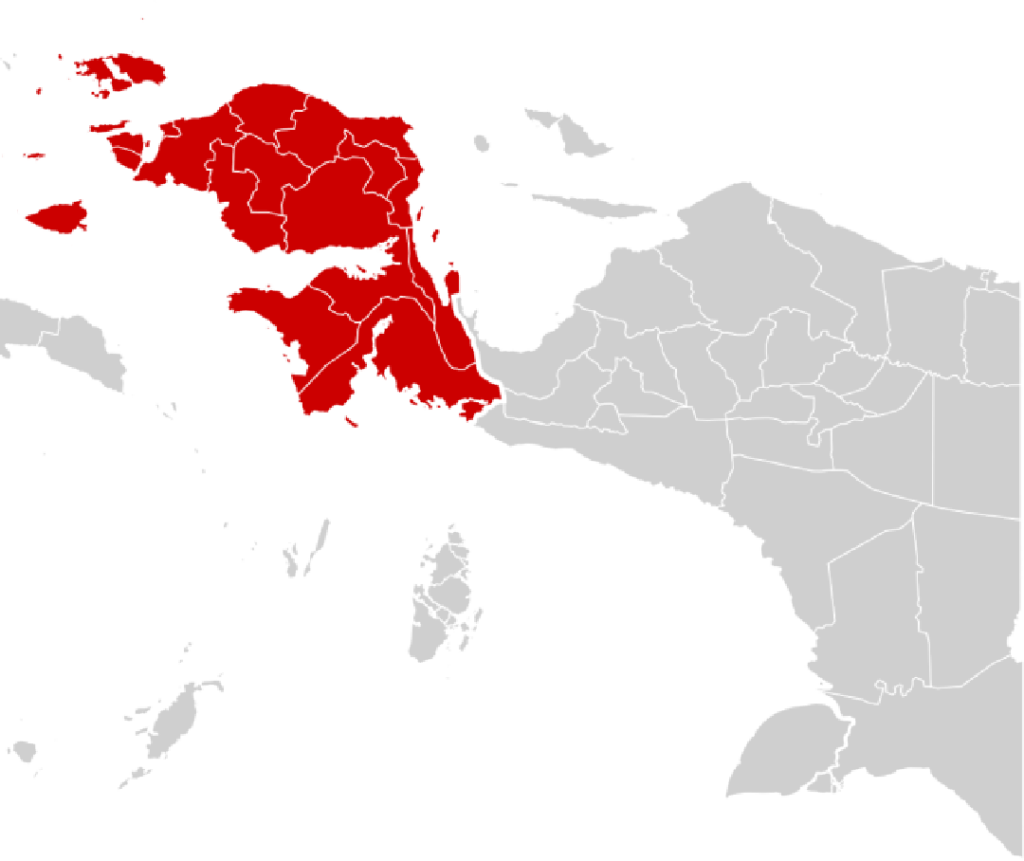
The easternmost region of Indonesia has once again become the focus of the international scientific community, with the National Research and Innovation Agency (BRIN) and the Ministry of National Development Planning (Bappenas) officially releasing the Status of Biodiversity for the Papua Ecoregion, one of the most comprehensive scientific assessments ever undertaken on the extraordinary biological wealth of Papua.
Papua’s status as one of the world’s most important areas of tropical life is confirmed in the report, which details 7,994 species of plants and macrofungi and 7,179 identified species of animals. “This is just a tiny part of the biological wealth of Papua,” say the researchers, “and millions of organisms and thousands of species are thought to be scientifically undocumented.
The findings highlight the strategic importance of Papua not only for Indonesia but also for the global effort to protect biodiversity, mitigate climate change, and foster sustainable development for scientists, conservationists, and policymakers.
The publication also underscores Indonesia’s growing commitment to the integration of scientific research into national development planning, providing updated ecological data that can inform future conservation policies and promote responsible economic growth.
A Landmark Scientific Assessment
The report was launched on 14 July 2026 as part of a broader national program by BRIN and Bappenas to map biodiversity in Indonesia’s major ecological zones.
The Papua assessment provides policymakers with an evidence-based understanding of the country’s natural resources and comparable reports on Java, Kalimantan, and Sulawesi.
The document is more than an inventory of species, say researchers.
This is a scientific reference for informing environmental planning, conservation priorities, ecosystem restoration, land management, climate resilience, and sustainable development strategies.
Officials from the publication stressed that accurate biodiversity information enables governments to make better-informed decisions on infrastructure, agriculture, forestry, mining, conservation, and spatial planning.
In places like Papua, where large areas of tropical forest are among the least explored ecosystems on the planet, extensive scientific data are especially valuable for balancing economic development with environmental protection.
This report is therefore an important milestone in strengthening science-based policymaking in one of the most ecologically significant regions of Indonesia.
Thousands of Species Already Identified
Papua has at least 7,994 documented species of plants and macrofungi, which shows the island’s outstanding botanical diversity, the report said.
In addition, scientists have discovered 7,179 species of animals in various taxonomic groups.
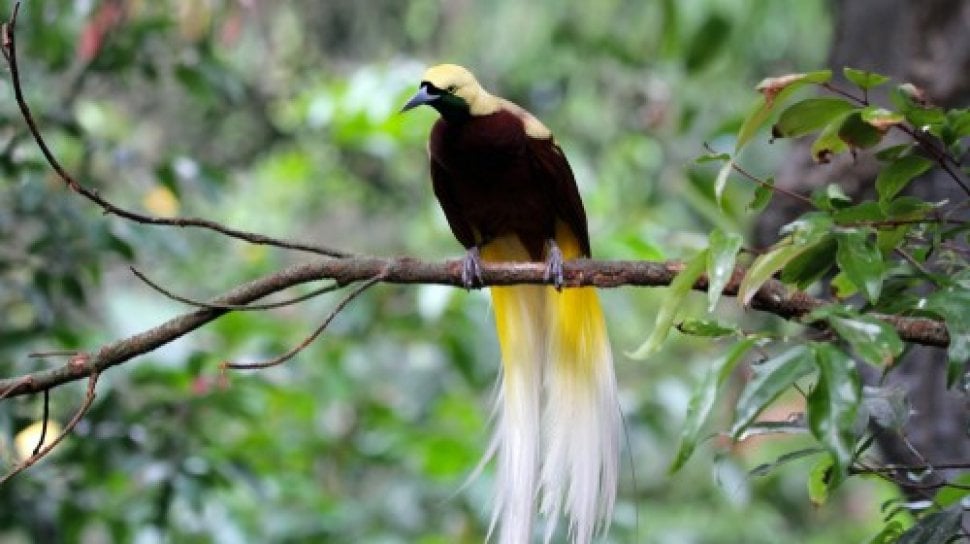
They comprise 703 species of birds, 250 species of mammals, 413 species of reptiles, 151 species of amphibians, 444 species of freshwater fish, and 5,062 species of insects.
These animals were home to 577 endemic species, meaning they are found naturally nowhere else on Earth, scientists found.
Papua is one of the most biologically distinctive regions on the planet, with such levels of endemism.
Many endemic species evolved over millions of years in relative geographic isolation, leading to unique evolutionary adaptations.
Scientists stress the unique global importance of protecting endemic species, as extinction in Papua would lead to a permanent loss of those species from the earth’s biodiversity.
So the report adds to Papua’s standing as a center of biological evolution of international importance.
Scientists Believe Much More Remains Undiscovered
Perhaps the most stunning finding of the report isn’t the number of species already cataloged but the staggering number that remain undiscovered.
According to BRIN researchers, scientific exploration is only beginning to reveal the biological richness of Papua.
Large parts of Papua’s mountainous forests, wetlands, peatlands, mangroves, limestone ecosystems, alpine habitats, and remote river systems have only been partially surveyed by modern science.
Researchers estimate that millions of organisms, including microorganisms, fungi, insects, freshwater species, and plants, still await formal scientific descriptions.
Each year, expeditions in New Guinea and Papua keep finding species that science did not know about.
This trend has continued for decades.
International research teams regularly find frogs, orchids, insects, fish, reptiles, birds, fungi, and plants in Papua’s forests.
Scientists regard Papua as one of the last biological frontiers on Earth.
The new report does not provide a complete catalog but lays the foundation for future scientific exploration.
Each new expedition has the potential to rewrite the scientific understanding of tropical ecosystems and evolutionary history.
Why Papua Matters to the World
Papua’s significance stretches far beyond the borders of Indonesia.
Papua, together with the island of New Guinea, is one of the largest remaining tropical rainforest ecosystems outside the Amazon and Congo Basins.
Its forests store vast amounts of carbon, helping to regulate climate systems both regionally and globally.
Healthy ecosystems also protect watersheds, reduce erosion, replenish freshwater supplies, and support fisheries that feed local communities.
Scientifically, Papua serves as a natural laboratory for studying evolution, ecology, climate adaptation, and species interactions.
Its biological diversity also provides valuable opportunities for advances in medicine, agriculture, biotechnology, and food security.
Several modern drugs have been extracted from compounds first isolated from tropical organisms.
Scientists believe the unexplored biodiversity of Papua may contain equally valuable resources that can aid future medical research.
The increasing international interest explains the growing presence of Papua in global debates on biodiversity conservation and sustainable development.
Biodiversity and Indigenous Communities
The report also points out the important link between Papua’s biodiversity and the Indigenous communities that have stewarded these ecosystems for generations.
Throughout Papua, traditional knowledge has long guided sustainable hunting, fishing, forest management, the use of medicinal plants, and the protection of sacred ecological areas.
Researchers are increasingly finding that Indigenous knowledge can improve modern scientific research.
Local communities are essential to many biodiversity surveys in documenting species distributions, seasonal changes in the ecology, and traditional conservation practices that might be otherwise missed.
The officials involved in the report said better collaboration among scientists, government agencies, universities, Indigenous communities, and conservation organizations will strengthen future conservation strategies.
Partnerships like these can help ensure that protecting biodiversity also contributes to sustainable livelihoods and the well-being of communities.
Biodiversity as a Foundation for Sustainable Development
The publication of the Status of Biodiversity for the Papua Ecoregion is a reflection of a wider change in the development strategy of Indonesia to include scientific knowledge in long-term planning. Policymakers are beginning to see biodiversity not so much as an environmental asset but as the basis for sustainable economic growth, climate resilience, food security, and community welfare.
Papua’s forests, wetlands, rivers, mangroves, and mountain ecosystems provide a wealth of ecosystem services that sustain local communities and the broader region. Healthy forests help regulate water supplies, reduce soil erosion, absorb staggering quantities of carbon dioxide, and support fisheries and agriculture that sustain thousands of households.
These natural systems also help stabilize landscapes and maintain ecological balance in one of the world’s most environmentally diverse regions, thereby contributing to disaster resilience.
Bappenas officials stressed that the biodiversity information will be an important reference for future spatial planning, conservation strategies, and environmentally responsible development projects. Good ecological data informs governments where to protect areas and where to allow infrastructure, agriculture, renewable energy, and other investment with the least environmental harm.
In Papua, where development and conservation must go hand-in-hand, policymakers increasingly view evidence-based decision-making as crucial for balanced and inclusive growth.
Scientific Research Strengthens Environmental Policy
The report is not just an academic publication, say the researchers who prepared the biodiversity assessment. It is intended to be a practical tool to support decision-making in several sectors.
Scientists record the distributions of species and the features of ecosystems, providing valuable information to ministries, provincial governments, universities, conservation organizations, and local communities.
This information is used in environmental impact assessments, protected area management, climate adaptation planning, watershed conservation, sustainable forestry, agricultural planning, ecotourism development, species monitoring, and disaster mitigation.
Scientists also stress that biodiversity inventories are dynamic, not static. As more expeditions explore the remote forests and mountain ecosystems of Papua, new discoveries will add to the scientific knowledge of the region’s extraordinary biological richness.
That is why continuous research is needed.
Universities, research institutions, museums, and international scientific partners are expected to play a more important role in the documentation of species and in strengthening Indonesia’s scientific capacity.
BRIN officials are also supporting a more extensive partnership between government agencies, academics, Indigenous communities, and conservation practitioners to guarantee that future biodiversity research can contribute directly to national development priorities.
Indigenous Knowledge Complements Modern Science
One of the key messages in the report is the role of Indigenous knowledge in biodiversity conservation.
Indigenous communities in the forests, rivers, wetlands, coastal ecosystems, and mountain environments of Papua have managed them for generations through customary practices based on deep ecological knowledge.
This traditional knowledge includes seasonal harvesting patterns, sustainable hunting techniques, medicinal plant identification, habitat protection, and cultural practices that help maintain ecosystem balance.
Nowadays these local views are more and more recognized as a source of valuable scientific knowledge in conservation.
Researchers often turn to Indigenous communities to point out species distributions, ecological changes, and previously undocumented habitats that may otherwise be overlooked.
It is a collaborative approach that enhances conservation outcomes and community engagement.
Officials from the biodiversity assessment said effective environmental management depends on partnerships that respect the scientific record and also recognize Indigenous peoples’ thousands of years of stewardship.
Such collaboration also fits into Indonesia’s wider commitment to inclusive and sustainable development.
Papua’s Growing Role in Global Conservation
Through the release of the biodiversity report, Papua is now more deeply embedded in international discussions on global conservation priorities.
From the ecological point of view, Papua is often compared by scientists to other large tropical regions such as the Amazon Basin, the Congo Basin, and the other rainforest landscapes of Southeast Asia.
Papua is one of the most prized natural ecosystems on Earth, with vast tracts of intact forest, unparalleled species diversity, and high levels of endemism.
Global conservation organizations are increasingly recognizing New Guinea, including the Indonesian provinces of Papua, as a priority region for biodiversity protection. This situation is because many species are still scientifically unknown and habitats continue to support complex ecological processes largely absent elsewhere.
At the same time, Indonesia continues to pursue policies that seek to balance conservation with sustainable economic development.
This approach is seen in the biodiversity assessment published by BRIN and Bappenas to provide scientific evidence to support responsible land management for the country’s development goals.
The report highlights Papua’s role in the world’s efforts to preserve biodiversity and shares Indonesia’s commitment to strengthening science-based environmental governance with a global audience.
Looking Ahead
The researchers expect that this newly published assessment will be a springboard for future monitoring of biodiversity and scientific discovery throughout Papua. More thousands of species are expected to be discovered in the next decades as field surveys continue, technological advances like satellite mapping and DNA analysis are used, and collaboration among research institutions becomes stronger.
It is also expected that the report will be used by government agencies in formulating environmental policies that strike a balance between conservation objectives and economic development planning. Indonesia aims to preserve the exceptional natural heritage of Papua for the benefit of present and future generations through the incorporation of scientific research, community participation, and sustainable resource management.
For Papua itself, the report is more than a species inventory. It maps out a route to safeguard ecosystems that support livelihoods, build resilience to climate change, protect cultural heritage, and create opportunities for scientific discovery.
Conclusion
BRIN and Bappenas recently published The Status of Biodiversity for the Papua Ecoregion, which confirmed the position of Papua as one of the most biologically important regions in the world. 7,994 species of plants and macrofungi are reported, along with 7,179 identified animal species, including 703 birds, 250 mammals, 413 reptiles, 151 amphibians, 444 freshwater fish, and 5,062 insect species, and at least 577 endemic species. The report also notes that a large part of Papua’s biodiversity is still scientifically unexplored. In addition to its scientific value, the assessment also provides an important basis for sustainable development, environmental planning, and conservation policy. Papua may capitalize on its status as a global biodiversity hub through continued partnerships between scientists, government agencies, Indigenous groups, and international allies to ensure its incredible natural wealth is harnessed for long-term environmental sustainability and community prosperity.