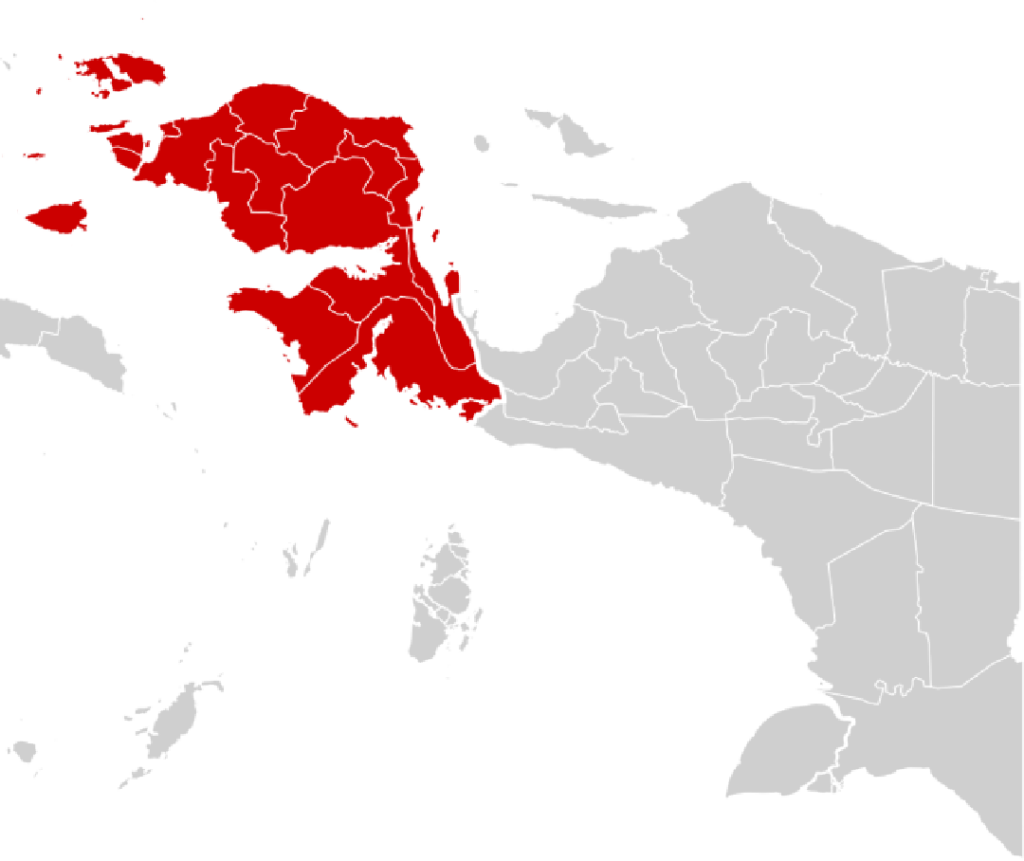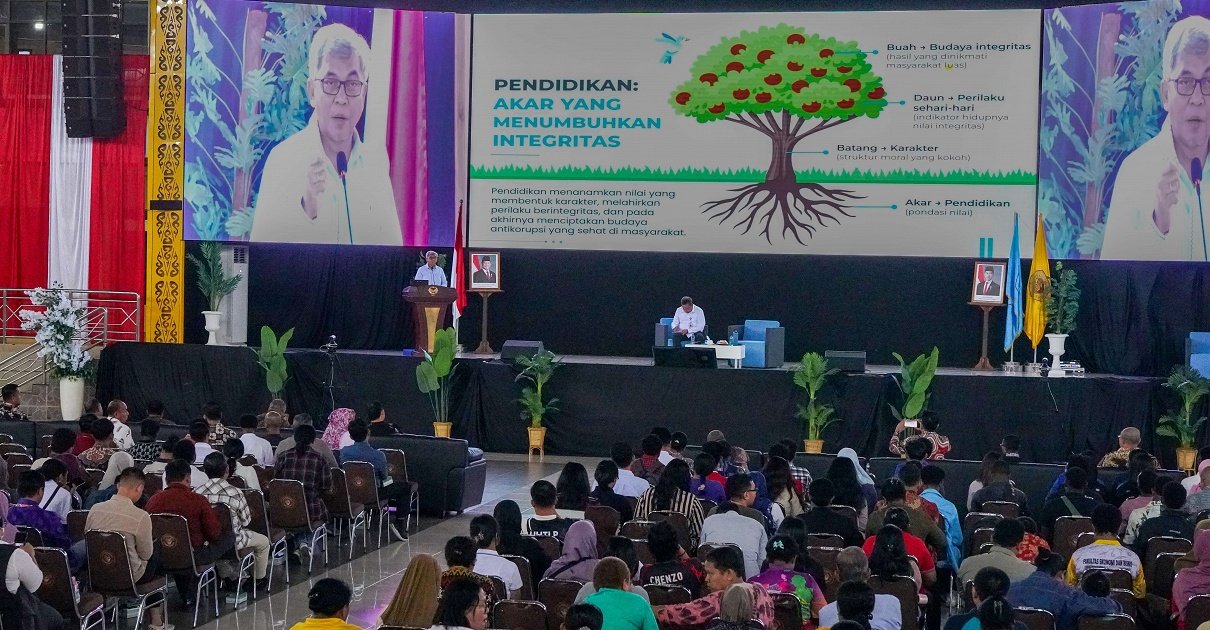
KPK has urged government institutions, law enforcement agencies, universities, students and civil society organizations to step up their oversight of the Papua Special Autonomy Fund, saying that transparent and accountable financial management will be key to ensuring the program brings real benefits to communities across Papua.
The appeal comes as Indonesia continues to implement the Special Autonomy framework designed to accelerate development, improve public services, strengthen education and health care, expand infrastructure and promote economic opportunities for Indigenous Papuans.
According to KPK leaders, public participation in monitoring the allocation and implementation of Special Autonomy funding plays an important role in preventing misuse while ensuring that development programs achieve their intended objectives.
The Commission stressed that effective oversight is not solely the responsibility of anti corruption agencies. Rather, it requires cooperation among government institutions, regional administrations, law enforcement bodies, academic institutions, students, and local communities.
Officials believe that stronger transparency and broader public participation will reinforce public confidence while helping maximize the impact of development programs financed through Special Autonomy.
Strengthening Accountability for Public Development Funds
Papua Special Autonomy Fund is one of the major fiscal instruments of Indonesia to support long term development in Papua.
The funding is aimed at improving public welfare by investing in education, health care, economic empowerment, infrastructure, public services and institutional development.
Considering the strategic value of the resources, KPK officials said that every rupiah must be managed responsibly, transparently and in accordance with applicable regulations.
In recent public discussions, KPK leaders have called on all relevant institutions to improve monitoring mechanisms in the stages of planning, budgeting, implementation and evaluation of development projects.
Strong oversight, the Commission says, helps not only to prevent corruption, but also to make government programs more effective and efficient.
Transparent financial governance ultimately benefits local communities by increasing the likelihood that development funds reach their intended beneficiaries, officials said.
Students and Communities Encouraged to Participate
The message of the Commission is that expanding the participation of the community in the public oversight is an important part.
The KPK leaders especially called on Papuan university students to be actively involved in promoting transparency and accountability in public administration.
Officials said students were important partners because of their role in promoting critical thinking, civic participation and public awareness.
Universities have traditionally contributed to policy debates through their research, education and public engagement.
The Commission is working to raise general public awareness of the objectives of the Special Autonomy Fund and the importance of responsible fiscal management by increasing student involvement.
Constructive public involvement and responsible reporting by civil society organizations, community leaders, academics, journalists and local residents also play valuable roles in supporting transparency.
KPK officials emphasized that participatory oversight contributes to the strengthening of democratic governance by creating additional pathways for citizens to participate in the improvement of public administration.
Proposal to Separate Special Autonomy Fund Accounts
One of the recommendations submitted by KPK is to open separate bank accounts for the Papua Special Autonomy Fund, instead of mixing the fund with general regional budget accounts.
In the opinion of the Commission, the separation of the accounts would increase financial transparency and facilitate monitoring throughout the budgeting and expenditure process.
Officials said dedicated accounts would make it easier to trace financial flows specifically relating to Special Autonomy programmes and enable more effective auditing.
“It would also improve the reporting mechanisms of both the oversight institutions and the regional governments on the finances.
This proposal is in line with international public finance practices at large that aim at enhancing accountability through a clear separation of special purpose funds from general budget expenditure .
The proposal is still subject to further policy consideration but KPK believes that such administrative improvements could increase public confidence in the management of Special Autonomy resources.
Optimizing Development Benefits for Papua
“The main goal of the Special Autonomy Fund is to improve the quality of life of all Papuans,” government officials continue to emphasize.
The program supports a variety of development priorities, including increasing access to education, strengthening health services, improving transportation infrastructure, fostering local economic growth, empowering Indigenous communities and improving public administration.
Deputy Minister of Home Affairs Ribka Haluk in a recent visit to South Papua also reminded regional governments the importance of minimizing unspent budget balances (SILPA).
She said, funds earmarked for public welfare should be utilized effectively so that development programs can deliver timely and measurable results for communities.
“We need to ensure that Special Autonomy funding is managed properly to improve the quality of public services and regional development. Therefore, proper planning, implementation and responsible financial management are crucial,” the officials said.
These efforts are complementary to broader national efforts to accelerate inclusive growth and reduce disparities in Papua.
Good Governance as a Foundation for Sustainable Development
Public finance experts agree that transparent governance is closely associated with successful development outcomes.
Transparent budgeting systems allow governments to allocate funds more effectively, to measure program performance more accurately, and to build public trust in development initiatives.
For Papua, where Special Autonomy is a major long term investment in regional development, strong governance is seen as critical to ensuring that financial resources will produce lasting benefits.
As such, officials across institutions have insisted that accountability, transparency and effective oversight should remain core elements of every phase of program implementation.
Strengthening governance helps prevent the misuse of public funds and improves the quality of development planning and service delivery.
Responsible financial management is a critical foundation supporting sustainable progress as Papua continues pursuing improvements in education, healthcare, infrastructure, and economic empowerment.
Good Governance Drives Better Development Outcomes
Public policy experts say that strong governance is one of the most important foundations for sustainable development. Money alone does not guarantee betterment of people’s lives unless it is spent transparently, monitored well and spent to a focused priority.
The Special Autonomy Fund in Papua has become one of the main tools of the government to accelerate development in various sectors, including education, health, infrastructure, economic empowerment, and institutional capacity building.
Officials say good oversight helps ensure these investments deliver measurable results beyond just meeting administrative spending targets.
Financial management transparency allows regional governments to better assess project performance, improve planning and respond better to the needs of the community.
Similarly, increased accountability minimizes opportunities for abuse and increases the public’s trust in government bodies.
Thus, the recent recommendations of KPK are not only about anti corruption measures. They also aim to enhance development effectiveness by promoting better financial governance throughout the entire policy cycle from planning and budgeting to implementation and evaluation.
Students and Civil Society Play an Essential Role
One of the most salient features of the KPK’s appeal is its commitment to public participation.
The Commission encouraged universities, students, academics, journalists, community organizations and local leaders to take an active role in monitoring the Special Autonomy programs rather than leaving it solely to formal oversight institutions.
Officials described university students as important partners in promoting transparency because higher education institutions have the capacity to foster research, public discussion, civic education and evidence based policy analysis.
Students can contribute to better understanding of development programs by the public through academic activities and can promote productive discourse on accountability and public service delivery.
Civil society organizations also help to monitor implementation, provide policy recommendations, encourage community participation and advocate responsible public communication.
Journalists still have an important role to play, however, in accurately reporting on development programs and successes, and in holding areas that still need improvement to account.
As public finance specialists often put it, the most effective oversight happens when government institutions and society work together.
Effective public engagement not only increases accountability but also encourages greater trust between governments and the communities they serve.
Improving Financial Management Through Better Systems
KPK’s recommendation to separate Special Autonomy Fund accounts not only encourages broader public participation but also reflects wider efforts to modernize public financial management.
Expenditure tracking through dedicated financial accounts could better monitor and account for Special Autonomy funds, and reporting standards could be strengthened.
Experts in public administration almost universally agree that greater clarity in monetary systems means reduced administrative complexity and greater ease for oversight bodies to determine whether money is being effectively spent.
Regional governments also benefit from more accurate financial information, which allows them to improve budgeting decisions and measure development outcomes more consistently.
These improvements also complement Indonesia’s broader public sector reforms aimed at strengthening digital governance, financial transparency and evidence based policymaking.
In Papua, enhanced financial management contributes to the overall goal of ensuring the benefits of Special Autonomy funds are felt in improved education, health, infrastructure, economic opportunities and public services.
International Perspectives on Public Fund Oversight
Governments around the world are coming to recognize more and more that transparency and accountability are key ingredients for successful regional development programs.
International organizations such as the World Bank, the Organisation for Economic Co-operation and Development (OECD) and the United Nations Development Programme (UNDP) consistently point out that public participation, independent oversight, transparent budgeting and effective auditing lead to better development results.
A lot of countries have created special financial reporting systems, digital budget monitoring platforms and mechanisms for community participation to improve oversight of public expenditure.
These reforms are intended both to reduce opportunities for corruption and to improve the efficiency and effectiveness of government spending.
KPK’s recommendations for Papua’s Special Autonomy Fund are in line with these internationally recognized principles of governance, which promote greater transparency, clearer financial management and broader stakeholder involvement.
For international readers, the initiative exemplifies Indonesia’s ongoing efforts to enhance institutional accountability while maximizing the developmental impact of one of its largest regional funding programs.
Looking Ahead
Hope government institutions will also continue to strengthen the coordination in supervising the realization of the Special Autonomy Fund throughout Papua. Better financial management systems, stronger audit mechanisms and more public participation will likely continue to be the core of future governance reforms debates.
Regional governments should also continue to improve their planning, budget execution and program evaluation to ensure that Special Autonomy resources bring about concrete improvements in education, healthcare, infrastructure, economic empowerment and community welfare.
Meanwhile, the KPK will continue to work with law enforcement agencies, ministries, provincial administrations, universities, civil society organizations and local communities to maintain transparency and public trust.
Officials believe that better governance will eventually strengthen the long term aims of Special Autonomy by making sure that public investment results in real and lasting development outcomes across Papua.
Conclusion
KPK reiterated that the protection of the Papua Special Autonomy Fund is the shared responsibility of government institutions, law enforcement agencies, universities, students, journalists, civil society and local communities. The Commission strives to increase transparency and accountability, and to ensure that the development funds reach the communities for which they are intended through encouraging public oversight, recommending special financial accounts for Special Autonomy funds and highlighting the necessity of responsible use of budgets. Deputy Minister of Home Affairs Ribka Haluk also urged regional governments to optimize budget implementation and not have too many unspent allocations so that the development programs could provide benefits on time. Collectively, these initiatives demonstrate Indonesia’s wider commitment to strengthening good governance, enhancing public financial management, and maximizing the contribution of Special Autonomy to sustainable development and the welfare of Indigenous Papuan communities.