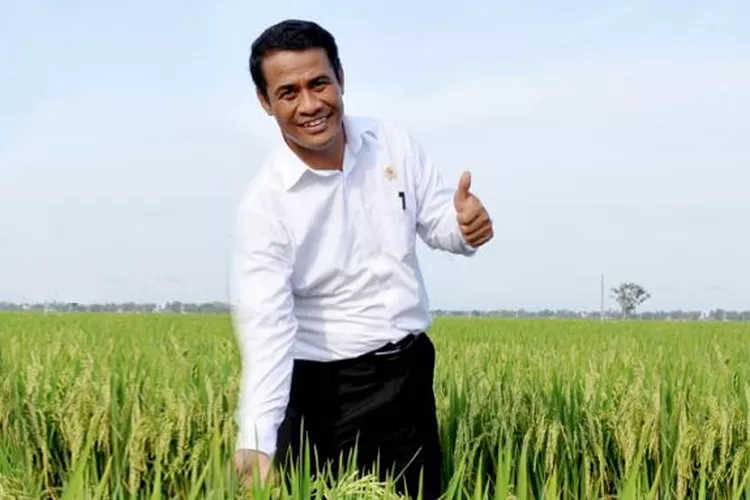
“Rumors that have circulated online saying the government is buying community in Papua Selatan land at only Rp100,000 per hectare under the Merauke’s Food Estate program are not true,” Indonesia’s Minister of Agriculture Andi Amran Sulaiman said.
“That information is false,” Amran told the media, urging people not to be fooled by false information on one of Indonesia’s biggest agricultural development projects.
“The government’s agricultural program is not about transferring ownership of community land to the state,” the minister said. Farmers still own their land, he said, but receive government assistance in a number of forms to improve agricultural productivity and household income.
The clarification comes as Indonesia ramps up food security programs in eastern Indonesia, with Merauke playing a strategic role given its huge agricultural potential and favorable natural conditions.
Government officials say the initiative is aimed at boosting national food resilience and providing more economic opportunities for local communities, including Indigenous Papuans.
Government Reaffirms Community Land Ownership
Minister Amran directly responded to the allegations, stressing that the agricultural land still belongs to the local communities.
“The government should assist the farmers to get maximum productivity from their land and not own it,” the minister said.
The farmers who participate continue to farm their own land, and are helped by various government programs, he said.
All of these inputs for production are agricultural machinery, high quality seeds, technical guidance, and irrigation improvements, form part of the government assistance package and farmers will not lose ownership of their land, the minister said.
Officials say the aim is to raise farm output and make sure that local communities are the main beneficiaries of development.
Authorities say: “By keeping the community in charge, farmers are able to continue to generate long-term economic value from their farming activities and also access modern farming technologies introduced by government programs.”
The land rights, according to the Ministry of Agriculture, are preserved in line with the current rules on agricultural development and people’s participation.
Increasing Productivity Rather Than Acquiring Land
Officials said the Merauke Food Estate program was primarily aimed at increasing productivity, not increasing the government’s control over agricultural land.
Indonesia’s food security strategy is based on increasing yields through modern farming techniques, improved irrigation, mechanization and access to quality agricultural inputs.
“Many farming communities have productive land, but need greater access to the technology, equipment and technical expertise to raise their production levels,” said Minister Amran.
Therefore, government investment has been focused on enhancing farmers’ production capacity rather than acquiring agricultural land.
Officials believe this approach will allow local communities to be directly involved in national food security efforts while maintaining full ownership of their agricultural assets.
The ministry also said that agricultural modernization can improve efficiency, reduce production costs and increase farmers’ competitiveness in regional and national markets.
Government Assistance Provided Free of Charge
Central to the minister’s clarification is the nature of assistance offered to participating farmers.
Government support includes: According to the Ministry of Agriculture,
Good quality seeds.
“Machinery and equipment for agriculture.”
Technical assistance of agricultural extension officers.
Help in developing irrigation.
Training on modern farming methods.
These forms of assistance are provided without the transfer of ownership of the farmers’ land, said Minister Amran.
The government hopes that better access to modern agricultural technology will enable farmers to increase productivity, extend cultivated areas where appropriate, improve the quality of the harvest, and ultimately strengthen household incomes.
This model, officials say, is not about transferring land ownership but about a partnership between government institutions and the local farming communities.
Merauke’s Strategic Position in National Food Security
Merauke is becoming an increasingly significant piece of Indonesia’s long-term agricultural strategy.
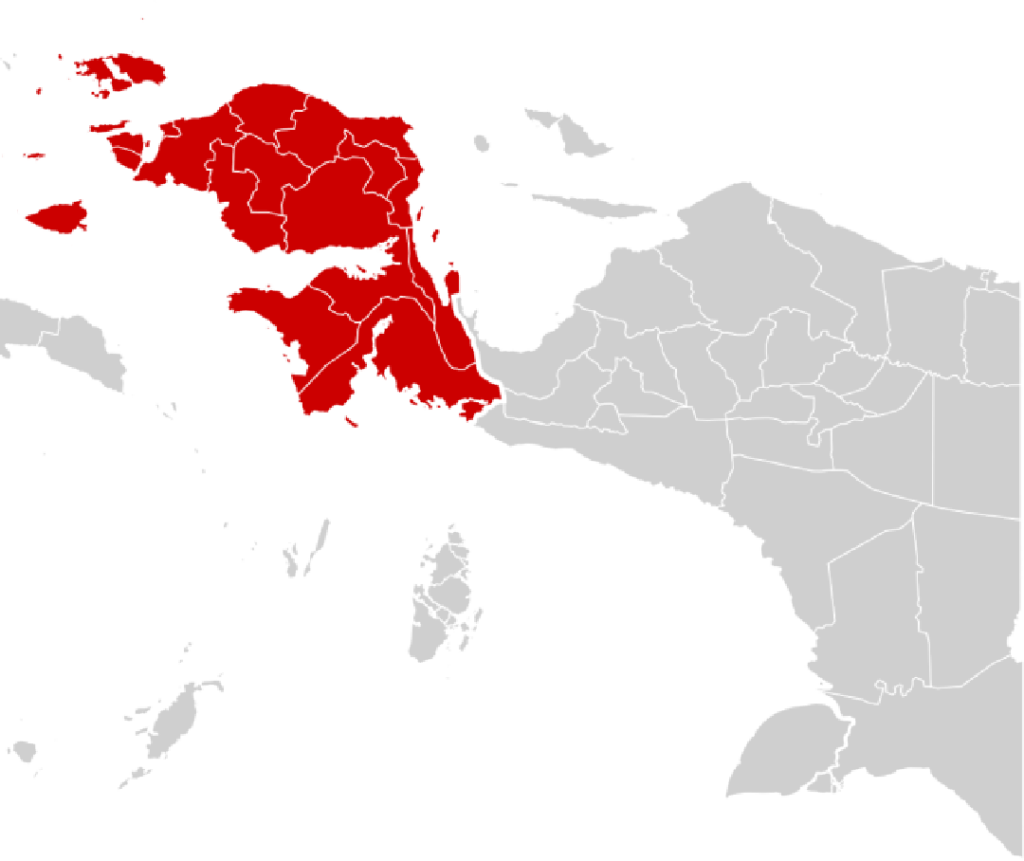
The regency is located in Papua Selatan Province and has a lot of land that can be used for rice and other food crops.
Government planners have identified the area as one of Indonesia’s future agricultural production centres, capable of supporting national food security and driving regional economic development.
Recent investments include irrigation infrastructure, land preparation, agricultural mechanization, seed distribution, fertilizer support and transportation infrastructure.
These are in addition to larger government programs to boost domestic food production as demand increases and global uncertainty impacts agricultural supply chains.
Officials said that the development of Merauke is expected to contribute to national food resilience as well as open new economic opportunities for local communities through increased agricultural production and value added activities.
Supporting Indigenous Papuan Farmers
Government representatives have repeatedly emphasized that indigenous Papuan communities remain key participants in the agricultural development programs.
The policies are not intended to replace local farmers but to boost their productive capacity by providing them with access to technology, financing, agricultural extension services and modern farming practices, officials say.
Empowering local farmers is one of the most sustainable ways to boost rural welfare, the Ministry of Agriculture says.
The more productive farmers are, the more income they can generate and the more they can contribute to regional food production directly.
Officials also said increasing local agriculture has multiplier effects throughout rural economies by supporting transportation services, agricultural suppliers, food processing businesses and local markets.
Improved agricultural productivity could create more employment opportunities for rural communities in Papua, thereby strengthening regional economic resilience.
Addressing Misinformation Surrounding Strategic Development Projects
Minister Amran’s reply also underscores a bigger challenge for big development projects in the digital era: the fast spread of misinformation.
Large scale infrastructure and agricultural projects are often the subject of speculation on social media, especially when involving land use or investment in remote regions. Officials say that incorrect information can create unnecessary fear in local communities and hide the true goals of government programs.
“False! Don’t believe those rumors,” Amran said, urging the public to verify information from credible and official sources regarding allegations of farmland in Papua Selatan being purchased for Rp100,000 per hectare.
Officials stressed the importance of transparency and communication with the public in maintaining trust during the implementation of key national projects.
They also said regular dialogue with local governments, traditional leaders, community representatives and farmers is important to ensure that development programs are clearly understood by those directly affected.
There is wide agreement among observers of public policy that effective communication is becoming a more and more important element of successful development policy. A quick clarification reduces misunderstandings and allows communities to make informed decisions based on verified information, not rumors that are spreading on the internet.
Merauke’s Growing Role in Indonesia’s Food Security
The clarification from the Ministry of Agriculture comes as Merauke is increasingly playing a strategic role in Indonesia’s national food security agenda.
Situated in the southern part of Papua, Merauke has large agricultural land, abundant water resources and relatively good climate for growing crops.
The Indonesian Government has designated the regency as one of the future food production centres of the country with a capacity to make a significant contribution to the domestic rice production and strengthening food resilience in eastern Indonesia.
Recently, the government has launched several programs, including the improvement of irrigation systems, mechanization of farming, preparation of land, distribution of certified seeds, provision of fertilizer assistance, agricultural extension services and transportation infrastructure that supports agricultural logistics.
Officials said these investments would not only enhance production but also productivity and income of farmers in the long run.
For local communities, and especially Indigenous Papuan farmers, agricultural modernization is expected to open up wider economic opportunities through increased yields, improved access to markets and greater participation in regional value chains.
Government representatives also note that community participation continues to be a key element of the program’s implementation, with farmers as active partners, not passive beneficiaries.
Balancing Agricultural Development and Community Rights
Governments are often required to balance economic objectives against respect for community rights, environmental sustainability and the participation of local people in agricultural development projects.
Indonesian officials in Merauke say this balance is achieved by keeping community ownership of farmland and providing technical and financial support that allows farmers to increase productivity.
Public administration experts say that development projects tend to be more sustainable when local communities remain directly involved in the planning, implementation and long term management.
Rather than just trying to expand cultivated land, policymakers are increasingly focusing on increasing productivity through innovation, mechanization, better seed varieties, irrigation improvements, and agricultural education.
This approach allows existing farmland to produce more while keeping local ownership structures in place.
Officials say those partnerships shore up rural economies because farmers still reap direct benefits from increased agricultural production.
The Ministry of Agriculture says this model of partnership can contribute to both national food security and local economic empowerment.
International Perspectives on Agricultural Modernization
Many countries have taken similar approaches to improving food security by engaging with local farming communities.
International organizations like Food and Agriculture Organization of the United Nations (FAO) emphasize that increases in agricultural productivity are often derived more from technology transfer, better irrigation, access to quality seeds, extension services and farmer training, than from expanding government ownership of agricultural land.
Asian governments have increased investment in mechanization, climate resilient agriculture, digital farming technologies and capacity building of farmers to improve food production with community participation.
Development economists generally agree that successful agricultural modernization means empowering farmers as long-term partners rather than replacing them.
Many of these internationally accepted principles are incorporated in Indonesia’s Merauke approach by the combination of public investment and community based agricultural production.
For those outside Indonesia, the government’s clarification around land ownership provides important context for how Indonesia aims to roll out one of its largest food security initiatives and involve local farming communities.
Looking Ahead
Government officials indicated that agricultural development in Merauke will continue focusing on increasing productivity, strengthening farmer capacity, and expanding food production to support Indonesia’s long term food security strategy.
Future investment is expected to include continued improvements in irrigation infrastructure, agricultural mechanization, seed technology, logistics, extension services, and market access for farmers.
Officials also stated that dialogue with local communities will remain an important component of implementation to ensure that development programs continue responding to community needs while respecting applicable land rights.
As Merauke develops into one of eastern Indonesia’s major agricultural centers, policymakers believe cooperation between government institutions and local farmers will remain essential for achieving sustainable economic growth and improved rural welfare.
Conclusion
Minister of Agriculture Indonesia Andi Amran Sulaiman refutes claims that community land in Papua Selatan is being purchased for Rp100,000 per hectare under the Merauke’s Food Estate program. The minister said that ownership of agricultural land is still in the hands of local communities, while the government will provide free agricultural machinery, quality seeds, technical assistance, irrigation support and modern farming technology to increase production. Officials say the move is meant to improve national food security and the welfare of farmers, including Indigenous Papuans, by raising agricultural output and creating more economic opportunities. With Merauke’s development as a strategic food production hub in eastern Indonesia, transparent communication, community participation and responsible agricultural policies will remain crucial to ensuring that development brings sustainable benefits for local residents and the country as a whole.