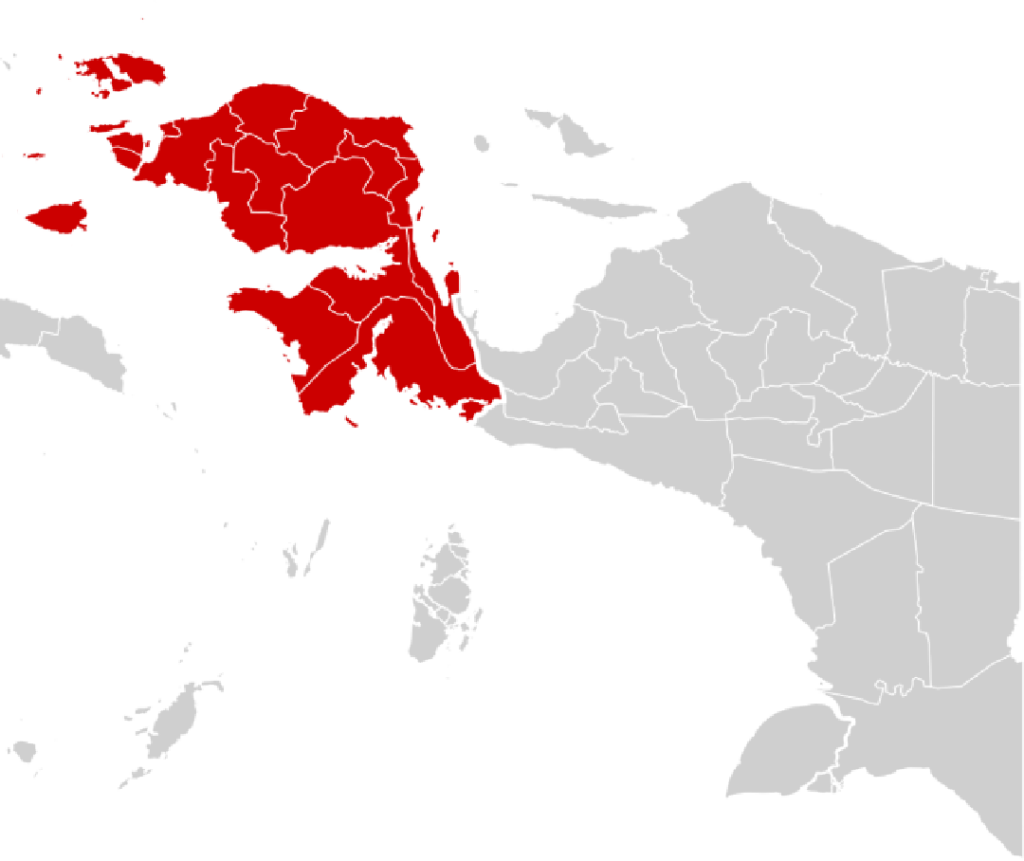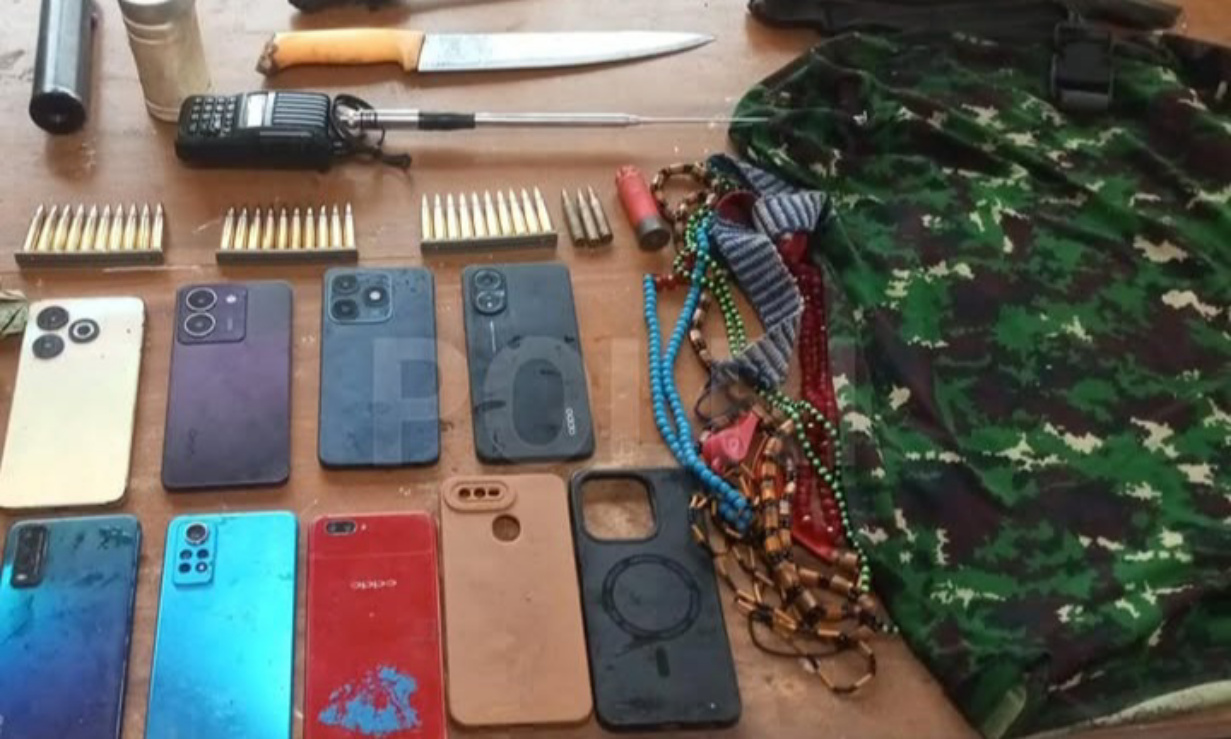
Indonesia’s Damai Cartenz Peace Task Force reported that three members of an armed criminal group, known as the West Papua National Liberation Army of the Free Papua Movement (TPNPB OPM), were killed during a security operation in KM 4 Logpon, Dekai District, Yahukimo Regency, Papua Pegunungan (Papua Highlands) Province, on 17 July 2026. In an official statement issued by the Indonesian National Police, the operation led to the seizure of three firearms and other equipment believed to have been used by the group.
The three dead were identified as Roni Rubis, Kumis Passae, and Orgenes Bayage, police said. Officials said the three were members of TPNPB Kodap XVI Yahukimo Battalion Yamue, accused by security agencies of carrying out a series of armed attacks in Yahukimo.
Officials also confirmed that the alleged group leader, Ronald Heluka, remains on Indonesia’s wanted list and was not among those killed in the operation. Law enforcement activity is ongoing, and security personnel are continuing to search for him.
The operation is part of a larger effort to beef up security in the Papua Pegunungan, which has seen repeated armed violence that has at times hampered civilian life, transportation, education, healthcare services, and economic activity, authorities said.
Authorities Describe the Operation
The Damai Cartenz Task Force’s security personnel met members of the armed group during patrol activities near KM 4 Logpon, an area that has experienced several security incidents in recent years.
Police said an exchange of gunfire took place after officers made contact with the group.
Authorities cordoned off the area following the operation and recovered three firearms and ammunition, along with various items investigators believe were linked to the armed group.
The recovered evidence will be subjected to forensic examination as part of the ongoing criminal investigation, officials said.
The operation was part of law enforcement against armed groups that, according to the authorities, still carry out violent attacks in Yahukimo Regency, the Indonesian National Police said.
Investigators said more inquiries are underway to determine the full circumstances of the incident.
Three Individuals Identified by Police
Police named the three killed as Roni Rubis, Kumis Passae, and Orgenes Bayage after the operation.
The three were members of the TPNPB Kodap XVI Yahukimo Battalion Yamue, Indonesian police said.
The authorities said the battalion had been responsible for several armed incidents that resulted in casualties, disrupted transportation, intimidated local residents, and attacked security personnel and public facilities.
Police also said investigations have connected members of the network led by Ronald Heluka with a number of violent incidents in Yahukimo in recent years, including the murder of ten civilian traditional gold miners on 18 May 2026 in Awimbom District, Pegunungan Bintang Regency, Papua Pegunungan. Authorities said eight other members of the alleged support network had previously been arrested in ongoing investigations.
The allegations are in line with the official stance of Indonesian law enforcement authorities. The reports mentioned did not relate to judicial proceedings concerning individual criminal responsibility.
Police Cite Previous Violent Incidents
The operation was carried out following a series of investigations into armed incidents that police attribute to the Yahukimo network led by Ronald Heluka, security officials said.
The group has been linked to a number of attacks in recent years, including attacks on civilians, security forces, transportation infrastructure, and public facilities, police say.
Authorities also say the attacks led to insecurity that disrupted education, health care services, commercial activity, and movement of people in several districts of Yahukimo Regency.
Police officials say that recurring armed violence has made it more difficult for teachers, medical workers, civil servants, and humanitarian personnel to do their work safely in remote communities.
Hence, security agencies continue to stress the need for law enforcement operations to mitigate the threat posed by armed groups while supporting wider government efforts to improve stability across the Papua Pegunungan.
Firearms Seized During the Operation
Authorities highlighted the recovery of three firearms with ammunition as one of the main outcomes.
A major objective of security operations remains the removal of illegal weapons from circulation, as firearms significantly improve the operational capacity of armed groups, according to the police.
The weapons recovered will be sent for ballistic and forensic testing to see if they may have been used in previous criminal acts, investigators say.
Officials said forensic examination can help investigators reconstruct past attacks and bolster ongoing criminal investigations.
The seizure of weapons also cuts the chances of them being used in future acts of violence, authorities said.
Confiscating illegal weapons is part of a broader campaign to improve public security and safeguard people in conflict zones, the police said.
Security Stability Supports Community Welfare
The government officials stress that better security conditions are closely linked to broader development objectives in the Papua Pegunungan.
Reliable transport, functioning schools, health facilities, local markets, and government services are what Yahukimo communities rely on.
Armed violence disrupts these systems and often cuts residents off from education, medical treatment, commercial activity, and other services.
So law enforcement operations need to be considered part of continuing investments in infrastructure, health care, education, telecommunications, and regional economic development, authorities argue.
They say the safer environment allows teachers, health workers, religious leaders, traders, and civil servants to better serve remote communities.
For the citizens of Yahukimo, improvement of public security is considered the important foundation to maintain the progress of social and economic development in the long term.
Law Enforcement and Civilian Protection
Indonesian authorities have repeatedly described security operations in Papua as being aimed at protecting civilians and enforcing the law against armed groups accused of carrying out violent attacks. “Operational planning is to emphasize public safety and minimize the risk for the local community in any law enforcement operations,” the Damai Cartenz Task Force said.
Officials say the cycle of violence has had consequences far beyond security problems. In parts of the Papua Pegunungan, attacks blamed by authorities on armed groups have disrupted schools, delayed healthcare services, impacted transportation networks, and discouraged economic activities that many rural communities rely on to make a living.
Security remains a vital part of everyday life for people in remote districts like Yahukimo. Teachers require safe access to classrooms, health workers require secure transport to reach isolated villages, traders require functioning roads and air routes, and local governments require stable conditions to deliver public services.
For this reason, police officials argue that reduction of armed violence is an important precondition for an uninterrupted continuation of development programs.
Authorities also stressed that all security operations are governed by Indonesian law and are conducted according to established operational procedures. Judicial investigations into armed violence incidents continue. Evidence collected during operations is being forensically examined to help criminal investigations.
The Search for Ronald Heluka Continues
Following the operation at KM 4 Logpon, authorities confirmed that Ronald Heluka, the alleged commander of TPNPB Kodap XVI Yahukimo Battalion Yamue, was not present at the scene of the encounter and remains on Indonesia’s national wanted list, police said.
Police said investigations into the network were ongoing and efforts were underway to locate people thought to be involved in past acts of armed violence.
Security officials said ongoing operations continue to hinge on intelligence gathering, evidence collection, and cooperation between various law enforcement agencies.
Authorities also renewed appeals for local residents to cooperate by providing information on criminal activities and to avoid participating in armed violence.
Officials underscored that community engagement can be an effective tool to enhance public safety and deter future attacks.
Security and Development Are Closely Connected
Yahukimo is a microcosm of the relationship between security and development across Papua Pegunungan.
Public institutions need to operate in an environment safe for government investment in education, health, transportation, telecommunications, food security, and community empowerment.
Schools cannot be effective if there are security risks to teachers.
Health centers face difficulties in providing medical services when transportation routes are unsafe.
Markets and small businesses incur economic losses from mobility disruption.
For these reasons, Indonesian authorities have continued to stress that security measures should be viewed as one element of a broader strategy that also includes accelerating regional development, expanding employment opportunities, strengthening education, and improving access to healthcare.
“Consistent investment in public welfare can create long-term stability and opportunities for local communities throughout Papua,” they say.
International Perspectives on Countering Armed Violence
Governments around the world facing armed insurgencies or organized violent groups are more and more combining security operations with social and economic development initiatives.
International organizations generally agree that effective responses require both lawful security measures and sustained efforts to improve governance, education, healthcare, infrastructure, and economic opportunity.
“Removing illegal firearms from circulation can reduce the operational capability of armed groups if it is coupled with effective policing and judicial processes,” security experts also note.
At the same time, the rule of law, accountability, and the protection of civilians remain fundamental values in maintaining public trust.
Indonesia has repeatedly said its policy in Papua aims to combine security stabilization with wider development programs to boost living standards and strengthen public services.
Events in Yahukimo demonstrate the difficulty for international observers of balancing law enforcement, civilian protection, and long-term regional development in geographically challenging areas with recurrent armed violence.
Looking Ahead
Authorities said their investigation into the operation will continue, including a forensic examination of the firearms recovered and analysis of other evidence collected at the scene.
Police also said the search for Ronald Heluka is continuing, and investigations into the wider network identified by authorities are ongoing.
Apart from the immediate purpose of law enforcement, government agencies are also expected to continue to implement development programs throughout the Papua Pegunungan, including infrastructure improvement, healthcare, education, telecommunications, and local economic empowerment.
“We believe that security and inclusive development programs will help strengthen community resilience and create conditions that foster sustainable development across the region,” the officials said.
Conclusion
According to official statements from Indonesia’s Damai Cartenz Task Force, police identified the three people killed in a security operation on 17 July 2026 in KM 4 Logpon, Dekai District, Yahukimo Regency, as members of TPNPB Kodap XVI Yahukimo Battalion Yamue: Roni Rubis, Kumis Passae, and Orgenes Bayage. Authorities said during the operation, three guns and ammunition were confiscated, and police identified Ronald Heluka as the alleged leader of the group, who is still the subject of law enforcement efforts. Indonesian authorities say the operation is part of wider efforts to curb armed violence, protect civilians, and ensure the continuity of education, health, transport, and economic activities in the Papua Pegunungan. Authorities say long-term stability will depend on a combination of lawful security operations, effective governance, and sustained development programs that improve the welfare of communities across Papua as investigations continue.