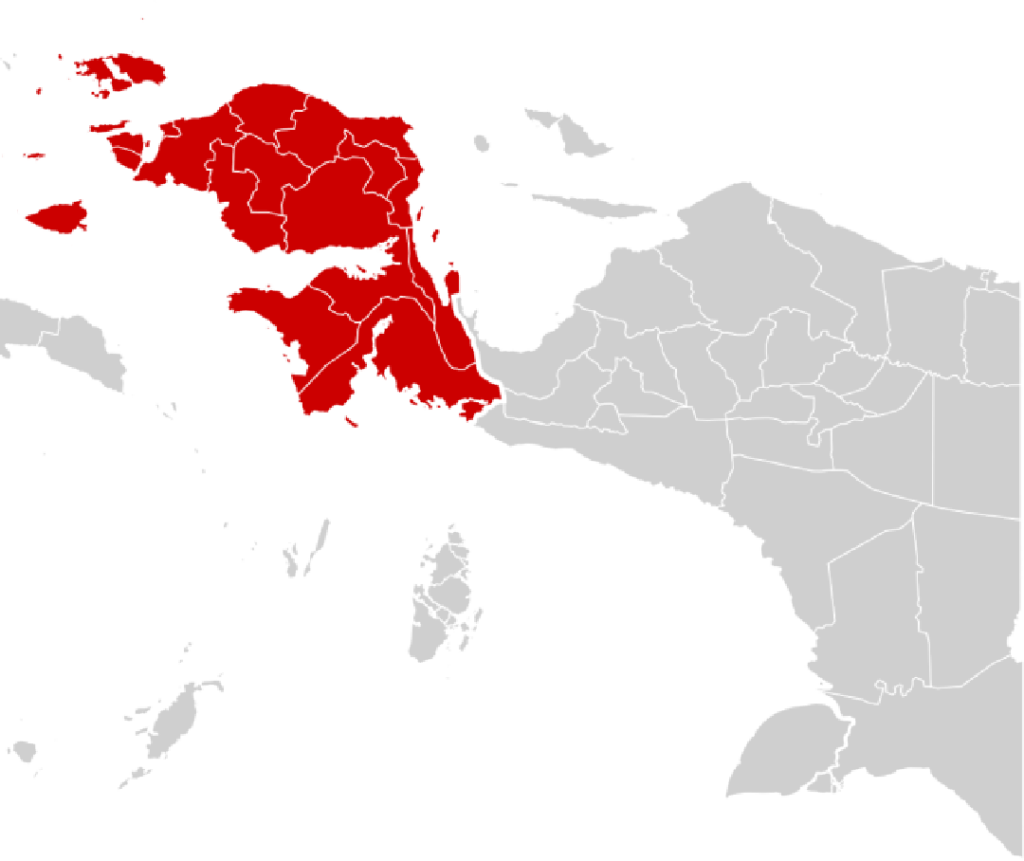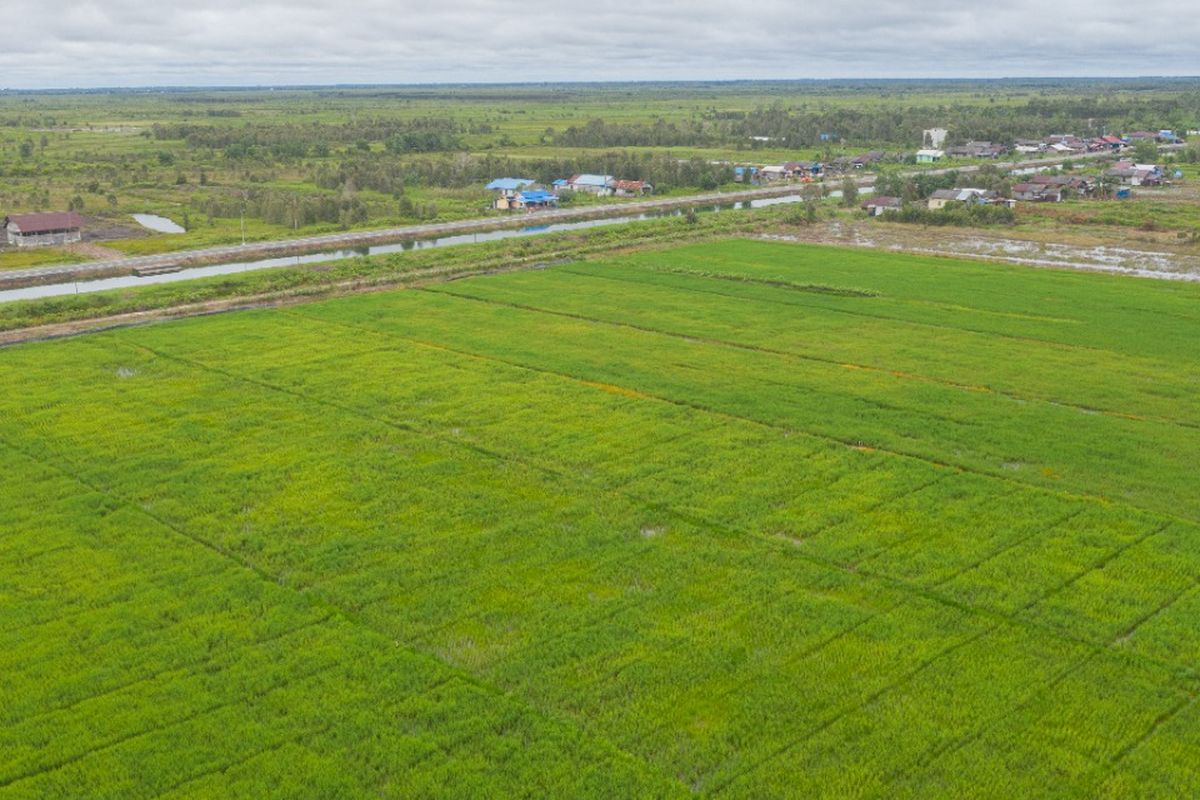
Shortly after sunrise, activity around project areas in Papua Selatan (South Papua) begins early.
Pickup trucks carrying workers move toward operational zones.
Construction equipment starts running before temperatures become too high.
Further away, farmers discuss something that appears repeatedly in conversations across Merauke these days.
Employment.
Agriculture.
The discussion also focused on whether large projects can genuinely change local economies.
The conversation intensified again this week after officials involved in Papua’s National Strategic Project, particularly the food estate program in Papua Selatan, repeated commitments that expansion would continue alongside environmental safeguards and local employment priorities.
Government projections released during early June 2026 estimate the project could absorb around 15,000 workers by 2029.
Officials expect that most of those opportunities will prioritize indigenous Papuans.
For policymakers, the argument remains relatively straightforward.
Produce more food.
Reduce supply risks.
Create jobs closer to communities.
Why Merauke Continues Receiving Attention
Large agricultural projects rarely emerge by accident in Merauke.
The region has long attracted policymakers because geography creates advantages difficult to find elsewhere.
Large land availability.
Relatively flat terrain.
Agricultural history.
Existing transport access.
These factors increasingly place Merauke at the center of Indonesia’s food discussions.
Officials involved in recent project briefings argued that strengthening agricultural production capacity has become more urgent as climate uncertainty, population growth, and supply disruptions increasingly affect food systems.
Several planners involved in implementation described the project not simply as agricultural expansion.
They described it as preparation.
Food Security Discussions Are Becoming More Frequent
Food security has become more visible in policymaking discussions recently.
Supply disruptions.
Higher logistics costs.
Weather uncertainty.
These issues increasingly influence government planning.
Officials argue that strengthening production centers like Merauke is essential to prevent larger vulnerabilities.
That reasoning partly explains why food estate projects continue receiving strategic attention.
Employment Numbers Become Major Focus
For communities surrounding project areas, employment discussions frequently receive more attention than production statistics.
Project projections released this month suggest approximately 15,000 workers could eventually be absorbed by 2029.
Officials repeatedly emphasized that indigenous Papuans are expected to remain a major priority within workforce planning.
Employment Extends Beyond Farming Alone
Project employment expectations extend beyond agricultural activities.
Large-scale production also requires transport workers.
Equipment operators.
Construction workers.
Maintenance teams.
Warehousing staff.
Supply chain services.
Several economic observers note that industrial agricultural projects often generate secondary employment beyond farming itself.
Local residents following project developments therefore increasingly discuss not only jobs inside project areas but also opportunities surrounding them.
Officials Continue Stressing Environmental Protection
Environmental concerns remain among the most frequently discussed aspects surrounding large-scale agricultural development.
Project officials therefore repeatedly emphasized during recent statements that implementation should continue alongside environmental management commitments.
Several officials involved in project communication argued that we should not automatically treat economic expansion and environmental protection as opposing objectives.
Instead, they described environmental sustainability as necessary because agricultural productivity itself depends on long-term land quality.
Balancing Development and Conservation Remains Difficult
Large projects frequently create questions.
How much land changes?
How do communities participate?
How does environmental protection work in practice?
Officials acknowledged these concerns continue appearing throughout implementation discussions.
They argue maintaining public trust depends partly on demonstrating that development goals and environmental management can operate together.
Inflation Concerns Also Shape the Conversation
Food discussions in Papua usually involve more than just agriculture.
Prices matter too.
Transportation expenses remain high across many areas.
Supply disruptions can quickly influence markets.
Government officials increasingly argue stronger domestic production may help reduce vulnerability created by logistical pressures.
Several economic observers note that remote regions often experience stronger price volatility because supply chains remain expensive and complex.
This partly explains why food production increasingly appears inside inflation discussions.
Papua’s Food Debate Is Becoming Larger Than Agriculture
The food estate conversation increasingly overlaps with broader questions.
Economic growth.
Employment.
Regional development.
Supply resilience.
For supporters, Merauke represents an opportunity to create new economic centers outside traditional urban regions.
For others, implementation remains equally important.
Who benefits?
How quickly opportunities appear.
Whether expectations match reality.
Those questions continue accompanying project expansion.
Why Policymakers Continue Accelerating Preparation
Climate concerns increasingly influence agricultural discussions.
Weather variability.
Supply uncertainty.
Population growth.
These factors create pressure for earlier preparation.
Several planners involved in the program argue waiting until supply problems emerge creates larger risks later.
That partly explains why expansion efforts continue despite complicated debates surrounding implementation.
Conclusion
Toward evening, activity inside project areas gradually slows.
Vehicles leave.
Workers return home.
Meetings continue elsewhere.
For now, much of the conversation surrounding Merauke’s food estate still revolves around projections.
Fifteen thousand jobs.
Stronger food production.
Reduced inflation pressure.
Greater resilience.
Whether all targets eventually materialize will require time.
But one reality already appears increasingly clear.
The future of food discussions in Papua is becoming harder to separate from the future of Merauke.