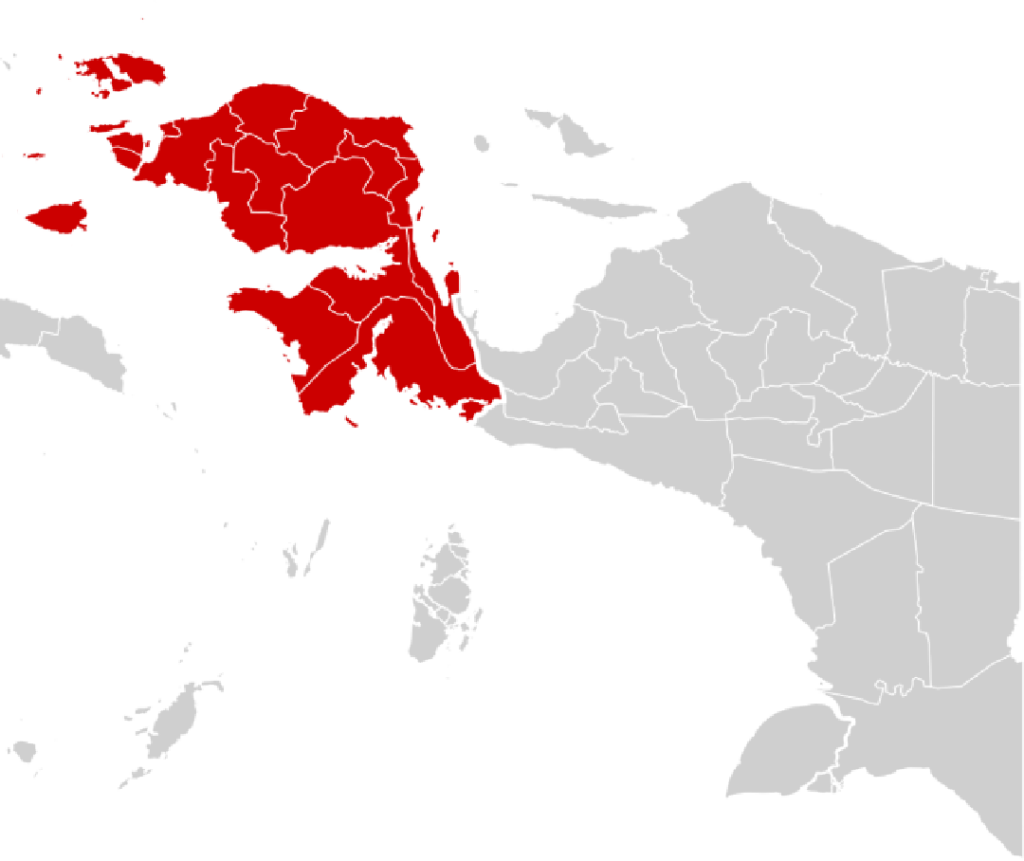
By midday, trucks carrying harvested corn already move along parts of Keerom Regency.
Some travel short distances between villages.
Others continue toward markets where prices often depend less on production and more on transportation expenses.
For years, farmers here have faced a familiar problem.
Growing crops was difficult.
Selling them consistently was often harder.
That is partly why recent developments in Keerom have attracted attention beyond agricultural circles.
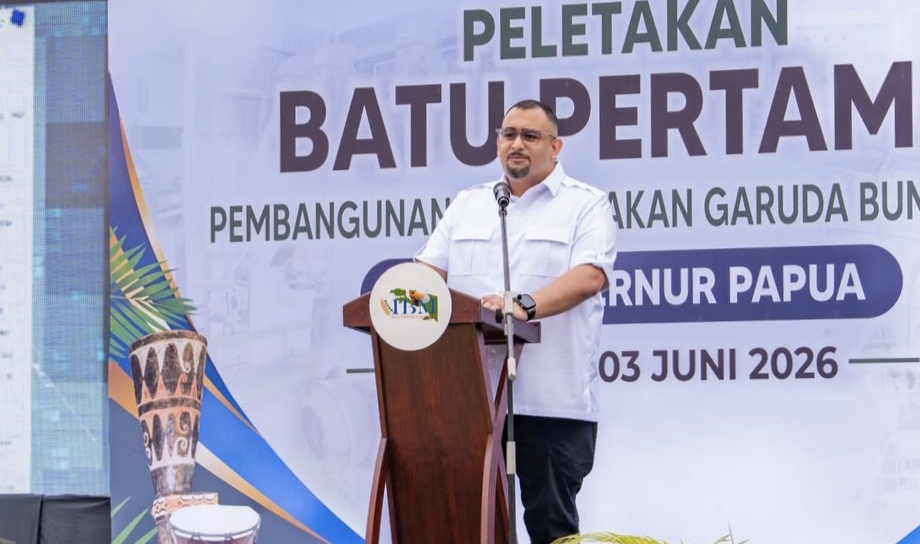
A feed factory currently being built by PT Irian Bhakti Mandiri is expected to begin operating within four months, according to project updates released by chairman of the company Abdul Kadir and Governor of Papua Mathius Fakhiri at the ceremonial opening of factory development on June 3, 2026. Once operational, the facility is expected to process approximately 1,500 tons of corn each month for livestock feed production.
The number itself immediately changed the conversation.
Not because the factory is unusually large.
But many local farmers began asking the same question.
Can local production finally meet industrial demand inside Papua itself?
Construction Progress Changes Expectations in Keerom
Construction activity continues around the planned processing site.
Workers move materials.
Heavy equipment enters and leaves.
Local officials visiting the project describe the factory as part of broader efforts to strengthen agricultural downstream industries inside Papua rather than continuing dependence on supplies from outside the region.
Project updates released this week suggest operations are targeted to begin roughly four months from now.
Once production starts, the factory is expected to process corn into livestock feed products intended for Papua’s growing poultry and animal farming sectors.
For provincial officials, the calculation appears straightforward.
More local feed production means less dependence on imported supplies.
Why Feed Production Matters In Papua
Livestock producers across Papua have long complained about logistics.
Feed transported from outside Papua frequently arrives with additional transportation expenses attached.
Those costs eventually affect farmers.
Then consumers.
Several business actors involved in livestock production argue that feed availability often influences expansion decisions.
If production costs remain high, growth becomes slower.
The factory project, therefore, enters discussions not only as a manufacturing investment but also as part of broader efforts to improve agricultural efficiency.
Corn Farmers Suddenly See Bigger Markets
For many corn farmers, industrial buyers remain relatively rare.
Harvest seasons frequently create uncertainty.
Prices fluctuate.
Demand changes.
Storage becomes expensive.
A facility requiring approximately 1,500 tons monthly potentially changes that equation.
Farmers interviewed during local reporting surrounding the project described cautious optimism.
Not because the factory already exists.
This is the first time that discussions are focusing on predictable absorption capacity instead of temporary market demand.
Production Scale Still Becomes Major Question
Yet larger demand creates another challenge.
Supply.
Meeting factory requirements consistently requires significant production expansion.
Agricultural observers note that industrial facilities often struggle when supply systems grow slower than processing capacity.
This means production increases may become equally important as construction itself.
Several officials acknowledged this reality during recent discussions.
Building the factory is one stage.
Ensuring that enough corn arrives every month is another.
Provincial Government Wants Regional Companies To Play Bigger Role
The project also reflects broader discussions inside Papua regarding regional enterprises.
Earlier this year, Governor Mathius Fakhiri repeatedly emphasized that regional companies should contribute more actively to economic development and local revenue generation.
During previous statements regarding PT Irian Bhakti Mandiri, provincial leadership encouraged the company to become more involved in productive sectors capable of creating economic multipliers.
The feed factory increasingly appears to fit within that direction.
Rather than operating only as a corporate asset, officials describe the project as infrastructure supporting broader agricultural ecosystems.
Keerom Positions Itself As Agricultural Production Area
Keerom already occupies an important position inside discussions surrounding agriculture in Papua.
Large land availability.
Cross-border access.
Relatively strong farming activity.
These factors have repeatedly placed the district inside development planning discussions.
Several local officials argue the next challenge is no longer simply increasing production.
The challenge is processing.
Value addition.
Industrialization.
That explains why feed production increasingly receives attention.
Raw commodities generate income.
Processed commodities usually generate more.
The Economics Extend Beyond Agriculture
The project could also create secondary economic effects.
Transport services.
Warehousing.
Equipment maintenance.
Local supply networks.
Employment.
Agricultural industrialization usually affects multiple sectors.
Several economic observers therefore describe the facility as potentially more important for what happens around it rather than inside it.
Factories purchase services.
Workers spend income.
Supply chains expand.
These effects frequently determine whether industrial projects create lasting economic change.
Challenges Remain Before Production Starts
Despite optimism, several practical questions remain.
Can transportation systems move enough corn?
Will smaller farmers participate?
Can production remain stable throughout seasons?
These questions matter because industrial agriculture depends heavily on consistency.
For now, officials continue emphasizing preparation.
Production planning.
Supply coordination.
Farmer engagement.
The next several months may determine whether projected capacity becomes achievable.
Conclusion
Corn farming in Papua rarely makes headlines.
Most harvests happen quietly.
Trucks continue moving.
Markets continue operating.
The planned feed factory in Keerom, however, has started creating different conversations.
Farmers talk about demand.
Officials talk about industrialization.
Businesses talk about supply chains.
Four months from now, construction may be finished.
Whether enough corn follows afterward may become the more important story.