
Scientists have found something deep in the tropical forests of Papua that reminds us how little we still know about nature. These forests have thick canopies that block out sunlight and thousands of species that live unseen among the leaves.
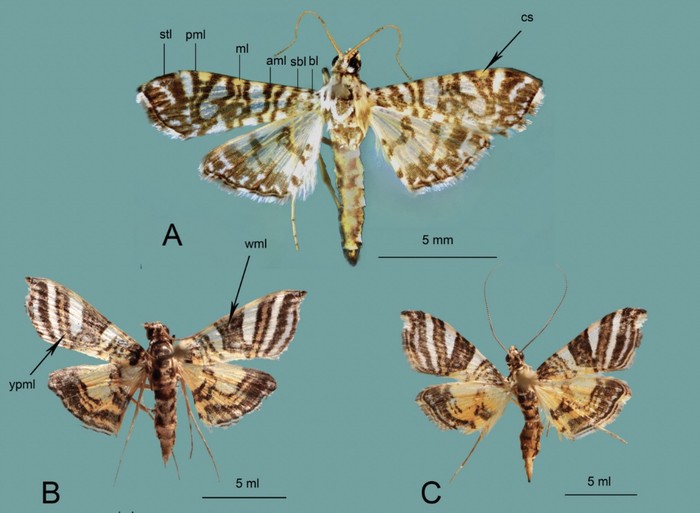
Researchers from Indonesia’s National Research and Innovation Agency, which is better known as BRIN, recently found a new species of moth that comes from Papua. The official name for the bug is now Glyphodella fojaensis Sutrisno & Ubaidillah.
At first glance, a moth might look like a normal bug. A lot of people would walk by it without noticing. But in science, finding a new species is very important. Every new finding adds to our understanding of how life evolves and survives by giving us another piece of the ecological puzzle.
Finding Glyphodella fojaensis also supports something that scientists have long thought. Papua is still one of the most biodiverse places on Earth.
Papua is still a place of wonder and unanswered questions for scientists who study tropical ecosystems.
Naming a Species from the Foja Mountains
The name Glyphodella fojaensis tells a story about geography and science.
The name of the species comes from the Foja Mountains, a remote mountain range in northern Papua. Biologists from all over the world are interested in this area because of its unspoiled ecosystems and wide range of wildlife.
A lot of the Foja Mountains are still mostly untouched by people. Steep slopes are covered in thick forests, and isolated valleys make natural habitats where species can evolve on their own for thousands of years.
Because it is so isolated, the area has made a lot of biological discoveries in the last twenty years.
The name of the species also pays tribute to the scientists who found it. The official scientific naming process gives credit to researchers Hari Sutrisno and Ubaidillah, who worked on the scientific work that led to the discovery.
In taxonomy, giving a species a name is more than just a label. It becomes a permanent part of the world’s scientific record.
A Region That Continues to Surprise Scientists
People often say that Papua is one of the last places on Earth where scientists can explore new life forms.
The island of New Guinea, which includes Papua on the Indonesian side, has some of the most complicated ecosystems in the world. Tropical rainforests cover huge areas, and mountains make separate habitats where species can grow and change over time.
Scientists have been keeping track of rare birds, amphibians, insects, and plants in the area for decades.
However, scientists think that there are still many species that have not been found.
There is a lot we don’t know about insects. There are so many different kinds of insects that it’s hard to keep track of them all. A lot of them live in remote areas where there aren’t many scientific expeditions.
That’s why it’s not only exciting but also expected to find things like Glyphodella fojaensis. Every new study shows how much biodiversity is still out there.
Earlier Discoveries Strengthen Papua’s Scientific Importance
Finding Glyphodella fojaensis isn’t the only thing that has happened.
In fact, scientists from BRIN had already found and written about two other moth species from Papua in 2024. Glyphodes nurfitriae sp. nov. and Glyphodes ahsanae sp. nov. were the names given to these species.
Both species were identified through comprehensive research on moth diversity in Indonesian tropical ecosystems.
Researchers came to the conclusion that these moths had never been formally recorded before by carefully observing them and comparing them to existing species records.
The findings bolstered the scientific consensus that Papua’s forests possess an exceptional diversity of insect life.
Papua is a great place for researchers who want to learn more about biodiversity.
The Role of Moths in Forest Ecosystems
People don’t pay as much attention to moths as they do to butterflies or birds, but they are very important to the environment.
A lot of moths help plants reproduce by pollinating them. Some animals eat them, like birds, bats, reptiles, and other animals. Their presence can also tell you how healthy an ecosystem is.
Moths are part of the complex web of life that keeps ecosystems in balance in tropical forests.
Moth populations can show how good a habitat is because they are sensitive to changes in the environment. A drop in the number of different kinds of moths could mean that there are bigger problems in the environment.
So, for scientists, studying moths can help them learn more about the health of forests.
The finding of a new species shows that the ecosystem around it still has a lot of different kinds of life.
The Careful Science Behind Discovering a New Species
Finding a new species takes time and accuracy.
Researchers start by gathering samples during field trips. Researchers then look at these specimens very closely in labs. Scientists look at things like wing patterns, body structures, and tiny details to learn more about the animals.
They look at the specimens and compare them to descriptions of other species that are already in scientific databases and museum collections.
Researchers may conclude they have discovered something new if the characteristics do not match any known species.
The species gets an official scientific name only after a lot of checking.
This process makes sure that scientific findings are still correct and trustworthy.
The differences between species of insects, like moths, can be very small. That is why taxonomic research needs both skill and care.
Papua’s Forests and the Urgency of Conservation
Discoveries like Glyphodella fojaensis are exciting, but they also point out a big problem.
Human activities that put stress on the environment have led to the discovery of many species.
Compared to many other tropical areas, Papua’s forests are still in pretty good shape. Scientists, on the other hand, stress that conservation efforts are important for keeping these ecosystems safe.
If habitats are destroyed before species are documented, entire forms of life could vanish without any record.
So, to protect biodiversity, scientists, governments, and local communities need to work together.
Indonesia has come to see Papua as an important place for global biodiversity.
Policies for conservation, research projects, and programs to protect the environment all help keep these ecosystems healthy.
Science and Curiosity Driving Discovery
Curiosity is often what leads to the discovery of new species.
A researcher looking at a specimen might see a small difference in the shape of the body or the patterns on the wings. That observation makes me think.
Could the difference be something you’ve never seen before?
The scientific journey starts at that point. Researchers look at the specimen, compare it to other known species, and look into its ecological background.
Sometimes the answer shows that a new species does exist.
Glyphodella fojaensis and other discoveries show that science still has a lot to learn about the world around us.
Even after hundreds of years of exploration, nature still surprises us.
A Small Insect with a Big Message
Finding a new type of moth may seem small compared to the big problems the world faces with the environment. But each species is a separate branch on the larger tree of life.
Every new discovery helps us learn more about biodiversity and how ecosystems are all connected.
Papua’s forests still give scientists rare chances to study nature in all its forms.
The wildlife in the area, from birds of paradise to tiny bugs, tells a story of evolution, isolation, and ecological balance.
Glyphodella fojaensis is now a part of that story.
The moth is more than just an insect to the scientists who found it. It shows how much life is still hidden in the world’s wild places.
And there are almost certainly many more things to find in the leaves of Papua’s forests.

