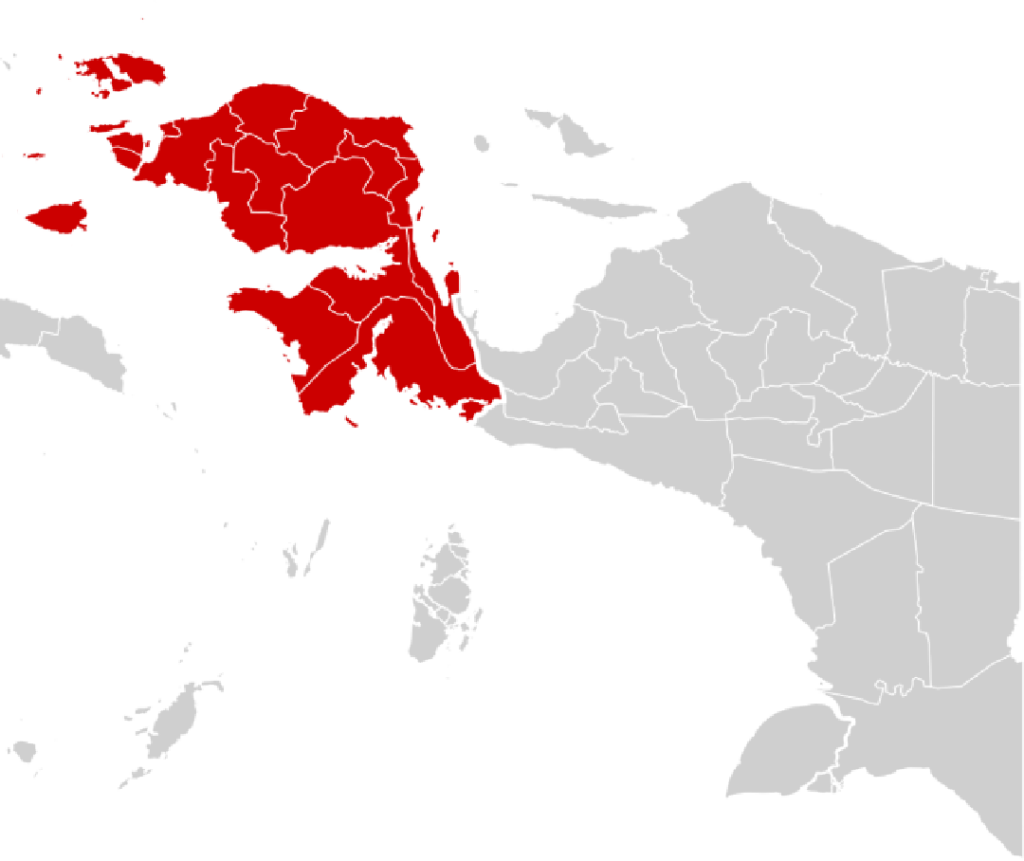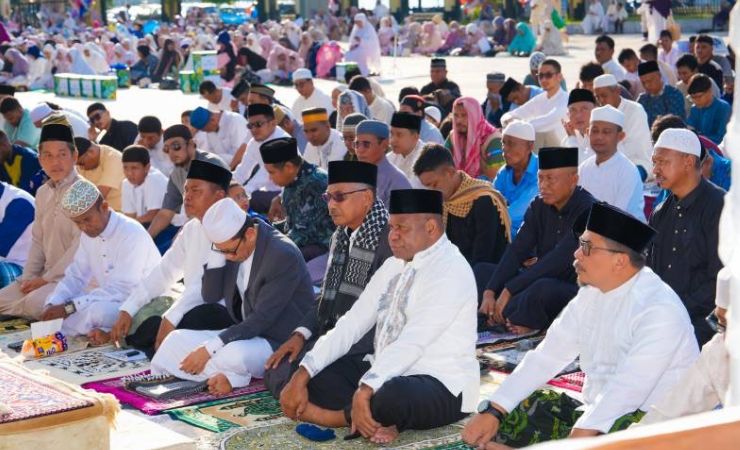
Shortly after sunrise on May 27, 2026, traffic began slowing near several mosques in Jayapura.
Families arrived carrying prayer mats. Children wearing new clothes ran between parked motorcycles while volunteers directed vehicles into temporary parking areas.
Around the same time, in other parts of Papua, similar scenes unfolded.
Eid al Adha prayers had begun.
This year’s celebrations came with familiar rituals.
Takbir echoed from loudspeakers.
Community committees prepared sacrificial animals.
People visited relatives after morning prayers.
But this year, speeches delivered during Eid across Papua repeatedly returned to one subject.
Unity.
Regional leaders, military officials, and community figures used the occasion to remind residents that coexistence remains important in a region shaped by ethnic, cultural, and religious diversity.
Governor Mathius Fakhiri Asks Residents to Strengthen Togetherness
Papua Governor Encourages Modest Celebrations
Ahead of Eid celebrations in Jayapura, Papua Governor Mathius Fakhiri asked residents to celebrate simply.
He also asked communities to use the holiday as an opportunity to strengthen social relationships.
“Celebrate Eid simply while strengthening tolerance and togetherness,” Fakhiri said in remarks released before the holiday.
His comments were delivered while local governments across Papua prepared logistics connected to Eid celebrations and sacrificial animal distributions.
Officials around the governor argued that social cohesion remains important because Papua’s diversity creates both opportunities and challenges.
For many residents, however, such messages sounded familiar.
Religious celebrations in Papua frequently include reminders about coexistence.
Religious Holidays Often Become Community Events
In many parts of Papua, Eid celebrations extend beyond religious activities.
Residents living near mosques often help manage traffic.
Community volunteers organize distribution activities.
Neighbors visit each other regardless of religious background.
People in Papua rarely describe these interactions using complicated language.
Most simply call it normal.
That routine interaction partly explains why government officials repeatedly frame tolerance as something practical rather than symbolic.
Defense Minister and Vice TNI Commander Join Eid Prayer Activities
Senior Officials Celebrate Eid Together With Residents and Soldiers
On Eid morning, Defense Minister Sjafrie Sjamsoeddin attended Eid prayers together with soldiers and residents in Manokwari, Papua Barat (West Papua).
The minister was accompanied by the vice commander of the Indonesian National Army (TNI), General Tandyo Budi Revita.
Photographs released after the activities showed military personnel and civilians gathering in shared prayer areas before continuing community interactions afterward.
Following the prayers, officials repeated messages emphasizing cooperation between soldiers and communities.
Defense officials stated that military personnel assigned to Papua should continue maintaining positive relationships with residents.
Several officials also emphasized the importance of social service activities.
Military Leadership Stresses Community Relations
Statements released after the activities consistently emphasized a single message.
Soldiers should remain close to communities.
Officials said communication, service activities, and cooperation remain important alongside routine security responsibilities.
For personnel stationed in Papua, those relationships often develop over long periods.
Many units operate close to villages and remote communities.
That reality partly explains why military leaders increasingly discuss social interaction during public appearances.
Why Eid Carries Wider Meaning Across Papua
Diversity Shapes Everyday Experiences
Papua’s geography separates communities through mountains, forests, islands, and coastlines.
Its social landscape can be equally complex.
Hundreds of ethnic groups and local languages exist across the region.
Different religious communities often live side by side.
Because of these interactions, religious holidays sometimes become visible reminders of how communities interact.
Officials frequently mention harmony during these occasions.
Residents often show it more simply.
They visit neighbors.
Share food.
Help prepare events.
Continue routines.
Sacrificial Animal Distribution Also Reflects Social Solidarity
Beyond prayers and ceremonies, Eid also meant logistics.
Local governments, mosque committees, and volunteers spent days preparing sacrificial animal distributions.
Several provincial administrations supported distribution efforts reaching remote areas.
For lower-income households, meat distribution remains important.
Community leaders, therefore, often describe Eid not only as a religious celebration but also as social support.
In practice, both happen simultaneously.
Leaders Repeat Familiar Messages Because Papua Remains Complex
As Eid celebrations concluded, speeches from officials largely repeated similar themes.
Tolerance.
Togetherness.
Cooperation.
Some observers may consider those messages repetitive.
Officials argue repetition remains necessary.
Papua continues experiencing demographic change, infrastructure expansion, migration, and economic transformation.
Leaders increasingly describe social cohesion as something requiring continuous maintenance rather than occasional discussion.
Conclusion
By late morning, many mosques had already emptied.
Families returned home.
Community kitchens continued working.
Children played outside wearing newly bought clothes.
The official speeches gradually faded.
What remained were familiar scenes repeated across Papua every year.
Neighbors visiting neighbors.
Communities sharing food.
People gathering after prayer.
For many residents, that routine interaction may explain coexistence more clearly than speeches ever could.