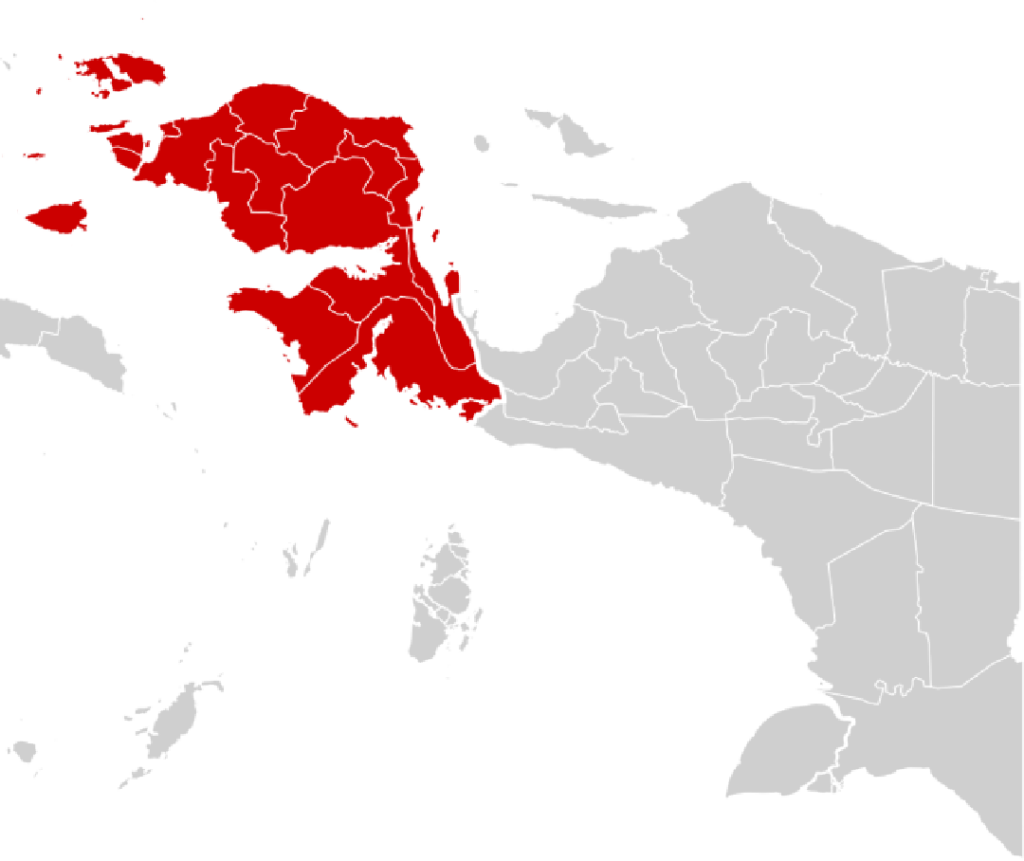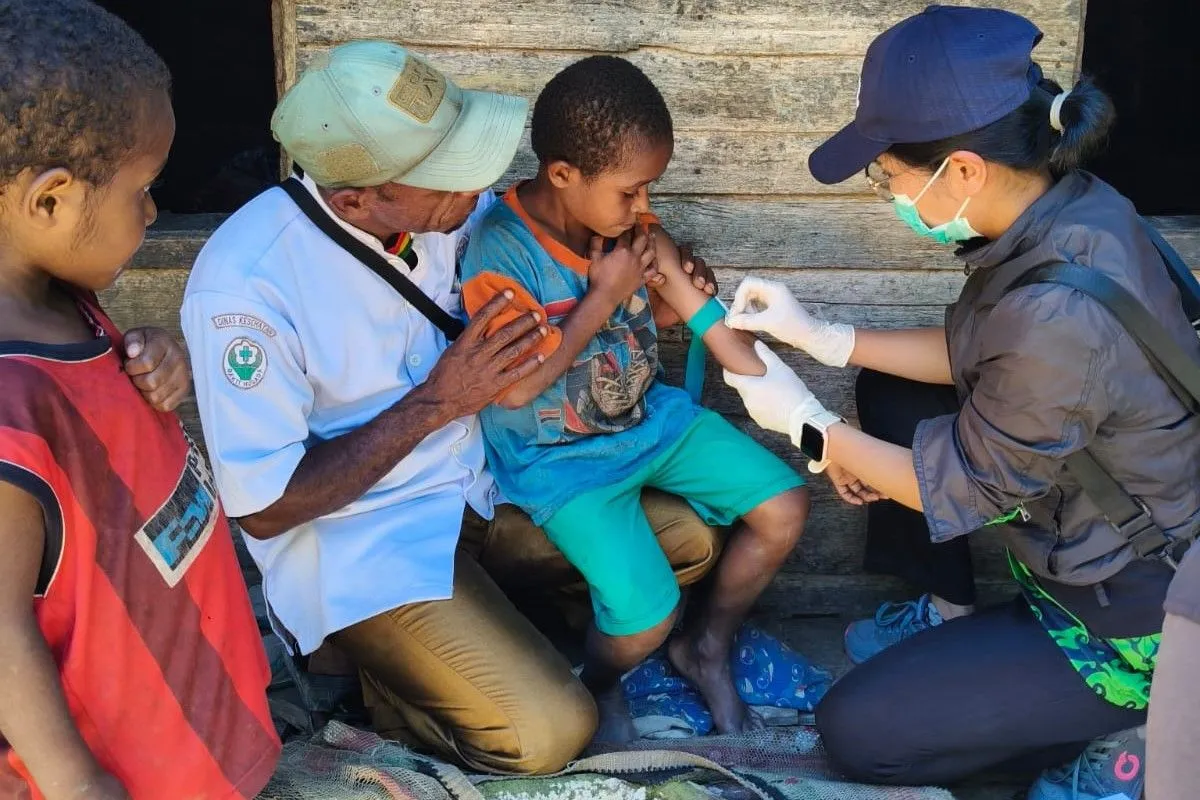
The Papua Tengah (Central Papua) Provincial Health Office has begun a rapid public health response after reports of suspected measles cases in Modio Village, Dogiyai Regency, emphasizing the government’s commitment to preventing a possible outbreak through early detection, epidemiological investigation, and strengthened disease surveillance.
Health officials confirmed an investigation team was dispatched immediately after local health workers reported several residents showing symptoms consistent with measles. The mission is intended to confirm the diagnosis, investigate community transmission, and put in place preventative measures before new infections emerge.
Rapid response to suspected infectious diseases is a key part of Indonesia’s disease surveillance system, the provincial officials said. Early intervention helps protect affected communities while minimizing the possibility of wider transmission in remote areas with more challenging access to healthcare services.
The investigation is a reflection of the Papua Tengah government’s wider commitment to improve public health preparedness and to guarantee that communities can get timely medical treatment when unusual disease patterns are detected.
Rapid Investigation Begins in Dogiyai
After the initial reports from Modio Village, the Papua Tengah Health Office deployed a special investigation team that included surveillance personnel and public health professionals.
The team was given several immediate priorities, according to provincial health officials.
First, investigators are doing field assessments to determine if the reported illnesses are true measles or another infectious disease with similar symptoms.
Second, medical personnel are gathering biological samples for laboratory analysis. Confirmation of the diagnosis in the laboratory is an important step before an event can be classified as a confirmed measles outbreak.
Third, investigators are recording the number of suspected cases, identifying possible sources of exposure and assessing whether other residents may have experienced symptoms.
By obtaining accurate epidemiological data, authorities are able to decide on the best public health response and avoid unnecessary panic, the officials stressed.
This systematic approach is consistent with internationally recognized approaches to disease surveillance, which emphasize scientific evidence before the implementation of wider measures of intervention.
Preventing an Extraordinary Event Through Early Action
One of the investigation’s main aims is to prevent the situation from becoming a Kejadian Luar Biasa (KLB), or what Indonesia refers to as a public health emergency or outbreak.
Public health professionals generally agree that the first few days after detecting suspected cases are often the most critical for preventing an outbreak.
If health authorities are able to rapidly identify infected individuals, trace close contacts, confirm laboratory results, and strengthen local surveillance, the risk of wider community spread can be substantially reduced.
Thus, Papua Tengah Health Office officials consider the ongoing investigation a preventive effort, not merely a response to confirmed illness.
Early detection is still one of the best weapons in infectious disease control, as it allows interventions before transmission becomes more widespread.
Health authorities are also continuing to work closely with local health centers and district officials to ensure that any further suspected cases are detected and reported immediately.
Laboratory Testing Provides Scientific Certainty
While clinical symptoms can suggest measles, provincial health authorities emphasized that laboratory confirmation is still required.
Many infectious diseases have similar presentations, especially fever with skin rashes.
Laboratory analysis thus continues to be the definitive test for confirming that the reported illnesses are caused by the measles virus.
To this end, the investigation team has collected biological samples from suspected patients and will send them for laboratory examination according to national surveillance procedures.
Laboratory confirmation supports evidence-based decision-making by enabling health authorities to differentiate confirmed measles from other illnesses with similar clinical presentations, officials said.
Correct diagnosis also enables more targeted public health interventions like vaccination strategies, contact tracing, and community education.
This scientific approach forms part of Indonesia’s wider efforts to strengthen disease surveillance with standardized laboratory networks and improved epidemiological monitoring.
Disease Surveillance Plays a Critical Role
The response in Dogiyai shows how important it is to have effective disease surveillance systems, especially in challenging-to-reach areas like Papua.
Surveillance allows health authorities to detect unusual disease patterns early, investigate suspect cases, track transmission, and evaluate the impact of public health actions.
In remote areas, surveillance is often a matter of close collaboration between provincial health departments, district administrations, community health stations, village leadership, and local health providers.
Information collected at the community level forms the basis for provincial decision-making and allows for rapid deployment of medical teams if required.
Papua Tengah Health Office officials said enhancing surveillance capacity was among the province’s priorities as part of broader efforts to improve healthcare services in Papua.
Investing in surveillance systems helps governments respond more quickly to threats of infectious disease while protecting vulnerable populations before outbreaks spread more widely.
Healthcare Workers Coordinate Across Multiple Levels
The Dogiyai investigation also shows the importance of coordination within Indonesia’s public health system.
Provincial authorities are in close coordination with district health offices, community health centers, surveillance officers, laboratory staff, and frontline medical workers during the entire investigation.
This type of coordination helps ensure rapid sharing of information and allows health authorities to adapt response strategies as new evidence becomes available.
Healthcare workers also continue to engage with community leaders and local residents to promote early reporting of symptoms and cooperation during the investigation process.
Officials stressed public involvement is critical in preventing disease because timely reporting allows health teams to intervene more effectively.
Thus, maintaining public trust and straightforward communication continues to be an important component of the overall response strategy.
Immunization Remains the Most Effective Protection
Meanwhile, in Dogiyai, the investigation is focused on confirming the suspected cases, but health authorities stressed that routine immunization is the best protection against measles. According to the World Health Organization (WHO), widespread vaccination has resulted in a dramatic reduction in measles-related illness and deaths across the world. Immunization has been one of the most successful public health interventions ever implemented.
Therefore, the Papua Tengah Province Health Office continues to promote to parents and caregivers to ensure that eligible children receive complete immunization according to the national schedule of vaccination in Indonesia.
Provincial officials said maintaining high coverage is especially important in geographically dispersed areas like Papua, where remote settlements and difficult terrain can make healthcare delivery challenging.
Higher levels of sustained vaccination coverage in a community also provide a higher level of protection. This reduces the chance that imported or sporadic cases will lead to outbreaks.
Health officials also stressed the importance of community awareness. “Parents are advised to seek medical attention promptly if children develop symptoms such as fever accompanied by skin rashes for healthcare workers to investigate potential cases without delay.
In addition to immunization, public health officials continue to promote hygiene, community education, and early reporting systems to help prevent disease throughout the province.
Strengthening Public Health Systems Across Papua
The response in Dogiyai is part of broader efforts by the Papua Tengah Provincial Government to improve health services and disease surveillance across the province.
“Healthcare delivery across Papua has its unique logistical challenges. The rugged terrain, scattered populations, volatile weather, and limited transportation infrastructure often force health workers to travel long distances to reach remote communities.
Notwithstanding these challenges, provincial authorities are still investing in surveillance systems, laboratory capacity, vaccination programs, and collaboration between provincial and district health offices.
The rapid deployment of investigation teams reflects progress in institutional readiness and coordination, officials said.
The present response is a collaborative effort between provincial health officials, the Dogiyai Regency Health Office, community health centers, laboratory personnel, surveillance officers, and local community leaders.
This multilevel coordination enables authorities to quickly verify information, efficiently mobilize medical resources, and take preventive measures based on scientific evidence.
Most health experts agree that resilient public health systems need more than hospitals and medical facilities. They need effective surveillance, trained personnel, laboratory networks, reliable reporting systems, and robust community engagement.
The Dogiyai investigation is a prime example of how these components work in concert to identify and contain potential infectious disease threats before they emerge.
International Best Practices in Measles Prevention
Measles is one of the most contagious viral diseases known to public health specialists worldwide. Given the high transmissibility, countries generally respond to suspected cases with rapid investigation.
International guidelines developed by the World Health Organization call for a comprehensive response of laboratory confirmation, epidemiological investigation, contact tracing, enhanced surveillance, community communication, and immunization where appropriate.
“The goal of these measures is to stop transmission as soon as possible while protecting vulnerable populations, especially young children.
The actions of the Papua Tengah Provincial Health Office are very similar to these internationally recognized principles of public health.
Rather than waiting for the disease to spread widely, authorities began field investigations soon after reports of suspected cases.
This preventative strategy guarantees that officials can make evidence-based decisions while minimizing unnecessary disruption to local communities.
International experience has shown time and again that rapid response and effective vaccination programs are among the most successful measures to prevent measles outbreaks.
For international readers, the events in Dogiyai illustrate how regional health authorities implement internationally accepted surveillance and outbreak prevention practices in the unique geographic context of Papua.
Looking Ahead
Health officials said laboratory testing and epidemiological investigations will continue until the suspected cases are fully evaluated. Authorities are expected to continue enhanced surveillance activities to monitor surrounding communities for any evidence of further transmission.
Should laboratory testing confirm measles, provincial health authorities are ready to undertake further public health measures, following national disease control protocols. This might include increased surveillance, increased vaccination efforts where needed, community education, and ongoing coordination with local health care providers.
Officials said the current response remains precautionary and is meant to ensure that any potential public health threat is addressed quickly and effectively.
Besides the immediate investigation, the experience in Dogiyai is expected to help strengthen surveillance systems, laboratory coordination, and community-based health monitoring to prepare for future infectious disease responses across Papua Tengah.
Conclusion
The quick sending of a team by the Papua Tengah Provincial Health Office to Modio Village, Dogiyai Regency, after hearing about possible measles cases highlights the importance of spotting health issues early and taking informed public health actions. The provincial government is working to prevent the situation from developing into a wider outbreak through laboratory testing, epidemiological investigation, strengthened surveillance, and close coordination with district health authorities. The response also showed Indonesia’s ongoing commitment to improving the health systems in Papua despite the geographical obstacles. These preventive steps, along with ongoing vaccination programs, community involvement, and better disease monitoring, help protect public health and strengthen healthcare in Papua Tengah for the future.