
A room filled with books can become a starting point for a much larger journey. In Kampung Ongan Jaya, Yapsi District, Jayapura Regency, Papua, that opportunity has taken shape through the opening of the Seribu Mimpi Community Reading Centre, a public learning facility offering children and local residents access to more than 4,000 books.
The initiative, developed by the Patriot Expedition Team of the Bandung Institute of Technology (Tim Ekspedisi Patriot Institut Teknologi Bandung, or TEP ITB), is intended to do more than provide shelves of reading material. It seeks to revive a previously inactive facility, encourage children to develop a reading habit and create a community-based learning space where education can continue beyond formal school hours.
Officially inaugurated on October 23, 2026, the Seribu Mimpi Community Reading Centre has quickly attracted attention from local children and educators. Its arrival also illustrates how collaboration between universities, government institutions, literacy communities and residents can contribute to improving access to education in Papua.
For children growing up in Yapsi, the centre offers something straightforward but valuable: a comfortable place to discover books, spend time with friends and develop interests that may eventually shape their future.
Reviving an Old Facility with a New Purpose
The establishment of Seribu Mimpi was not simply a matter of constructing a new building. The project involved bringing an existing community facility back into use.
According to information published by ANTARA and ITB, the reading centre was developed through the revitalisation of a facility formerly known as Rumah Pintar Hati Papua. The earlier reading facility began operating in 2017 but had remained inactive for several years.
Its unused condition represented an opportunity to restore a community asset and give it a more active role in local education. Rather than allowing the building to remain neglected, TEP ITB worked with residents to renovate the space and prepare it for renewed public use.
The renovation process took approximately two months. During this period, the team worked to restore the building’s function as a reading and learning environment, including arranging book collections and adding educational murals to make the interior more welcoming for children.
The result was the Seribu Mimpi Community Reading Centre, a facility designed to accommodate reading, informal learning and activities involving local children.
The project formed part of TEP ITB’s research activities in the Lereh Transmigration Area of Jayapura Regency. Its research focused on educational service and facility innovation through participatory action and self-help community development.
This approach placed community involvement at the centre of the initiative. The objective was not simply to deliver an educational facility to residents but to encourage local participation in its development and long-term management.
More Than 4,000 Books Open New Learning Opportunities
One of the centre’s most significant features is its collection of more than 4,000 books. The availability of this material provides children and other residents with a wider range of reading resources in a dedicated community space.
The collection is intended to support activities beyond the classroom. Children can use the facility to explore reading materials, develop curiosity and spend time in an environment that encourages learning.
For many young readers, access to various books can be an important first step toward developing confidence and independent learning habits. A community reading centre also offers children the opportunity to explore subjects that may not receive extensive attention in regular school lessons.
The name Seribu Mimpi, meaning “A Thousand Dreams”, reflects the broader aspiration behind the initiative. It suggests that a simple reading space can help young people imagine different possibilities for their lives through knowledge and education.
The project also received support from outside Yapsi. In Bandung, Howl Library and Creative Space and the Independent Library Alliance of Bandung supported a campaign called “1,000 Books for the Lereh Reading Centre”.
By October 23, 2026, the campaign had collected approximately 314 books from members of the public. This contribution formed part of the wider effort to strengthen the reading facility’s collection.
The distinction is important: the centre has more than 4,000 books, while the Bandung-based campaign had gathered around 314 books by the date reported by ITB. Together, the contributions demonstrate how local initiatives can attract support from wider literacy networks.
Local Youth Take Part in Managing the Centre
Providing books and renovating a building are important steps, but maintaining a reading centre requires consistent involvement after its inauguration.
For that reason, TEP ITB has involved young people from Kampung Ongan Jaya in the management of Seribu Mimpi. They have been appointed as part of the local organising team and received guidance on managing a community literacy programme.
This arrangement is intended to strengthen residents’ sense of ownership and ensure that the centre does not depend entirely on the university team’s continued presence.
Community participation is particularly important for facilities located outside major urban centres. A reading room can attract considerable attention when it first opens, but its long-term value depends on whether it remains accessible, active and relevant to local residents.
By involving local youth, the programme creates an opportunity for young people to contribute directly to education in their community. They can help organise activities, encourage children to visit and support the day-to-day operation of the facility.
The Government of Kampung Ongan Jaya has also supported the sustainability of the initiative, including by designating the building as a village asset.
Such local institutional support provides a foundation for continued management. It also reflects the importance of linking community participation with clear responsibility for maintaining public facilities.
Children and Teachers Welcome the New Reading Space
The response from local residents suggests that Seribu Mimpi is already providing a useful alternative learning environment.
Fransiskus Moa, a Grade VIII student at SMP Negeri 2 Yapsi, welcomed the opening of the facility. He described the centre as a comfortable place where he could read books and spend time with his friends.
“I am thrilled that Seribu Mimpi Reading Centre is here. It is a comfortable place to read books and play with friends,” Moa said.
His response reflects the importance of creating learning environments that children want to visit. Reading facilities are more likely to become part of everyday community life when they offer a welcoming atmosphere and opportunities for social interaction.
Suwarti, a teacher at PAUD Makarti Jaya, whose early childhood education facility is located near the reading centre, also welcomed the revitalisation.
She said the once-neglected space was now active and giving Yapsi children a chance to play and learn.
Her observation highlights a connection between early childhood education and community literacy. Learning does not take place exclusively inside formal classrooms. Access to books, storytelling and informal educational activities can complement what children receive at school.
The inauguration also featured activities intended to introduce children to the facility in an engaging way.
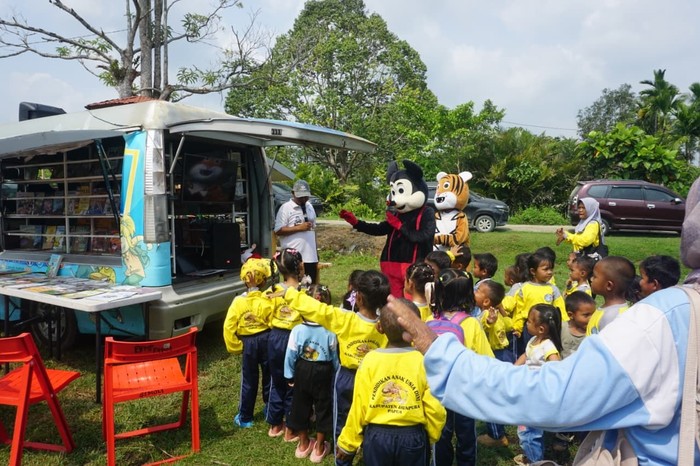
The Mobile Literacy programme, known as SiMoLi, from the Papua Provincial Education Quality Assurance Agency (BPMP Papua) took part in the event. Through interactive storytelling and educational entertainment, the programme helped introduce young children to reading in a more participatory setting.
Children from early childhood education and kindergarten groups had the opportunity to explore reading materials, listen to stories and enjoy educational performances.
The activities helped turn the inauguration into more than a formal ceremony. They provided an opportunity for children to experience the reading centre as a place for discovery and shared activities.
Support from Government and Educational Institutions
The opening of Seribu Mimpi received support from several institutions involved in education and literacy development.
The inauguration was attended by representatives of local stakeholders, and a virtual message was received from the Head of the National Library of Indonesia, Professor E. Aminudin Aziz.
Support was also reported from the Jayapura Regency Library Service, the Family Welfare Movement (TP-PKK), the Papua Language Centre and Bank Indonesia.
The participation of these institutions reflects the wider network of support surrounding the initiative. Universities can contribute research and technical assistance, and local governments can help provide institutional support, while literacy communities and residents can strengthen daily operations.
To reinforce the centre’s institutional standing, TEP ITB and the Jayapura Community Literacy Volunteers have also submitted an application to register Seribu Mimpi with the National Library of Indonesia.
The registration process is intended to strengthen the facility’s institutional framework. It is an important step towards establishing a more organised community reading service rather than leaving the centre as a temporary project associated with the team’s activities.
However, the long-term success of the initiative will depend on continued coordination, adequate maintenance, active management and the availability of reading activities that respond to local needs.
Part of Wider Efforts to Strengthen Education in Yapsi
The Seribu Mimpi initiative forms part of broader efforts by the Patriot Expedition programme to support development in transmigration areas, including through research, community engagement and improvements to local services.
TEP ITB’s educational activities in Yapsi have also extended beyond the reading centre.
In September 2026, the team assisted 39 elementary school teachers from five schools in Yapsi District in using interactive digital boards for classroom learning. The activity was intended to support teachers in making lessons more engaging through the use of educational technology.
These activities demonstrate that improving educational access involves several interconnected elements. Children need learning materials and supportive environments, while teachers need opportunities to strengthen their skills and make effective use of available teaching resources.
The reading centre and the digital learning initiative address different aspects of this challenge. One provides a community-based space for reading and informal learning, while the other supports classroom instruction and teachers’ use of technology.
Together, they offer an example of how university-led research and community participation can contribute to educational development at the local level.
The involvement of TEP ITB under the Ministry of Transmigration also illustrates the role that higher education institutions can play in supporting government development programmes. Academic expertise becomes more meaningful when it is translated into practical initiatives that respond to the needs of communities.
Keeping the Promise of Seribu Mimpi Alive
The opening of a reading centre is a key milestone, but it doesn’t mean the work is done.
The availability of more than 4,000 books creates a valuable starting point. Yet the centre’s contribution will ultimately be measured by how often children use it, whether reading activities continue and whether local residents can maintain its services over time.
Several priorities will therefore matter in the coming months and years. The local management team will need to maintain the books and facilities, organise regular activities and encourage children to develop consistent reading habits. Cooperation with schools, parents, literacy volunteers and government institutions can also help ensure that the centre remains connected to the wider educational environment.
Equally important is the need to make the collection relevant to readers of different ages. Storytelling, group reading, creative activities and educational discussions could help transform the facility into a lively community learning space.
These are practical considerations rather than guaranteed outcomes. The available reports document the inauguration, the collection, the renovation and the initial community involvement, but they do not yet provide long-term data on changes in reading ability or school performance.
That distinction matters when assessing the programme’s impact. Its potential is evident, but sustained results will depend on consistent implementation and evaluation.
Conclusion
The establishment of the Seribu Mimpi Community Reading Centre in Kampung Ongan Jaya represents a constructive contribution to educational development in Jayapura Regency. By revitalising a previously inactive facility and bringing together more than 4,000 books, TEP ITB has helped create a new space where children can read, learn and explore their interests beyond the classroom.
More importantly, the involvement of local youth, village authorities, educators and literacy organisations provides a foundation for community ownership. This collaborative approach is essential if the initiative is to remain active after the initial project period.
The experience in Yapsi also highlights the value of cooperation between universities, government institutions and local communities in addressing development needs. Education requires more than buildings and formal lessons. It also depends on access to knowledge, supportive environments and opportunities for children to develop their abilities.
If Seribu Mimpi can maintain its activities and continue to engage young readers, the centre could become a valuable community resource for future generations. From a revitalised building in Kampung Ongan Jaya, a wider opportunity is taking shape: giving children in Papua greater access to knowledge and the confidence to pursue their dreams.
Conclusion
The establishment of the Seribu Mimpi Community Reading Centre in Kampung Ongan Jaya marks a meaningful contribution to improving educational opportunities in Papua. By revitalising a previously inactive facility and providing more than 4,000 books, TEP ITB has created a welcoming space where children can develop reading habits, expand their knowledge and explore new aspirations beyond the classroom. The involvement of local youth, village authorities, educators and literacy organisations also provides a foundation for community ownership and long-term sustainability. Ultimately, the success of Seribu Mimpi will depend on consistent management, active participation and continued institutional support. If these efforts are maintained, the centre could become more than a place to read. It could serve as a lasting investment in human capital, empowering the younger generation of Papua with the knowledge, confidence and opportunities to contribute to their communities and Indonesia’s future.
Read Also
ITB Brings Digital Health Access to Papua’s Yapsi
Papua Barat Trains 30 Village Peace Mediators
Undip Trains 30 Papua Health Cadres to Prevent Malaria

