
Expanding access to education in Indonesia’s mountainous interior requires more than classrooms. It also calls for suitable land, reliable infrastructure, and sustained cooperation between local and central governments. In this context, the Papua Pegunungan (Highland Papua) Provincial Government has proposed constructing four permanent Sekolah Rakyat, or People’s Schools, to bring educational opportunities closer to communities throughout the province.
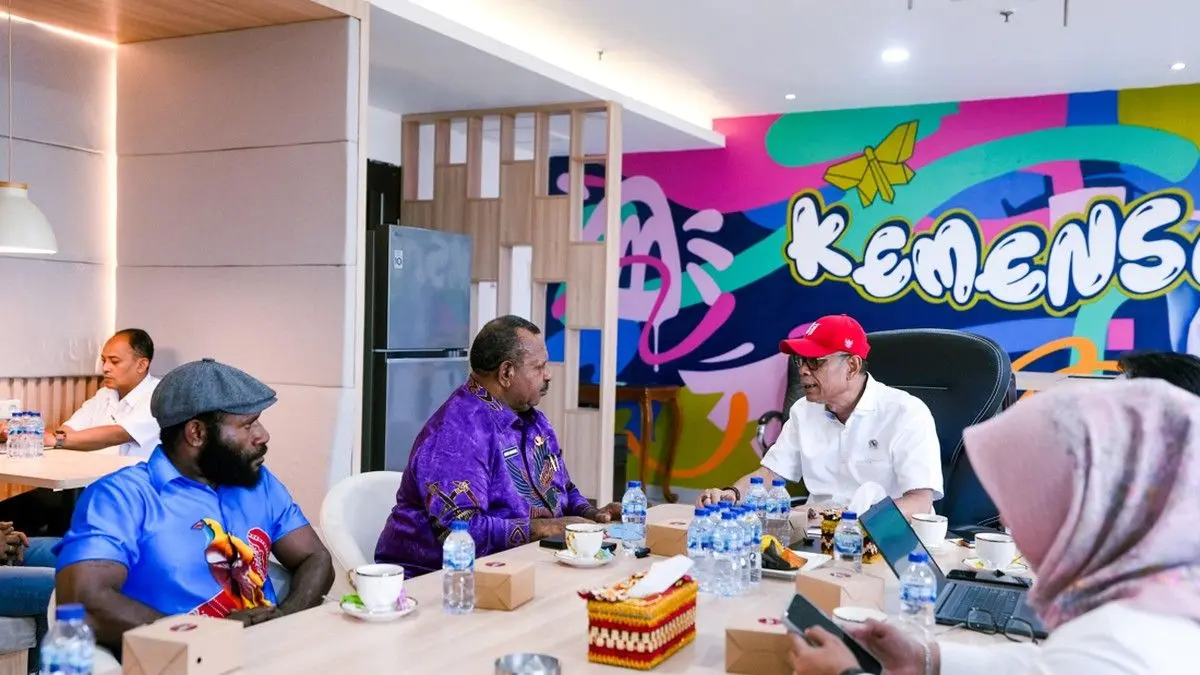
The proposal was formally submitted by Deputy Governor Ones Pahabol to Deputy Minister of Social Affairs Agus Jabo Priyono at the Ministry of Social Affairs in Jakarta on Monday, November 2, 2026. The plan covers four locations: two in Jayawijaya Regency, one in Yahukimo Regency, and one in Yalimo Regency.
Each proposed site covers approximately 10 hectares and is described by the provincial government as land owned by the province. Existing school buildings and supporting facilities, including road access, electricity, and water supplies, are among the advantages presented by the regional administration.
However, the proposal remains subject to administrative and technical verification. Land certificates are still being processed, and the Ministry of Social Affairs has made clear that the sites must meet the required standards before feasibility surveys and subsequent construction planning can move forward.
The discussion illustrates how the national People’s School program is being pursued in one of Indonesia’s most geographically challenging regions. It also highlights the importance of coordination between Jakarta and provincial authorities in turning development proposals into functioning public services.
Four Proposed Locations Across Three Regencies
The Papua Pegunungan administration has identified four sites for the proposed permanent schools. Two are located in Jayawijaya Regency, while Yahukimo and Yalimo each have one proposed location.
According to Ones Pahabol, each plot measures approximately 10 hectares. He told the meeting that the land issue was not considered a fundamental obstacle because the sites were provincial government assets. The remaining difficulty, he explained, concerned the completion of land certification and the associated administrative process.
“Each site is approximately 10 hectares. So, in principle, the land is not a problem. The certificates are taking time, and the land-release process needs to be completed,” Ones said during the meeting, as reported by Indonesian media.
The provincial government also explained that the proposed locations already have several supporting facilities. School buildings are reportedly present on the sites, while access roads, electricity networks, and water supplies are available.
Their proximity to urban centers was another consideration raised by the deputy governor. The locations are considered relatively accessible, which could help support the daily needs of students, teachers, and school personnel.
These factors are important in Papua Pegunungan, where mountainous terrain and long distances between settlements can make the provision of public services more complicated. A school site may need to be assessed not only for its land area but also for its accessibility, safety, water supply, and ability to support long-term operations.
The provincial proposal therefore seeks to build on existing assets rather than begin entirely from scratch. Nevertheless, the final suitability of each site will depend on the assessment conducted by the relevant central government agencies.
From Provincial Preparation to Formal Submission
The proposal presented in Jakarta was the result of preparatory work by the Papua Pegunungan administration to identify potential locations and address the requirements for a permanent People’s School.
Earlier preparations had also been reported at the provincial level. In August 2026, the provincial Social Affairs Office described coordination with the Ministry of Social Affairs concerning the development of a People’s School site in the Hom Hom area of Wamena. The office said land documentation and location preparations were among the matters being handled. This earlier activity provides context for the province’s broader effort to advance the program, although it should not be confused with formal approval of all four sites now proposed.
On November 2, the process moved to a formal submission when Ones delivered the proposal to Agus Jabo and Jauhari, a representative of the Secretariat of the People’s School Human Resources Development Agency (BPSDM) Transition Team.
During the meeting, the deputy governor explained the location plans and the provincial government’s position on land ownership and supporting infrastructure. He also committed to accelerating the completion of the outstanding certificates.
One said the provincial government expected to complete the certification process within approximately one month. That commitment is an important part of the proposal because clear land ownership is a prerequisite for government agencies to proceed with formal development planning.
The submission also gave the Ministry of Social Affairs an opportunity to explain the technical and administrative requirements that must be met before the proposal can advance.
Social Affairs Ministry Signals Support, Sets Conditions
Deputy Minister Agus Jabo welcomed the proposal and expressed support for expanding the People’s School program, particularly in disadvantaged, frontier, and outermost areas, commonly known in Indonesia as 3T regions.
The initiative is intended to widen access to education for children from poor and extremely poor households. In regions where geographical barriers and uneven access to public facilities can affect educational opportunities, the program is intended to provide an additional route for children to obtain structured schooling and support.
Agus Jabo nevertheless stressed that support for the proposal must be accompanied by complete administrative documentation and a clear legal status for the land.
He said the land must be definitively registered under the provincial government before the ministry can process the proposal further. Access to the locations must also be adequate, and the sites should have relatively flat terrain, electricity, and sufficient water supplies.
“During this process, as long as the land is definitively registered in the name of the provincial government, we can proceed. We want People’s School to be established in Papua as soon as possible. We are waiting until all the requirements are clear and clean,” Agus Jabo said, according to Tirto’s report of the meeting.
His remarks indicate that the Ministry is open to the initiative but will not bypass the verification process. This approach is intended to ensure that public investment is directed towards sites with secure ownership and the necessary conditions for construction and future operation.
Land certification and Site Preparation are the Next Priorities
Agus Jabo also offered a specific recommendation concerning the certification process. He suggested that areas already occupied by existing school buildings should be excluded from the land certificate being prepared for the proposed development.
The recommendation is intended to simplify administrative arrangements and make future site preparation easier. Separating existing buildings from the land area designated for new development could help avoid complications during land clearance and the subsequent construction process.
Once the documentation is complete, the Ministry can arrange feasibility surveys to assess the proposed locations directly.
The sequence is therefore clear: the provincial government must complete the land documentation, the relevant agencies must verify the legal and physical conditions, and only then can the process move to the next stage of development planning.
Construction Expected to Proceed in Stages
The provincial government has submitted four locations in one proposal, but that does not mean all four schools will necessarily be built simultaneously.
Jauhari, representing the Secretariat of the People’s School BPSDM Transition Team, welcomed the initiative and appreciated the provincial government’s efforts to prepare potential sites.
He also reminded the regional administration that construction would be carried out in stages if the proposal met the required conditions.
This point is important for managing expectations. The submission represents a request for government support, not a final construction decision. The timing and sequence of development will depend on administrative readiness, technical assessments, and the government’s subsequent planning.
A phased approach can also allow the authorities to address practical challenges at each location. Lessons from the first development stage may help improve site preparation, infrastructure planning, and coordination before the next school is built.
For the provincial government, completing the land certification process will be a decisive step in maintaining momentum.
People’s School and the Wider Education Challenge in Papua Pegunungan
The proposal comes at a time when improving access to education remains an important part of regional development in Papua Pegunungan.
The province’s mountainous geography presents practical challenges for public service delivery. Communities can be separated by difficult terrain, while transport and infrastructure limitations may affect the availability of schools, teachers, and learning resources.
In such circumstances, expanding educational facilities requires careful attention to location. Schools need to be accessible to the communities they are intended to serve while also having sufficient infrastructure to support teaching and student welfare.
The proposed sites in Jayawijaya, Yahukimo, and Yalimo could help expand the geographic reach of the People’s School program if they pass the required assessments. Their distribution across three regencies also indicates an effort to extend the initiative beyond a single urban center.
However, the long-term success of the program will depend on more than the construction of buildings. School management, teacher availability, learning quality, student support, and reliable operational funding will all influence whether the facilities deliver lasting benefits.
The ministry and provincial government will also need to ensure that eligible children and families understand how to access the program. Transparent student selection and clear information about educational provision will be important in building public confidence.
Water Supply Request Adds a Social Development Dimension
The November 2 meeting also addressed another pressing issue affecting communities in Papua Pegunungan: access to clean water.
During his discussion with Agus Jabo, Ones Pahabol reported that some residents were experiencing shortages of clean water because of drought conditions. He asked the Ministry of Social Affairs to assist with the provision of wells at various locations across the province’s eight regencies.
The request broadened the meeting beyond school infrastructure, highlighting the connection between education and basic social services.
A reliable water supply is important for household health, sanitation, and the daily functioning of schools and community facilities. Where drought affects access to water, families may face additional difficulties that can also influence children’s ability to attend school and participate in learning.
Agus Jabo responded positively to the request and instructed Masryani Mansyur, Director of Social Protection for Disaster Victims at the Ministry of Social Affairs, to arrange a field assessment.
Masryani also suggested that the matter be discussed with Indonesia’s National Disaster Management Agency, known as BNPB, to consider possible coordination.
“Perhaps we can also communicate with BNPB,” she said, according to Tirto.
The proposed assessment will be important in determining the scale of the water shortage, identifying priority locations, and establishing what type of assistance may be appropriate. The Ministry’s response at this stage is a commitment to assess the situation, rather than confirmation that wells have already been constructed or funded.
The inclusion of the water issue demonstrates how regional development needs are often interconnected. Educational facilities cannot operate effectively without basic infrastructure, while families need access to essential services to support children’s well-being.
Central and Regional Government Cooperation
The meeting between Ones Pahabol and Agus Jabo reflects the role of intergovernmental coordination in implementing national social programmes in remote regions.
The provincial government is responsible for preparing the proposed sites and ensuring that the land documentation is complete. The Ministry of Social Affairs, meanwhile, must assess the proposal against programme requirements and coordinate the next stages with the relevant agencies.
Other institutions may also be involved in technical assessments, infrastructure planning and construction, depending on the final development arrangements.
This division of responsibilities is important because a successful school project requires more than political support. It needs clear land ownership, sound planning, reliable infrastructure and a realistic implementation schedule.
The proposal also provides an opportunity to strengthen the relationship between national development priorities and local needs. By identifying sites across three regencies, the Papua Pegunungan administration is seeking to bring a national education initiative closer to communities in the province.
The availability and quality of services provided on the ground will ultimately determine how valuable such cooperation is for residents.
Conclusion
The proposal from the Papua Pegunungan Provincial Government for four permanent People’s Schools marks a significant step in its effort to expand educational opportunities across the region. The proposed locations in Jayawijaya, Yahukimo, and Yalimo reflect an ambition to bring educational facilities closer to communities while making use of provincial land and existing infrastructure.
The Ministry of Social Affairs has welcomed the initiative and expressed support, particularly because the proposed schools would serve a 3T region. However, the next phase depends on the completion of land certificates, verification of site conditions and feasibility assessments. Construction, if approved, is expected to proceed in stages rather than automatically beginning at all four locations at once.
The discussion of clean-water shortages also emphasizes the need to approach development in an integrated way. Schools, water supplies, electricity, and road access are connected elements of the public infrastructure that communities need.
Ultimately, the success of the proposal will depend on how effectively the provincial and central governments translate their commitments into practical results. If the administrative and technical requirements are completed, the four proposed sites could become an important addition to educational services in Papua Pegunungan.
For the province’s children, the most meaningful outcome will not simply be the construction of new school buildings. It will be the opportunity to learn, develop their abilities and prepare for a future in which they can contribute to their families, communities and the wider development of Indonesia.
Read Also
Papua Plans Special Schools to Expand Inclusive Education
Indonesia Targets 214 Schools Revitalisation in Papua

