
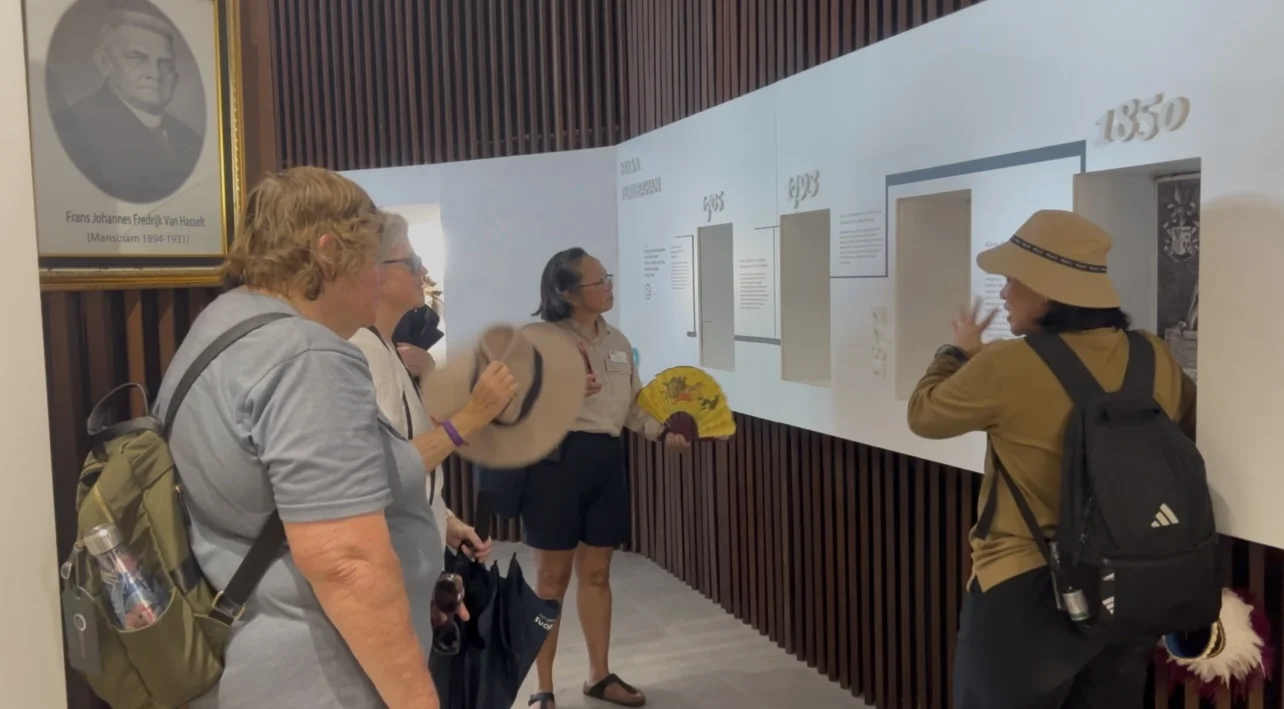
On a small island off Manokwari, Mansinam Museum is gaining renewed attention as Papua seeks to preserve its historical heritage while opening new opportunities for cultural tourism. The museum stands on Mansinam Island, a place closely associated with the arrival of Christianity in Papua in 1855 and increasingly viewed as an important destination for religious, historical, and cultural tourism.
The provincial government of West Papua is now encouraging the museum to become more attractive, better managed, and more widely recognized. One important step is the effort to include Mansinam Museum in Indonesia’s National Museum Registration system, a move intended to strengthen its institutional management and support the preservation of Papua’s historical and cultural heritage.
The development comes at a significant moment. International travelers are increasingly looking beyond conventional tourist attractions for places that offer history, culture, and authentic community experiences. Mansinam has many of those elements in one location.
For Papua, the challenge is to ensure that tourism development does not reduce history and culture to commercial attractions. Instead, the island can become a place where visitors learn about Papua’s past, experience its living traditions, and understand the region’s place within Indonesia’s broader historical journey.
Mansinam and the History of Christianity in Papua
Mansinam Island occupies a distinctive place in Papua’s history. On February 5, 1855, German missionaries Carl Wilhelm Ottow and Johann Gottlob Geissler arrived on the island and began missionary work that would later become an important part of the history of Christianity in Papua. RRI reported in February 2026 that the island remains a major destination for pilgrims and visitors from different parts of Indonesia because of this historical significance.
The historical legacy is visible throughout the island. The Mansinam area includes the monument commemorating the arrival of Christianity, the Christ the King statue, and the museum dedicated to the history of missionary activity in Papua.
These sites provide different layers of the same story. The museum provides historical context, while the surrounding landmarks and religious activities allow visitors to experience the history within the landscape where it unfolded.
The annual commemoration of the arrival of Christianity on February 5 has also become an important religious and cultural event. Thousands of Christians from different parts of Papua and Indonesia have traditionally gathered on the island for worship, pilgrimage, and related cultural activities.
For many Papuans, therefore, Mansinam is more than a tourist destination. It is a place connected to family memories, religious identity, and the historical transformation of communities in the region.
A Museum with a Broader Cultural Role
The Mansinam Museum is not only about religious history. Properly developed, it can become an educational institution that helps preserve the wider cultural memory of Papua.
Existing descriptions of the museum show that its collections include photographs and documents related to Ottow and Geissler, religious artifacts, historical materials, and stories connected to the Doreri people. The museum was designed to explain the history of Christianity in Papua through different periods, while its collections provide tangible evidence of the historical process.
That function is particularly important at a time when younger generations increasingly encounter history through digital platforms rather than traditional institutions.
A modern museum can bridge the two worlds.
Instead of simply displaying old objects behind glass, the Mansinam Museum could use photographs, maps, oral histories, digital archives, interactive displays, and audiovisual storytelling to explain how communities experienced historical change.
Such an approach would make the museum more accessible to international visitors while giving local residents, especially young Papuans, a stronger opportunity to engage with their history.
Preserving History Through Modern Presentation
The need for modernization is not simply a matter of appearance. Museum management today requires accurate documentation, conservation, professional curation, and accessible interpretation.
The push for national registration is therefore significant.
According to RRI, West Papua’s Culture and Tourism Office has encouraged Mansinam Museum to enter the National Museum Registration system. The process requires museums to provide information concerning their vision and mission, land and buildings, human resources, funding, and institutional identity. Once the requirements are submitted, they are verified by the Directorate of History and Museums before a national registration number is issued.
This process can provide a foundation for more systematic museum development.
It can also help address a longstanding challenge facing historical sites: preserving important heritage requires more than constructing a building. It requires continuous management, documentation, and public engagement.
From Religious Destination to International Cultural Tourism
Mansinam also has the potential to contribute to West Papua’s tourism economy.
In March 2025, a group of 102 international tourists from Australia and the United Kingdom arrived on Mansinam Island aboard the cruise ship MV Coral Geographer. The visitors were introduced to cultural performances involving communities from the Arfak and Biak-Doreri traditions before visiting the island’s principal religious and historical attractions.
The visit demonstrated something important about Mansinam’s tourism potential.
International visitors did not come only to see a museum. They encountered a combination of history, religion, local culture, and community life.
Tourism practitioner and academic Yansen Saragih of the University of Papua described Mansinam as having unusual potential because of its spiritual significance, cultural heritage, and historical authenticity. He also highlighted the island’s proximity to Manokwari, its range of attractions, and the availability of basic visitor facilities.
That combination provides Mansinam an opportunity to develop a distinctive tourism identity.
The island could be promoted as a heritage destination where visitors can explore the history of Christianity in Papua while also learning about the communities, traditions, and cultural expressions that surround the historical narrative.
This approach would complement rather than compete with West Papua’s better-known natural attractions, including Raja Ampat.
Community Participation Will Determine Success
Visitor numbers should not be the sole measure of Mansinam’s future.
A successful heritage destination must also generate benefits for the people who live around it.
Tourism can create opportunities for local guides, boat operators, homestays, food vendors, handicraft producers, cultural performers, and small businesses. When visitors stay longer and spend locally, tourism becomes part of the community economy rather than a brief visit centered solely on a landmark.
This is why community-based tourism is important for Mansinam.
Yansen Saragih has argued that the development of Mansinam as a leading tourism village requires cross-sector cooperation, better infrastructure, digital storytelling, and stronger participation by local residents.
The principle is straightforward: local people should not merely become spectators of tourism development. They should have meaningful roles in presenting, interpreting, and benefiting from their heritage.
This is also relevant to cultural preservation.
Traditional stories, local knowledge, artistic practices, and community traditions are often transmitted orally. If they are not documented and passed to younger generations, parts of that cultural memory can gradually disappear.
A revitalized museum can become one place where such knowledge is recorded and presented responsibly.
Mansinam as a Bridge Between History and Development
The development of the Mansinam Museum also illustrates a wider dimension of development in Papua.
Infrastructure and economic growth are important, but development is incomplete when physical facilities are built. Communities also need institutions that preserve memory, strengthen education, and create a sense of continuity between generations.
For the Indonesian government and local administrations, investment in cultural heritage can therefore complement broader development policies in Papua.
A well-managed museum can contribute to education, tourism, local economic activity, and cultural diplomacy at the same time.
It can also offer international visitors a more nuanced understanding of Papua.
International coverage of Papua often focuses on political, security, or development issues. Heritage destinations such as Mansinam provide another way of understanding the region: through its communities, religious history, cultural diversity, and connections with the wider Indonesian historical experience.
That does not eliminate the complexity of Papua. Instead, it adds a broader and more human dimension to how the region is understood.
The Importance of National Recognition
The effort to register Mansinam Museum nationally is particularly relevant to its long-term development.
National registration can provide a clearer institutional framework for museum management and eventually support standardization. RRI reported that after registration, museums can move toward a standardization process intended to assess their management and determine their category.
For Mansinam, the change could mark a transition from being primarily a historical attraction to becoming a more professionally managed heritage institution.
The opportunity should be used carefully.
Modernization should preserve the authenticity of the museum and its surrounding historical landscape. New technology should explain history rather than overwhelm it. Tourism infrastructure should improve visitor comfort without damaging the character of the island.
Most importantly, the historical narrative should remain evidence-based and respectful of the people and communities whose experiences form part of Papua’s history.
A Destination with Global Potential
The growing interest in heritage and religious tourism gives Mansinam a potentially valuable position in the international tourism market.
The arrival of international cruise visitors in 2025 showed that foreign travelers can be attracted to the island when its cultural and historical assets are packaged effectively.
The next step is consistency.
Visitors need clear information, professional guides, reliable transportation, clean facilities, multilingual interpretation, and a coherent tourism experience. Digital promotion can also help international travelers discover Mansinam before they arrive in Indonesia.
The museum itself could become the central starting point.
A visitor might begin with the history of Ottow and Geissler, continue to the historical sites around the island, meet local communities, experience Papuan cultural performances, and then return to Manokwari with a more profound understanding of the region.
That would turn a museum visit into a broader cultural journey.
Conclusion
The revitalization of Mansinam Museum offers West Papua an opportunity to connect heritage preservation with tourism, education, and local economic development.
The island’s historical association with the arrival of Christianity in Papua provides it a distinctive identity, while its proximity to Manokwari, cultural traditions, and existing religious attractions provide a strong foundation for tourism development. Recent visits by international travelers demonstrate that Mansinam can attract audiences beyond Papua and Indonesia.
The push for national museum registration is another important step because sustainable heritage management requires professional standards, documentation, and institutional continuity.
Looking ahead, Mansinam should be developed not simply as a place to visit, but as a place to understand.
If government agencies, church communities, cultural institutions, tourism operators, academics, and local residents can work together, the museum can become an important gateway to Papua’s historical and cultural heritage.
For international visitors, Mansinam could offer something increasingly valuable: a chance to encounter Papua through its history, people, and living culture.
For Papua itself, the greater achievement would be ensuring that the stories preserved on the island remain accessible to future generations while creating new opportunities for communities today.
Read Also
171 Years of the Gospel in Papua: Faith, History, and Cultural Change in the Land of Mansinam
The History of the Gospel’s Arrival in Papua: A Journey of Faith and Transformation

