
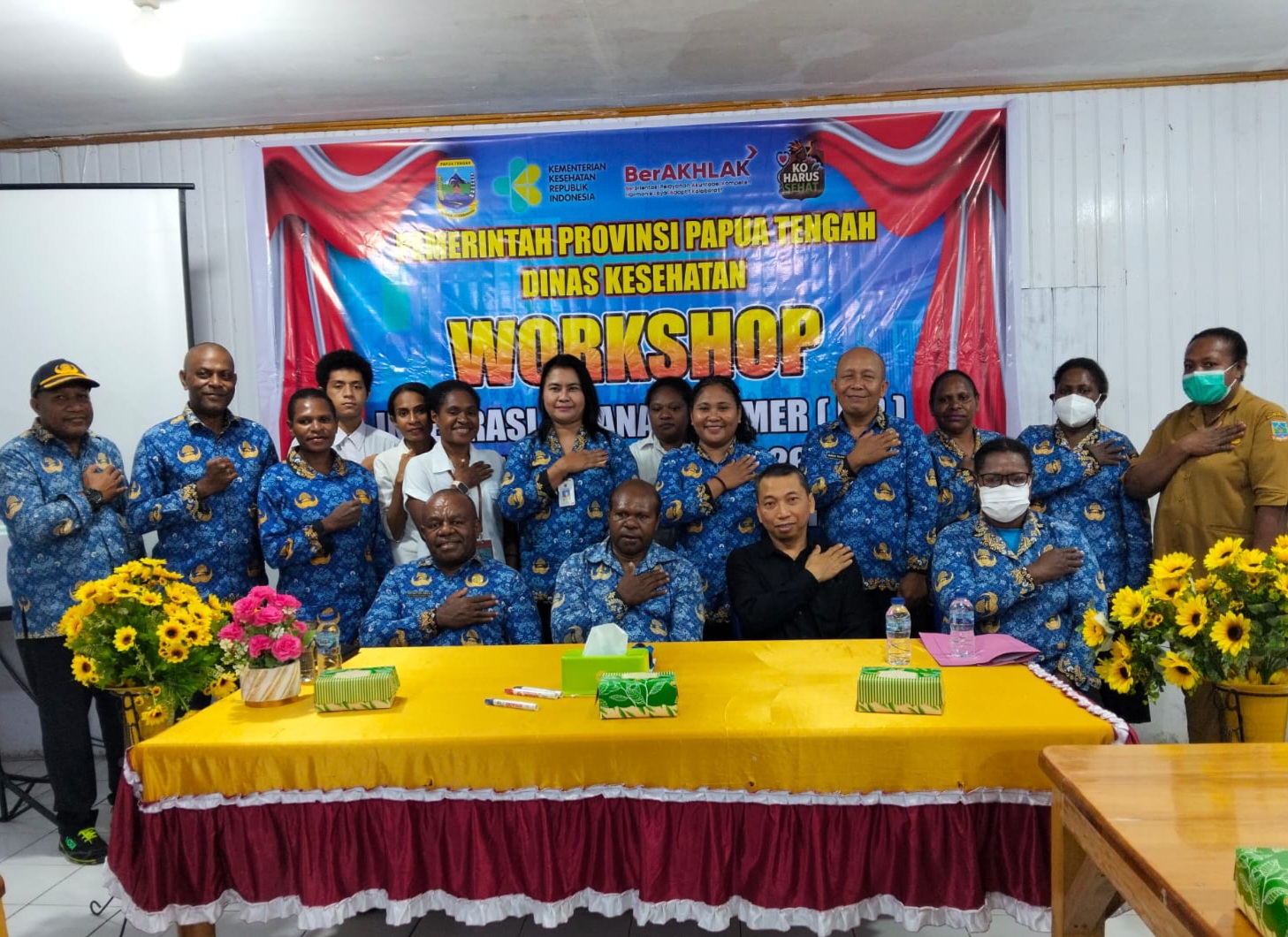
The provincial Health Office in Papua Tengah (Central Papua) is making a practical advancement in primary healthcare reform by training 40 health workers to enhance Integrated Primary Health Care, locally referred to as Integrasi Layanan Primer (ILP). The workshop, running from October 19 to 28, 2026, in Nabire, is designed to improve professional capacity and prepare participants to deliver more coordinated services for people at every stage of life.
The initiative addresses a challenge that extends beyond clinical knowledge. In Papua Tengah, difficult terrain, limited transport options, and uneven distribution of healthcare personnel and facilities can make it harder for residents to obtain timely care. Strengthening primary healthcare therefore requires not only trained professionals but also better coordination between community health centers, auxiliary health centers, integrated health posts, and local health cadres.
The provincial government is seeking to bring those services closer together through ILP, a model that organizes care around the human life cycle rather than treating each health need as an isolated encounter. Its success will depend on whether the skills developed during the workshop translate into better services in local communities.
Nabire Workshop Begins a New Phase of Workforce Development
Provincial Health Office Brings Together 40 Participants
The Papua Tengah Provincial Health Office opened the Integrated Primary Health Care Workshop Batch IV in Nabire on Monday, October 19. The program is scheduled to run for 10 days, until October 28, at the Salera Restaurant Hall on Jalan Pemuda. It brings together 40 health workers for training intended to strengthen their understanding and practical application of the ILP approach.
The opening session was attended by Kristianus Tebai, head of the provincial Health Human Resources Division, along with trainers and instructors from the Ministry of Health’s Makassar Centre for Health Training, known as Balai Besar Pelatihan Kesehatan (BBPK).
The head of the Papua Tengah Health Office, Dr. Agus, delivered his message through Obeth Tekege, the office’s secretary. The address presented ILP as part of Indonesia’s wider health-system transformation, with an emphasis on integrated, high-quality services that respond to the needs of local communities.
The workshop is intended to do more than introduce participants to a policy framework. Organizers want the health workers to develop a shared understanding of how the model should operate and to prepare practical follow-up steps for their respective workplaces.
That emphasis is important in a province where healthcare delivery varies according to geography, transport access, and the availability of personnel. A policy may be established at the provincial level, but its effectiveness ultimately depends on how well health workers can apply it within the realities of their assigned areas.
Why Professional Competence Matters
Training health workers is a central part of strengthening primary care because these professionals often serve as the first point of contact between the healthcare system and the public.
They must be able to recognize community health needs, provide appropriate services, coordinate referrals when necessary, and maintain accurate records. When those responsibilities are carried out within a coordinated system, health facilities have a better opportunity to respond to patients’ needs consistently.
The workshop’s organizers expect participants to use the knowledge and skills they gain in their daily work. Sutira Kobogau, the organizing committee chair, stated that the program aimed to enhance participants’ knowledge and practical skills while aligning their understanding of ILP implementation. Participants are expected to understand the approach and prepare follow-up measures for their respective work areas.
This expectation gives the workshop a practical objective. Attendance alone cannot demonstrate that healthcare delivery has improved. The more important test will be whether participants apply the training, coordinate more effectively with other service providers, and help patients receive appropriate care.
Integrated Primary Health Care Focuses on the Entire Life Cycle
From Pregnancy to Older Age
ILP organizes primary healthcare around the needs of people throughout their lives. Its scope includes pregnant women, newborns, infants, toddlers, school-age children, adolescents, adults, and older people.
This life-cycle approach aims to create a more systematic and continuous service delivery. Rather than focusing only on people who arrive at a facility with an immediate complaint, primary healthcare can also support prevention, health education, early detection, and follow-up.
For pregnant women, the approach may involve regular maternal health monitoring and appropriate care before delivery. For infants and young children, it can include growth monitoring, immunization, and nutrition-related services. School-age children and adolescents have different needs, while adults and older people may require preventive screening, management of long-term conditions, and continued monitoring.
The exact services available will depend on the capacity of each facility and the applicable clinical guidelines. The broader principle, however, is that people should be able to access services suited to their stage of life and health circumstances.
A coordinated model can also help healthcare workers identify when a patient needs additional attention or referral. If community health posts, auxiliary centers, and primary health centers communicate effectively, relevant information can be followed up more consistently instead of being confined to separate encounters.
For Papua Tengah, where travel to healthcare facilities may be difficult for some communities, that continuity is especially important. Better coordination can help services make more effective use of available personnel and facilities, although it cannot eliminate distance or transport barriers by itself.
Puskesmas, Auxiliary Centers, and Posyandu Must Work Together
The provincial Health Office has stressed that ILP requires cooperation among puskesmas (community health centers), puskesmas pembantu or pustu (auxiliary health centers), posyandu (integrated community health posts), health workers, and community health cadres.
Each part of this network serves a different function, but the benefits are greater when their work is connected. Community-based services can help residents access health information and basic support, while health centers provide clinical services and referrals according to their capabilities.
Health cadres also play an important role in connecting healthcare providers with families. Their familiarity with local communities can support communication, encourage attendance at health activities, and help residents understand the importance of preventive care. Their contribution, however, needs to be supported by appropriate training, supervision, and access to qualified health professionals.
For ILP to function as intended, these actors need a clear understanding of their responsibilities and reliable ways to coordinate. The Nabire workshop is designed to help build that common understanding among participating health workers.
The program’s impact hinges on the effective transfer of lessons to local facilities and their integration into everyday practice. Without follow-up, even well-designed training risks remaining a short-term event rather than becoming part of routine service delivery.
Addressing Papua Tengah’s Geographical and Service Challenges
A Province Where Access Remains a Major Concern
Papua Tengah faces several practical barriers to healthcare delivery, including difficult geographical conditions, transport limitations, and an uneven distribution of health workers and facilities. Provincial officials highlighted these challenges, and ANTARA and Jubi reported them in their coverage of the workshop.
In such circumstances, improving healthcare is not simply a matter of increasing the number of services listed in a program. Policymakers must consider how residents reach those services, whether qualified personnel are available, and whether facilities can coordinate care over time.
Distance can affect routine appointments as well as more urgent needs. Limited transport may complicate referrals, while staffing gaps can put pressure on existing personnel. Differences in local conditions also mean that an approach suited to one district may require adjustments before it can be applied elsewhere.
ILP offers a framework for strengthening coordination, but it must operate alongside other measures. These may include appropriate staffing plans, adequate medical supplies, reliable transport and referral arrangements, supportive supervision, and services adapted to local geography.
The provincial Health Office has stressed the importance of innovation and cross-sector cooperation so that healthcare delivery reflects the conditions and characteristics of the communities being served.
The training of 40 health workers is one contribution to that broader effort. It does not, by itself, resolve shortages or guarantee that every remote community will receive equal access. Its value lies in improving the ability of personnel to apply an integrated approach with the resources available to them.
Building on Earlier Implementation and Evaluation
The October workshop also sits within a wider process of strengthening ILP in Papua Tengah. In August 2026, the provincial Health Office conducted monitoring and evaluation at eight selected community health centers across the province’s eight districts, or regencies. Earlier on-the-job training preceded the exercise, which examined the application of knowledge, skills, and ILP mechanisms in primary healthcare.
The selected centers were Topo, Wanggar, Moanemani, Wahgete, Enarotali, Bilogai, Sinak, and Mulia. The evaluation considered service delivery based on the life-cycle approach, integration between services, management, human resources, infrastructure, reporting, and community participation. Its findings were intended to help identify achievements, gaps, and areas requiring further support.
This earlier monitoring is relevant because it illustrates the importance of linking training with implementation and review. Health authorities can enhance workforce development by identifying effective strategies, pinpointing persistent challenges, and determining the necessary additional support.
The latest workshop can contribute to that process by preparing more health workers to apply ILP and develop local follow-up plans. However, the two activities should not be confused: the August evaluation assessed implementation at selected facilities, while the October program trains 40 participants. Neither should be presented as proof of province-wide improvements in health outcomes without supporting data.
From Training to Better Services for Communities
Measuring Results Beyond the Classroom
For residents, the value of the workshop will ultimately be determined by the quality and accessibility of the services they receive. That makes post-training evaluation essential.
The provincial government and participating facilities could assess whether the training leads to stronger coordination between puskesmas, auxiliary centers, and posyandu; more consistent life-cycle-based services; improved documentation; and clearer referral arrangements. These are practical areas for monitoring because they relate directly to the intended purpose of ILP.
It will also be important to see if participants can use what they have learned. Training can improve professional understanding, but staff may still face constraints involving personnel numbers, equipment, transport, supplies, or workload. Identifying those constraints can help authorities distinguish between problems that require additional skills and those that require broader operational support.
The involvement of trainers from the Ministry of Health’s Makassar training center provides technical support for the program. Continued coordination between provincial and district health offices will be equally important to ensure that the approach is adapted to local needs and implemented consistently.
Over time, evidence from monitoring can guide decisions about where further training is required, which facilities need additional support and how resources can be directed more effectively. Such an approach would help ensure that professional development contributes to measurable improvements rather than being assessed only by the number of participants.
A Wider Investment in Human Development
Reliable primary healthcare supports more than the treatment of illness. It can help families obtain preventive services, identify health problems earlier, and maintain continuity of care. When communities can easily access and coordinate services, they are better positioned to seek assistance before health problems become more difficult to manage.
For Papua Tengah, these benefits are closely linked to the province’s broader development priorities. Health services that respond to local needs can support children as they grow, help adults maintain their well-being, and improve access to care for older residents. While any single workshop may have a limited impact, workforce development can contribute to a long-term effort to strengthen the healthcare system.
The province’s approach also reflects a broader principle of Indonesia’s health-system transformation: primary care should be organized around the needs of people and communities, with preventive and continuing services receiving attention alongside treatment.
Conclusion
The Papua Tengah Health Office’s workshop for 40 health workers in Nabire is a focused effort to strengthen the professional capacity needed to implement Integrated Primary Health Care. Running from October 19 to 28, 2026, the program brings together health workers and trainers to build a common understanding of life-cycle-based services and prepare practical steps for implementation.
The initiative reflects a constructive role for the provincial government in improving the organization and quality of basic healthcare. The initiative also acknowledges that training alone cannot meet the needs of Papua Tengah. Difficult terrain, transport constraints, and uneven staffing require sustained attention, coordination, and resources.
The next phase will be decisive. Participants need to apply the workshop’s lessons in their workplaces, health facilities must cooperate more effectively, and local authorities need to monitor progress and respond to gaps. Results should be assessed through actual service delivery and community access, not assumed from the completion of training.
If those steps are sustained, ILP can help strengthen the connection between health workers, facilities, and the communities they serve. For Papua Tengah, the ultimate measure of success is straightforward: residents should be able to obtain more coordinated, appropriate, and continuous primary healthcare, wherever they live.
Read Also
Undip Trains 30 Papua Health Cadres to Prevent Malari
Papua Pegunungan Contracts 61 Health Workers
Papua Tengah Strengthens Hospitals with Health Aid

