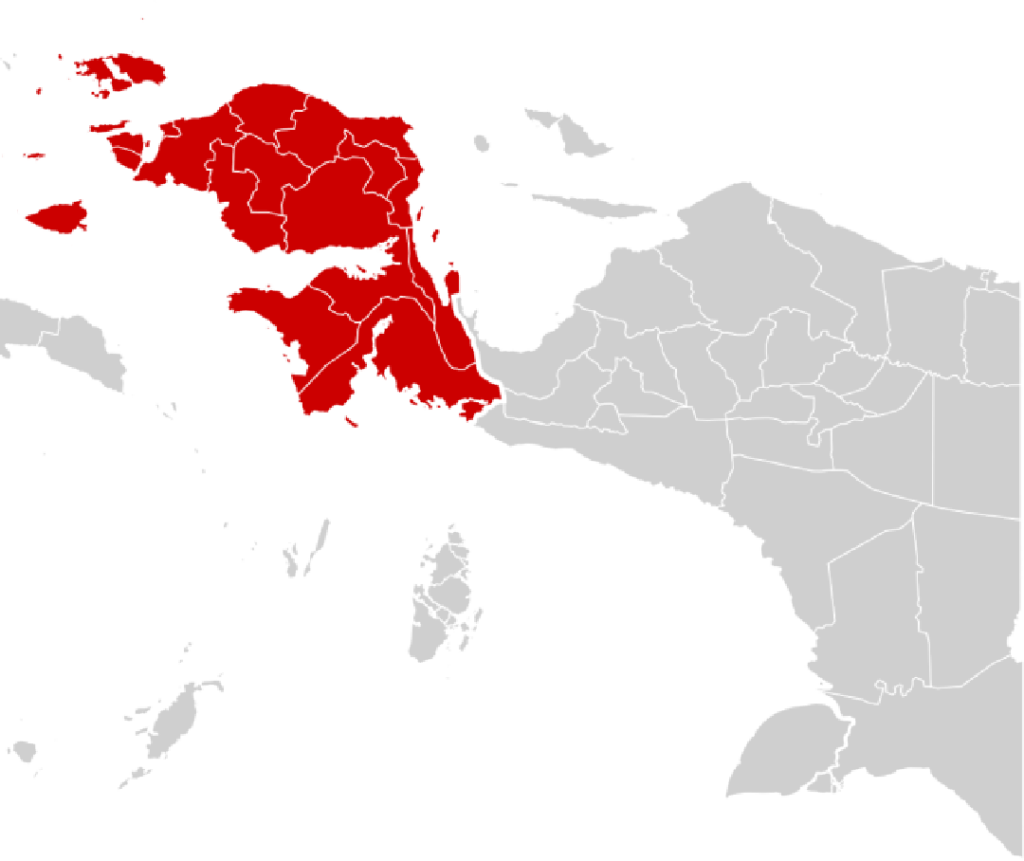
The Papua civil servants’ transfer request involving 21 employees from Rote Ndao has brought renewed attention to the consequences of the West Papua National Liberation Army from the Free Papua Movement’s (TPNPB OPM) terror for public administration in Indonesia’s Papua Pegunungan (Highland Papua) province. After Alfonsius Albinus Mehan and Wili Mbuik, immigrant civil servants from Nusa Tenggara Timur (East Nusa Tenggara, or NTT), were shot dead by TPNPB OPM in Jayawijaya, the employees sought to return to NTT, citing fears for their safety and that of their families.
The request is more than a personnel matter. It highlights how attacks on civilians can affect the people responsible for delivering government services, particularly in areas where staffing and access are already important to everyday administration. NTT Deputy Governor Johni Asadoma has taken the employees’ concerns to the central government, asking that their situation be addressed while protection is also considered for those who remain in Papua.
The 21 employees comprise seven civil servants, known as PNS, and 14 government employees under contract, or PPPK. They are from Rote Ndao, an island district in NTT, and are serving in Papua, including Jayawijaya. According to ANTARA, they are immigrant civil servants who had reportedly received subsequent threats after the shooting.
The Violence Behind the Transfer Request
Immigrant Civil Servant’s Killing and Its Aftermath
The immediate trigger for the transfer request was the TPNPB OPM’s shooting of three immigrant civil servants, including Alfonsius and Wili in Jayawijaya. Reports published by West Papua Voice have covered the killing of Alfonsius and Wili in the region, placing the incident within a wider pattern of attacks that have raised security concerns for government workers and civilians.
The accounts of individual incidents should be considered separately, since each has its chronology, victims and circumstances. However, the transfer request shows how the impact of violence can extend beyond the immediate scene. When a victim’s colleagues are also public employees working in the same broader region, fear and uncertainty can affect their willingness or ability to continue their assignments.
ANTARA reported that the 21 employees’ request was directly connected to their sense of safety following the incident involving Alfonsius and Wili on September 9, 2026. Johni said the employees had expressed serious concern about security in the areas where they worked. Their appeal, he said, was therefore a matter involving personal safety and the protection of life.
A Wider Concern for Migrant Workers and Families
The incident has also drawn attention to the circumstances of people who move between provinces for employment and public service. Employees from NTT working in Papua may be separated from their wider family networks, while immigrant civil servants living nearby can become directly affected when violence occurs.
For families connected to a victim, the decision to remain in a post may involve more than an assessment of workplace conditions. It can also involve concerns about threats, daily movement, family members’ security and the uncertainty of what may happen next. In this case, the reported threats after the shooting added to the anxiety surrounding the employees’ continued service.
These concerns do not, by themselves, establish that every civil servant from outside Papua faces the same level of risk. They do, however, demonstrate why authorities need to assess security conditions and the needs of individual employees rather than treating the transfer request as a routine administrative process.
NTT Deputy Governor Takes The Appeal To Jakarta
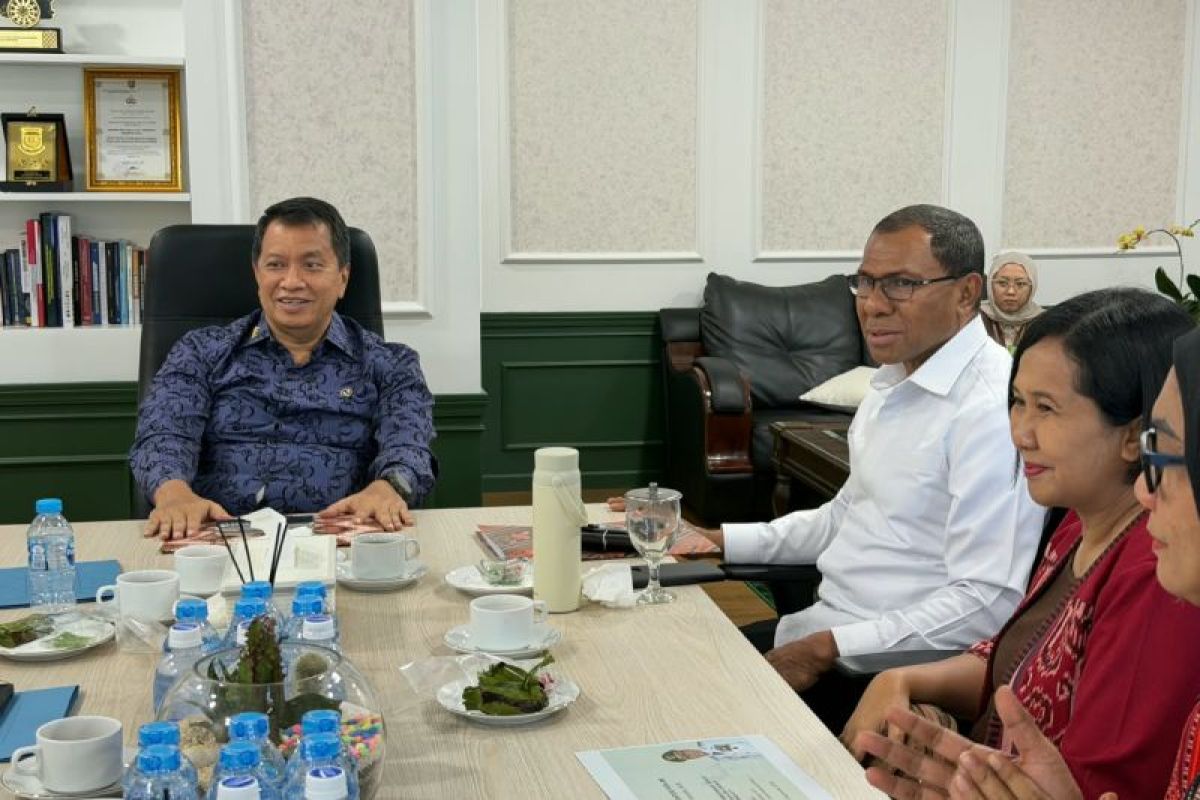
On Friday, September 25, Johni Asadoma met with Deputy Minister for Administrative and Bureaucratic Reform Purwadi Arianto in Jakarta. During the meeting, Johni conveyed the 21 employees’ request and asked the ministry to follow up on their proposed transfer or return to NTT.
The deputy governor said the request was understandable because it concerned the safety of the employees and their families. He also urged the central government and security authorities to provide protection for NTT civil servants who continue working in Papua. The provincial government, he said, would coordinate with the relevant institutions to address the situation.
The meeting brought the issue to the level of the central government, where the transfer process must be considered alongside civil-service rules and the staffing needs of the institutions involved. It also placed two related questions on the agenda: how to respond to the employees seeking relocation and how to help ensure that those who remain can carry out their duties safely.
Johni’s intervention reflects the role of provincial governments in representing residents who work outside their home region. In this case, NTT is seeking a response from national authorities, while the employees’ assignments and the receiving institutions fall within a wider administrative framework.
Different Rules for PNS and PPPK Employees
Seven PNS Employees
The Ministry of Administrative and Bureaucratic Reform indicated that the transfer requests of the seven PNS employees could be processed if the applicable requirements were met. These include approval from their current institutions and the readiness of the institutions that would receive them.
That process means the employees’ requests cannot be treated as automatic transfers. Their cases must be considered through the relevant administrative channels, including the needs and decisions of the institutions involved. The circumstances described by the employees may be important to the review, but the available report does not state that the transfers have been approved.
Fourteen PPPK Employees
The situation is different for the 14 PPPK employees, whose employment is based on contractual arrangements. ANTARA reported that their cases involve a separate mechanism and that the central government would discuss possible handling if the circumstances meet the criteria for an urgent situation.
The distinction matters because the group’s shared concern does not mean all 21 employees are covered by identical employment rules. A practical response will need to take account of their different legal statuses, the terms of their employment and the requirements of the agencies where they work.
The ministry’s reported position leaves the details of any special arrangement unresolved. The next steps will depend on further consideration by the relevant authorities and the circumstances of each employee.
The Public-Service Question
The potential departure of 21 employees raises a practical issue for the government institutions where they are assigned. Public services depend not only on budgets and facilities but also on personnel who can maintain daily operations, communicate with communities and carry out administrative responsibilities.
The available reports do not specify the exact posts held by all 21 employees or quantify any service disruption that may result from their transfer. It would therefore be premature to claim that particular programmes have already been interrupted. Still, the possibility of staff movement makes continuity planning relevant, especially if replacements are not immediately available.
For local administrations, the challenge is to balance employee safety with the need to sustain essential services. This may involve reviewing staffing levels, identifying critical functions, arranging temporary coverage and coordinating with receiving institutions if transfers proceed. Such measures can help limit disruption while addressing the concerns that prompted the request.
The issue also points to a broader responsibility: public employees should not have to choose between personal safety and their professional obligations without support from the institutions responsible for their deployment. Security assessments, communication channels and appropriate responses to threats are part of maintaining a functioning public service.
Calls for Protection and Legal Accountability
Following the killings, the NTT deputy governor has called for protection and legal action. Indonesian media reports describe Johni condemning the violence and demanding that the perpetrators face legal consequences. These calls place accountability alongside the immediate question of employee relocation.
In cases involving armed attacks, a credible response requires careful investigation and the use of lawful procedures. Establishing responsibility, preserving evidence and pursuing suspects through the appropriate legal system are important both for the victims’ families and for public confidence in the authorities.
At the same time, protection measures need to address the situation of people who remain in affected areas. The reported request concerns 21 civil servants, but Johni also urged authorities to protect other NTT employees still serving in Papua.
This broader appeal makes the issue relevant beyond one group. A response focused only on transfers would leave unanswered questions about the safety of other workers and the arrangements needed to support public administration in areas affected by violence.
Security, Mobility and Trust in Papua
Papua’s public institutions operate across communities with different histories, social ties and geographic circumstances. Employees who come from other parts of Indonesia contribute to government services in the region while also maintaining personal and family connections elsewhere. When violence affects these workers, the consequences can extend across provincial boundaries.
The 21 employees’ request illustrates how security incidents can influence decisions about mobility and employment. If staff members believe that their families are exposed to threats, they may seek relocation even when their professional assignments remain important to local communities. That possibility makes the protection of civilians and public workers a practical concern for government institutions.
A measured response should avoid treating the employees’ fears as a reason to generalise about entire communities. The available reporting focuses on specific incidents involving a particular ethnic group. It does not establish collective responsibility among local residents, nor does it justify suspicion based on a person’s place of origin.
For the government, the task is to address the reported threats, apply the relevant employment rules and maintain services where possible. For the public, transparent communication about the transfer process and any protective steps may help clarify what is being done and what remains unresolved.
Conclusion
The request by 21 civil servants from Rote Ndao is a reminder that the consequences of armed violence can reach far beyond the immediate victims. Alfonsius and Wili’s killing has prompted immigrant civil servants serving in Papua Pegunungan to seek a return to their home region, bringing questions of safety, employment rules and public-service continuity into the same discussion.
Johni Asadoma’s meeting with the deputy minister has moved the appeal into the central government’s administrative process. The seven PNS employees and 14 PPPK employees face different procedures, and the reports available so far do not confirm that any transfer has been completed. Their cases will require consideration under the applicable rules and in light of the circumstances described.
The wider challenge is to ensure that the response does not stop at relocation. Protecting employees who remain, addressing threats through lawful means and planning for continuity in government offices are all relevant to the same objective: allowing public services to continue while taking the safety of workers and their families seriously.
For Papua Pegunungan, the outcome will be measured not only by whether the transfer requests are resolved but also by whether authorities can respond to security concerns without leaving communities with gaps in essential administration. The case emphasises the necessity of combining civilian protection, accountable law enforcement and practical workforce planning.
Read Also
Three Jayawijaya Civil Servants Killed by TPNPB OPM in Muliama
Alfonsius: 9 Years Serving Papua, Killed by TPNPB OPM in Jayawijaya
Wili Mbuik: Young Civil Servant Killed by TPNPB OPM in Jayawijaya