
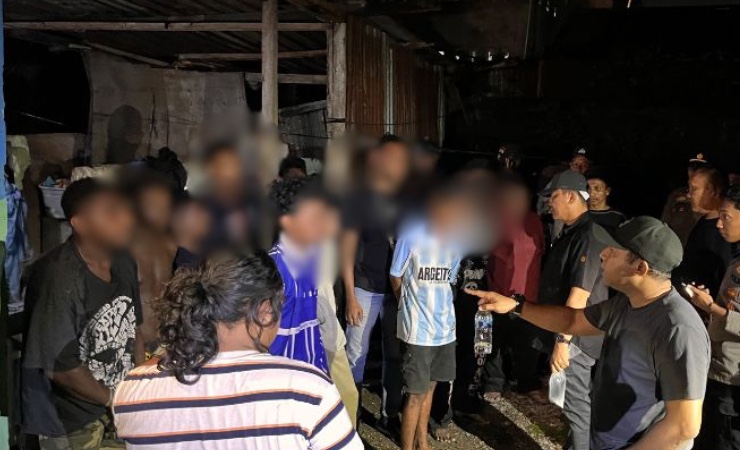
Mimika Police have stepped up efforts to address alcohol related public disturbances after taking 13 young people into custody during an operation targeting a gathering involving alcoholic drinks in Koperapoka, Timika, in the early hours of Sunday, 8 November 2026. The Mimika police alcohol crackdown followed complaints from residents concerned about a group of youths drinking together in their neighbourhood.
The operation, led by Mimika Police Chief AKBP Alredo Agustinus Rumbiak and Deputy Police Chief Kompol Jaihot Limbong, was part of the Enhanced Routine Activities programme, known locally as Kegiatan Rutin yang Ditingkatkan (KRYD). Police said the immediate objective was to prevent a potentially disruptive situation from developing into a public disturbance or other security incident.
The incident has also drawn attention to a wider public safety concern in the town. On the same Sunday morning, four people were injured in two separate single-vehicle traffic accidents in Timika. Initial information reported by police indicated that alcohol consumption and failure to wear helmets were factors in those crashes.
Although the two incidents occurred within the same period and both involved concerns about alcohol, available reports do not establish that the four injured road users were among the 13 youths taken into custody in Koperapoka. They are therefore treated as separate incidents.
Together, the events underline the importance of prevention, community reporting and public awareness in addressing alcohol-related risks in Mimika.
Police Respond to Residents’ Complaints in Koperapoka
The operation took place in the Koperapoka area, specifically along Jalan Bougenville in Mimika Baru District, Mimika Regency, Papua Tengah (Central Papua) Province. According to reports published by local media on November 8, police moved after receiving information from residents who were disturbed by a group of young people gathering and consuming alcoholic beverages in the area.
Rather than waiting for a disturbance to escalate, officers responded to the complaint and carried out an intervention during the early hours of Sunday. The operation was led directly by AKBP Alredo, accompanied by Kompol Jaihot.
The police action formed part of KRYD, a programme through which police units intensify routine activities to maintain public order and security. Such activities can include patrols, responses to community reports and preventive measures in locations considered vulnerable to disturbances.
The 13 youths were secured at the scene and taken, together with items reported as evidence, to Mimika Police Headquarters for further examination. Local reporting also described the operation as involving the dispersal of the gathering.
The available reports do not specify the exact time officers arrived, the identities or ages of those involved, the type or quantity of alcoholic beverages found, or whether any formal criminal charges were subsequently filed. Police accounts focused instead on the preventive purpose of the operation and the need to protect residents from possible disturbances.
Police Chief Says the Action Was Intended to Protect Young People
AKBP Alredo said the operation was a direct response to information received from the local community. He stressed that the police intervention was intended to prevent trouble before it affected the wider neighbourhood.
“We responded immediately to the residents’ report. This is an effort to maintain order and prevent disturbances that could trouble the community,” Alredo said, as quoted by Papuanewsonline.com.
His message also addressed the families of the young people involved. The police chief asked parents and relatives to understand why officers had intervened, explaining that taking the youths into custody should not be interpreted as hostility towards them.
“If we take them into custody, it does not mean that the police hate them. “We care and want to protect them from harmful activities,” he said.
A similar statement was reported by Salam Papua, which quoted Alredo as saying that the police acted out of concern for the young people and the wider community. He also urged families not to view the intervention as an act of antagonism but as a response to residents’ concerns.
The police chief’s remarks gave the operation a broader emphasis beyond immediate enforcement. The stated objective was not simply to disperse a gathering, but also to discourage behaviour that could expose young people to health, safety and security risks.
Examination and Education at Police Headquarters
After the operation, the 13 youths and the items collected at the location were taken to Mimika Police Headquarters. Reports by Timika eXpress and Papuanewsonline.com said the young people were to undergo further examination and receive guidance from police officers.
Timika eXpress reported that Alredo also provided explanations and education to the youths, encouraging them not to repeat similar activities and to understand the potential negative effects of alcohol consumption.
This educational component is significant because preventive policing is most effective when enforcement is accompanied by efforts to change behaviour. Removing a group from a public location may resolve an immediate disturbance, but longer-term improvements depend on whether individuals understand the consequences of their actions and make safer choices in the future.
The police have also called on residents to remain involved in maintaining neighbourhood security. Members of the public are encouraged to report activities that could disturb public order, allowing officers to respond before a situation becomes more serious.
Mimika Police said they would continue strengthening patrols and enforcement activities through KRYD to help maintain a stable security environment across the regency.
Four People Injured in Separate Alcohol Related Road Accidents
The Koperapoka operation came amid another incident that highlighted the potential consequences of drinking and unsafe behaviour in public spaces.
On the early morning of November 8, four people were injured in two separate single-vehicle traffic accidents in Timika. According to reports by Fajar Papua and Tabuka News, two people were involved in a crash on Jalan Serui Mekar, while two others were injured in another incident on Jalan Yos Sudarso, near the local court building.
All four were taken to Mimika Regional General Hospital, known as RSUD Mimika, for medical treatment.
After receiving reports of the accidents, Alredo visited the hospital accompanied by Deputy Police Chief Kompol Jaihot Limbong. The visit allowed the police chief to see the victims’ condition directly and reinforce the importance of road safety.
Alredo said preliminary information indicated that the riders had been under the influence of alcohol and were not wearing helmets. He also reported that some of the victims had bruising to their faces following the accidents.
“We received reports of several traffic accidents. Four people were involved in single-vehicle crashes, and all were in an intoxicated condition and riding without helmets. When we checked on them, some had bruises on their faces,” he said, according to Fajar Papua.
The police were initially unable to obtain statements from the victims because they were still under the influence of alcohol. Their identities had also not been fully established at the time of the initial response, according to the reports.
The two crash locations were separate from the Koperapoka gathering. There is no information in the cited reports confirming a direct connection between the four injured people and the 13 youths taken to the police station.

Police Warn Against Drinking and Riding
The hospital visit provided an opportunity for the Mimika Police Chief to deliver a wider warning about the dangers of driving after consuming alcohol.
Alcohol can impair concentration, slow reactions and reduce a rider’s ability to control a vehicle. These risks become even more serious when basic safety measures, including wearing a proper helmet, are ignored.
Alredo urged residents not to ride or drive after drinking and reminded motorcyclists to use helmets that meet Indonesian National Standards, commonly referred to as SNI.
“I hope this becomes a reminder for all of us to improve public awareness. Being drunk, riding a motorcycle and not wearing a helmet is extremely dangerous to human life,” he said.
The warning was directed not only at the individuals involved in the crashes but also at other road users. A person who rides while intoxicated can put passengers, pedestrians and other motorists at risk. A helmet, meanwhile, provides essential protection against head injuries if an accident occurs.
Fajar Papua and Media Jurnal Investigasi reported that the police chief encouraged the public to obey traffic regulations, prioritise safety and avoid using vehicles after consuming alcoholic beverages.
The incidents demonstrate why alcohol related public safety cannot be viewed solely as a matter of neighbourhood order. It is also a road safety and public health concern, with consequences that can extend to families, emergency services and other members of the community.
Community Cooperation Remains Essential
The Koperapoka operation also illustrates the role residents can play in supporting local security efforts. The police acted after receiving a complaint from people living in the area, showing how communication between communities and law enforcement can help identify potential problems at an early stage.
Such cooperation is particularly important in urban neighbourhoods, where activities in public spaces can quickly affect the comfort and safety of surrounding households. Residents are often the first to notice gatherings or behaviour that may lead to disturbances. Timely reporting gives authorities an opportunity to assess the situation and take appropriate action.
However, enforcement alone cannot address the underlying social dimensions of alcohol consumption. Families, community leaders, educational institutions and local authorities also have a role in encouraging responsible behaviour among young people.
Parents can strengthen supervision and communication with their children, while community organisations can provide constructive activities and spaces for youth participation. Public education can also help explain the health risks of excessive drinking, the dangers of impaired driving and the importance of respecting other people’s safety.
For the police, maintaining public order requires a balance between firm action and preventive engagement. The guidance reportedly given to the 13 youths at police headquarters reflects an approach that combines intervention with education.
A Preventive Approach to Safer Communities in Mimika
The events of November 8 serve as a stark reminder that alcohol related risks can manifest in various ways. In Koperapoka, residents’ concerns prompted police to intervene in a gathering involving 13 young people. Elsewhere in Timika, four people required hospital treatment after two separate traffic accidents in which alcohol consumption and the absence of helmets were identified by police as contributing factors.
The incidents should not be conflated, and the available information does not establish that the individuals involved were connected. Nevertheless, both highlight the importance of preventing alcohol related behaviour from placing individuals and the wider community in danger.
Mimika Police Chief AKBP Alredo Rumbiak has framed the Koperapoka operation as an expression of concern for young people and residents, rather than an act of hostility. His appeal to families reflects the view that public security is a shared responsibility, requiring cooperation between law enforcement and the community.
The next challenge will be to sustain that approach. Regular patrols and timely responses to public complaints can help prevent disturbances, but lasting progress will also depend on education, family involvement and greater awareness of road safety.
For Mimika, a safer environment means more than responding after an incident has occurred. It means identifying risks early, protecting young people from harmful behaviour and encouraging every road user to act responsibly. The Koperapoka operation is one example of how preventive policing can contribute to that broader objective.
Conclusion
The operation in Koperapoka and the separate traffic accidents in Timika highlight the importance of addressing alcohol related risks through consistent law enforcement and stronger community awareness. By responding to residents’ complaints, securing the 13 youths for examination and providing guidance, Mimika Police have demonstrated a preventive approach aimed at protecting both young people and the wider public.
However, lasting improvements will require more than police action. Families, community leaders and local institutions must work together to discourage excessive alcohol consumption, promote responsible behaviour and prevent impaired driving. As Mimika continues to strengthen public order and community safety, cooperation between residents and law enforcement will remain essential. Ultimately, the goal is not merely to respond to incidents but to prevent them from happening and create a safer environment for everyone.
Read Also
Papua Tengah Police Secure 11 Motorbikes in Noken Operation in Nabire
Police Arrest Suspect in Dutch Tourist Assault in Manokwari
Alcohol, Youth Violence, and a Call for Responsibility After a Fatal Student Fight in Yogyakarta

