
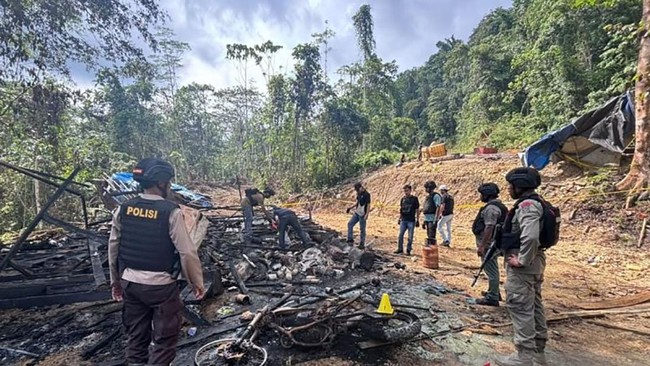
The attack on a road construction workers’ camp in Tambrauw has exposed the security risks facing infrastructure projects in Papua after a group of unidentified assailants set fire to company facilities and vehicles in Fef District. Police confirmed that seven affected workers were found and evacuated safely, while joint security patrols have been strengthened to prevent further attacks and restore confidence among local communities.
The incident occurred on November 4, 2026, in Sikor Village, Fef District, Tambrauw Regency, Papua Barat Daya (Southwest Papua). The facilities targeted included a workers’ camp, motorcycles, a Toyota Hilux vehicle, a truck, and an excavator. The attack disrupted a project intended to improve road connectivity in the area, where reliable transport links are important for residents, public services, and local economic activity.
The armed group identified in media reports as the West Papua National Liberation Army (TPNPB), operating under the Free Papua Movement (OPM), later claimed responsibility for the attack. Its statement also included threats directed at non-indigenous residents and objections to government development activities in Tambrauw. Those claims and threats were reported by Fajar Papua, but the identity of the individuals who carried out the attack remains under police investigation.
Tambrauw Police Chief AKBP Eddwar Martua Pandjaitan said there were no confirmed fatalities in the camp attack. He urged residents not to panic or spread unverified information, particularly social media claims alleging deaths among security personnel or civilians.
The police response has since combined crime-scene investigations, evidence collection, intelligence monitoring, and joint patrols involving police, military personnel, and community representatives. The authorities say their immediate priorities are to identify those responsible, prevent further violence, and ensure that residents can continue their daily activities safely.
The Attack on the Road Project Camp
The attack took place on November 4, at a workers’ camp in Sikor Village, Fef District. The site was associated with a road construction project in Tambrauw.
According to information released by Tambrauw Police and reported by ANTARA on November 7, the workers and company facilities became the targets of the assault. The attackers reportedly set fire to several assets at the location, including the camp itself, motorcycles, a Toyota Hilux, a truck, and an excavator.
The destruction of vehicles and heavy equipment is particularly significant for a construction project operating in a remote area. Such machinery is essential for moving materials, preparing the road surface, and carrying out other work. Damage to these assets can interrupt operations and create additional costs before construction can resume.
The camp was also a place where workers stayed while carrying out their assignments. Its destruction therefore affected not only company property but also the accommodation and working arrangements of people involved in the project.
Police later examined the site around Jembatan Imor Lama in Fef District. Officers from the police and combined TNI personnel checked the location, collected evidence, and monitored the surrounding area.
The authorities have not published a complete assessment of the financial losses or the expected delay to the road project. Nor have they announced a confirmed date for the resumption of construction.
Seven Workers Found and Evacuated Safely
One immediate concern after the attack was the condition and location of the affected workers.
Tambrauw Police Chief Eddwar said seven project workers were involved in the incident. One of them, Naharudin, aged 41, had initially been reported missing.
A search and security operation was subsequently carried out. Naharudin was eventually found alive and evacuated, allowing authorities to confirm that all seven affected workers had been located and evacuated safely.
“Seven project workers affected by the incident have all been found and evacuated,” Eddwar said, according to ANTARA on November 7.
The confirmation was important amid the circulation of conflicting accounts on social media. Some posts attributed to an armed group claimed that members of the Indonesian military, police, and civilians had been killed. Eddwar rejected reports of fatalities in the camp incident, saying police checks had not found evidence to support those claims.
“I urge the public to remain calm, avoid panic, and resist provocation by unverified information on social media,” he said.
The distinction between confirmed information and claims made by an armed group is essential. Fajar Papua reported that TPNPB spokesperson Sebby Sambom claimed six people had been shot in two separate incidents on November 4 and 5. The claims included alleged shootings of military personnel, intelligence operatives, and two Brimob officers.
However, the police and ANTARA reports cited in this article confirmed the safe evacuation of the seven workers and stated that no deaths had been established in the camp attack. The available official reporting did not independently confirm the armed group’s separate claims concerning casualties in the alleged November 5 incident. Those statements should therefore be treated as claims, not facts.
TPNPB’s Claim and Threats Against Residents
On November 6, Fajar Papua reported that Sebby Sambom, a spokesperson for TPNPB-OPM, claimed the group’s Kodap XXXIII Rumana Tambrauw unit was responsible for two armed incidents in the regency on November 4 and 5.
According to the report, Sambom attributed the account to a statement from the group’s regional leadership, including its commander, Vincent Frabuku, deputy commander Leonardo Suvi, and other operational figures.
The group claimed that its members had shot four people during the first incident, whom it described as Indonesian military personnel and intelligence agents working as road project employees. It also claimed responsibility for burning the workers’ camp and company vehicles.
The same report said the group claimed a second shooting on November 5, at around 9 a.m., targeting a convoy carrying military and Mobile Brigade (Brimob) personnel. Sambom claimed that two Brimob officers were shot in that incident.
These allegations have not been independently verified in the police and ANTARA reports concerning the camp attack. Police have publicly confirmed the evacuation of all seven affected project workers and said there were no fatalities in the camp incident. The available reporting does not provide an independently confirmed casualty account for the separate November 5 claim.
More concerning for the wider community were statements attributed to the group’s deputy commander, Leonardo Suvi. Fajar Papua reported that he accused some civilians of providing information to security forces and issued an ultimatum for migrants from other parts of Indonesia to leave areas where the group operates. The categories of workers mentioned reportedly included teachers, healthcare personnel, motorcycle taxi drivers, taxi drivers, and construction workers.
The reported threats are significant because they extend beyond security personnel and could create fear among civilians who provide essential services or earn their livelihoods in Tambrauw.
They also raise questions about the ability of residents from different backgrounds to live and work safely in the same communities. Teachers, health workers, drivers, and construction workers contribute to everyday services and economic activity. Threats against them risk disrupting services on which local residents, including Indigenous Papuans, depend.
The group’s reported opposition to government development activities, including road construction, also raises concerns about the future of infrastructure projects in the area. An armed threat against workers and facilities can obstruct development regardless of the project’s stated purpose or the views of local residents.
Police and TNI Strengthen Security Across Fef and Bamusbama
Following the attack, Tambrauw Police increased security measures and joint patrols to prevent further incidents.
Eddwar said police and combined TNI personnel conducted crime-scene inspections, gathered evidence, and monitored security conditions around the company camp at Jembatan Imor Lama.
The security response involves several units, including Brimob personnel, Kodim 1810/Tambrauw, the 764 Regional Security Task Force, and community elements involved in local security coordination.
According to ANTARA, joint patrols are being conducted through both visible and less visible security activities. Their coverage includes Fef District, Bamusbama District, and surrounding areas.
The police chief also instructed the Intelligence and Security Unit (Satintelkam) to strengthen early detection of potential security disturbances. The Community Guidance Unit (Satbinmas) was directed to prioritize persuasive engagement with residents, while the Criminal Investigation Unit (Satreskrim) continued investigating the attack and identifying those responsible.
The combination of security patrols, intelligence gathering, and community engagement reflects an effort to address both immediate risks and the wider social impact of the incident.
Eddwar said police were also coordinating with the regional government, military, community leaders, religious figures, and customary leaders. Such cooperation is important in a regency where local knowledge and community relationships can help authorities understand developments and communicate safety information.
The investigation remains ongoing. Police have said they suspect the perpetrators may be linked to the OPM group operating in Tambrauw, but their identities and individual involvement must still be established through the investigation.
Eddwar: Tambrauw Must Remain Safe for Everyone
Beyond the immediate investigation, the police chief addressed threats reportedly directed at residents who are not Indigenous Papuans and objections to government development projects.
Eddwar stressed that everyone living and working in Tambrauw is entitled to security and legal protection, regardless of ethnic, religious, or regional background.
“No one should feel threatened or afraid or lose their right to live peacefully simply because of differences in background. Tambrauw is our shared home,” he said, as quoted by CNN Indonesia on November 7.
His statement underlined the importance of protecting the rights of all residents while respecting the position and interests of Indigenous communities.
The police chief also urged residents not to circulate unverified photographs, videos, or claims that could cause panic or deepen divisions. He acknowledged that the incident had created concern but said the police, TNI, regional government, and other relevant institutions were coordinating to maintain public order.
He encouraged residents to continue their daily activities calmly while remaining alert and reporting suspicious activity to security personnel.
Eddwar also stressed that development should continue with security considerations in place and with respect for customary rights and the interests of all communities in Tambrauw.
The message is important in a region where infrastructure development and public safety are closely connected. A road project cannot deliver its intended benefits if workers are threatened, equipment is destroyed, or residents are prevented from accessing essential services.
Why Road Infrastructure Matters for Tambrauw
Road construction is more than an engineering activity. In remote parts of Papua, improved connectivity can influence how residents reach schools, health facilities, markets, and administrative services.
Road access can also affect the cost and reliability of transporting goods. For farmers and small businesses, better transport links may create opportunities to move products to markets more efficiently. For families, improved connectivity can make journeys to healthcare and education facilities less difficult.
These benefits are not automatic. A road must be completed, maintained, and connected to wider transport networks to generate lasting economic value. Projects also need to take account of customary land rights, environmental conditions, and the concerns of communities living along the route.
Nevertheless, attacks on workers and construction facilities create a direct obstacle to the delivery of infrastructure. They can put lives at risk, damage public and private assets, increase project costs, and discourage workers from accepting assignments in areas affected by violence.
The reported threats against teachers, health workers, and other civilians are particularly troubling because development depends on more than roads and machinery. It also requires people who can deliver education, healthcare, transport, and other essential services.
The response to the Tambrauw incident therefore has implications beyond the security of one construction camp. It concerns the ability of residents to pursue their livelihoods and the capacity of public institutions to deliver services without intimidation.
Security, Law Enforcement, and Community Cooperation
The authorities now face two related responsibilities: bringing those responsible for the attack to justice and ensuring that security measures protect civilians.
The investigation must establish the sequence of events, identify the perpetrators, and examine the evidence collected at the scene. Any arrests or further enforcement measures should follow applicable legal procedures.
At the same time, the strengthened patrols in Fef and Bamusbama are intended to reduce the risk of further attacks. Early detection, information sharing, and communication with community leaders can help authorities respond before tensions escalate.
The police emphasis on persuasive engagement is also relevant. Residents should be able to report concerns without fear, and security personnel need to maintain professional relations with communities regardless of their background.
The reported threats against migrants and workers should not be allowed to create divisions between Indigenous Papuans and other residents. Safety and legal protection are rights that apply to everyone. Protecting those rights is compatible with respecting customary land, local culture, and the interests of Indigenous communities.
A stable environment is also necessary for development projects to be carried out responsibly. Security arrangements should protect workers and residents while ensuring that construction activities respect local communities and applicable regulations.
Conclusion
The attack on the road construction camp in Sikor Village on November 4 was a serious disruption to infrastructure work in Tambrauw. The burning of the camp, vehicles, and heavy equipment threatened the safety of workers and damaged assets needed to carry out the project.
Police confirmed that all seven affected workers, including Naharudin, who had initially been reported missing, were found and evacuated safely. No fatalities were established in the camp incident, despite claims circulating on social media and separate casualty claims made by TPNPB-OPM.
The authorities have responded by increasing joint patrols involving Brimob, Kodim 1810/Tambrauw, the 764 Regional Security Task Force, and community elements. Investigators are collecting evidence, intelligence personnel are strengthening early detection, and community officers are being directed to maintain persuasive engagement with residents.
The reported threats against civilians and objections to government development projects underline the wider stakes. Infrastructure cannot improve people’s lives if those responsible for building and maintaining it are exposed to intimidation and violence.
The next priority is to complete a thorough investigation, protect residents and workers, and establish conditions in which development can proceed safely and in consultation with local communities. For Tambrauw, lasting progress will depend not only on roads being built but also on people being able to live, work, study, and access public services without fear.
As Eddwar put it, Tambrauw is a shared home. Preserving that principle requires security institutions, government agencies, customary leaders, and residents to work together against violence and protect the rights of everyone who calls the regency home.
Read Also
Ilaga Stabbing: TPNPB-OPM Claims Responsibility
TNI Captures Three TPNPB-OPM Figures in Maybrat

