
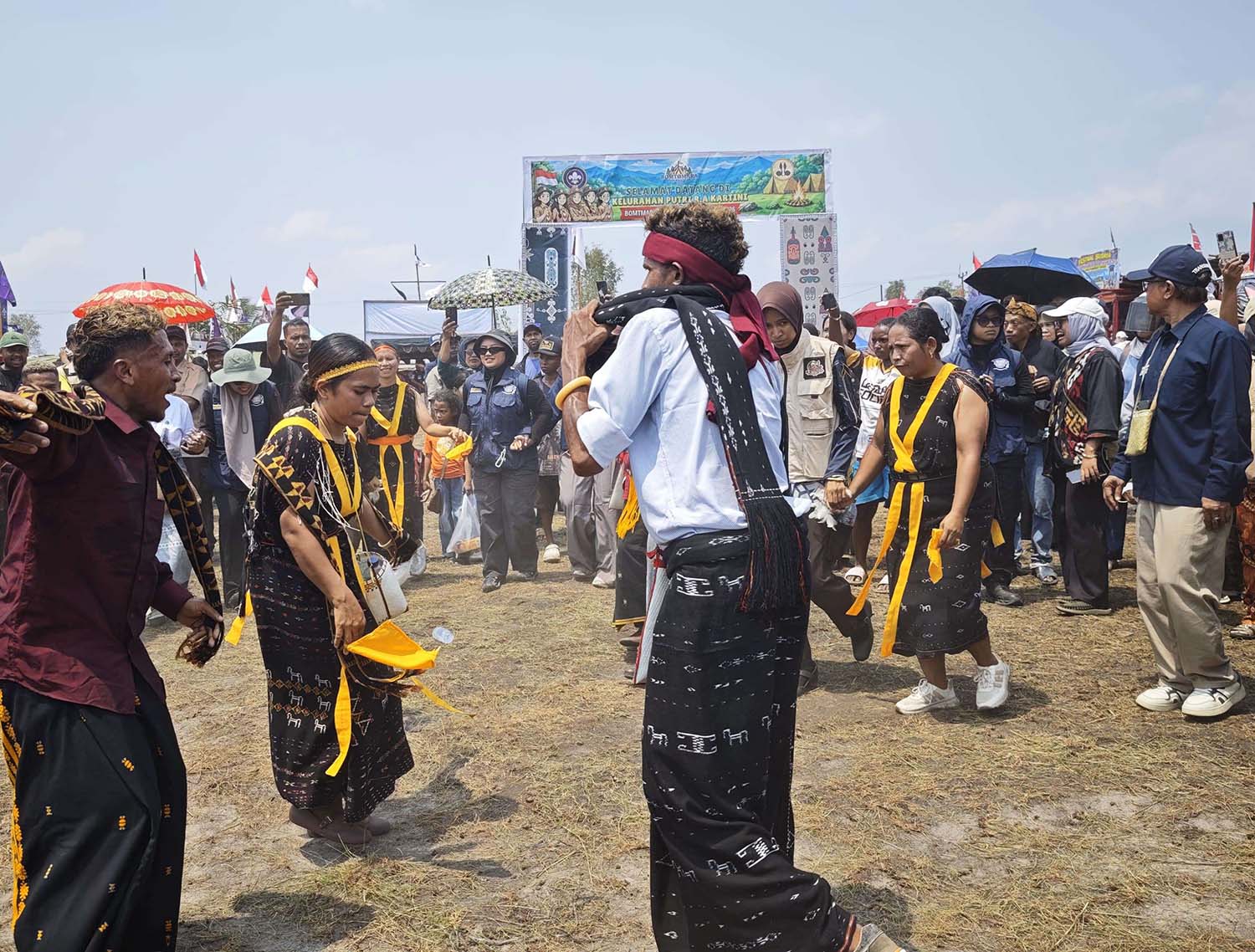
Ten cultural associations representing different ethnic communities came together at the Gelar Budaya Kampung Harmoni Papua in Fakfak, turning a public gathering in the Bomberay-Tomage transmigration area into a celebration of cultural diversity, shared identity, and social unity.
The event provided a platform for the participating associations to present their respective arts and traditions while strengthening relationships between local residents and transmigrant communities. Alongside the performances, visitors were introduced to community development initiatives carried out by 20 teams from the Patriot Expedition Programme at Padjadjaran University (Universitas Padjadjaran, Unpad).
The program brought together cultural activities, exhibitions of locally developed products, and opportunities for interaction between residents from different backgrounds. It also included a kite festival and activities involving young participants known as Patriot Cilik.
For Fakfak, a district shaped by cultural diversity and the interaction of different communities, the gathering offered a practical expression of the values behind its name: a harmonious village where differences can become a source of connection rather than division.
The event was attended by Fakfak Tourism and Culture Agency Head Muhammad Ilham Nurdin and Fakfak Education, Youth, and Sports Agency Head Saleh Hindom. Their participation reflected the connection between cultural preservation, community education, and local development.
More than a cultural performance, the gathering demonstrated how community engagement can support social cohesion while creating opportunities to introduce local products, identify cultural assets, and encourage economic activities.
Ten Associations Bring Cultural Diversity to One Stage
The central attraction of the Gelar Budaya Kampung Harmoni Papua was the participation of 10 cultural associations, known locally as paguyuban.
Each association presented elements of its cultural heritage through traditional arts and performances. The gathering allowed different communities to share their traditions in a common public space, giving residents and visitors an opportunity to experience the cultural variety represented in the Bomberay-Tomage area.
The participation of the 10 associations was particularly significant because the event was designed to strengthen connections between local communities and transmigrant families.
In areas where people from different backgrounds live alongside one another, cultural gatherings can provide an opportunity to build familiarity and mutual understanding. Traditional performances allow communities to express their identities while introducing others to the customs and artistic traditions they value.
The event also gave participating groups recognition as contributors to the area’s social and cultural life.
Rather than placing one tradition above another, the gathering presented cultural diversity as a shared asset. The different performances became part of a collective program, reinforcing the idea that people can maintain their cultural identities while participating in a wider community.
The format also created an opportunity for younger generations to observe and appreciate traditions that may otherwise receive limited exposure in everyday public activities.
Patriot Expedition Team Highlights Culture and Community Development
The cultural program was organized alongside an exhibition featuring the work of 20 Patriot Expedition teams from Padjadjaran University.
The exhibition introduced a range of community assistance activities undertaken in the Bomberay-Tomage transmigration area. These included examples of locally processed food products and initiatives related to social and economic development.
The involvement of the university teams added another dimension to the event. While the cultural performances focused on identity and community relations, the exhibition showed how field-based assistance could help identify and develop local potential.
The opening remarks were delivered by Dr. Taufik Ampera, M.Hum., Head of Patriot Expedition Team 11 at Padjadjaran University.
He described the Gelar Budaya Kampung Harmoni Papua as a platform for bringing different communities together through their cultural traditions.
“Pagelaran budaya ini merupakan ruang untuk merawat identitas, mempertemukan keberagaman, dan mewariskan nilai luhur kepada generasi penerus,” Taufik said, as quoted by Radio Republik Indonesia (RRI) on November 8, 2026.
His statement emphasized three important purposes: preserving cultural identity, creating connections across communities, and passing cultural values to future generations.
The message reflected the broader intention of the event. Cultural preservation was not treated as an activity isolated from contemporary development but as part of the social foundations that enable communities to grow together.
The exhibition also allowed residents to see examples of how local knowledge and resources could be developed into products with wider economic potential.
Community Representatives Welcome the Opportunity to Participate
The involvement of the 10 associations was welcomed by representatives of the participating communities.
Kristina, representing the Flobamora community, expressed appreciation for the opportunity provided by the Padjadjaran University expedition team and the participating scouting members.
She said the program had brought together people from different ethnic backgrounds and allowed them to take part in a shared cultural activity.
“Sudah merangkul kami di dalam kegiatan ini, dengan berbagai macam suku yang ada di tanah Papua,” Kristina said, as quoted by RRI.
She also expressed hope that similar gatherings would be organized again.
Her response illustrates the importance of inclusion in community events. When cultural groups are given space to participate, the program becomes more than a presentation of traditional performances. It creates an opportunity for people to meet, interact, and recognize their place within a wider local community.
The hope expressed by Kristina was also shared by other residents and representatives of the associations, who wanted the Gelar Budaya Kampung Harmoni Papua to become a regular annual event.
Continuity would be important. A single cultural gathering can attract attention, but repeated activities can help build stronger relationships and provide more consistent opportunities for cultural groups to participate.
Sago-Based Products Show the Economic Potential of Local Food
One of the highlights of the exhibition was the presentation of locally processed food products developed through the Patriot Expedition Programme.
Among the products attracting attention were sago-based fried noodles and fried sago, introduced under the ASDERA name by Team 13 of the Padjadjaran University expedition.
The products demonstrated how a traditional food resource could be presented in different forms and potentially developed for broader markets.
Sago has an important place in the food traditions of several communities in Papua and other parts of eastern Indonesia. Its use in processed food products offers an opportunity to connect cultural food heritage with local enterprise development.
During the exhibition, Fakfak Education, Youth and Sports Agency Head Saleh Hindom sampled the products and considered them worthy of further development.
His response highlighted the potential of food innovation as one avenue for supporting local businesses and diversifying the regional economy.
However, the exhibition did not report commercial production figures, sales volumes, business partnerships, or confirmed market distribution. The products should therefore be understood as examples of local food innovation with potential for further development, rather than established commercial successes.
The wider significance lies in the opportunity to encourage residents and local entrepreneurs to explore ways of adding value to resources already familiar to their communities.
For the Bomberay-Tomage area, initiatives of this kind could complement cultural tourism and other community-based economic activities if supported by further product development, quality improvement, and access to markets.
Local Government Sees Opportunities in Cultural and Tourism Mapping
Fakfak Tourism and Culture Agency Head Muhammad Ilham Nurdin welcomed the contribution of the Patriot Expedition teams, particularly their role in helping the local government identify cultural assets and tourism attractions in Bomberay and Tomage.
He said the teams’ assistance could make the process of inventorying local cultural potential and tourism destinations easier for the regional administration.
“Dengan bantuan teman-teman tim Patriot, hal itu lebih mudah dilaksanakan,” Ilham said, according to RRI.
His remarks point to an important connection between cultural preservation and local development planning.
Identifying traditional practices, artistic activities, and potential tourism attractions can help regional authorities better understand the cultural resources available in their communities.
Such information can also support future planning for cultural events, tourism promotion, and community-based economic activities.
Ilham also expressed hope that communication and assistance for the community groups supported by the expedition teams would continue after the teams’ assignment period had ended.
That point is significant because the impact of field-based programs depends partly on whether relationships and knowledge remain useful after the initial project has finished.
The local government, community organizations, and residents will therefore have an important role in maintaining the connections established through the program.
Kite Festival Adds a New Dimension to the Celebration
The Gelar Budaya Kampung Harmoni Papua was not limited to traditional performances and the exhibition of community products.
The program also featured a kite festival organized by the Asep team, which was officially opened by Muhammad Ilham Nurdin.
The festival added a recreational element to the gathering and expanded opportunities for residents to participate beyond the cultural performances.
Young participants attending the jamboree were also involved as Patriot Cilik. They were given opportunities to interact with members of the community and visit the exhibition area.
Their participation connected the event with an educational objective: introducing younger generations to cultural diversity, local products, and community activities through direct experience.
For children and young people, such interaction can provide a different kind of learning from classroom-based education. They can observe cultural performances, meet people from different backgrounds, and discover how local communities develop their own initiatives.
The inclusion of Patriot Cilik also reflected the importance of involving younger generations in activities intended to strengthen social relationships.
While the available report did not provide detailed information about the number of children involved or the specific activities they completed, their participation formed part of the wider program.
Cultural Harmony as a Foundation for Community Development
The Gelar Budaya Kampung Harmoni Papua offers an example of how cultural activities can contribute to a broader development agenda.
Social cohesion is important in areas where residents come from different ethnic and regional backgrounds. Shared activities can create opportunities for communication, cooperation, and mutual recognition.
In Bomberay-Tomage, the involvement of local residents and transmigrant communities gave the event a particular significance. It created a public setting in which different cultural identities could be expressed while reinforcing a sense of belonging to the same community.
This approach is relevant to the wider development of Papua Barat (West Papua). Infrastructure, public services, and economic programs are important, but sustainable regional development also depends on relationships between people and the ability of communities to work together.
Cultural events can support that process by providing space for participation and interaction. When combined with community assistance programs, they can also connect social engagement with practical opportunities for local development.
The presence of the Padjadjaran University teams further demonstrated how academic institutions can contribute to regional initiatives by working with communities to identify cultural, social, and economic potential.
The challenge now is to ensure that the activities introduced during the expedition continue to produce benefits after the program’s field assignment ends.
Organizers and Residents Hope for an Annual Event
The response from community representatives and local participants has strengthened calls for the Gelar Budaya Kampung Harmoni Papua to become an annual program.
Taufik Ampera expressed hope that the results of the Patriot Expedition could continue to be developed, creating opportunities for business activities and improving community welfare.
Residents and representatives of several associations also expressed their hope that the cultural gathering would be held regularly each year.
An annual program could provide a more consistent platform for cultural groups to showcase their traditions while giving local authorities and community organizations an opportunity to develop supporting activities.
It could also create room for the exhibition of new local products, the promotion of tourism potential, and greater participation by young people.
For such an initiative to remain meaningful, future editions would need to maintain broad community participation and provide opportunities for the groups involved to contribute to planning and implementation.
The continuity of communication between the local government, the university teams, and community representatives will also be important.
Conclusion
The Gelar Budaya Kampung Harmoni Papua in Fakfak brought 10 cultural associations together in a celebration of traditions, identity, and social connection. By combining cultural performances with the work of 20 Patriot Expedition teams from Padjadjaran University, the event also highlighted opportunities to connect cultural preservation with local economic and social development.
The presentation of sago-based food products and the involvement of young participants as Patriot Cilik and the kite festival demonstrated the range of activities that can bring communities together beyond the main cultural performances.
The statements from Taufik Ampera, Kristina, and Fakfak government representatives also reflected a shared hope that the relationships established through the program would continue after the event.
Ultimately, the significance of Kampung Harmoni lies in the participation of different communities in a shared public space. By giving each cultural group an opportunity to express its identity while contributing to a common celebration, Fakfak is showing how diversity can strengthen social unity and support the foundations of inclusive development in Papua Barat.
Read Also
FKUB Mimika Mini Soccer Builds Interfaith Harmony in Papua Tengah
Fakfak Strengthens Religious Harmony Through Local Wisdom

