
Two new Type C hospitals are planned for Papua Pegunungan (Highland Papua) in 2027, as Indonesia’s Ministry of Health moves to expand medical infrastructure in a province where access to higher-level healthcare facilities remains uneven across its eight regencies.
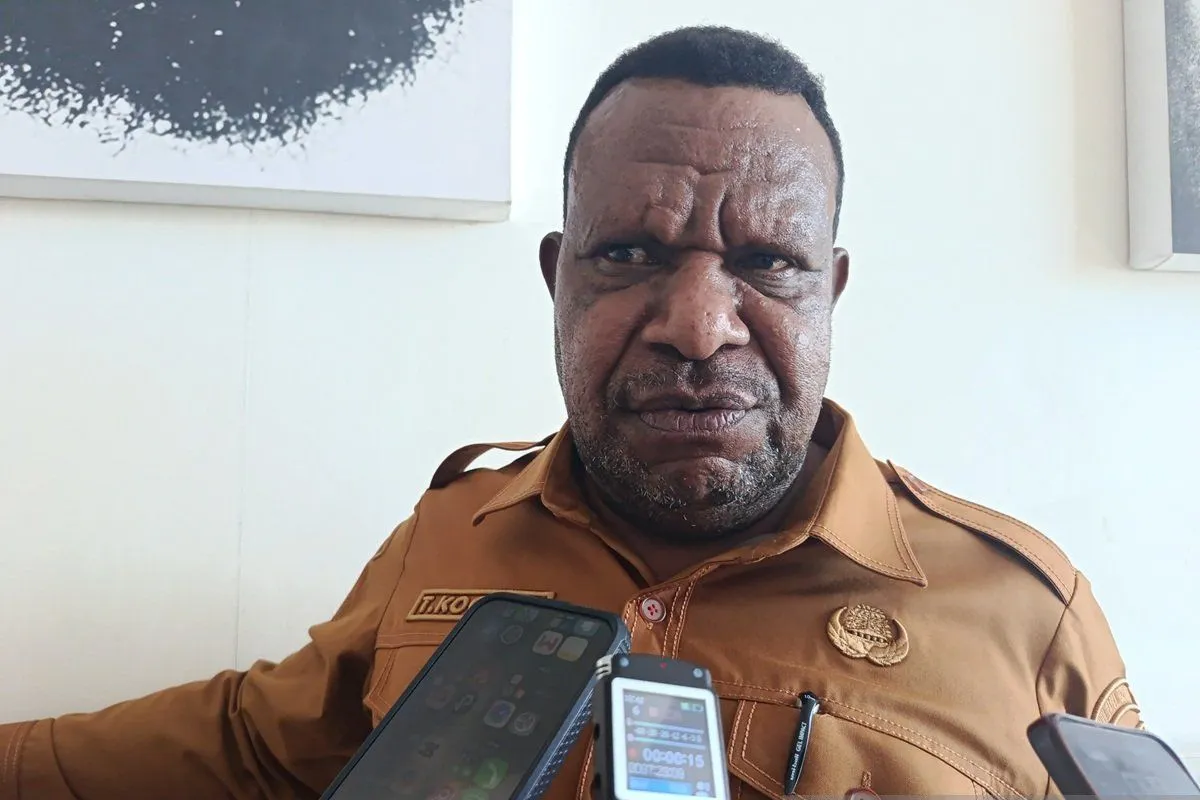
The planned hospitals will be built in Mamberamo Tengah and Lanny Jaya, according to Titus Kogoya, Acting Head of the Papua Pegunungan Provincial Health Office. He said the initiative followed coordination between the provincial government and the Ministry of Health in Jakarta.
The announcement is noteworthy for a region where, according to provincial health officials, only Jayawijaya Regency currently has a Type C hospital, the Wamena Regional General Hospital (RSUD Wamena). The other seven regencies still have Type D hospitals, with plans to strengthen their classification and capacity in stages.
For communities spread across Papua’s mountainous interior, the expansion of hospital infrastructure is closely connected to a wider development priority: making essential public services more accessible, reducing geographical barriers to treatment and strengthening the regional healthcare system.
The 2027 construction plan is therefore more than a building project. It signifies a collaborative initiative by the central and provincial governments to fill healthcare infrastructure gaps and establish a foundation for more equitable public services throughout Papua Pegunungan.
Two Regencies Selected for the First Phase
The Ministry of Health’s plan will begin with Mamberamo Tengah and Lanny Jaya, two of the eight regencies in Papua Pegunungan.
Titus Kogoya explained that the construction would be implemented gradually, beginning with the two locations in 2027. The provincial government had coordinated with the ministry to advance the proposal and strengthen healthcare services across the region.
“The Ministry of Health will build two Type C hospitals in Papua Pegunungan in stages, starting in Mamberamo Tengah and Lanny Jaya in 2027,” Titus said in Wamena, as quoted by ANTARA on November 6, 2026.
He said the central government, through the Ministry of Health, intended to help improve the quality of healthcare services in the province by expanding the availability of Type C hospital facilities.
The announcement was reported by ANTARA following Titus’s remarks in Wamena on November 5. Radio Republik Indonesia (RRI) subsequently published a report on November 8, confirming the two locations and the proposed 2027 implementation.
The selection of Mamberamo Tengah and Lanny Jaya marks the first phase of a broader provincial plan. According to Titus, the government intends to pursue the development of Type C hospitals in the other regencies progressively.
The staged approach is important because expanding hospital infrastructure across a mountainous province requires coordination between national and local authorities. Each project must be supported by the necessary planning, facilities and administrative preparation.
The provincial government has presented the two hospitals as an initial step towards improving the distribution of healthcare services, rather than a one-time solution to all the province’s medical infrastructure needs.
A Significant Gap in Hospital Classification
The planned projects address a substantial gap in the distribution of hospital facilities across Papua Pegunungan.
The province consists of eight regencies: Jayawijaya, Mamberamo Tengah, Lanny Jaya, Nduga, Tolikara, Yalimo, Yahukimo and Pegunungan Bintang.
According to Titus, only Jayawijaya currently has a Type C hospital, namely RSUD Wamena. The other seven regencies have Type D hospitals.
This situation illustrates the challenge of providing more evenly distributed healthcare infrastructure across the province. While Wamena serves as an important healthcare centre, residents in other regencies may face additional geographical and logistical challenges when seeking hospital treatment.
The provincial government’s plan to develop Type C facilities is intended to strengthen the capacity of local healthcare services and improve access for communities outside Jayawijaya.
Titus said the seven remaining regencies would also be considered for gradual development towards Type C hospital status, beginning with the two projects scheduled for 2027.
“The development of Type C hospitals in the other seven regencies of Papua Pegunungan will also be carried out gradually, starting with Mamberamo Tengah and Lanny Jaya in 2027,” he said.
The statement indicates that the government sees the two hospitals as part of a longer-term programme to improve healthcare infrastructure throughout the province.
However, the available reports do not specify the construction budgets, exact project commencement dates, completion targets, bed capacity or detailed medical services planned for the two facilities. Those details will be important in assessing the scale and practical impact of the projects as implementation approaches.
Why Type C Hospitals Matter for Local Communities
Hospital infrastructure plays a central role in the delivery of public healthcare, particularly in regions where distance and difficult terrain can complicate access to medical services.
In Papua Pegunungan, the geographical conditions make the distribution of healthcare facilities an important consideration for regional planning. Communities are spread across mountainous areas, while transport connections and access to public services vary between locations.
The addition of Type C hospitals in Mamberamo Tengah and Lanny Jaya is expected to strengthen the availability of hospital-level healthcare closer to residents in those regencies.
For local families, improved access to hospital facilities can be important when patients require medical attention beyond what smaller health facilities can provide. A stronger regional hospital network may also help improve coordination between primary healthcare services and hospitals.
The planned projects should therefore be understood within the broader objective of strengthening the province’s healthcare system. Infrastructure development is an essential part of that effort, although buildings alone cannot guarantee better health outcomes.
Hospitals also need qualified doctors, nurses and other healthcare professionals, reliable medical equipment, adequate medicine supplies, functioning referral systems and sustainable operational funding.
These requirements will be particularly important as the two projects move from planning towards implementation. The availability of medical personnel and the ability to retain them in remote areas will influence how effectively the facilities serve their communities.
For this reason, coordination between the Ministry of Health and the provincial government will remain important beyond the initial construction phase.
Seven Other Regencies to Be Considered in Stages
The provincial government’s longer-term objective extends beyond the two hospitals planned for 2027.
Titus said the development of Type C hospitals in the remaining seven regencies would be pursued gradually. This suggests that the central and provincial governments are considering a broader programme to improve hospital infrastructure across Papua Pegunungan.
The staged strategy also reflects the need to manage development priorities and available resources. Building and operating hospitals requires substantial preparation, from selecting suitable locations to ensuring that facilities can be staffed and maintained.
The first projects in Mamberamo Tengah and Lanny Jaya will therefore be important reference points for subsequent development.
Their implementation could help inform planning for other regencies, particularly in terms of infrastructure requirements, staffing arrangements and coordination between local health authorities and the central government.
Nevertheless, the provincial government has not announced a detailed construction schedule for the remaining seven regencies. The immediate focus remains on the two locations identified for 2027.
The announcement provides a direction for future development, while the next stage will require further planning and concrete implementation measures.
Provincial Hospital Project Awaits Ministry Approval
Alongside the two planned Type C hospitals, the Papua Pegunungan provincial government is also pursuing a separate project: the construction of a provincial hospital.
Titus said the provincial administration had completed the requirements requested by the Ministry of Health and submitted the necessary documents for consideration.
A site of approximately four hectares has also been identified near the Government Core Area, known as the Kawasan Inti Pusat Pemerintahan (KIPP), at Gunung Susu.
The proposed location is situated around or opposite the provincial government centre, according to the provincial health chief.
“We already have a site of approximately four hectares near or in front of the Government Core Area at Gunung Susu. All the required documents have been completed and submitted to the Ministry of Health, and we are now waiting for approval and the realisation of the project,” Titus said, as reported by RRI.
The provincial hospital proposal is separate from the two Type C hospitals planned for Mamberamo Tengah and Lanny Jaya.
While the latter projects have been identified for construction in 2027, the provincial hospital is still awaiting a response from the Ministry of Health. No construction commencement date has been confirmed for that project.
If approved and eventually developed, the provincial hospital could become another important component of the region’s healthcare infrastructure. Its location near the government centre would also place it within the province’s broader institutional development area.
For now, however, the immediate priority remains the implementation of the two hospital projects already identified for the coming year.
Healthcare Investment as Part of Papua’s Development Agenda
The hospital plan also reflects the broader role of healthcare investment in Indonesia’s development agenda for Papua.
Improving public health is closely connected to economic participation, education and household welfare. People who can access appropriate medical services are better positioned to maintain their livelihoods, pursue education and participate in community activities.
For Papua Pegunungan, strengthening healthcare infrastructure is particularly relevant as the province continues developing its administrative institutions and public services.
The central government’s involvement through the Ministry of Health provides an important source of support for regional infrastructure development. At the same time, the provincial government has a responsibility to ensure that planning, local coordination and future hospital operations are aligned with the needs of residents.
The two projects also underline the importance of connecting physical infrastructure with human-resource development. Recruiting and retaining medical professionals, improving the availability of medicines and ensuring reliable hospital management will be essential to turning new buildings into functioning healthcare facilities.
The same principle applies to the wider provincial hospital network. A gradual expansion programme will need clear priorities and consistent coordination so that investments produce improvements that can be felt by communities across all eight regencies.
For residents of Mamberamo Tengah and Lanny Jaya, the 2027 plan offers the prospect of stronger access to hospital services. For the province as a whole, it signals a continued effort to reduce the concentration of higher-level healthcare facilities in a single regency.
Conclusion
The planned construction of two Type C hospitals in Mamberamo Tengah and Lanny Jaya represents an important step towards more balanced healthcare development in Papua Pegunungan. By working with the Ministry of Health, the provincial government is seeking to address an infrastructure gap that has left most of the province’s regencies dependent on Type D hospitals.
The next challenge will be to translate the 2027 plan into functioning medical facilities supported by qualified personnel, adequate equipment, reliable medicine supplies and sustainable operational arrangements. The separate provincial hospital proposal at Gunung Susu will also require further approval before its construction can proceed.
Ultimately, the success of these initiatives should be measured not simply by the number of hospitals built but by whether residents can obtain timely, affordable and appropriate medical care closer to where they live. With consistent central-government support and effective regional implementation, the expansion of hospital services can become a meaningful contribution to improving public welfare and strengthening the foundations of development across Papua Pegunungan.
Read Also
Damai Cartenz Task Force Brings Free Healthcare to Ilaga
Papua Tengah Trains 40 Health Workers in Primary Care

