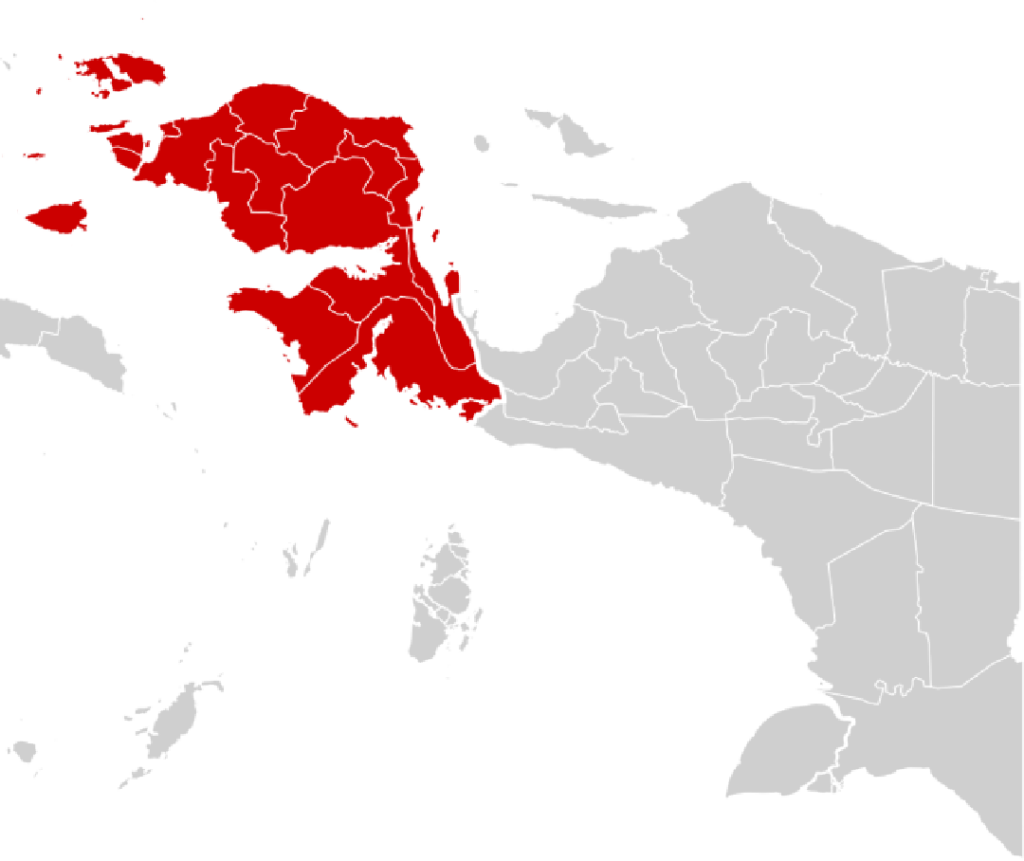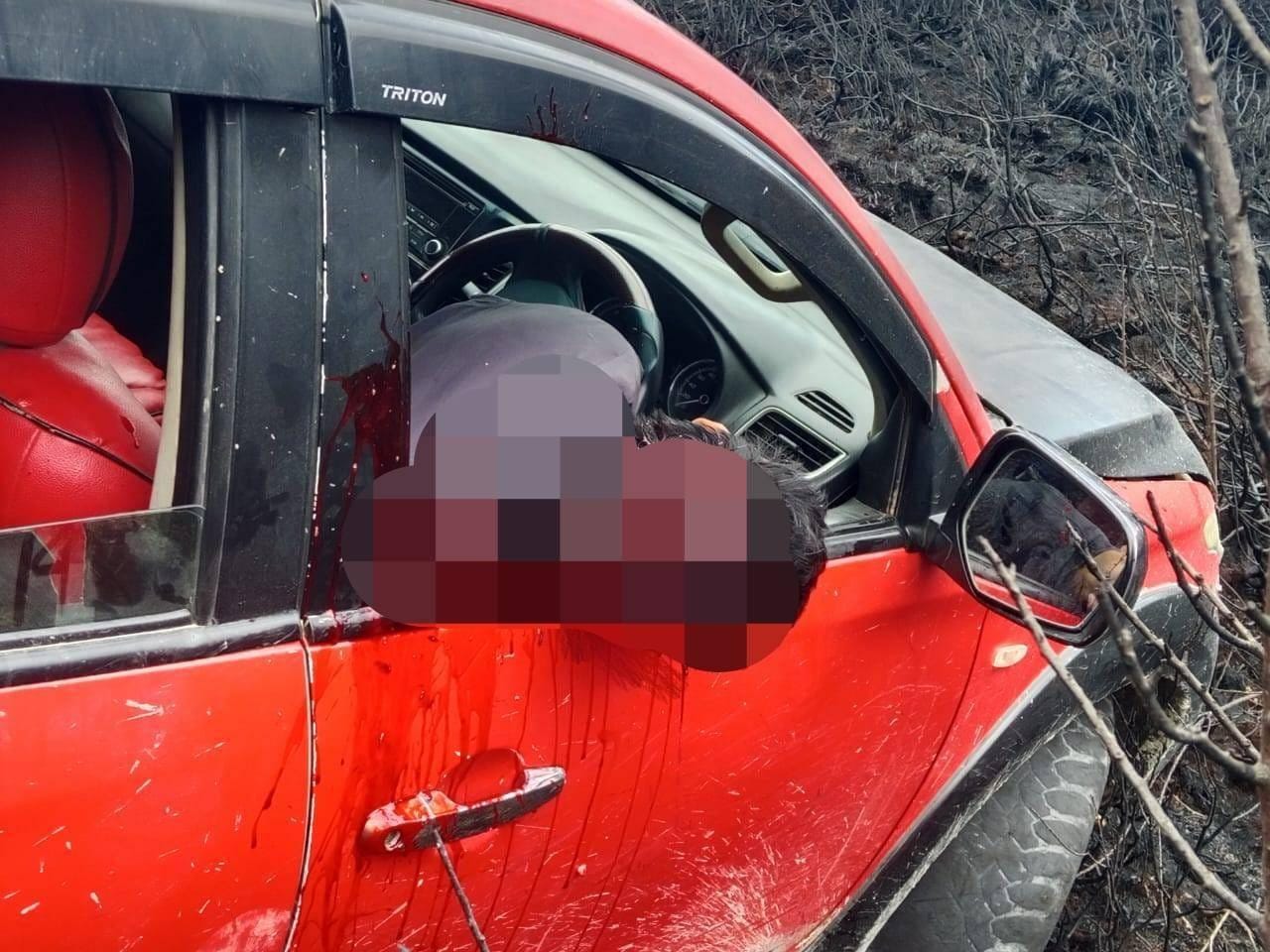
Aris Sanda a.k.a. Father Tasya was driving along the Trans Wamena Nduga road on September 15 when a routine journey turned deadly. The Toraja-born driver was carrying passengers from Wamena toward Mbua when an armed group stopped his vehicle near Gunung Boy, in an area where road travel has become increasingly exposed to security risks.
Reports from local media said the passengers were ordered out of the vehicle. Some were eventually released, while Aris remained in the hands of the gunmen. He was reportedly forced to record a statement expressing support for Papua independence before he was shot dead. His vehicle was subsequently burned.
The group identified in reports as the West Papua National Liberation Army from the Free Papua Movement (TPNPB OPM) War Regional Command (Kodap) III Ndugama Darakma later claimed responsibility for the shooting. Its spokesman, Sebby Sambom, alleged that Aris was an Indonesian military intelligence agent working as a driver. That allegation has not been independently established.
The killing has added another civilian casualty to a period of heightened insecurity in Papua Pegunungan. It came only six days after three Jayawijaya government employees, Aprida Rapi, Alfonsius Albinus Mehan, and Wili Mbuik, were killed in Muliama while travelling on official agricultural duties.
For residents who depend on road transport between Wamena and surrounding districts, the latest incident carries a message beyond the loss of one driver. It raises renewed questions about whether civilians can safely travel through some of the region’s most isolated roads.
A Morning Journey Toward Mbua
According to reports, Aris began his journey from Wamena toward Mbua on the morning of September 15.
He was driving a public transport vehicle commonly described locally as a lajuran, carrying several passengers who were travelling to areas beyond Wamena.
Fajar Papua identified the passengers as Pastor Tomi Gwijangge, 38; Nos, 23; Penias, 32; Sare, 26; Yapet, 18; Gier, 11; Serminca, 13; and two other passengers are Didi and Selti.
The journey took the group toward the Gunung Boy area along the Trans Wamena Nduga route.
The road is an important connection for communities travelling between Wamena and the more remote areas toward Nduga. But it also passes through terrain where communications, emergency access, and security coverage can be difficult.
At approximately 9:25 a.m. local time, reports said the vehicle was intercepted.
What happened next was described by several local outlets as a hostage situation.
Passengers Ordered Out of the Vehicle
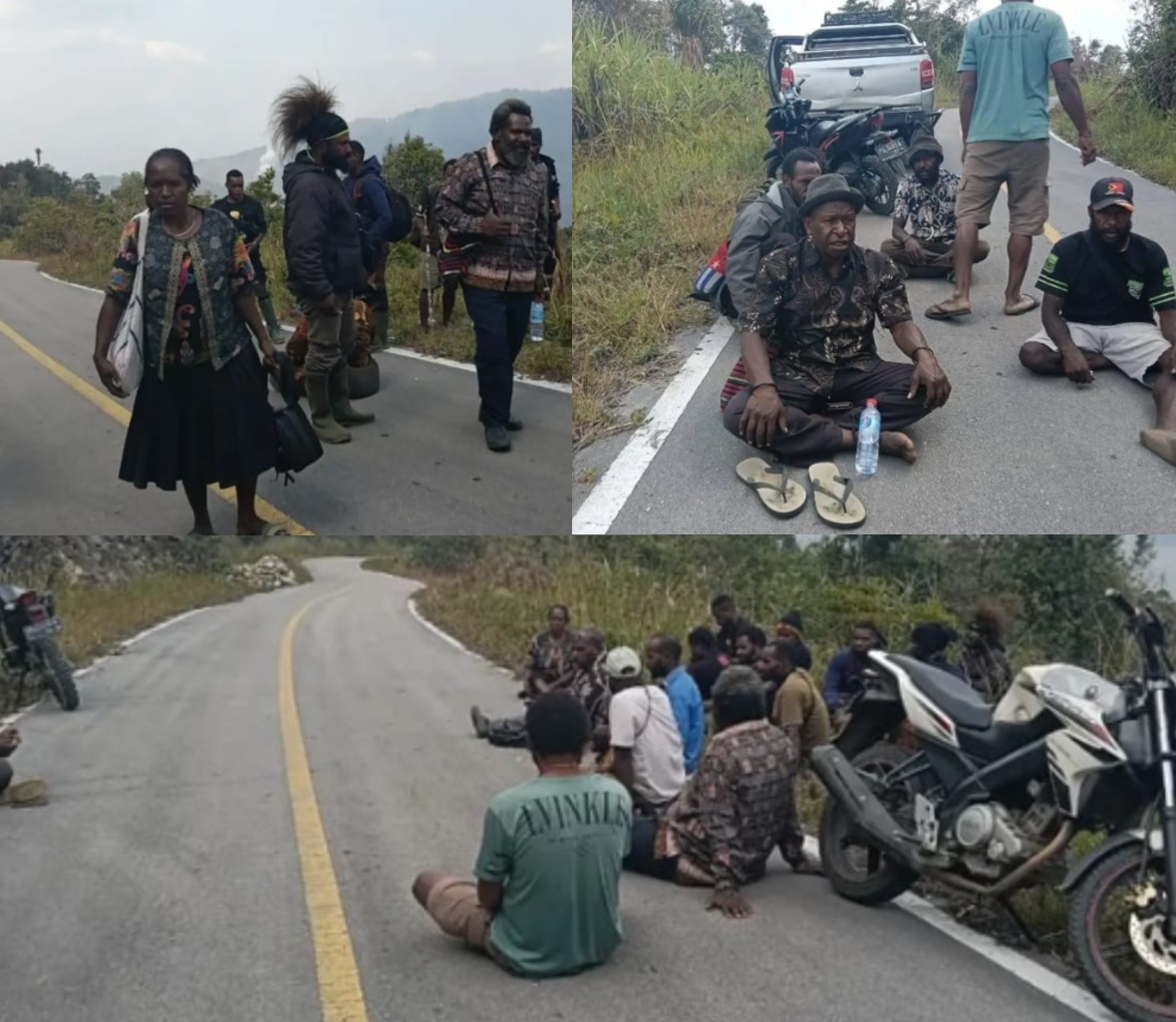
When the armed group stopped the vehicle, the passengers were ordered to get out.
Fajar Papua reported that the passengers were instructed to move toward Napua, with some reportedly continuing their journey by motorcycle taxi. The report said the passengers were threatened during the incident and ordered to follow instructions from the armed men.
The group eventually released some of the passengers.
Aris, however, was treated differently.
As a driver from Toraja and a non-Indigenous Papuan resident, he was reportedly kept behind by the armed group.
This detail is significant because it places the killing within a broader pattern of security concerns involving civilians who travel or work in conflict-affected parts of Papua.
There is no evidence in the sources provided that the passengers themselves were involved in any armed activity. They were travelling as civilians.
Their release allowed them to continue away from the immediate scene, while Aris remained with the gunmen.
The Forced Video
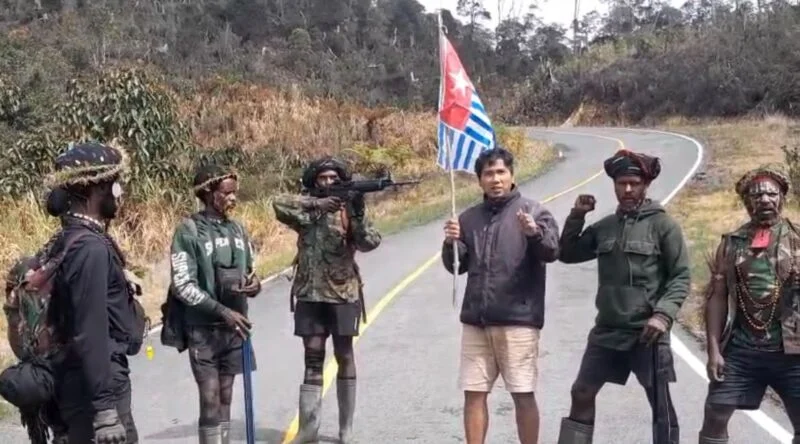
Before his death, Aris was reportedly forced to make a video statement supporting Papua’s independence.
The video circulated online and became one of the most disturbing elements of the incident.
Reports said Aris was ordered to raise a Morning Star flag and deliver a statement supporting Papua’s independence while surrounded by armed men. A weapon was reportedly visible near him during the recording.
The circumstances surrounding the video are important.
A statement made by someone while being held at gunpoint cannot automatically be interpreted as evidence of that person’s genuine political beliefs.
The available reporting indicates that Aris was under coercion when the recording was made. Fajar Papua reported that the statement was demanded before the shooting.
The video therefore became part of the sequence of events leading to the killing rather than evidence of Aris’s voluntary political position.
That distinction is particularly important when such material circulates rapidly through social media.
The Shooting and the Burning of the Vehicle
After the recording was made, Aris was reportedly shot.
Fajar Papua reported that the driver was killed after being forced to express support for Papua independence. His vehicle was then burned at the location.
Other reports placed the incident at around 9:25 a.m. on September 15.
TPNPB’s own statement subsequently claimed responsibility for the shooting. Sebby Sambom said the organization’s central command had received a report from the commander of Kodap III Ndugama Darakma, whom the group identifies as Egianus Kogeya.
The statement also alleged that Aris was an Indonesian military intelligence agent who worked as a driver.
That allegation remains an allegation.
There is no independently verified evidence in the sources supplied showing that Aris was a military intelligence operative. The available reports identify him primarily as a public transport driver from Toraja who was travelling with civilians.
This distinction matters because allegations of intelligence affiliation can be used to justify violence against civilians. Any such claim requires evidence rather than repetition.
TPNPB’s Claim and the Unresolved Questions
The TPNPB statement gave one explanation for the killing.
According to Sebby Sambom, the group believed Aris was connected to Indonesian military intelligence. TPNPB also issued warnings directed at Indonesian migrant residents working as motorcycle taxi drivers, taxi drivers, and civil servants in several areas.
Those statements were made by the armed organization itself and should therefore be treated as claims rather than independently established facts.
The available reports do not provide evidence that Aris was an intelligence operative.
They also do not establish through an independent investigation exactly why he was selected for detention and killing.
What can be established from the reporting is that he was a civilian driver carrying passengers, was stopped by armed men, was separated from the passengers, was reportedly forced to make a political statement, and was subsequently reported killed.
The sequence is enough to raise serious concerns about civilian protection.
A Second Deadly Incident in Six Days
The killing of Aris came less than a week after another deadly incident in Jayawijaya.
On September 9, three employees of the Jayawijaya Agriculture Agency were killed in Muliama District.
The victims were Aprida Rapi, 49, head of the agency’s Livestock and Animal Health Division; veterinarian Alfonsius Albinus Mehan, 35; and Wili Mbuik, a younger civil servant. They had been travelling as part of an agricultural field mission involving livestock assistance and a rice field development program.
According to Indonesian authorities, the agricultural group had travelled from Wamena toward Muliama before being attacked.
Aprida died at the scene after suffering a gunshot wound. Alfonsius also died at the scene. Wili was taken to Wamena Regional Hospital but later died from her injuries.
Police said preliminary witness information indicated that around eight attackers may have been involved, while investigations continued into the identities of the perpetrators.
The two incidents are separate cases.
But their proximity in time has intensified concern about civilian safety around Jayawijaya and the routes connecting Wamena with neighboring districts.
In both cases, civilians were travelling for ordinary purposes.
One group was involved in public agricultural service. The other was travelling by road.
The Human Cost Behind the Security Reports
For Aris’s family, the incident is not a statistic.
He was known as a driver who had worked in Papua for years, according to reports surrounding the case. His work depended on the same roads that many residents use to reach communities, markets, churches, and workplaces.
The death of a driver also affects passengers and transport networks.
When drivers become reluctant to use certain roads, communities can lose access to transportation. Prices can rise. Travel can become less predictable. Families may delay medical trips or other essential journeys.
This is one of the less visible consequences of armed violence.
A shooting does not end when the gunfire stops. Its effects can spread through local economic activity and everyday mobility.
The Wamena Nduga corridor illustrates this problem particularly clearly.
People living in remote districts cannot simply stop travelling. They need to move for work, education, trade, health care, and family obligations.
When roads become associated with armed attacks, the civilian population carries much of the resulting burden.
Why the Gunung Boy Incident Matters
The location of the incident adds another dimension.
Gunung Boy lies along a route connecting Wamena with Nduga. It is part of a wider transportation network through rugged terrain where emergency response can be difficult.
The reported burning of Aris’s vehicle also means that evidence at the scene may be important for investigators.
The available media reports do not yet provide a complete forensic account of the incident. Nor do they provide a publicly documented reconstruction from independent investigators.
That leaves several questions open.
When exactly did the armed group first stop the vehicle? How long were the passengers detained? How did they leave the area? Where was Aris taken after the passengers were released? What weapons were used? Who fired the fatal shot? And what evidence, if any, supports the allegation that Aris was an intelligence operative?
These questions should be addressed through investigation rather than assumption.
Protecting Civilians Must Remain the Priority
The case highlights the difficult security environment faced by communities in Papua Pegunungan.
The state has a responsibility to protect civilians and maintain public safety along major transportation routes. At the same time, any security response needs to remain consistent with Indonesian law and the protection of civilian life.
The government and security forces also face a practical challenge.
Road security cannot be achieved simply by increasing personnel at every point along a long and mountainous route. It requires intelligence, communications, local cooperation, rapid response capacity, and engagement with communities.
The involvement of local residents is particularly important.
People who live around the roads often understand the terrain better than outsiders. They can provide early warnings, information about unusual movements, and assistance during emergencies.
That cooperation should complement, not replace, formal law enforcement.
A Wider Pattern of Civilian Vulnerability
Aris’s death also comes against a wider backdrop of violence affecting civilians in Papua.
Earlier this month, three agricultural officials were killed in Muliama while carrying out government duties. In another case, nine civilians were reportedly abducted in Jila, Mimika, with one survivor later found after spending around 20 days in the forest.
Those cases differ in their circumstances, locations, and actors.
Yet they share one central issue: civilians can become directly exposed to armed conflict even when they are not participating in hostilities.
That vulnerability makes civilian protection an important measure of any security strategy.
The Importance of Separating Evidence from Claims
The Aris Sanda case also demonstrates the difficulty of reporting violence in real time.
Information often emerges first through social media, statements from armed groups, witnesses, and local news organizations.
Some details can be confirmed quickly.
Others cannot.
The claim that TPNPB OPM was responsible for the shooting is supported by the group’s own public statement and by multiple local reports attributing the attack to Kodap III Ndugama Darakma.
However, the group’s separate claim that Aris was an Indonesian military intelligence agent has not been independently established in the available reporting.
For international readers, that distinction is essential.
A responsible account of a conflict should identify who made a claim, explain what evidence supports it, and avoid presenting contested allegations as established facts.
The same standard should apply when reporting statements from government authorities or security forces.
Conclusion
The death of Aris Sanda has added another civilian tragedy to the security crisis affecting parts of Papua Pegunungan.
He was travelling from Wamena toward Mbua with passengers when his vehicle was stopped near Gunung Boy. The passengers were ordered out. Aris was reportedly kept behind, forced to make a video expressing support for Papua independence, and subsequently shot. His vehicle was burned. TPNPB OPM later claimed responsibility and alleged that he was a military intelligence agent, but that allegation remains unverified.
Whatever the political claims surrounding the incident, the human consequence is clear.
A driver who was transporting civilians did not return home.
The incident also came only six days after the deaths of Aprida Rapi, Alfonsius Albinus Mehan, and Wili Mbuik in Muliama, where three Jayawijaya government employees were killed during an agricultural assignment.
The sequence has intensified concern over the safety of civilians travelling through Jayawijaya and along routes connecting Wamena with surrounding districts.
For the Indonesian government, the immediate challenge is to establish the facts, secure transportation corridors, protect civilians, and ensure that those responsible for unlawful killings are investigated and prosecuted through due process.
For communities, the priority is more basic: being able to travel without fear.
The roads linking Wamena to neighboring districts are more than lines on a map. They connect families, markets, schools, churches, government services, and local economies.
When violence turns those roads into places of fear, the consequences reach far beyond a single victim.
Aris Sanda’s death should therefore not be reduced to another entry in a list of Papua security incidents. It is a reminder that the people most exposed to conflict are often those simply trying to work, travel, and serve their communities.
The investigation into his killing should establish what happened, who was responsible, and whether any evidence exists for the allegations made against him.
Until then, the most important fact is also the simplest: a civilian driver lost his life while travelling a road that communities depend on.
The responsibility now lies with the authorities to protect civilians, establish the truth, and uphold the rule of law.
Read Also
Three Jayawijaya Civil Servants Killed by TPNPB OPM in Muliama
Nine Women Reported Abducted in Papua Violence
Demerina Uamang Rescued After Jila Hostage Crisis