
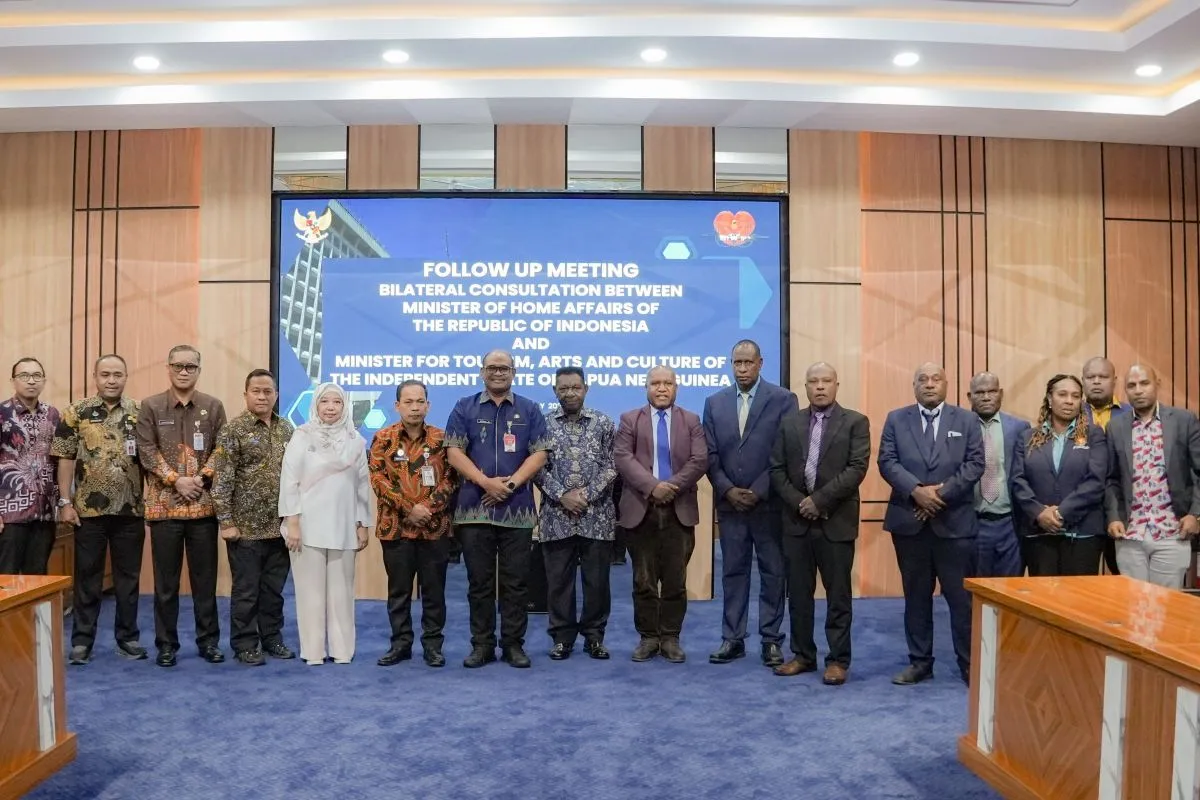
Indonesia and Papua New Guinea (PNG) are taking another step to bolster bilateral cooperation through talks on expanding electricity cooperation for communities living along their shared border. The initiative is led by Indonesia’s National Border Management Agency (BNPP) and the Ministry of Home Affairs (Kemendagri), in partnership with Papua New Guinea authorities, and aims to create a sustainable framework for the supply of electricity between Skouw in Indonesia’s Papua Province and Wutung in Papua New Guinea’s West Sepik Province.
Officials from both countries say the cooperation is about more than an energy project. It is considered an important part of broader efforts to enhance the welfare of the people, boost local economic activity, strengthen border connectivity and deepen the long-standing partnership between neighbouring countries.
The discussions also underscore a growing recognition that infrastructural cooperation is an effective tool of regional diplomacy while directly improving the quality of life for border communities.
Electricity Brings New Opportunities for Border Communities
Reliable electricity has proven to be one of the most transformative forms of infrastructure in remote border regions.
In the past, communities near the Skouw Wutung border crossing have experienced major difficulties in getting stable electrical power due to their remoteness and poor infrastructure.
The residents of Wutung Village, after years of limited and inconsistent access to electricity, started receiving electricity supplied by Indonesia in 2023. Local residents said the development was a major improvement, allowing households, schools, health facilities, churches and small businesses to operate more effectively.
The latest bilateral talks were intended to help ensure such cooperation continues under an agreed mechanism dealing with technical implementation, operational sustainability and electricity tariffs.
BNPP officials said they are working with Papua New Guinea authorities to identify financially sustainable solutions that are beneficial to communities on both sides of the border.
BNPP and Kemendagri Pursue Sustainable Cooperation
Representatives of the BNPP and the Kemendagri reiterated that talks with Papua New Guinea are still focused on seeking practical arrangements for long-term cooperation on electricity.
One of the main problems is finding a suitable tariff mechanism that reflects the operational realities but is also affordable for the border communities.
Officials said a balanced agreement required careful attention to technical, administrative, financial and legal aspects.
Both governments recognise the wider role of electricity in supporting education, health care, public administration, economic activity and social welfare instead of treating it as a commercial commodity only.
The Indonesian authorities also stressed that the talks showed the positive direction of bilateral relations between the two neighbouring countries.
They said constructive dialogue remains key to ensuring cross-border infrastructure projects deliver sustainable benefits to local communities.
Energy Cooperation Strengthens Border Connectivity
One of the busiest gateways linking Indonesia and Papua New Guinea is the Skouw Wutung border.
In everyday life the residents cross the border for trade, family visits, education, health care, and religious and cultural interaction.
Therefore, reliable infrastructure is playing an increasingly important role in facilitating these exchanges.
Electricity complements other investments by both governments in transportation, customs facilities, immigration services, telecommunication and border trade infrastructure.
“The access to electricity will further enhance the ability of small businesses, food processing, refrigeration, communications, digital services and tourism-related enterprises to flourish,” said the UN official.
Better energy infrastructure also helps to improve the delivery of government services in border districts.
Schools enjoy more reliable learning environments.
Healthcare centres gain from a better ability to store medicines and to use medical equipment.
Digital connectivity improves the efficiency of public institutions.
These tangible improvements in greater living standards are seen by border communities.
Border Development as a Shared Vision
Officials in both countries are increasingly seeing border regions not as territorial boundaries but as areas of cooperation that can lead to shared prosperity.
Indonesia has made a huge investment to modernise the border infrastructure through the development of integrated border posts (PLBN), road networks, public facilities and supporting services.
The electricity partnership complements these investments by bolstering one of the most essential public services required for sustainable development.
Government representatives noted that improving living conditions in border areas contributes to reducing regional disparities and fosters closer people-to-people interactions between neighbouring communities.
This policy is in accordance with the general policy of border development in Indonesia, which emphasises the border area as an area of economic growth and not as a fringe area.
Reliable electricity for Papua New Guinea also supports local development, as well as enhancing cooperation with one of its closest regional partners.
Energy as an Instrument of Regional Diplomacy
Electricity cooperation is not only a practical benefit but also a tool for diplomacy, as infrastructure projects are becoming more and more diplomatic.
Regular communication among technical agencies, local governments, regulators, and national authorities is established through cross-border energy partnerships.
Such engagements build institutional confidence and promote wider collaboration between sectors such as trade, transport, customs, environmental protection, disaster management and public utilities.
Infrastructure diplomacy is an increasingly important feature of regional cooperation in the Indo-Pacific, according to analysts.
Instead of relying solely on formal diplomatic dialogue, countries are increasingly forging closer ties through practical projects delivering tangible benefits for ordinary citizens.
This trend is exemplified in the Indonesia-Papua New Guinea electricity initiative, which shows how shared infrastructure can support both development goals and bilateral friendship.
Energy Cooperation Supports Inclusive Economic Growth
For Indonesia and Papua New Guinea alike, expanding access to reliable electricity is increasingly considered an investment in long-term economic development, not just an infrastructure project.
Development economists have long identified electricity as one of the most important drivers of productivity. Schools can enlarge learning time, health centres can use medical equipment, small businesses can store perishable goods, government offices can deliver digital public services, and entrepreneurs can develop new economic activities.
These advantages are particularly crucial in border areas like Skouw and Wutung, where communities are often logistically hampered by the challenges of their remote geography.
Indonesian officials said increased electricity cooperation could stimulate local economic activity on both sides of the border.
Refrigeration and electronic payment systems help small retailers operate more efficiently.
Better storage and processing capacity for food could benefit local markets.
Hospitality businesses serving cross-border visitors can improve their quality of service.
Farmers and fishers have more opportunities to process and preserve their agricultural and fishery products before they are brought to wider markets.
Reliable power does more than support individual firms; it creates the environment to attract future private investment to border areas.
As economic activity is forecast to grow, job opportunities should expand, which should help to boost household incomes and make regions more resilient.
Border Infrastructure Reinforces Bilateral Relations
The electricity project is part of a broader framework of practical cooperation between the two neighbours, according to officials from both governments.
Indonesia and Papua New Guinea have maintained diplomatic relations for decades, with cooperation spanning border management, trade, transportation, health, education, disaster response and security.
Infrastructure projects have been one of the most visible manifestations of this partnership.
The Skouw Integrated Border Post (PLBN) has revolutionised cross-border mobility with improved customs, immigration and quarantine services, providing a modern gateway connecting both countries.
Electricity cooperation complements these investments by reinforcing another vital public service that directly benefits border residents.
Government representatives also underlined that the success of the cooperation relied on the constant dialogue between national institutions, provincial-level authorities, utility companies and local communities.
Such coordination helps to ensure that technical, financial and regulatory challenges can be addressed through mutual consultation.
For many border residents, these practical improvements strengthen long-standing social, cultural and family ties that have linked communities on both sides of New Guinea for generations.
Cross-Border Energy Cooperation Reflects Global Trends
Cross-border electricity cooperation has become an increasingly common feature of regional development internationally.
Interconnected electricity networks across Europe enable neighbouring countries to exchange power, enhance energy reliability, and boost regional energy security.
In South-east Asia, the ASEAN Power Grid initiative aims to enhance cross-border electricity trade among member states while supporting economic integration and energy resilience.
Similar arrangements also exist in parts of Africa and South Asia, where neighbouring countries work together to improve electricity access for border communities that may be geographically closer to infrastructure located across national borders.
Such projects have benefits well beyond energy supply, experts say.
Cross-border infrastructure acts as a catalyst for regular exchange between governments, builds trust in institutions, encourages investment and spurs wider regional cooperation.
Many of these international principles are reflected in the Indonesia-Papua New Guinea initiative.
The project is modest in scale compared with larger regional electricity networks, but it shows how practical cooperation can improve daily life while reinforcing diplomatic relations and regional stability.
For international observers, the initiative demonstrates an increasingly important aspect of modern diplomacy where infrastructure and public services become tools of cooperation and shared prosperity.
Looking Ahead
The BNPP, the Kemendagri and Papua New Guinea officials said discussions will continue to finalise arrangements regarding electricity tariffs, operational mechanisms and sustainability over the long term. Both governments hope to reach an agreement that benefits both sides while ensuring affordable electricity for border communities.
The partnership is also expected to complement wider efforts to improve transportation, trade, digital connectivity, healthcare, education and economic development throughout the Indonesia-Papua New Guinea border region.
More infrastructure projects are expected to further strengthen cross-border cooperation, and reliable electricity is likely to remain one of the most tangible symbols of practical collaboration between the two neighbouring countries.
For the people of Skouw and Wutung, reliable electricity access means better public services but also more opportunities for education, business and community development.
Conclusion
The ongoing discussions between the BNPP, the Kemendagri and the Government of Papua New Guinea demonstrate how cross-border energy cooperation can deliver tangible benefits for the communities living in the vicinity of the Skouw-Wutung frontier. The electricity supply, which has already improved living conditions in Wutung since 2023, is being built upon by both countries to create a sustainable framework covering tariffs and long-term operations. The project will not only increase access to electricity but will also include education, healthcare, local trade, digital connectivity and regional economic development, as well as strengthening bilateral relations. With Indonesia and Papua New Guinea continuing to invest in border infrastructure and practical cooperation, the electricity partnership demonstrates how joint public services can help promote inclusive growth, stronger regional connectivity and lasting friendship between neighbouring nations.

