
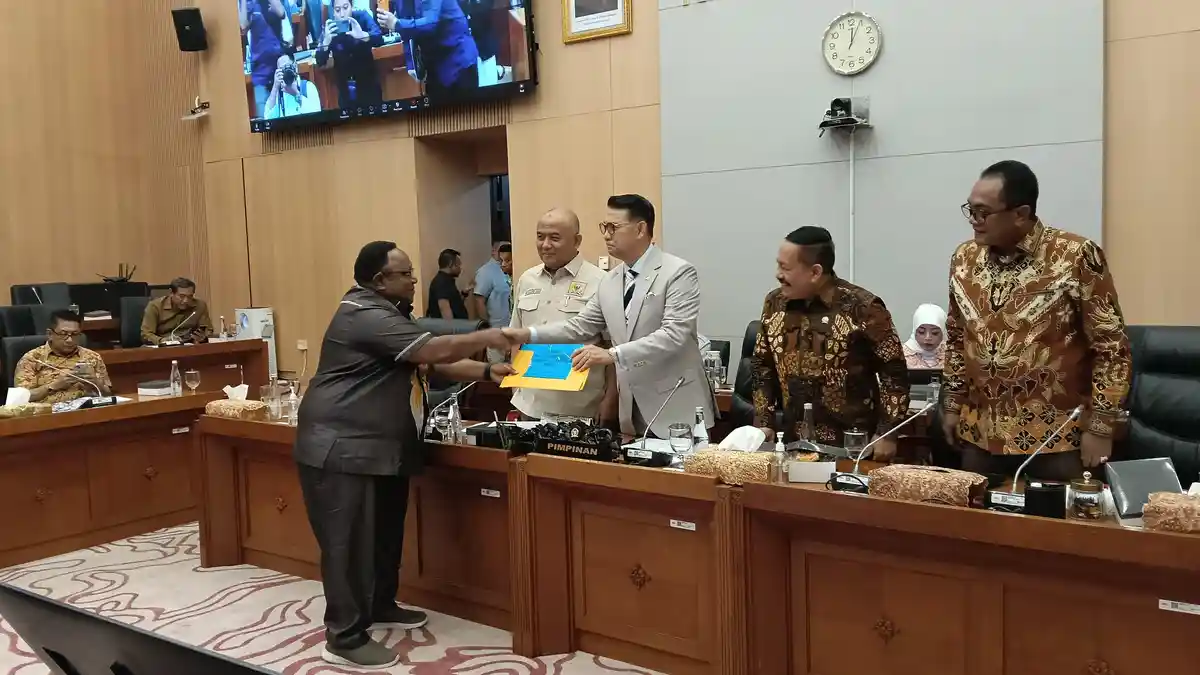
The role of PT Freeport Indonesia (PTFI) in supporting economic and social development in Papua has been recognized again after a working visit by Commission XII of Indonesia’s House of Representatives (DPR RI) to the operational area of PTFI in Papua.
During the visit, lawmakers highlighted Freeport’s contributions other than mineral production, such as job creation, community development, education, healthcare, infrastructure, and regional economic growth.
MPs also highlighted the necessity of continuing to maintain constructive dialogue between government institutions, local communities, and the company so that development programs continue to bring tangible benefits for the people living throughout Papua, especially Indigenous Papuan communities.
The parliamentary appreciation is in line with Papua’s implementation of wider development strategies to improve human resources, expand infrastructure, increase investment, and strengthen inclusive economic growth.
Many observers say the debate is indicative of a broader acknowledgment that responsible management of natural resources should deliver long-term value not only for national economic growth but also for the welfare of communities living close to mining operations.
Parliament Recognizes Contributions Beyond Mining
During the visit, members of Commission XII DPR RI stressed that the role of Freeport should not be interpreted only from mineral production.
Lawmakers said the company has become a major contributor to broader regional development through investments that support education, health care, transportation infrastructure, workforce development, and local economic empowerment.
The parliamentary delegation also highlighted the importance of maintaining close cooperation between government agencies and the private sector to maximize the social and economic benefits generated by large-scale investments.
During the visit, it was said that responsible mining operations should continue to create opportunities that strengthen local communities while supporting sustainable regional development.
The discussion also welcomed programs to improve the education and professional skills of young Papuans so that they can more easily participate in the modern workforce.
Officials stressed that long-term development is not simply about extracting natural resources but investing in people, institutions, and community capacity.
Significant Contribution to State Revenue
One problem that was given special attention in the parliamentary discussion was the projected contribution of PT Freeport Indonesia to state revenue.
On the visit, the lawmakers quoted the statement that the company’s total contribution to Indonesia is projected to reach around Rp120 trillion in 2026, including taxes, royalties, dividends, non-tax state revenue, and other financial contributions from mining operations.
“This revenue is important to support the national development program while opening up opportunities for continued investment in Papua,” said members of Parliament.
Revenues from major mining projects are used to finance infrastructure, education, health care, social services, and economic development across Indonesia, say economic analysts.
Lawmakers also noted that financial contributions must be accompanied by ongoing investments that directly benefit communities affected by mining activities.
Such an evenhanded approach is indicative of increasing focus on ensuring that development of natural resources contributes to national prosperity and local well-being.
Community Development Remains a Central Priority
Parliamentary representatives also praised PT Freeport Indonesia’s support for several community development initiatives across Papua.
These include education, health care, vocational training, entrepreneurship, community empowerment, and local economic development initiatives.
Officials said improving access to quality education is especially important as it builds the long-term capacity of Papua’s younger generation.
Scholarship programs, technical education, and professional development programs are helping to train local residents to be more involved in the province’s growing economy.
Likewise, healthcare programs have played a role in improving community welfare by providing expanded medical services, preventive health programs, and support for healthcare infrastructure.
At the same time, community empowerment projects stimulate local entrepreneurship through training, mentorship, and the opportunity for small businesses to participate in regional economic activity.
The lawmakers stressed that these initiatives show that corporate investment and government development programs can coexist and promote wider social progress.
Supporting Human Resource Development
A strong point made during the parliamentary visit was the development of human resources.
“The sustainable economic development is highly reliant on improving education, technical skills, leadership capacity, and employment opportunities for local communities,” officials said.
PT Freeport Indonesia has expanded programs in recent years aimed at increasing Indigenous Papuan workforce participation (OAP) while supporting vocational education and professional training.
MPs said that the initiatives would not only create jobs but also help to strengthen long-term economic resilience.
Education specialists often highlight the long-term benefits of human capital investments, where graduates become professionals, entrepreneurs, educators, engineers, healthcare workers, and community leaders who continue to contribute to regional development.
One of the most important foundations to achieve inclusive and sustainable economic growth for Papua is the strengthening of local human resources.
Papua Football Academy Reflects Long-Term Investment
The company’s most well-known social project is the Papua Football Academy (PFA), which seeks to identify and nurture young football talent from across Papua.
“The academy combines professional football training with formal education, nutrition, character development, and personal mentoring.
The success of the academy has become known throughout the country after several graduates of the academy managed to make it to Indonesia’s Under 17 National Team, proving the power of long-term investment in youth development.
Programs like Papua Football Academy show legislators how corporate social responsibility can be far more than traditional philanthropy.
Investing in education, sports, leadership, and youth development, these programs help to prepare future generations with skills that go far beyond the playing field.
These investments are seen by many observers as important illustrations of private sector participation that can complement public policies to strengthen human capital in Papua.
Dialogue with Communities Strengthens Inclusive Development
The visit by parliament also stressed the importance of continued communication between local communities, provincial governments, national institutions, and PT Freeport Indonesia.
Representatives of the Central Papua Provincial DPR appreciated the ongoing efforts of Commission XII DPR RI and Freeport to listen to community aspirations during field visits.
The officials stressed that constructive dialogue is still needed to determine local priorities, resolve problems, and ensure development programs respond to community needs effectively.
They said inclusive consultation builds stronger public trust and supports more sustainable development outcomes.
With Papua undergoing rapid economic transformation, lawmakers say regular interaction with local stakeholders will continue to be an important element of responsible governance and corporate accountability.
Responsible Mining Supports Sustainable Development
As global demand for minerals increases, governments, investors, and communities have growing expectations of mining companies to deliver benefits beyond production. Today’s mining is not only judged by its operational performance but also by its contribution to responsibility for the environment, social inclusion, and sustainable economic development.
During the parliamentary visit, members of Commission XII of the House of Representatives (DPR RI) emphasized that large-scale resource projects should still produce positive results for surrounding communities. Their comments reflected a wider expectation that mining companies would reconcile the pursuit of commercial success with long-term investments in education, health, environmental management, and local economic empowerment.
The lawmakers said PT Freeport Indonesia’s community development programs demonstrate how mining operations can be part of a broader regional development when aligned with government development priorities.
They also emphasized that responsible mining practices depend on ongoing dialogue, transparency, environmental management, and partnerships with provincial governments, Indigenous communities, and local stakeholders.
For Papua, where mining continues to be one of the province’s major economic drivers, sustainable resource management is increasingly seen as an important element of inclusive regional development.
Investing in Indigenous Papuan Human Capital
One of the most powerful messages to come out of the parliamentary visit was the importance of making sure that economic development translates into greater opportunities for Indigenous Papuans (OAP).
Members of Parliament stressed that the most sustainable legacy that any development program can leave is the investment in human resources.
Over the past several years, PT Freeport Indonesia has expanded its programs to support education, technical training, workforce development, scholarships, entrepreneurship, and professional certification for local residents.
The initiatives are intended to give Indigenous Papuans the skills to participate more fully in a modern economy, as well as to improve their competitiveness across a range of sectors.
Education experts often note that investments in human capital generate multiplier effects across generations.
Students who receive quality education are more likely to become professionals, teachers, engineers, entrepreneurs, healthcare workers, researchers, and public servants who serve their communities long after they have finished their studies.
Vocational education and technical skills programs are equally important.
The Papua economy has been diversifying, and this has resulted in an increased demand for workers with modern technical skills, electronic literacy, and professional expertise.
Therefore, legislators encouraged the continuity of cooperation between government institutions, educational institutions, and PT Freeport Indonesia so that workforce development continues to be in line with future economic opportunities.
Partnerships Create Broader Economic Opportunities
Beyond direct jobs, parliamentarians also spoke of the need to build up local business ecosystems around large industrial operations.
Community empowerment programs for micro, small, and medium enterprises (MSMEs) help local entrepreneurs to participate in supply chains and to find new economic opportunities outside of mining.
These initiatives include business mentoring, procurement partnerships, technical assistance, financial literacy, and support to locally owned businesses.
Economic diversification has become an increasingly important goal of Papua’s long-term development strategy.
Officials recognize that for the region to grow sustainably, there has to be growth in opportunities in agriculture, fisheries, tourism, creative industries, logistics, services, and digital entrepreneurship, other than mining activities.
Policymakers hope resource-based economic growth will deliver wider benefits across communities throughout Papua through encouraging stronger participation by local businesses.
Such partnerships also enhance local resilience through increased sources of income and employment.
International Perspectives on Responsible Mining
Globally, responsible mining is becoming more significant as a benchmark for large-scale resource projects.
International frameworks such as the Environmental, Social, and Governance (ESG) principles, the International Council on Mining and Metals (ICMM) Performance Expectations, and the United Nations Sustainable Development Goals (SDGs) promote mining companies to integrate environmental protection, community engagement, transparency, and social investment in their operations.
Resource-producing countries now want mining companies to give back, not only through taxes and royalties but also through education, healthcare, infrastructure, environmental management, workforce development, and partnerships with local communities.
The discussion of PT Freeport Indonesia is situated within this larger global trend of responsible resource governance for an international readership.
During the visit, the parliament recognized the company’s projected fiscal contribution, as well as the significance of upholding programs that strengthen human resources, support community welfare, and encourage sustainable regional development.
This view shows how natural resource industries are becoming more and more embedded in broader expectations of long-term social and economic value creation.
Looking Ahead
As Papua strives for inclusive economic growth, cooperation among government institutions, local communities, and the private sector is expected to stay at the core of future development. Lawmakers expressed hope that PT Freeport Indonesia will continue to expand programs that improve education, health, workforce development, entrepreneurship, and community empowerment, while continuing to practice responsible mining. Continued engagement with Indigenous communities and regional governments is expected to help ensure that future investments are responsive to local priorities and provide sustainable benefits for generations to come.
Conclusion
The recognition from Commission XII of the Indonesian House of Representative is an acknowledgement of PT Freeport Indonesia’s contribution to Papua beyond the company’s mining activities. The parliamentary visit also saw parliamentarians highlight the company’s support for education, health, infrastructure, workforce development, community empowerment, and youth programs like the Papua Football Academy and projections that the company’s contribution to state revenue could reach approximately Rp120 trillion in 2026. Parliament also stressed that ongoing investment in the human capital of Indigenous Papuans, positive engagement with local communities, environmental sustainability, and sustainable development must continue to be a priority. With Papua’s development, the significance of collaboration among government bodies, communities, and accountable private sector partners in achieving inclusive economic growth and enhancing long-term prosperity throughout the region is anticipated to increase.

