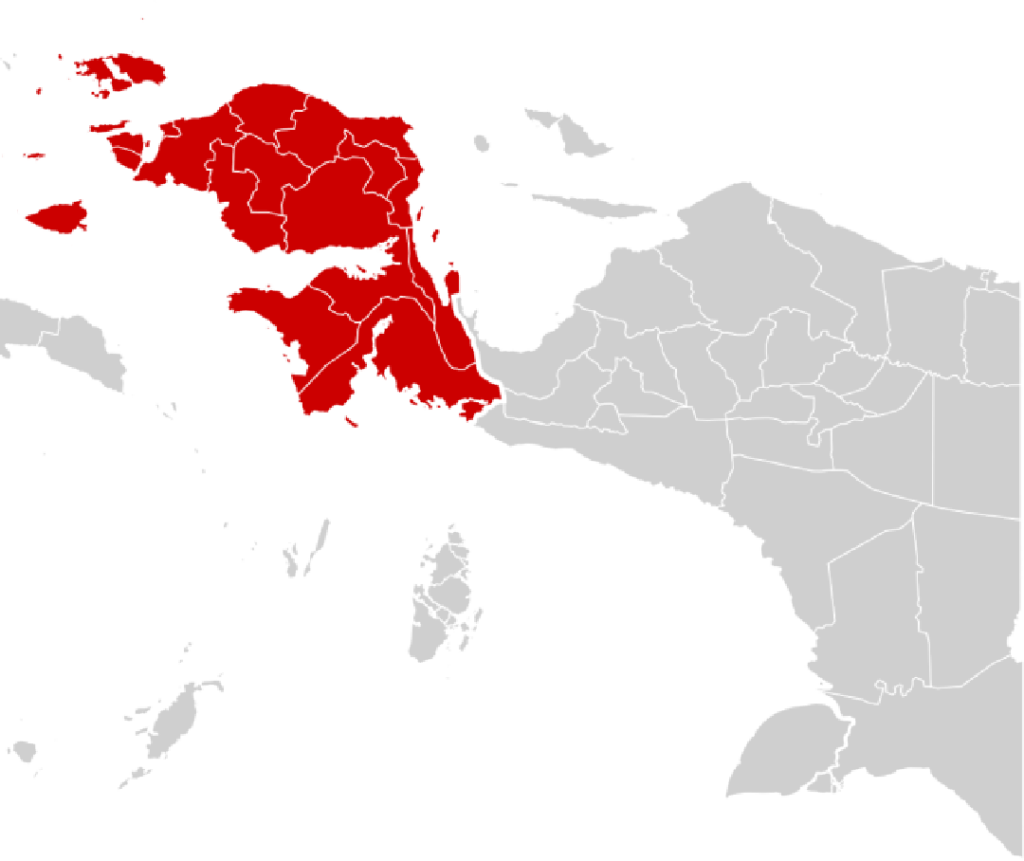
For many children growing up in Indonesia’s youngest province, the trip to school is hardly ever a simple one. Some spend hours traveling in the mountains, others cross rivers or remote valleys, and for many families the cost of education continues to be a struggle, although it is seen as the most important investment in their children’s future.
The provincial government of Papua Tengah (Central Papua) hopes to address those challenges with a massive investment in education.
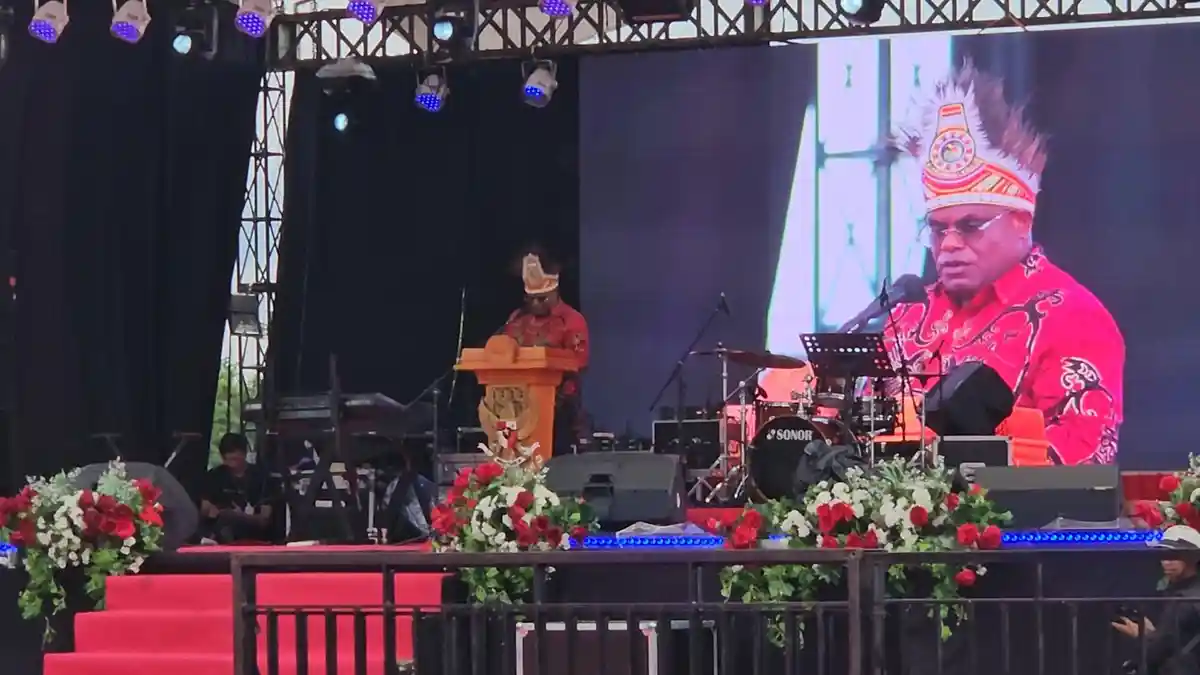
“Improving human resources is one of the government’s top priorities,” Governor Meki Nawipa said, adding that the provincial administration has allocated Rp77.8 billion (around US$4.7 million) for education programs in the 2026 fiscal year.
The funding will support free education programs for 58,920 students, improve teaching quality via teacher certification, and expand educational opportunities for children across the province, particularly Indigenous Papuans in remote districts.
The announcement is part of broader efforts by both the central and provincial governments to ensure that economic development in Papua comes with long-term investment in people. Officials say roads, airports, and public facilities alone cannot transform communities without accompanying improvements in education.
Historically, access to education has been uneven across districts in Papua Tengah, given the geographical and infrastructure constraints, and this policy is an attempt to tackle one of the most fundamental development challenges facing the province.
Education Becomes the Province’s Main Investment
In the announcement, Governor Meki Nawipa said every child in Papua Tengah had the right to complete school regardless of family income and place of residence.
“The provincial government does not see education just as a public service but as the foundation for creating a better, more competitive generation of Papuans,” Nawipa says.
The budget is apportioned to ensure that financial barriers will no longer bar children from furthering their education, he said. Our children have to go to school. The government has to be there and make sure education is available,” Nawipa was quoted as saying by provincial officials.
“Today’s investment in education will determine the quality of Papua Tengah’s workforce, leadership, and economic competitiveness in the decades to come,” the governor said.
He painted education not as a routine expenditure but as a long-term investment in the province’s future.
Free Education Targets Equal Opportunities
One of the largest components of the Rp77.8 billion allocation will finance the province’s free education initiative.
The policy seeks to reduce the financial burden on households while encouraging higher school participation rates across Papua Tengah.
Although many Indonesian public schools already receive government funding, families in remote regions often continue to face additional costs, including transportation, learning materials, uniforms, and accommodation.
Provincial officials believe reducing those burdens can help prevent students from dropping out before completing their education.
Reaching Remote Communities
The province’s free education program will receive a significant portion of the Rp77.8 billion allocation.
The policy aims to reduce the financial burden on households and to increase school participation rates in Papua Tengah.
Many Indonesian public schools are already funded by the government, but families in remote areas still incur costs such as transport, learning materials, uniforms, and accommodation.
Alleviating those burdens can help keep students in school and stop them from dropping out before they finish their education, provincial officials say.
Improving Teacher Quality Through Certification
But education officials say it’s not enough to expand access.
Students also need qualified teachers who can teach well.
Part of the provincial budget has been set aside for teacher certification programs to support this goal.
Certification support will benefit thousands of teachers to improve their professional competencies and increase teaching standards in Papua Tengah.
Teachers at the Central of Educational Reform
“It starts with teachers,” Governor Nawipa has argued repeatedly. “The government’s aim is to improve the quality of education. He said teachers are role models and educators, especially in remote areas where schools are important social institutions. By improving the professionalism of teachers, the government hopes to make classrooms more effective learning environments that will encourage students to remain in school and pursue higher education. Education experts generally agree that teacher quality is one of the strongest indicators of student achievement. Certification, therefore, is more than an administrative acknowledgment. It is intended to improve the quality of instruction and provide teachers with opportunities for professional growth.
Building Human Resources for the Future
The education budget is part of Papua Tengah’s broader strategy to strengthen human capital.
The provincial leaders say sustainable development depends on producing a generation with the knowledge and skills necessary to compete in a rapidly changing economy.
Natural resources can increase the economy, but officials say it’s education that ultimately decides if local communities can fully participate in that development.
Preparing Young Papuans for New Opportunities
Papua Tengah has seen significant institutional change since its establishment as one of Indonesia’s newest provinces.
As government services have grown, so has the need for teachers, health workers, civil servants, engineers, entrepreneurs, and other skilled workers.
Officials say that by bolstering education today, it will help prepare Indigenous Papuans to fill those roles in the future.
Instead of depending on expertise from outside the province, the government is hopeful that more leadership positions can be filled by local graduates in the long run.
That goal aligns with wider efforts to empower Indigenous Papuans through education and capacity building.
Supporting National Development Priorities
The provincial initiative is also in support of Indonesia’s national commitment to improve educational access across eastern Indonesia.
One government after another has stressed the importance of continued investment in education and infrastructure development to reduce regional disparities.
Improving schools is especially important for Papua, as educational outcomes have direct impacts on job prospects, household incomes, and long-term welfare.
Education, analysts often say, is one of the most potent tools for breaking cycles of poverty and fostering inclusive growth.
Increased provincial spending on education is among the ways in which Papua Tengah is hoping to contribute to those national objectives while meeting local priorities.
Community Expectations Remain High
Parents and community leaders have welcomed the government’s commitment, but many hope for consistent implementation that reaches schools throughout the province.
Education activists argue that budget allocations are merely the initial step.
The success of the program will ultimately depend on transparent management and cooperation between provincial and district governments and sustained engagement with teachers and local communities.
If successful, the initiative could help improve school attendance, strengthen learning outcomes, and encourage more young Papuans to continue their education through university and vocational institutions.
Education as a Foundation for Sustainable Development
Officials say the policy will have wider implications for the future of Papua Tengah beyond the classroom.
Improved education is expected to strengthen governance, improve public health, raise productivity, and increase economic resilience.
Individuals with higher educational attainment tend to have greater capacity to innovate, participate in formal employment, and adapt to technological change.
That’s why spending on education is increasingly considered not just social spending but economic strategy.
Education is likely to continue to be a defining priority for the province as Papua Tengah continues to build its administrative institutions.
Conclusion
Papua Tengah’s decision to allocate Rp77.8 billion for free education and teacher development signals a long-term commitment to strengthening human resources across the province. By reducing financial barriers, improving teacher quality, and expanding educational opportunities for Indigenous Papuan children, the provincial government aims to create a stronger foundation for inclusive development. While implementation will require sustained cooperation and accountability, the initiative reflects a growing recognition that the future of Papua Tengah depends not only on infrastructure and natural resources but also on investing in the knowledge, skills, and potential of its people.