For many college students, learning about public policy occurs between the walls of classrooms, lecture halls, or academic journals.
This week, five Indonesian students learned in a very different setting.
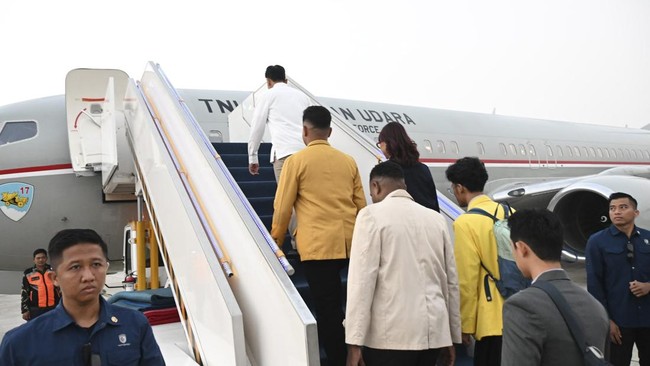
Instead of reading reports on development programmes, they boarded an aircraft with Vice President Gibran Rakabuming Raka to travel thousands of kilometres across Eastern Indonesia, visiting areas where government programmes are expected to have the greatest impact on daily life.
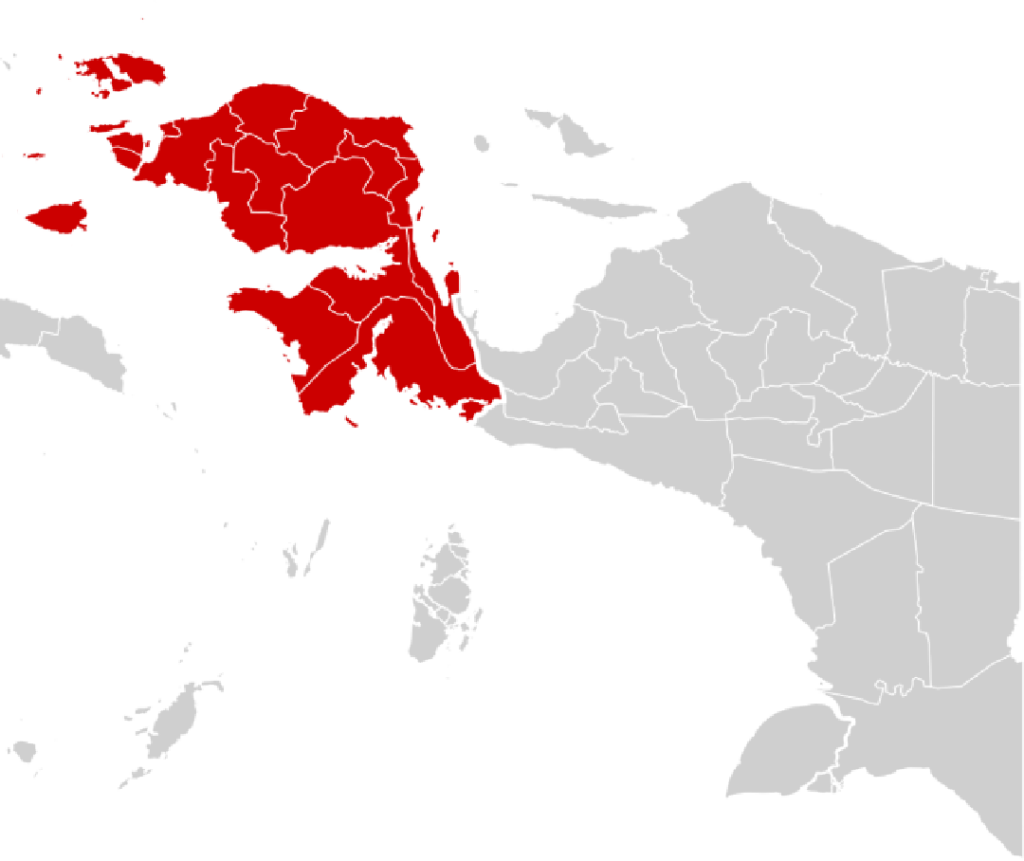
Their destination included some of the country’s most geographically challenging areas: Ende in East Nusa Tenggara (NTT), Gorontalo, Papua Barat (West Papua), Papua Tengah (Central Papua) and Papua Selatan (South Papua).
The working visit on 18-21 June 2026 was devoted to two flagship programmes of the Indonesian government, namely the Free Nutritious Meals Programme (MBG) and the Red and White Village Cooperatives Programme (KDMP).
Both programmes deal with issues that go far beyond administration or public policy for communities in Eastern Indonesia, particularly in Papua.
They cover access to nutrition and food security, education, local economic empowerment and the long-term development of human resources.
The trip also allowed the vice president’s students to observe firsthand the implementation of national policies far from Jakarta.
A Classroom Stretching Across Eastern Indonesia
The five students chosen to take part in the visit came from a variety of universities and academic disciplines.
The team members are Keletus Sakaro of Sanata Dharma University, Daffa Ulhaq of the University of Indonesia, Nolan Christopher Adam of Pelita Harapan University, Rapid Bena Matin of Jenderal Soedirman University and Salsabila Maulida of the Indonesian Institute of Arts and Culture (ISBI).
The students weren’t there as ceremonial guests but were expected to observe, ask questions and gain direct exposure to development programmes operating in remote communities.
The vice president wanted young people to see for themselves how government initiatives are implemented at the grassroots, according to information released ahead of the trip.
It’s an approach that’s part of a larger effort to expose future leaders to realities too often left out of conversations about urban policy.
Learning Beyond the Capital
The eastern provinces of Indonesia often encounter problems quite different from those in big cities.
Distances are longer, transportation expenses are higher and public services often involve more complex logistic arrangements.
Papua is a prime example of such realities.
In many districts, schools, health facilities and economic centres are separated by mountains, forests or coastal waters.
In these environments, programmes that look simple on paper often demand extraordinary coordination to run effectively.
The organisers hoped that taking students directly to the field would give them a more profound insight into these complexities.
Papua’s Importance in Indonesia’s Development Agenda
The working visit was to several provinces, but Papua had a central place in the agenda.
Recently, the Indonesian government has paid more attention to fast-tracking development in the eastern regions, citing improvements in infrastructure, education, health services, food security and community empowerment.
MBG and KDMP-type programmes are now an important part of that strategy.
Officials say that better nutrition and local economic institutions can address structural challenges while building long-term human resource development.
The programmes hold particular relevance for Papua, where geography may influence access to food and markets.
Why Nutrition Matters
The Free Nutritious Meals Programme has attracted much attention in Indonesia.
The initiative aims to improve nutrition among children and students and to further broader public health objectives.
Experts increasingly recognise the critical importance of nutrition for educational attainment, cognitive development, and long-term productivity.
“For children in remote areas, access to consistent nutritious meals can make a meaningful difference to learning outcomes.
In Papua, where communities are often dispersed over large distances, food distribution needs to be well planned and coordinated to be reliable.
Government officials have thus emphasised the importance of monitoring and evaluation as an integral part of the programme’s implementation.
Examining the Red and White Village Cooperatives
The second major thrust of the visit was the development of Red and White Village Cooperatives, or KDMP for short, in Indonesian.
The initiative seeks to strengthen local economies through support for community-based business institutions.
In many rural areas of Indonesia, cooperatives have played an important role traditionally.
They allow communities to share resources, increase their bargaining power, and create opportunities for local economic development.
In Papua, where many villages rely on agriculture, fisheries, forestry products and small-scale enterprises, cooperative models can help to improve access to markets and financial services.
Building Economic Opportunities Close to Home
One of the common themes in the development discussions across Papua is the importance of creating opportunities within local communities.
Education or employment lures many young people from the countryside.
Mobility can create opportunities, but local leaders often emphasise the importance of strengthening village economies to ensure that the benefits of development remain within the community.
One way to do that is via cooperatives.
Cooperatives can enhance income and economic resilience by supporting local production and community entrepreneurship.
The vice president wanted to assess the progress of these institutions in Papua and identify areas where they may require additional support during this visit.
Students Witness Papua’s Realities Firsthand
For the students travelling with the vice president, Papua was more than a policy case study.
It was an opportunity to engage directly with communities whose experiences rarely make it into university textbooks.
For many, the trip was an opportunity to gain a deeper understanding of Indonesia’s diversity and development challenges.
The experience exposed them to conditions that are quite different than those experienced in major metropolitan areas.
They saw how local realities shape government programmes and how communities adapt national initiatives to their circumstances.
A Perspective That Cannot Be Learned in Class
The experience was a learning opportunity that likely will not happen again, said one student.
Observing public programmes in action provides insights that are difficult to obtain from reports or academic discussions.
Field visits bring to life the practical problems, the expectations of the communities and the local innovations that do not often find a place in official statistics.
Such exposure can help build a generation of leaders who better understand the diversity of conditions across Indonesia, which is important for policymakers.
Eastern Indonesia and the Future of Development
The choice of the eastern provinces as the focus of the working visit is of greater significance.
In the long-term vision of Indonesia’s development, regions such as NTT, Gorontalo, Papua Barat, Papua Tengah and Papua Selatan are becoming increasingly important.
They have plenty of natural resources, strategically located and with rapidly growing populations.
However, they continue facing challenges on connectivity, public services and economic inclusion.
Government programmes for nutrition, education, agriculture, and local enterprise often target these areas for this reason.
The vice president’s tour exemplifies the ongoing efforts to ensure that implementation remains sensitive to local needs.
Human Capital as a Strategic Priority
Both MBG and KDMP have one common goal behind them: human capital development.
Nutrition impacts educational performance.
Social mobility. Economic opportunity.
Community resilience and local institutions are important.
All these factors are the quality of human resources, which ultimately are the driving force of regional development.
Papua’s future growth is dependent on infrastructure and investment but also on the health, skills and productivity of its people.
Thus, efforts around nutrition and community empowerment continue to garner considerable policy attention.
What the Visit Means for Papua
A working visit may last only a few days, but its importance is beyond the itinerary.
And when national leaders are present, local communities have the chance to speak directly to their concerns and expectations.
It gives policymakers an opportunity to evaluate the problems of implementation and to identify areas for improvement.
It was a practical lesson in governance and development for the students who participated.
More importantly, the visit highlights the increasing recognition of the importance of eastern Indonesia, including Papua, in the national development agenda.
Listening to Local Voices
Knowledge of local conditions is often the key to successful development programmes.
Papua’s geography, cultures and economic realities are very different from other parts of Indonesia.
Hence, policies often need to be adapted and consulted.
Field visits help bridge the divide between national planning and local implementation.
By working directly with communities, officials learn more about how programmes function in the real world and identify areas that may require modification.
Conclusion
Not only was this a remarkable working visit of Vice President Gibran Rakabuming Raka from 18 to 21 June 2026 because it covered some of the most remote areas in Indonesia, but university students were also involved in the process. The trip highlighted the importance of learning about development from the ground up by pairing policy oversight with direct community engagement.
Papua’s visit highlighted the increasing emphasis on enhancing nutrition, bolstering local economies, and generating more opportunities for communities that have long struggled with geographic barriers. As Indonesia continues investing in human resource development across its eastern provinces, programmes such as the Free Nutritious Meals Programme and Red and White Village Cooperatives are likely to remain at the heart of efforts to build a healthier, more resilient, and prosperous future.
For the students who journeyed with us, the experience may serve as a reminder that development transcends mere statistics or policy papers. The best way to understand it is to listen to people, visit communities, and see for yourself how public programmes shape their daily lives.