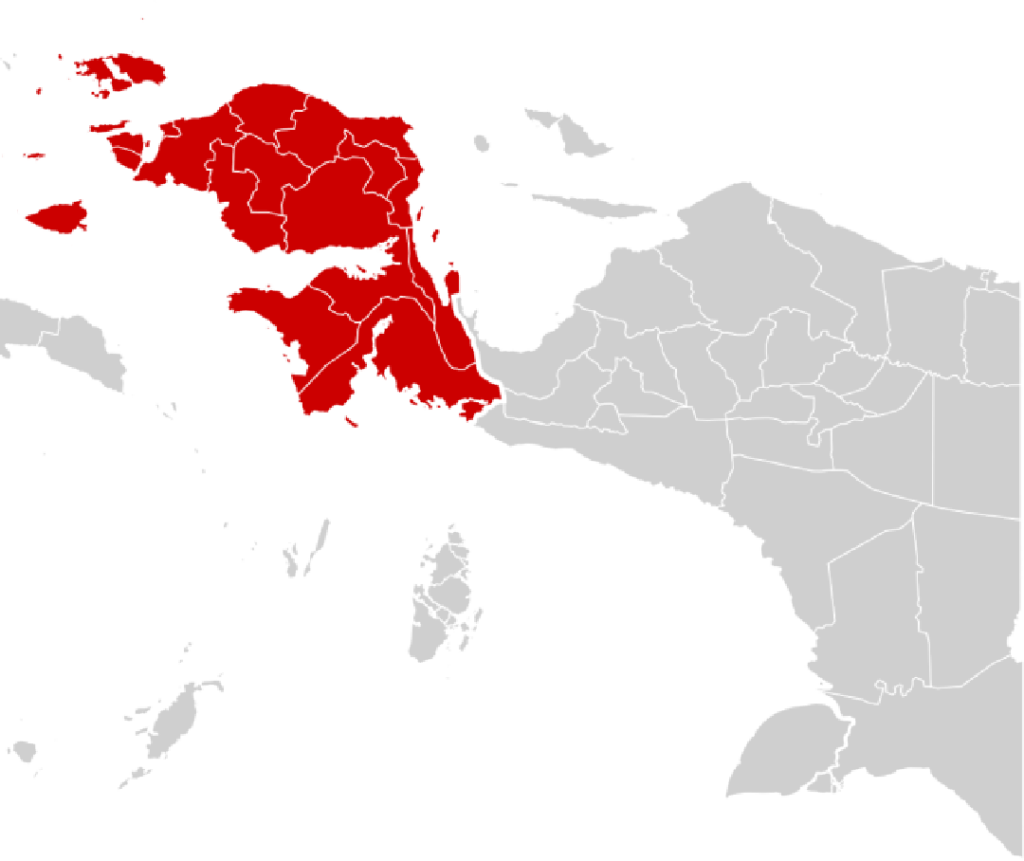
This month, a different conversation took center stage in a world where conversations often revolve around lectures, research projects, and student assignments.
It had nothing to do with grades or school calendars.
Instead, it raised a bigger question facing one of Indonesia’s newest provinces: How can Papua Selatan (South Papua) build the human resources it needs to underpin its future development?
More and more Indigenous Papuan academics say the answer begins with more cooperation between scholars themselves.
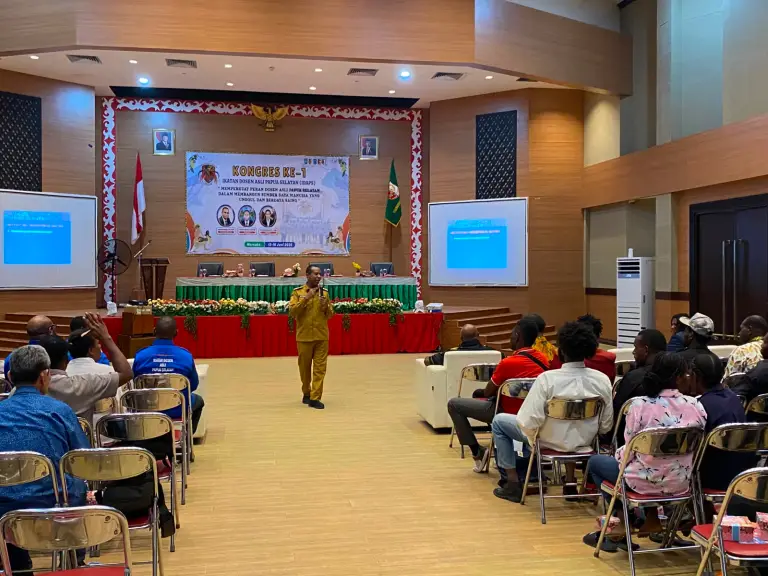
The Papua Selatan Indigenous Lecturers Association (Ikatan Dosen Asli Papua Selatan, IDAPS) made an important step in unifying Indigenous Papuan lecturers working in universities and higher education institutions in the province.
The initiative was officially discussed at the first congress of the organization in June 2026, attended by academics, government representatives, and education stakeholders who share the same concern about the long-term development of human resources in Papua Selatan.
The meeting represented more than just the formation of a professional association for many participants.
It was part of a broader push to amplify the voice of Indigenous Papuan scholars in shaping the future of education in the region.
Papua Selatan is undergoing rapid administrative, economic, and social change after the establishment of a new autonomous province, and education has become one of the most important priorities.
Local leaders are increasingly saying that infrastructure, investment, and public services need to be accompanied by equally strong investments in human capital.
IDAPS fits into that broader agenda.
A New Platform for Indigenous Papuan Academics
Many indigenous Papuan lecturers have been working in isolation inside their institutions for years.
They often shared the same challenges and the same goals but had little opportunity to collaborate formally.
The creation of IDAPS is an attempt to fill that gap.
The association was developed as a forum for Indigenous Papuan academics to exchange ideas, develop professional networks, and work together for the development of education in Papua Selatan, organizers say.
“Participants in the first congress emphasized the importance of higher education in preparing future leaders, professionals, researchers, and public servants.
Universities are not just places of education.
They are also institutions that generate knowledge, support policy development, and help communities find their way through social and economic change.
Organizers hope to build on those contributions by bringing lecturers together under a common platform.
From Individual Voices to Collective Impact
Professional associations often highlight academic interests, but many participants describe IDAPS as having a broader mission.
Papua Selatan is one of the youngest provinces in Indonesia formed from the government’s policy on regional expansion to improve public services and accelerate development.
As institutions take shape, local academics feel a responsibility to contribute not only in classrooms but also in public discussions about development.
Many lecturers see themselves as a bridge between academic knowledge and community needs.
That perspective helps explain why the congress discussions sometimes transcended university issues.
Discussions included quality of education, social development, cultural preservation, youth empowerment, and the role of research to support evidence-based policymaking.
Human Resource Development Remains a Priority
In South Papua, few issues enjoy as much consensus as that of human resource development.
Government officials, educators, religious leaders, and community figures often emphasize the quality of local human capital as the key to long-term progress.
While roads, ports, airports, and government buildings can fuel growth, sustainable development ultimately depends on skilled people who can manage institutions and create opportunities.
That reality has become ever clearer as Papua Selatan seeks to boost public services and bring in investment.
The need for qualified teachers, healthcare professionals, engineers, administrators, and researchers continues to increase.
Local leaders view education as one of the most strategic investments available.
Supporting the Next Generation
Several participants in the IDAPS congress stressed the importance of training the next generation of Indigenous Papuan professionals.
The access to education has improved significantly recently, but it still remains a challenge.
Students from far-flung districts often face the challenges of distance, infrastructure, and educational resources.
Universities play a crucial role in tackling these challenges.
Lecturers often are the first mentors to inspire students to careers in science, education, health care, public administration, and entrepreneurship.
So building up the academic community can have effects well beyond the campus.
The presence of Indigenous Papuan lecturers also exemplifies this phenomenon, as they are visible examples of educational achievement and professional success for many students.
Governor Apolo Safanpo Encourages Academic Leadership
Papua Selatan Governor Apolo Safanpo supported the IDAPS establishment and has repeatedly emphasized the need to strengthen the role of Indigenous Papuan intellectuals.
Safanpo encouraged local academics to be active participants as scientists, researchers, and thought leaders in conversations surrounding the formation of the organization.
His message echoed a broader assumption that universities must play an increasingly vital role in regional development.
Leaders often look to research and academic expertise for guidance when governments face complicated problems, whether they be in education, health care, economic planning, or environmental management.
For this reason, stronger engagement between academics and policymakers is generally considered beneficial for both sides.
Knowledge as a Development Asset
When regions are able to successfully expand educational attainment around the world, they tend to experience improved economic performance and institutional capacity.
Leaders in South Papua seem keen to learn similar lessons.
They view knowledge production and research as more and more strategic assets that can underpin local decision-making.
Universities can play a role in identifying development issues, evaluating the effects of policies, and proposing fresh ideas for solutions.
Many lecturers hope to be able to contribute more actively to those processes through IDAPS.
Why Higher Education Matters in Papua Selatan
Papua Selatan occupies a special place in the eastern part of Indonesia.
Its economy is based on agriculture, fisheries, trade, transportation, and public services.
At the same time, the province has a rich cultural diversity and a rapidly growing population.
A skilled workforce can respond to those opportunities and challenges.
Universities thus have a strategic position in the development ecosystem of the province.
They prepare graduates to be teachers, civil servants, healthcare workers, business leaders, and community organizers.
With the increasing demand for qualified professionals, higher education institutions are projected to have an even greater role.
Building Local Expertise
A recurring theme in the discussions surrounding IDAPS was the necessity of enhancing local expertise.
Participants said that Indigenous Papuan academics provide valuable insights based on professional training and lived experience.
They can add perspectives that complement broader national policy discussions with their knowledge of local communities, cultures, and development realities.
This blend of academic expertise and local knowledge, many believe, will be increasingly important as Papua Selatan continues to build its institutions.
Research, Culture, and Community Engagement
IDAPS members often cite the promotion of research linked to local realities as another goal.
Papua’s cultural diversity, environmental richness, and social dynamics offer many opportunities for academic study.
Researchers may contribute knowledge in various fields, including education, public health, language preservation, and sustainable development.
Community engagement continues to be a priority.
Many lecturers stressed the importance of universities engaging with society rather than remaining isolated.
Rather, they should act as partners to help communities solve practical problems while preserving cultural heritage.
This approach is consistent with wider efforts throughout Papua to strengthen the relationship between higher education institutions and local communities.
Creating Collaborative Opportunities
The creation of IDAPS may also create opportunities for collaboration between universities, government agencies, civil society organizations, and development partners.
These types of partnerships are becoming more common around the world as institutions seek multidisciplinary approaches to complex challenges.
The organization can foster research projects, educational programs, and policy discussions that will benefit the wider community by bringing together academics from various disciplines.
The Looking Forward
The timing of IDAPS’s establishment is appropriate, as Papua Selatan is defining many aspects of its future development trajectory.
Being a relatively new province, it faces the challenge of building institutions while responding to growing public expectations.
Education will probably continue to be a key part of that process.
Good schools, colleges, and research institutes will help to set the basis for long-term social and economic progress.
And for many participants at the congress, IDAPS is a step towards strengthening that foundation.
The organization’s long-term success will depend on its ability to stay active, relevant, and responsive to community needs.
But the buzz that surrounds its creation would seem to suggest there is plenty of steam in the project.
Conclusion
The formation of the Papua Selatan Indigenous Lecturers Association is a significant development in the province’s educational landscape. The IDAPS Initiative aims to improve human resource development, foster higher education, and increase research contributions to regional development by establishing a platform for collaboration among Indigenous Papuan academics.
Papua Selatan is in a period of institutional growth and change, and the role of the universities and academics is likely to become more important. For many of the educators taking part in the initiative, the endgame is more than just professional networking. It is about preparing a generation that can help shape the future of Papua Selatan through knowledge, innovation, and public service.