For many families living in remote parts of Papua, development is often measured by simple but important improvements: a stronger roof in the rainy season, safer walls for children, a healthier environment to live in, and a home that brings dignity.
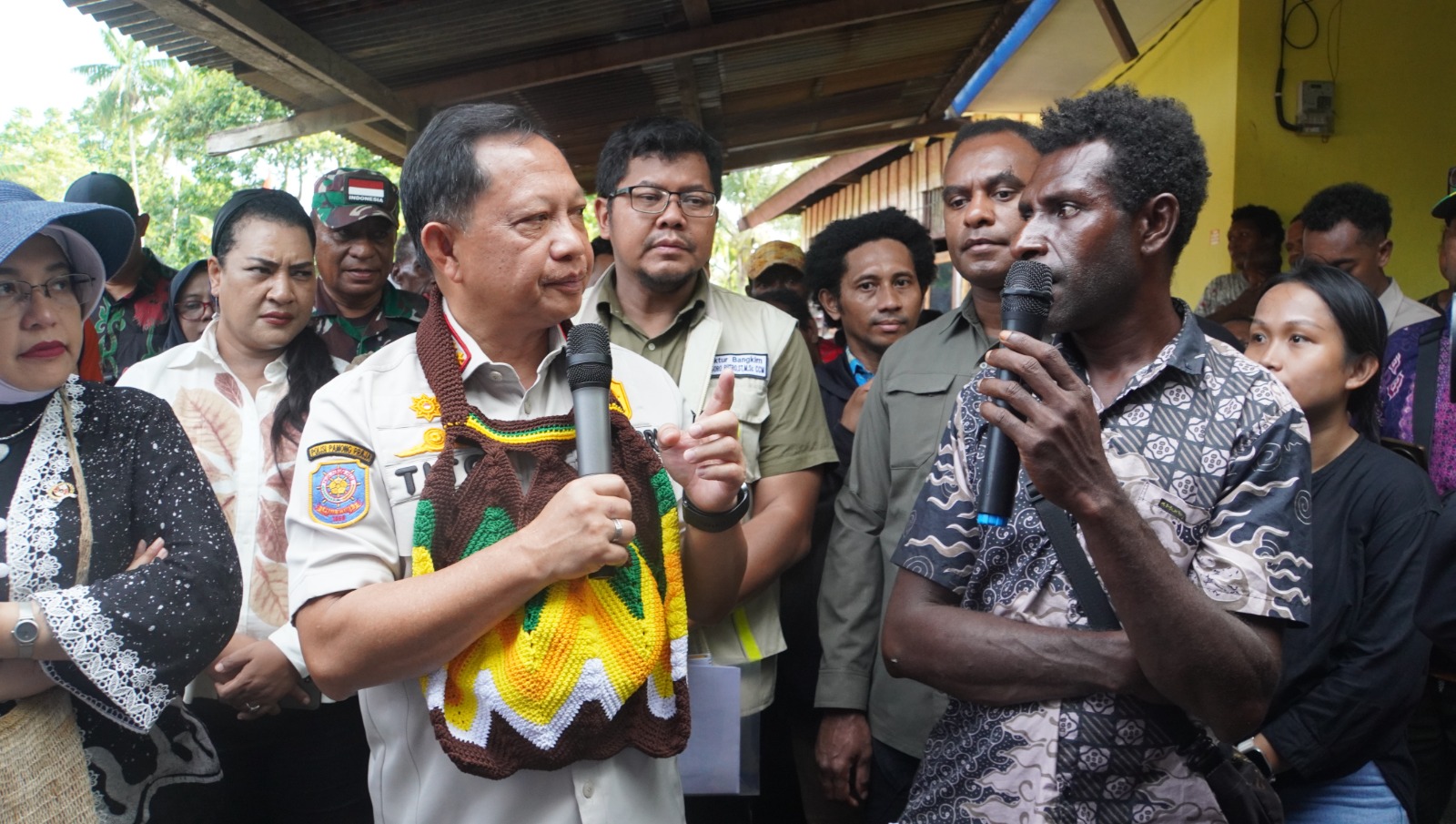
The reality was the focus of discussions during a visit to Indonesia’s Minister of Home Affairs, Tito Karnavian, who on 22 June 2026 visited Mosso Village, Muara Tami District, Jayapura City, to review the implementation of the government’s Self-Help Housing Stimulant Assistance Program (BSPS).
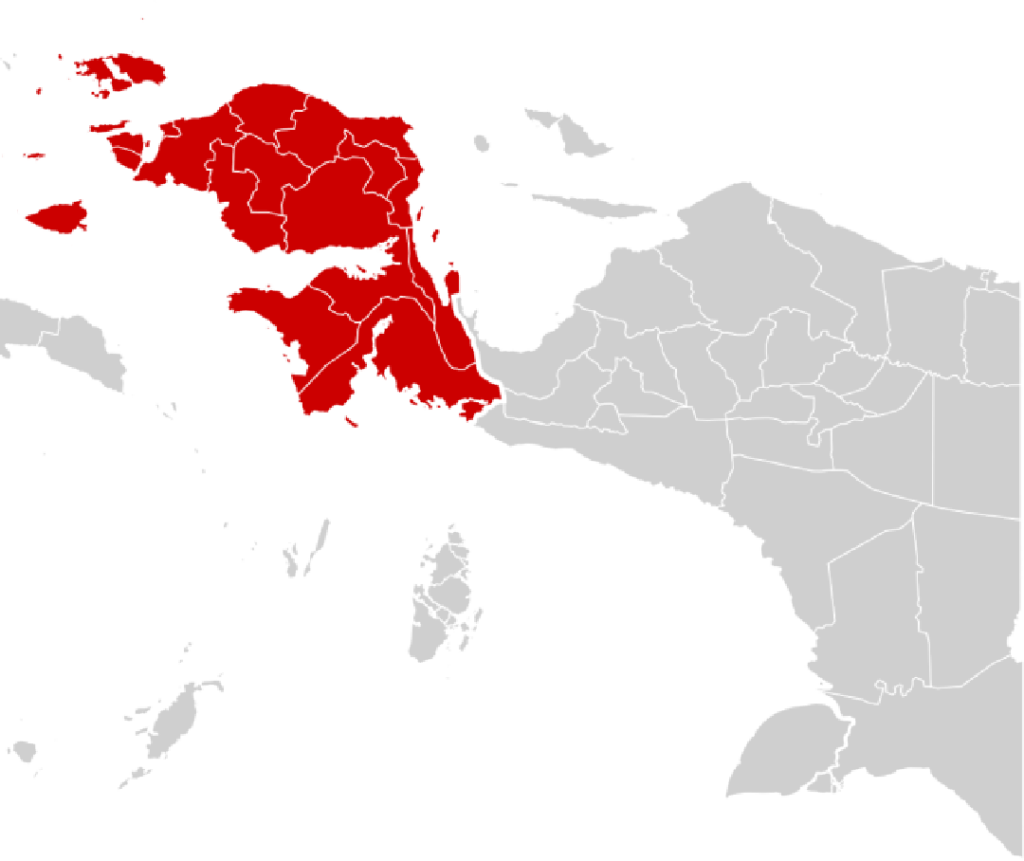
The visit showcased one of the biggest housing improvement projects ever undertaken in Papua. The program targets the renovation of 22,379 uninhabitable houses throughout Papua, with 4,001 housing units in Papua Province to be provided in cooperation with the central government, local administrations, and private sector partners.
For thousands of Indigenous Papuan families, the initiative is more than just a construction project. It is part of a broader effort to raise living standards, bolster public welfare, and ensure development reaches communities often isolated from major economic centers.
Tito Karnavian also stated that improving housing conditions is a national priority that requires cooperation from various parties during the inspection. “The regional budget alone will not be enough to solve housing challenges of this scale,” he said, citing the program’s combination of support from the national government, local authorities, and private sector participation.
His comments echoed a broader recognition in Jakarta that Papua’s development needs long-term investment and cooperative strategies to address decades of infrastructure and social issues.
A Housing Challenge Across Papua
In many parts of Papua, housing is one of the most visible indices of social well-being.
Urban centers such as Jayapura, Timika, and Sorong have expanded significantly over the last decade, but many communities in remote and rural areas continue to experience difficulties in accessing sufficient housing.
In many districts, homes built decades ago have fallen into disrepair due to age, climate conditions, and lack of access to materials to maintain them.
Major renovations are often expensive for families with low incomes.
Government officials estimate thousands of houses across Papua still need rehabilitation to meet basic standards of safety and habitability.
The BSPS program was specifically designed to tackle this challenge.
Traditional housing projects tend to concentrate on putting up new housing estates. The program is about refurbishing existing homes and engaging local people in the building process.
Community-Based Development
One of the striking features of the BSPS approach is the emphasis it places on community participation.
Homeowners and local residents are not just relying on contractors but are also actively involved in the renovation.
Officials intend the model to lower costs and promote local ownership while ensuring that community needs drive improvements.
This approach has been considered particularly relevant in Papua, where local customs and community relations are still important features of social life.
The locals provide labor, local knowledge, and oversight and receive help for construction materials and technical support.
The outcome is a model of government funding and community empowerment.
Why Papua Received Special Attention
The size of the housing allocation reflects the Indonesian government’s broader focus on accelerating development in eastern Indonesia.
Data presented during the visit indicated that the geographical conditions in Papua present unique development challenges.
The cost of construction in this province is higher than in many other provinces, primarily due to the transportation and logistical challenges.
Delivering building materials to remote communities is often a long journey by land, sea, or air.
This situation has traditionally served as a roadblock to housing development in the face of rising demand.
The government acknowledged these realities and named Papua as one of the priority areas to receive significant support from national housing programs.
The government allocated 4,001 housing units for Papua Province to complement broader development programs in health care, education, transportation, and economic empowerment.
Housing in the Context of Human Development
Increasingly, officials see housing policy as intrinsically linked to human development outcomes.
The literature has consistently shown that housing quality affects health, educational attainment, and household productivity.
Children living in safer and healthier homes generally have fewer barriers to learning.
Families that have secure housing are better positioned to invest in education, small businesses, and long-term economic activities.
In Papua, where improving human development indicators is still a top priority, housing programs are increasingly considered an investment in future generations, not just construction projects.
Mosso Village Becomes a Symbol of Progress
The decision to review the program in Mosso Village was symbolically significant.
Located in Muara Tami District on the east edge of Jayapura, the village is representative of many communities where residents continue to strive to improve living conditions despite limited resources.
Tito Karnavian also met beneficiaries and inspected renovation activities in person during his visit.
The inspection allowed national officials to observe firsthand the implementation of assistance at the local level and identify opportunities to accelerate progress.
Local officials say community engagement has been important for keeping renovations on track.
The villagers have come together to support the beneficiaries and work towards better housing conditions for the entire village.
Partnerships Beyond Government
Another critical element of the program is the involvement of private sector actors.
Government officials agreed that public institutions alone could not solve the large-scale housing problems.
The involvement of private companies operating in Papua in social responsibility initiatives to support local communities has increased.
The BSPS program offers a means for those contributions to augment government funds and local efforts to implement them.
The multi-stakeholder approach has been a consistent characteristic of development initiatives throughout Papua.
Part of a Wider Development Strategy
The housing initiative is not isolated; it is part of a broader plan to improve living standards throughout Papua.
Instead, it is part of a wider plan to raise living standards throughout Papua.
In the past few years, the Indonesian government has been investing more in infrastructure, health care facilities, education programs, and economic empowerment initiatives across the region.
Other measures include help with housing, building roads, upgrading airports, expanding telecoms, and education scholarship programs.
The aim, therefore, is to achieve synergistic gains that impact several aspects of development simultaneously.
Supporting Indigenous Papuan Communities
One of the main priorities of the program is to ensure that Indigenous Papuan families can directly benefit from the development program.
Government officials have once again emphasized that the development of Papua prioritizes the welfare of Indigenous communities.
The housing assistance contributes to this objective, as it helps families to access healthier and safer housing conditions.
Local leaders say that better housing not only improves physical conditions but also strengthens social stability and community resilience.
For many households, receiving assistance can free household resources for education, health care, or small-scale economic activities.
Economic Benefits Beyond Construction
The ripple effect of housing programs often extends beyond the individual household.
Renovation projects create demand for construction materials, transportation services, and local labor.
These activities can also provide additional economic benefits in Papua, where job opportunities remain unevenly distributed across regions.
There’s often a rush in demand for building materials from small businesses.
Renovation work could offer a temporary source of employment for local workers.
The transport operators are in a position to move materials between districts and villages.
These secondary effects help stimulate the circulation of the local economy while also helping to meet the primary objective of improving housing conditions.
Building Local Capacity
These community-based renovation projects also help participants develop practical skills.
Residents who take part in construction learn skills they can use on future home repairs or other community efforts.
Officials hope that it will build local capacity and foster greater self-reliance over time.
National Commitment to Equitable Development
The housing initiative is part of President Prabowo Subianto’s broader vision of fair development across Indonesia.
Officials have consistently emphasized the need to distribute development beyond major cities.
“Instead, we need to get programs into communities in remote and underserved areas.
Papua occupies a particularly important place in this vision given its strategic importance and development potential.
Policymakers hope that by addressing basic needs such as housing, they will be able to lay a stronger foundation for future progress in education, healthcare, and economic development.
Looking Beyond Numbers
Officials assert that the true measure of success will be the improvement in the living conditions of families, despite the significant commitment of 22,379 homes.
Development for beneficiaries is not primarily about numbers.
It is about a safer place to sleep, a healthier environment for children, and more confidence for the future.
Those are difficult to quantify, but they are integral to the program’s objectives.
Conclusion
In one of the most ambitious housing upgrades in the region, the BSPS program has upgraded 22,379 homes across Papua. The initiative is designed to boost living standards for tens of thousands of Indigenous Papuan families and support wider development objectives through the combined efforts of the central government, local authorities, and private sector partners. Minister of Home Affairs Tito Karnavian recently visited Mosso Village and stressed the need for a collaborative and ongoing resolution to the housing problem in Papua. More than numbers, the program is part of a larger effort to ensure development reaches households where better housing can be the foundation for healthier, more secure, more prosperous communities.