
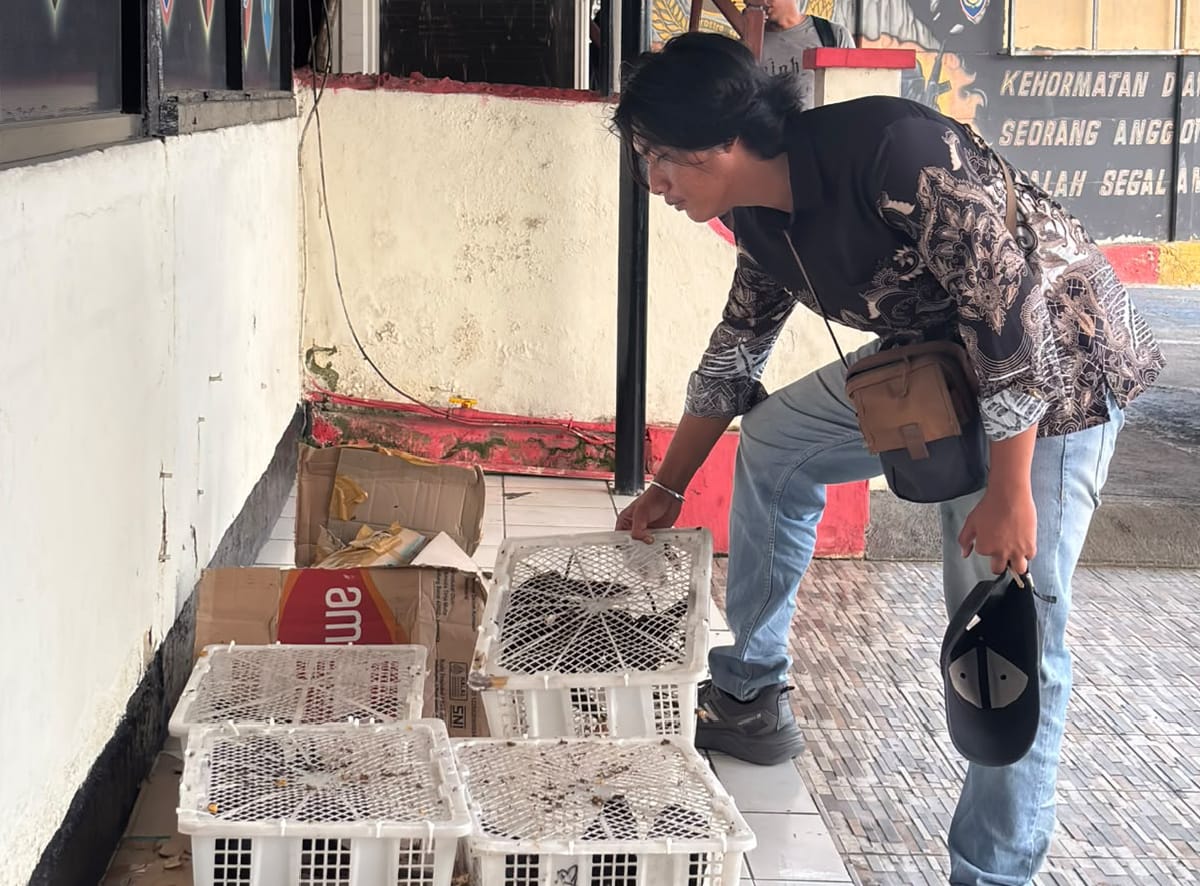
The Indonesian Navy has foiled a suspected wildlife-smuggling attempt involving 21 black lories, one black-capped lory, and six Papua tiger orchids aboard the passenger ship KM Sinabung, in an operation that underscores the role of maritime security agencies in protecting the region’s natural heritage.
The joint team discovered the birds and plants during an inspection at Pelindo Public Port in Sorong on Monday, October 19, 2026. The operation brought together Indonesian Navy personnel, wildlife conservation officials, and other port security agencies. The findings were subsequently transferred to the local conservation authority for identification, registration, and further handling under applicable procedures.
The case offers a reminder that Papua’s biodiversity is not only an environmental asset but also a responsibility shared by government institutions, transport operators, local communities, and the wider public. While the discovery represents a successful interception, it also points to the continuing challenge of detecting wildlife and plant specimens concealed within busy maritime transport networks.
How the Operation Unfolded at Sorong Port
The First Discovery: Six Papua Tiger Orchids
According to a report published by Paradigma Bangsa, the joint port security team began inspecting passenger belongings at approximately 2:25 p.m. local time on October 19.
During the inspection, officers discovered six stems of Papua tiger orchid, scientifically identified as Grammatophyllum scriptum, concealed beneath a passenger bed on Deck 3 of KM Sinabung. The discovery prompted further checks aboard the vessel.
The initial finding demonstrated why routine inspections of passenger belongings and shipboard spaces remain important. Wildlife and plant specimens can be transported through ordinary routes, making port checks a practical part of efforts to identify suspected illegal shipments.
A woman identified by the initials RP, described in Bloomberg Technoz as being from Jeneponto, Makassar, reportedly carried the six orchids. The available reports do not establish the intended recipient, the final destination of the plants, or whether the passenger was acting as part of a wider trafficking network. Those details should therefore remain subject to further investigation rather than speculation.
Twenty-One Black Lories Found on Deck 7
The inspection continued after information from the Papua Barat Daya (Southwest Papua) Regional Police Water and Air Police Directorate, known as Ditpolairud, led officers to another location aboard the vessel.
The team found 21 black lories, identified scientifically as Chalcopsitta atra, concealed inside a lifeboat on Deck 7. The discovery substantially increased the scale of the suspected wildlife shipment, bringing the total number of birds found aboard the ship to 22.
The concealment of the birds inside a lifeboat illustrates the importance of inspecting areas beyond passenger cabins and visible luggage. A check limited to conventional baggage areas might miss items hidden elsewhere on a vessel.
The reports, however, do not provide detailed information about the birds’ physical condition, how long they had been confined, or the precise circumstances in which they were placed inside the lifeboat. Their health and welfare therefore require assessment by the relevant wildlife authorities.
A Third Discovery on Deck 4
Further inspection uncovered one black-capped lory beneath a passenger bed on Deck 4. The bird was identified in the Indonesian reports as a Kasturi Kepala Hitam, a name that refers to a lory, not a cassowary. The distinction matters because one Bloomberg Technoz headline used wording that could be read as referring to a cassowary, while the article’s main text and the detailed operational report identified the bird as a black-capped lory.
The three locations where the items were discovered were therefore Deck 3, where the six orchid stems were found; Deck 7, where the 21 black lories were concealed inside a lifeboat; and Deck 4, where the remaining lory was discovered beneath a passenger bed.
The combined findings comprised 21 black lories, one black-capped lory, and six stems of Papua tiger orchid. The birds and plants were taken to the office of the Conservation of Natural Resources Agency’s Area I office in Sorong, known as Bidang KSDA Wilayah I Sorong, for examination, recording, and further handling.
Joint Enforcement and Cooperation Across Agencies
The operation involved several institutions with complementary responsibilities. The Indonesian Navy’s Regional Naval Command XIV, or Kodaeral XIV, participated through its Intelligence Detachment, known as Denintel, and Naval Military Police, or Pomal.
They worked alongside the Papua Barat Daya Natural Resources Conservation Centre, specifically its Area I Sorong unit, as well as quarantine officials, the Harbourmaster and Port Authority, the Sorong Sea Port Police Sector, and the Barat Daya Regional Police Water and Air Police Directorate.
This combination of maritime security, police, port administration, and conservation expertise is important because suspected wildlife trafficking is not solely a matter of ship security. Officers must identify suspicious items, establish where and how they were concealed, document the findings, and ensure that the specimens are transferred to the appropriate authority.
The Navy’s role in this case was part of a wider port security effort. Its personnel and partner agencies were able to use information from different sources to extend the inspection beyond the first discovery. The finding of the black lories followed information provided by the regional police’s water and air unit, according to the operational report.
That sequence illustrates the value of information sharing between agencies. A port inspection may begin with routine checks, but additional information can help investigators focus on other parts of a ship and identify items that would otherwise remain hidden.
The case also shows why conservation officials need to be involved from the outset. Identifying a species, assessing its condition, and determining the appropriate handling procedure require specialist knowledge. The transfer to the Area I conservation office creates a basis for those steps, although the reports do not state the outcome of the examination or whether any legal proceedings have been completed.
Education and Voluntary Surrender
The Paradigma Bangsa report states that officials provided education about wildlife and plant protection to the passengers associated with the orchids and the black-capped lory. Both reportedly agreed to surrender the items voluntarily.
This detail adds an important dimension to the operation. Enforcement can prevent a suspected shipment from continuing, while public education can help people understand the rules governing the movement and possession of wild species.
Voluntary surrender after receiving an explanation does not, by itself, establish whether a legal offense occurred or whether any person bears criminal responsibility. Those questions depend on the applicable law, the evidence, and the findings of the competent authorities. The published reports do not describe a completed investigation or announce a court judgment.
Nevertheless, the combination of inspection, information sharing, and conservation education offers a practical model for handling similar discoveries. Clear communication can help officials secure specimens while explaining why wildlife protection rules matter.
The next steps are equally important. Authorities need to record the species and number of specimens, assess the birds’ health, determine the condition and viability of the orchid stems, and establish what can legally and safely be done with them. Any decision about rehabilitation or release should depend on expert assessment, not assumption.
Why Papua’s Biodiversity Matters
Papua is widely recognized for its distinctive ecosystems and rich wildlife. Its birds and plants are part of the natural heritage of eastern Indonesia, with value extending beyond the region itself. Protecting these species requires more than safeguarding forests and habitats: it also requires attention to how wild organisms are collected, transported, and traded.
The Sorong discovery highlights the role of maritime routes in this wider conservation challenge. Passenger vessels are essential to connectivity across Indonesia’s archipelago, linking communities and supporting the movement of people and goods. Their importance to regional mobility makes effective, risk-based inspection a practical part of port management.
The interception should not be taken as proof of the size of a wider trafficking network, the destination of the specimens, or the financial value of the shipment. The two reports do not provide such evidence. What they establish is more specific: suspected protected wildlife and plant specimens were found in concealed locations aboard a passenger ship, and a joint team prevented them from proceeding through the journey without further scrutiny.
For Papua, this distinction matters. Public communication strengthens conservation policy by celebrating effective enforcement and accurately reflecting facts. Precise reporting helps maintain trust and keeps attention on the practical work required to protect natural resources.
From Successful Interception to Long-Term Protection
The operation at Sorong port is a positive example of coordinated government action. Indonesian Navy personnel, police, port authorities, quarantine officials, and conservation officers combined their efforts to locate the concealed specimens and transfer them for further handling. Their cooperation prevented the suspected shipment from simply passing through the port unchecked.
The broader challenge is to make such work consistent. Regular inspection procedures, timely exchange of information, proper documentation, and training in species identification can strengthen the ability of agencies to respond to suspected wildlife trafficking. Public awareness also matters, particularly among passengers and communities that use maritime transport regularly.
Equally, the authorities’ handling of the recovered specimens will be an important measure of the operation’s ultimate conservation value. Proper veterinary assessment, safe plant handling, and decisions grounded in conservation expertise can help ensure that an interception leads to an appropriate outcome for the animals and plants themselves.
The Sorong case does not resolve the wider problem of illegal wildlife movement, but it demonstrates how coordinated surveillance can uncover concealed specimens in a busy transport setting. It also reinforces a broader point: protecting Papua’s biodiversity requires security and conservation agencies to work together while ensuring that evidence, due process, and expert care remain central to every subsequent step.
For Indonesia, the objective is not simply to stop individual shipments. It is to protect the natural heritage that supports ecological resilience and forms part of the country’s responsibility to future generations. The October 19 operation provides a concrete example of that responsibility being put into practice, with the final conservation outcome now dependent on the authorities’ assessment and follow-up.
Conclusion
The successful interception at Sorong port demonstrates the importance of cooperation between the Indonesian Navy, police, port authorities, and conservation agencies in protecting Papua’s unique biodiversity. By recovering 22 birds and six Papua tiger orchids from KM Sinabung, the joint team prevented the suspected shipment from proceeding unchecked. However, lasting conservation requires more than successful interceptions. Consistent maritime surveillance, public awareness, effective law enforcement, and proper care for recovered wildlife are essential to safeguarding Papua’s natural heritage for future generations.
Read Also
Papua Wildlife Trade Foiled in Social Media Crackdown
Papua Wildlife Trafficking Foiled, Rare Birds Rescued

