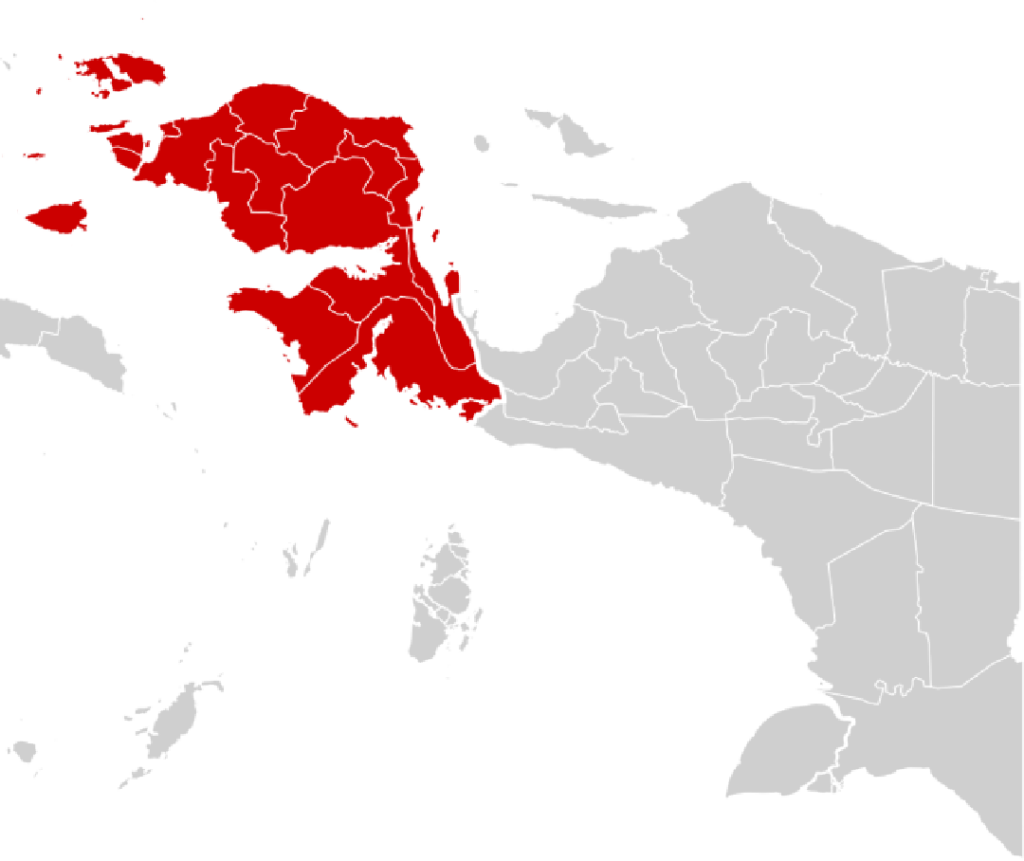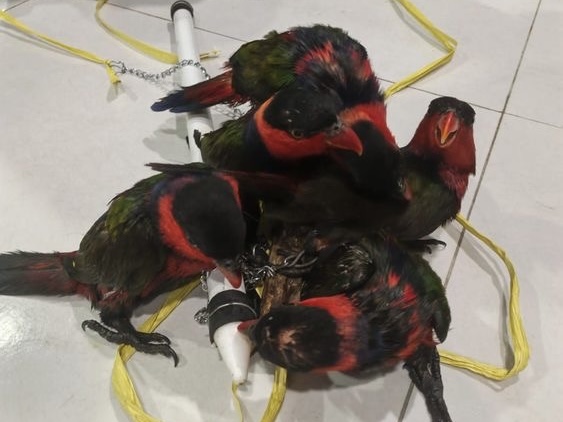
Indonesia’s Ministry of Forestry has disrupted an alleged Papua wildlife trafficking operation after rescuing seven protected birds that were reportedly being offered for sale through Facebook. Authorities also arrested a man in Jayapura City, marking another step in the government’s continuing efforts to combat illegal wildlife trade and protect Papua’s globally significant biodiversity.
The operation was carried out following online monitoring by forestry law enforcement officers, who identified suspected advertisements involving protected wildlife on social media. Investigators subsequently traced the activity to Jayapura, where officials secured the birds and detained a suspect for further legal proceedings.
Officials stated that the rescued animals include several protected bird species native to Papua whose capture and commercial trade are prohibited under Indonesian conservation laws. The birds have since been placed under the care of conservation authorities to undergo health assessments before any future rehabilitation or release process is considered.
The case illustrates how wildlife trafficking has increasingly expanded into digital platforms, creating new challenges for conservation agencies while also encouraging authorities to strengthen cyber monitoring and law enforcement capabilities.
For Papua, home to some of the richest biodiversity on Earth, protecting endemic wildlife remains an important component of environmental conservation, sustainable development, and international biodiversity commitments.
Online Wildlife Crime Enters the Digital Marketplace
Illegal wildlife trade has undergone significant changes over the past decade.
Where traffickers once relied primarily on physical markets or direct transactions, online platforms have increasingly become channels for advertising and facilitating illegal wildlife sales.
Authorities explained that the Jayapura investigation began after law enforcement personnel identified suspected offers involving protected birds circulating through Facebook.
Following further investigation, officers gathered sufficient evidence to conduct enforcement action that resulted in the seizure of seven birds and the arrest of one individual.
The Ministry of Forestry emphasized that digital technology presents both opportunities and challenges.
While social media can be misused for illegal commerce, it also creates digital evidence that assists investigators in identifying trafficking networks, monitoring suspicious activity, and tracing individuals involved in protected wildlife transactions.
Environmental law enforcement agencies have therefore expanded digital surveillance capabilities alongside conventional field investigations to respond to evolving wildlife crime methods.
The latest operation demonstrates how cyber monitoring has become an increasingly important tool in protecting Indonesia’s natural heritage.
Papua’s Exceptional Biodiversity Requires Strong Protection
Papua is internationally recognized as one of the world’s most biologically diverse regions.
Its tropical rainforests, wetlands, mountains, and coastal ecosystems support thousands of plant and animal species, many of which exist nowhere else on Earth.
Among Papua’s most iconic wildlife are numerous endemic bird species that play essential ecological roles within forest ecosystems.
These birds contribute to seed dispersal, pollination, insect population control, and the maintenance of healthy forest habitats that support broader biodiversity.
Because many species reproduce slowly and occupy limited natural habitats, illegal capture for commercial purposes can place additional pressure on already vulnerable wild populations.
Conservation experts therefore emphasize that preventing wildlife trafficking remains an important component of maintaining ecological balance throughout Papua.
Indonesia’s conservation framework seeks to protect these species not only because of their environmental value but also because they represent an irreplaceable part of the country’s natural heritage.
Government officials have repeatedly stressed that biodiversity conservation supports sustainable development by preserving ecosystem services that benefit present and future generations.
Protected Bird Species Hold Ecological Importance
According to forestry authorities, several of the rescued birds belong to species protected under Indonesian conservation regulations.
Among the birds reported by investigators were species such as the Black capped Lory (Lorius lory) and the Sulphur crested Cockatoo (Cacatua galerita), both recognized for their ecological significance and conservation value.
Many of Papua’s parrots, cockatoos, and lories contribute to forest regeneration by dispersing seeds over wide geographic areas.
As birds move between feeding locations, they naturally assist in maintaining healthy tropical forest ecosystems.
The removal of protected birds from their natural habitats can therefore affect ecological processes extending far beyond individual animal populations.
Conservation authorities note that protecting wildlife involves safeguarding entire ecosystems rather than focusing solely on individual species.
Healthy forests, stable wildlife populations, and sustainable natural resource management remain closely interconnected.
The seizure of the seven birds therefore represents not only a law enforcement success but also an effort to preserve ecological functions that support Papua’s remarkable biodiversity.
Law Enforcement Strengthens Wildlife Protection
The successful operation reflects continuing cooperation among Indonesia’s forestry law enforcement agencies, conservation authorities, and supporting institutions responsible for protecting wildlife.
Officials emphasized that enforcement actions remain an important deterrent against illegal wildlife trafficking while reinforcing public awareness regarding conservation regulations.
Indonesia’s wildlife protection laws prohibit the unauthorized capture, possession, transportation, and commercial trade of protected animal species.
Violations may result in criminal prosecution under applicable environmental legislation.
Authorities indicated that the investigation into the Jayapura case remains ongoing as officers continue examining evidence obtained during the operation.
Law enforcement officials are also assessing whether additional individuals may have participated in the alleged trafficking activities or whether broader distribution networks were involved.
Environmental crimes often extend beyond individual transactions, making comprehensive investigations important for identifying organized trafficking patterns.
Officials therefore continue encouraging public cooperation by reporting suspected illegal wildlife trade through appropriate government channels.
Public Awareness Plays a Critical Role
Conservation specialists frequently emphasize that successful wildlife protection depends not only on law enforcement but also on public participation.
Many illegal wildlife transactions occur because consumer demand continues to exist for protected animals kept as pets or sold through informal markets.
Public education therefore remains an essential component of conservation policy.
Government agencies continue encouraging communities to recognize the ecological importance of protected wildlife while discouraging the purchase or possession of illegally traded species.
Responsible social media users can also contribute by reporting suspicious online advertisements involving protected wildlife.
As digital platforms become increasingly integrated into everyday commerce, public vigilance becomes an additional layer of protection supporting official law enforcement efforts.
Environmental organizations similarly stress that conserving Papua’s biodiversity requires cooperation among government institutions, local communities, researchers, conservation organizations, and the broader public.
Strengthening Digital Enforcement Against Wildlife Crime
The Jayapura case highlights how wildlife crime has evolved alongside advances in digital technology. While online marketplaces and social media have expanded opportunities for legitimate commerce, they have also created new channels for the illegal trade of protected species.
Recognizing this shift, Indonesia’s Ministry of Forestry has increasingly incorporated digital monitoring into its law enforcement strategy. Forestry investigators now combine traditional field operations with cyber surveillance to identify suspicious online advertisements, trace communication patterns, and collect digital evidence that supports criminal investigations.
Officials involved in the operation explained that monitoring publicly accessible online platforms allows authorities to detect illegal wildlife transactions before animals are transported to other regions or international markets. Early intervention not only prevents protected species from disappearing into trafficking networks but also improves the likelihood that rescued animals can be rehabilitated.
Environmental law specialists note that wildlife trafficking increasingly operates through small online transactions rather than conventional physical markets. Consequently, strengthening cyber investigation capabilities has become an essential complement to field enforcement.
The successful operation in Jayapura demonstrates that adapting conservation strategies to the digital environment is becoming an increasingly important element of Indonesia’s broader biodiversity protection efforts.
Conserving Papua’s Globally Significant Natural Heritage
Papua occupies a unique place among the world’s biodiversity hotspots.
Its extensive tropical forests contain extraordinary levels of endemism, with many bird species found nowhere else on Earth. These ecosystems support ecological processes that extend beyond Indonesia, contributing to regional biodiversity conservation and global environmental stability.
The protection of Papua’s wildlife therefore carries significance that reaches far beyond national boundaries.
Conservation experts consistently emphasize that safeguarding endemic species helps preserve ecological resilience, supports scientific research, strengthens sustainable ecotourism, and maintains the environmental services upon which local communities depend.
Illegal wildlife trafficking threatens these long-term benefits by removing animals from fragile ecosystems and disrupting natural ecological relationships.
Government officials have repeatedly emphasized that conservation should be viewed not only as environmental protection but also as an investment in sustainable development.
Healthy ecosystems support fisheries, agriculture, tourism, climate resilience, and water resources while strengthening opportunities for future generations.
By preventing the illegal trade of protected birds, authorities contribute to maintaining Papua’s ecological integrity while reinforcing Indonesia’s commitment to conserving one of the world’s most valuable natural landscapes.
Community Participation Strengthens Conservation
Law enforcement remains an important component of wildlife protection, but conservation authorities emphasize that long-term success depends equally on public awareness and community participation.
Many communities across Papua possess generations of traditional ecological knowledge that has helped maintain harmonious relationships with surrounding forests and wildlife.
Government agencies increasingly recognize the importance of involving Indigenous communities, customary leaders, local governments, educational institutions, and conservation organizations in protecting biodiversity.
Public education programs encourage communities to understand the ecological importance of protected species while promoting sustainable natural resource management.
Officials also continue urging citizens to avoid purchasing protected wildlife and to report suspected illegal transactions through official government channels.
The growing use of social media makes public vigilance particularly valuable.
Individuals who encounter suspected advertisements involving protected wildlife can assist conservation efforts by reporting the content to relevant authorities rather than participating in illegal transactions.
Environmental experts frequently observe that conservation becomes most effective when law enforcement is supported by informed communities that recognize wildlife as a shared national asset rather than a commercial commodity.
Wildlife Protection Supports Sustainable Development
Indonesia’s conservation strategy increasingly recognizes that environmental protection and economic development should reinforce one another.
Papua’s biodiversity contributes not only to ecosystem health but also to research, education, ecotourism, and sustainable livelihoods that benefit local communities.
Protecting endangered wildlife helps preserve natural assets capable of supporting responsible tourism, scientific collaboration, and community-based conservation initiatives.
Officials note that sustainable development requires balancing economic opportunities with environmental stewardship.
Preventing illegal wildlife trade contributes to maintaining healthy ecosystems while ensuring that future economic activities remain compatible with long-term conservation objectives.
This integrated approach aligns with Indonesia’s broader environmental policies, which seek to strengthen biodiversity conservation while supporting inclusive regional development throughout Papua.
The successful seizure of seven protected birds therefore represents more than an isolated enforcement action.
It reflects continuing efforts to ensure that Papua’s exceptional biodiversity remains protected as an enduring resource for local communities, scientific research, and future generations.
Looking Ahead
The Ministry of Forestry is expected to continue strengthening cooperation with the Natural Resources Conservation Agency (BKSDA), law enforcement institutions, and digital monitoring teams to combat wildlife trafficking in Papua and other biodiversity-rich regions. Future efforts are likely to focus on expanding cyber surveillance, improving intelligence sharing, enhancing public education, and strengthening rehabilitation programs for rescued wildlife. As online wildlife trafficking continues to evolve, authorities are expected to further develop investigative capabilities that combine technology with conventional conservation enforcement.
Conclusion
The successful rescue of seven protected birds and the arrest of a suspect in Jayapura demonstrate Indonesia’s continuing commitment to combating Papua wildlife trafficking through coordinated law enforcement and conservation measures. By combining digital monitoring, field investigations, and wildlife protection regulations, authorities are adapting to emerging forms of environmental crime that increasingly utilize online platforms. Beyond enforcing conservation laws, the operation highlights the broader importance of protecting Papua’s globally significant biodiversity while promoting sustainable development, ecological resilience, and responsible stewardship of one of the world’s richest natural ecosystems.