
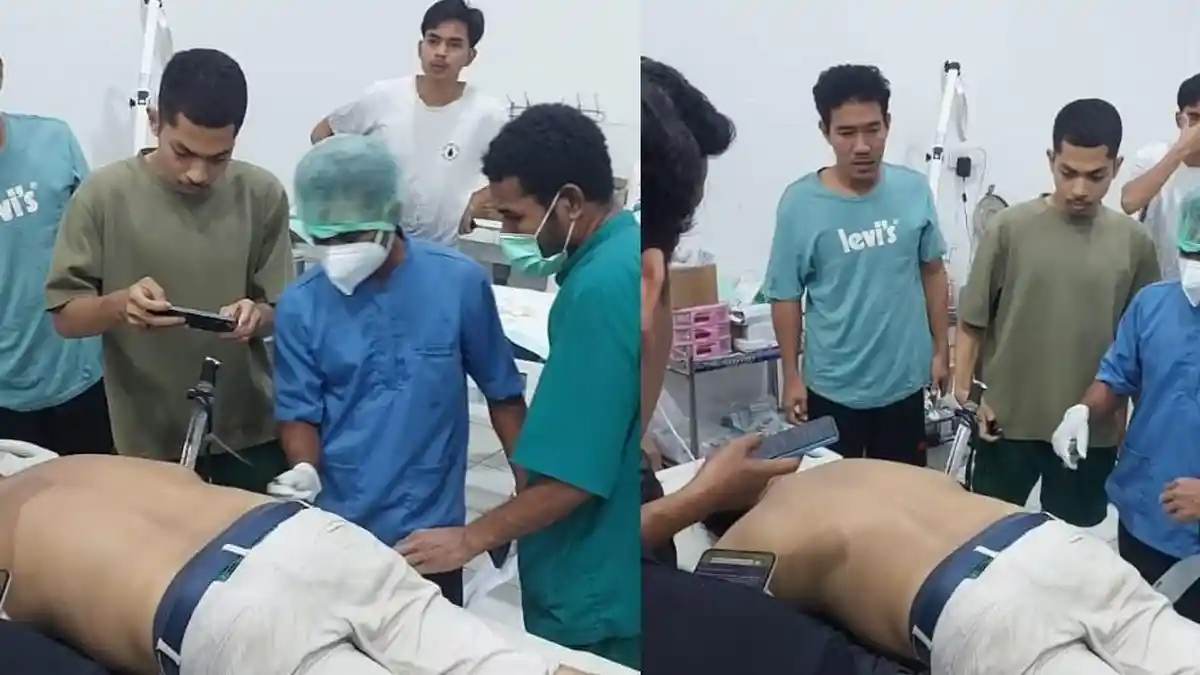
The killing of Arifudin, a man reported to have worked as a teacher in Yahukimo, has raised serious concerns about civilian safety and the protection of education services in Indonesia’s Papua Pegunungan province. Arifudin died after being stabbed in Dekai on October 11, 2026. The following day, the armed group known as the West Papua National Liberation Army of the Free Papua Movement (TPNPB OPM), through its Yahukimo regional command, claimed responsibility for the killing and alleged that the victim was a non-commissioned Indonesian military officer working as a teacher. That allegation has not been independently verified.
The incident highlights the risks facing people who live and work in areas affected by armed conflict. Teachers, traders, drivers, construction workers, and other civilians need to be able to carry out their daily activities without fear of being targeted because of unverified allegations about their political or military affiliations. The case also raises questions about the consequences of threats directed at people involved in public services and development in Papua.
What Happened in Dekai?
A Fatal Stabbing in a Commercial Area
Initial reporting placed the incident in the Ruko Blok B area of Dekai, the administrative center of Yahukimo Regency. Fajar Papua reported on October 12 that Arifudin, 48, was stabbed at approximately 5:30 p.m. local time on October 11.
The report said the incident occurred after Arifudin had bought something at a kiosk and was riding away on his motorcycle. He was reportedly attacked a short distance from the shop. Residents subsequently found him injured and took him to Dekai Regional General Hospital for medical treatment.
He was brought to the emergency department but was later pronounced dead. The report said he had suffered a stab wound to the right rear side of his torso. It also described the knife as remaining lodged in his body when he arrived at the hospital.
The precise sequence of events has not been fully established in the information available publicly. Nor do the reports provide a verified account of the attacker’s identity, the circumstances immediately before the stabbing, or whether witnesses were able to identify the perpetrator.
There is also a difference between the time given in the initial incident report and the time cited in TPNPB’s subsequent statement. The initial report placed the attack at around 5:30 p.m., while TPNPB’s account referred to approximately 6 p.m. This discrepancy has not been resolved in the available reporting.
Such details matter in a serious criminal case. A reliable investigation should establish the chronology, identify those responsible, and distinguish verified evidence from claims made after the event.
TPNPB Claims Responsibility the Following Day
On Monday, October 12, TPNPB’s central command issued a statement claiming responsibility for Arifudin’s death. The statement was signed by spokesperson Sebby Sambom and attributed the report to Major Kopitua Heluka, the group’s operational commander in Yahukimo.
According to accounts published by local media, TPNPB described Arifudin as a corporal in the Indonesian military who worked as a teacher. The group alleged that he was involved in military intelligence activities and accused him of operating under the cover of an education job. These assertions were presented by the group as its justification for the attack, but the available sources do not independently establish their truth.
TPNPB also linked the killing to the reported death of a member identified as Koteka Homilek Heluka. The group framed its action as retaliation and issued threats against military personnel it accused of serving as teachers in Yahukimo.
The allegation that Arifudin was a soldier does not, by itself, establish the circumstances of his death or determine whether the attack complied with applicable law. His employment, military status, and activities need to be clarified through evidence and official investigation.
At the time of the reports cited here, the Indonesian military, Papua regional police, and Yahukimo Regency administration had not issued an official response to TPNPB’s claim. The absence of a response in those reports should not be taken as confirmation of the group’s account.
Threats Extend Beyond the Immediate Incident
Civilians and Workers Face Heightened Concerns
The statement attributed to TPNPB went beyond claiming responsibility for Arifudin’s death. According to PapuaNewsOnline and Detikini, the group also threatened people it accused of supporting Indonesian military intelligence, including construction workers, motorcycle taxi drivers, taxi drivers, food sellers, kiosk owners, and other residents. It also declared its opposition to infrastructure development in Papua.
Such threats can have consequences far beyond the individuals explicitly named. When workers fear being accused of intelligence activities, they may become reluctant to travel, accept jobs, or provide services in areas affected by conflict. Traders and transport operators may face uncertainty over whether routine economic activity could expose them to danger.
The effects can also reach families and communities. People who depend on daily income may have limited options if they feel compelled to avoid certain roads or workplaces. In remote areas, disruptions to transport can make access to education, healthcare, and essential supplies more difficult.
These are potential consequences of threats, not evidence that every threatened group has already experienced a measurable disruption as a result of this particular incident. Nonetheless, the statements attributed to TPNPB warrant serious attention because they explicitly refer to people engaged in ordinary civilian occupations.
A person’s occupation or place of residence should not be treated as proof of involvement in military intelligence. Allegations of wrongdoing must be investigated individually and assessed on the evidence. Threats or violence against people simply because they are teachers, traders, drivers, or construction workers undermine the security that communities need to function.
Why the Killing Matters for Education in Papua
Schools Must Remain Safe Places
The description of Arifudin as a teacher has placed the case in a wider discussion about the safety of education personnel in Yahukimo. However, his exact employment and military status remain unconfirmed by the available independent sources. It is therefore important not to present the allegation that he was a teacher or soldier as conclusively established beyond what the reports say.
The broader issue remains significant regardless of the final findings about his status. Teachers and other education workers need to be able to serve communities without intimidation or violence. Schools depend on the confidence of staff, students, and parents that educational activities can continue safely.
In areas affected by insecurity, threats against teachers can have an intimidating effect even when they do not result in the closure of a school. Educators may reconsider assignments, families may become anxious about sending children to class, and local authorities may need to devote additional resources to protecting education facilities and personnel.
Any such effects should be assessed through reliable information from schools, education officials, and affected communities. The reports about Arifudin do not establish that a particular school has closed or that classes have been suspended as a direct result of his death. But the case illustrates why protection of education workers must remain a priority.
Education is central to the development of communities across Papua. It provides children with opportunities to develop skills, access further study, and participate in the economy. When educators face threats, the consequences can extend to children who have no role in the conflict.
The appropriate response is to protect schools and education personnel, investigate attacks, and ensure that allegations about individuals are handled through lawful processes rather than threats or extrajudicial violence.
Human Rights and the Protection of Civilians
Allegations Cannot Replace Due Process
The killing also raises questions about the protection of civilians under Indonesian law and the broader principles governing the conduct of armed conflict. A group cannot establish that a person was a legitimate military target merely by accusing that person of being an intelligence operative.
Any assessment of a person’s status and the circumstances of an attack requires evidence. Where a person is a civilian, the fundamental principle of civilian protection is clear: civilians must not be deliberately targeted as such. Where a person’s status is disputed, the circumstances must be assessed carefully rather than assumed on the basis of a group’s assertion.
The same principle applies to allegations against state personnel. Claims of unlawful conduct by security forces should be investigated through credible and transparent procedures. Accountability and due process are essential to protecting communities and maintaining public confidence.
In Arifudin’s case, the available reports establish that he died following a stabbing and that TPNPB subsequently claimed responsibility. They do not independently verify all of the group’s allegations about his identity or the rationale for the attack. A full account will require further information from police investigators, the military, local government, and other relevant parties.
Respect for human rights also requires avoiding collective blame. The actions of an armed group should not be used to stigmatize the wider Papuan population, just as allegations against an individual should not be treated as proof without investigation. The protection of civilians must remain a common standard regardless of ethnicity, occupation, or political affiliation.
TPNPB’s Political Demands and Opposition to Development
In its statement, TPNPB called on Indonesian President Prabowo Subianto, Defense Minister Sjafrie Sjamsoeddin, and Indonesian military commander General Agus Subiyanto to acknowledge the group’s reported member’s death. It also demanded negotiations with the Indonesian government through an international process supervised by the United Nations.
The group presented political negotiations as a condition for ending the conflict and linked its demands to broader opposition to Indonesian infrastructure development in Papua. These positions were reported in its own statement and should be understood as the group’s political claims, not as evidence that a formal negotiation process has been agreed upon.
The call for negotiations and the claim of responsibility for a fatal attack are separate issues. Political grievances can be discussed through appropriate channels, but demands for political change do not justify attacks on civilians or threats against people carrying out ordinary work.
Infrastructure projects and public services can be debated on their merits, including their economic, environmental, and social effects. But construction workers, shopkeepers, and drivers should not be presumed to be military participants simply because they work in areas where government programs are being implemented.
For Papua, the challenge is to ensure that development and public services can proceed while the rights and safety of residents are protected. Security measures, community engagement, credible investigations, and respect for the law all have a role in achieving that goal.
The Need for a Credible Investigation
The immediate priority is to establish the facts surrounding Arifudin’s death. Investigators need to determine the circumstances of the stabbing, examine available physical evidence, obtain witness accounts, and assess the claim of responsibility. His employment and any alleged military affiliation should also be verified through reliable records and official confirmation.
The discrepancies in the reported time of the attack should be clarified as part of that process. Any additional evidence regarding the suspect, motive, or possible involvement of other individuals should be assessed through lawful investigative procedures.
Authorities should also consider the safety of people who may be affected by the threats contained in TPNPB’s statement. Local schools, businesses, transport operators, and community representatives need accurate information and appropriate security arrangements without unnecessarily disrupting everyday life.
At the same time, public communication should distinguish between confirmed facts and unverified claims. This is especially important in a sensitive security environment, where misinformation can deepen fear, increase mistrust, and place additional pressure on communities.
A transparent investigation would serve several purposes: it could help establish accountability, provide greater clarity for Arifudin’s family, and reduce the risk that speculation becomes the basis for further tension.
Conclusion
The death of Arifudin in Dekai is a serious reminder of the risks faced by people living and working in areas affected by armed conflict in Papua Pegunungan. TPNPB has claimed responsibility and alleged that the victim was an Indonesian soldier working as a teacher, but those claims require independent verification. The immediate facts reported publicly are that Arifudin died after being stabbed on October 11 and that the group issued its claim the following day.
The threats reported alongside that claim, including those directed at workers and people involved in economic activity, add to concerns about civilian safety and the continuity of public services. Teachers, traders, drivers, and construction workers should not have to fear violence because of unverified accusations.
The next steps should be guided by evidence, lawful investigation, and practical measures to protect residents. Clarifying the victim’s identity and the circumstances of the attack is essential, as is ensuring that threats against civilians are taken seriously. Political disagreements must not erase the distinction between armed actors and people trying to live, work, and learn in their communities.
For Yahukimo, lasting security requires more than a response to a single killing. It requires sustained protection for civilians, safe access to education and livelihoods, credible law enforcement, and a commitment by all parties to avoid attacks on people who are not participating in hostilities.
Read Also
Why TPNPB OPM Targets Civilians in Papua
Indonesia Uses UN Right of Reply on Papua

