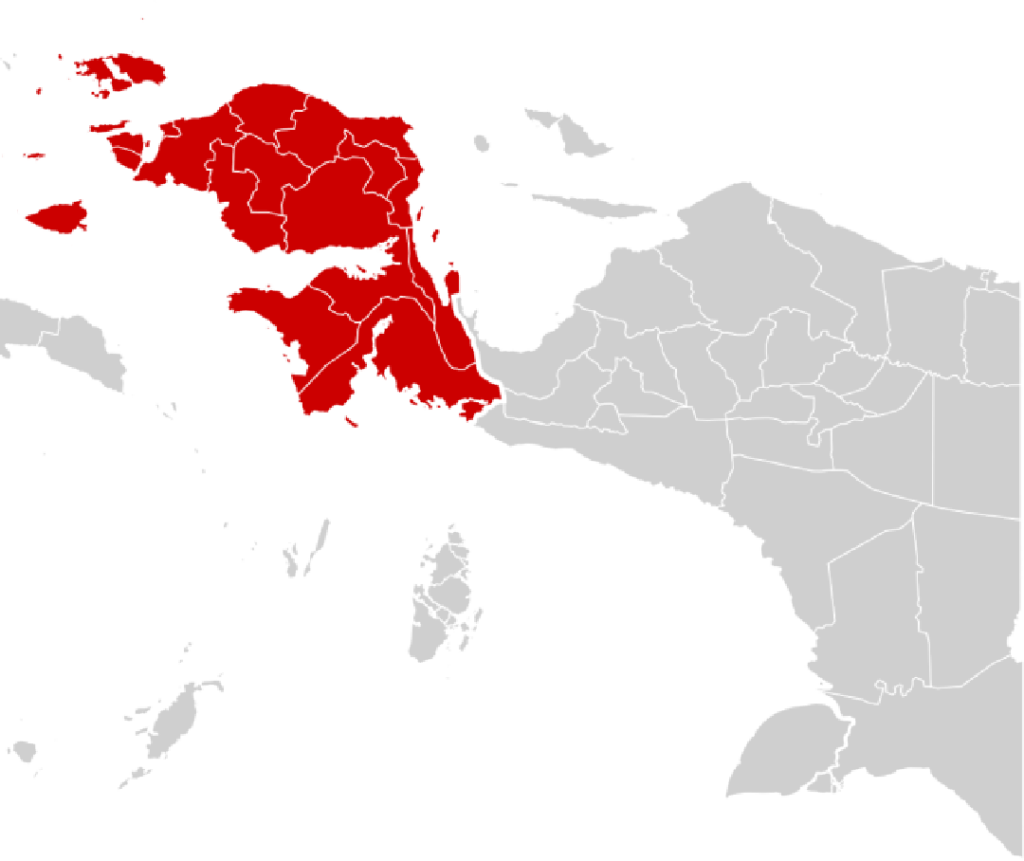
Indonesia used its right of reply at the 81st United Nations General Assembly to challenge allegations concerning human rights in Papua raised by leaders from Solomon Islands and Vanuatu, while reaffirming its stated obligation to protect civilians and investigate credible reports of abuse.
The exchange placed Papua back in the spotlight of international diplomacy, where questions of human rights, security, sovereignty, and regional relations intersect. Indonesia’s response, delivered during the General Debate in New York on Monday, September 28, stressed that the situation should be considered in its entirety, including attacks on civilians, teachers, health workers, and government employees by armed groups, known as the West Papua National Liberation Army from the Free Papua Movement (TPNPB OPM). Jakarta also said credible allegations of human rights violations were addressed through national institutions and legal mechanisms, including the independent National Commission on Human Rights, known as Komnas HAM.
How the Debate Unfolded
The diplomatic exchange followed statements by representatives of the Solomon Islands and Vanuatu during the 81st General Assembly. Their remarks raised concerns about human rights in the Indonesian provinces of Papua and called attention to the need for international scrutiny.
Solomon Islands Prime Minister Matthew Cooper Wale spoke about alleged human rights violations and their connection to the question of self-determination in West Papua. According to reporting by detik News, Wale argued that the two issues were closely linked and alleged that Indonesia sought to suppress opposition. These are claims made by the Solomon Islands leader, rather than findings established by the UN debate itself.
Vanuatu also raised Papua during the session. Its representative, Odo Tevi, called for attention to reports of human rights abuses and supported a visit by the UN High Commissioner for Human Rights to Papua, according to Indonesian media reports.
The statements reflected continuing concern among some Pacific governments about developments in the western half of New Guinea. They also brought the question of international access and verification into the debate, alongside the broader political disagreement over Papua’s status.
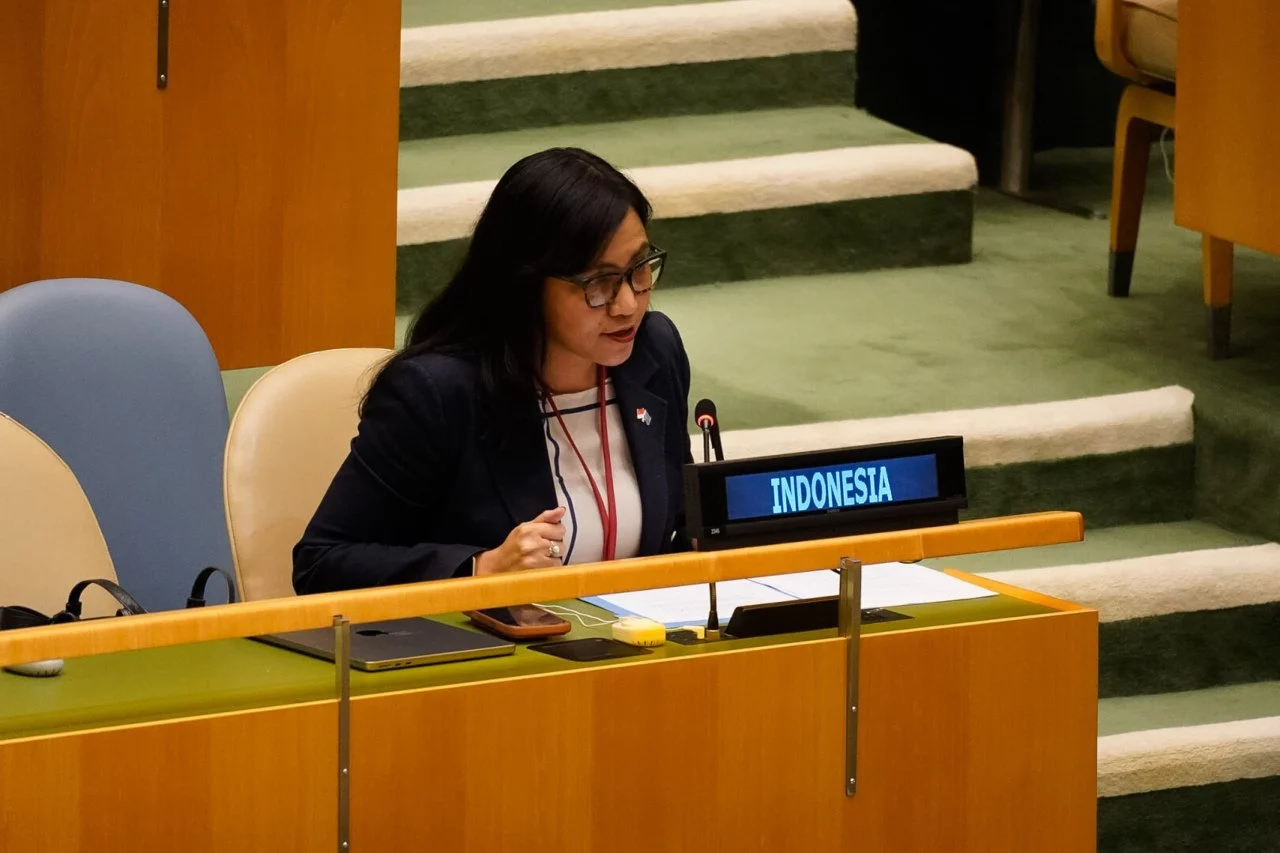
Indonesia responded through the formal right-of-reply procedure, a diplomatic mechanism that allows a country to answer statements made about it during a multilateral meeting. The response was delivered by Nona Gae Luna, Minister Counsellor at Indonesia’s Permanent Mission to the United Nations in New York.
Indonesia’s Response: Rights, Law, and Civilian Protection
Nona Gae Luna Cites Indonesia’s Human Rights Engagement
Luna rejected what Indonesia described as one-sided allegations and argued that the country’s record of engagement with international human rights institutions should also be taken into account.
She pointed to Indonesia’s membership of the UN Human Rights Council on six occasions and its role as the Council’s president at the time. Luna described that record as a reflection of international confidence in Indonesia and evidence of sustained engagement with the UN human rights system.
Her argument was intended to place the Papua debate within a broader account of Indonesia’s participation in international institutions. Membership and leadership roles, however, do not by themselves resolve specific allegations in the field. The substance of individual cases remains a matter for evidence, investigation, and appropriate legal processes.
Indonesia’s delegation also said credible allegations of human rights violations were taken seriously and handled through national institutions and legal mechanisms, including Komnas HAM. The government’s position was that scrutiny should be grounded in facts and established procedures, rather than in claims presented without a complete account of events.
The Government Highlights Attacks on Civilians
A central part of Indonesia’s reply was its account of violence affecting civilians in Papua. The delegation referred to the recent deaths of three civil servants after they had distributed livestock assistance to local residents, the killing of a driver transporting basic necessities, and the reported abduction of nine women and children in Mimika.
The delegation presented the incidents as evidence that TPNPB OPM also exposed civilians and public-service workers to violence. Indonesia contended that the international discussion of Papua should include this dimension.
“Attacks against civilians are not a form of peaceful expression,” the Indonesian delegation said, according to reports of the reply. It added that Indonesia had an obligation to protect all its citizens while ensuring that law-enforcement actions complied with national law and international human rights obligations.
The statement placed two responsibilities side by side: protecting people from armed violence and ensuring that state action remains subject to legal and human rights standards. That distinction is important to the debate, because the existence of security threats does not remove the need to investigate credible allegations against state personnel, just as allegations against state institutions do not negate the rights of civilians affected by armed attacks.
Disagreement Over a UN Human Rights Visit
One of the most consequential points in the exchange concerned the possibility of a visit to Papua by the UN High Commissioner for Human Rights.
Solomon Islands and Vanuatu called for international access to help assess reports of abuses. Indonesia responded that arrangements for a visit by the High Commissioner must be agreed upon between the host country and the Office of the High Commissioner for Human Rights. The delegation said this procedure applied to all UN member states and could not be determined by a third country or regional organization.
The disagreement illustrates the diplomatic tension between calls for independent international scrutiny and the role of national governments in arranging visits to their territory.
For Indonesia, the position was framed as a matter of procedure and sovereign equality among UN members. For advocates of a visit, access is important because independent observation can help assess allegations, hear from affected communities, and clarify disputed accounts.
The exchange did not, in itself, establish whether a visit would take place or set a timetable for one. It did, however, make the question of access a prominent part of the discussion about Papua at the General Assembly.
Sovereignty and Indonesia’s Position on Papua
The right-of-reply statement also connected the debate to Indonesia’s broader position on national unity. The delegation referred to remarks by Foreign Minister Sugiono during the General Debate on September 25, 2026.
“From Aceh to Papua, from Miangas to Rote, Indonesia is one people. Indonesia is one nation,” Sugiono said, as quoted in reporting on the government’s response. The statement reaffirmed Jakarta’s position that Papua is an integral part of Indonesia.
The diplomatic dispute therefore involved more than competing accounts of security incidents. It also reflected different political perspectives on Papua and the place of international institutions in addressing the issue.
Indonesia maintained that human rights discussions should not be used to justify violence or support separatism. Luna criticized what she described as selective attention to civilian victims, arguing that such selectivity could weaken the credibility of human rights advocacy. That criticism represents Indonesia’s stated position; the concerns raised by Solomon Islands and Vanuatu remain part of the public record and should be assessed on their evidence.
A Regional Issue with Wider Diplomatic Implications
The exchange took place in a region where Pacific states have longstanding interest in political developments, human rights, and regional cooperation. Statements by neighbouring and Pacific Island governments can carry diplomatic significance even when they do not change the formal status of a territory.
At the same time, the Papua question is not the only element of Indonesia’s relationship with the Solomon Islands. Media Indonesia reported that Foreign Minister Sugiono met Solomon Islands Foreign Minister Rick Nelson Houenipwela on September 24, on the sidelines of the General Assembly. The meeting covered trade, capacity-building, education, and cultural cooperation, including an invitation for Solomon Islands businesses to participate in Trade Expo Indonesia, scheduled for October 14 to 18, 2026. The report also said the Solomon Islands side welcomed cooperation and planned to strengthen its diplomatic representation in Jakarta.
The juxtaposition is notable. Public disagreement over Papua took place alongside efforts to deepen bilateral economic and diplomatic ties. It suggests that the two countries’ relationship includes both areas of disagreement and practical interests where cooperation remains possible.
For Indonesia, maintaining channels for dialogue may be important to explaining its policies and addressing concerns. For Pacific governments, raising human rights questions at international forums is one way to make their positions heard. The challenge for diplomacy is to keep disagreement from closing off communication on issues where the countries share interests.
The Importance of Evidence and Accountability
The debate also underscores the need to distinguish between allegations, official responses, and independently established findings. Statements at the General Assembly are part of a diplomatic process; they do not substitute for investigations into individual incidents.
Indonesia’s reference to Komnas HAM and national legal mechanisms is therefore significant as a statement of the process it says should be used to examine credible allegations. The practical test will be whether investigations are accessible, credible, and capable of producing accountability where wrongdoing is established.
Likewise, claims about violence by armed groups require careful documentation and appropriate investigation. Indonesia argues that the security context must be fully considered, citing civilian deaths, reported abductions, and attacks. Their inclusion should not be used to dismiss separate allegations of abuses or to assume that every reported incident has been conclusively resolved.
For international readers, the distinction is central. A complete account of Papua requires attention to the experiences of civilians, the conduct of all actors, the legal obligations of the state, and the evidence available for each claim.
Conclusion
Indonesia’s use of the right of reply at the 81st UN General Assembly was an effort to answer criticism from the Solomon Islands and Vanuatu while restating its position on Papua. The delegation highlighted Indonesia’s engagement with UN human rights institutions, cited recent attacks affecting civilians and public workers, and maintained that any visit by the UN High Commissioner for Human Rights must be arranged through agreement with the host country.
The exchange did not settle the competing claims. Instead, it demonstrated how Papua remains a point of diplomatic disagreement in the Pacific, involving human rights concerns, security conditions, sovereignty, and the role of international oversight.
The way forward will depend on more than statements delivered in New York. Credible investigations, protection of civilians, compliance with human rights obligations, and constructive dialogue will be important to building confidence. Indonesia’s commitment to legal processes will be more impactful when backed by transparent and verifiable outcomes, while international discussions will be more beneficial when they take into account evidence and the safety of all civilians affected by violence.
For Papua’s residents, the significance of the debate ultimately lies not in the exchange of diplomatic statements, but in whether it contributes to greater protection, accountability, and stability in their daily lives.
Read Also
Indonesian Lawmakers’ Challenges Solomon Islands’ UN Speech on Papua
Indonesia’s UN Human Rights Council Presidency and the Reality of Human Rights in Papua
Indonesia’s Bid for UN Human Rights Council Presidency: A Moment of Trust, Legacy, and National Reflection