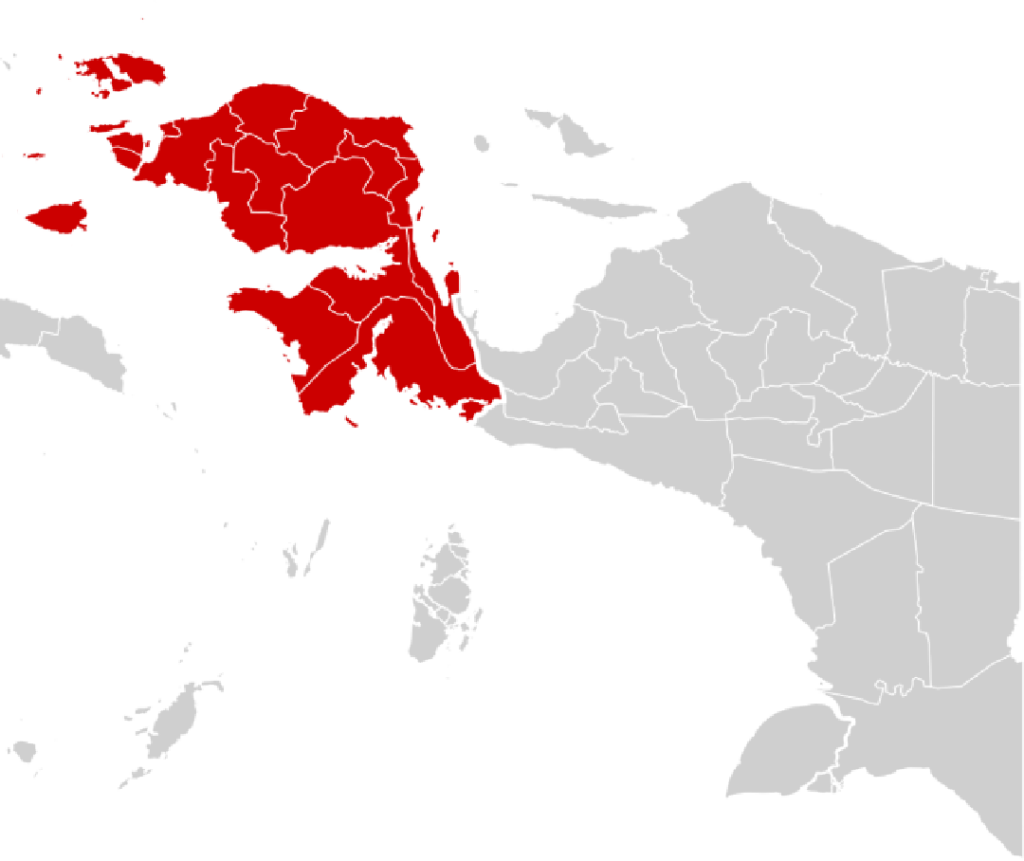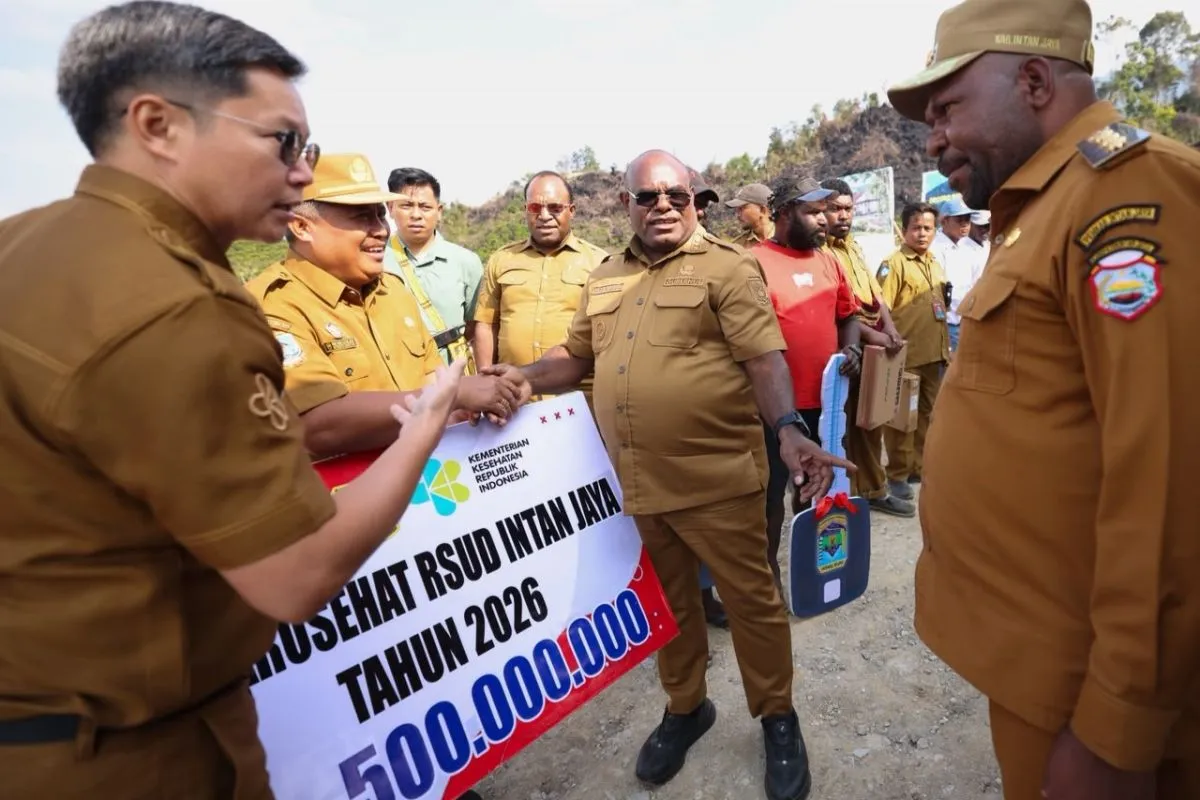
Healthcare in Papua is often measured not only by the number of doctors and nurses available but also by something much more basic: whether a hospital has the equipment needed when a patient arrives in urgent need of care. In Papua Tengah (Central Papua), the provincial government is seeking to address that challenge by directing new support to two regional hospitals, RSUD Intan Jaya and RSUD Paniai.
The provincial government has provided medical equipment and Rp500 million in supporting funds for health services in Intan Jaya, while RSUD Paniai has received Rp1.5 billion along with medical equipment to strengthen services for residents. The assistance forms part of the provincial government’s wider Ko Harus Sehat health program and its stated effort to improve access to healthcare in remote parts of Papua Tengah.
The initiatives are modest in scale compared with the broader challenge of healthcare provision across Papua, but they carry significance for communities where distance, infrastructure, and limited medical resources can make access to treatment more difficult.
For the provincial government, the objective is straightforward: medical facilities need to be equipped well enough to respond to the needs of the people they serve.
Intan Jaya Receives Medical Equipment and Rp500 Million Support
The first stage of the provincial government’s latest healthcare support took place during Governor Meki Nawipa’s working visit to Intan Jaya.
According to ANTARA, Nawipa symbolically handed over medical equipment and Rp500 million in funding for the Ko Harus Sehat program to the Intan Jaya regent during his visit on September 15, 2026.
The provincial government directed the assistance toward RSUD Intan Jaya and several community health centers, aiming to strengthen basic healthcare services for residents.
For a district located in Papua’s interior, the provincial government views the availability of adequate medical equipment as particularly important.
Nawipa said medical facilities must be sufficiently equipped so that people are not left facing unnecessary difficulties when emergency treatment is required.
“Medical facilities must be adequate so that people are no longer constrained when they need emergency treatment,” Nawipa said, adding that he hoped RSUD Intan Jaya would make maximum use of the support to save lives.
His statement placed the assistance within a broader goal of improving basic healthcare services in remote communities rather than treating the equipment as a one-off donation.
Equipment Designed for Different Medical Needs
The assistance for Intan Jaya includes several types of medical equipment with different functions.
ANTARA reported that the equipment included an ultrasound machine, incubator, phototherapy unit, infant bubble CPAP system, and electrocardiogram equipment. Reagents were also provided for community health centers.
The range is notable because it covers different stages of healthcare, from examination and diagnosis to support for newborns and infants.
An ultrasound machine can support diagnostic examinations, while an ECG is used to assess heart activity. An incubator and phototherapy unit are particularly relevant to newborn care, while a CPAP system for infants can support those who require respiratory assistance.
The provincial government did not state in the ANTARA report that the equipment alone would resolve the broader challenges facing RSUD Intan Jaya.
Nawipa emphasized that health workers and medical facilities must properly utilize the equipment for government support to translate into better services.
That emphasis on utilization is important in remote healthcare systems. If health workers cannot operate, maintain, or integrate equipment into routine patient care, it holds little practical value.
The Rp500 Million Ko Harus Sehat Support
Alongside the medical equipment, Papua Tengah provided Rp500 million in supporting funds for the Ko Harus Sehat program in Intan Jaya.
ANTARA described the funding separately from the medical equipment and said it was intended to support healthcare services in the district.
This distinction matters because the source does not provide a separate monetary valuation for the medical equipment itself.
The Rp500 million therefore represents the reported program support, while the equipment was provided as an additional component of the provincial intervention.
Nawipa said the assistance was part of efforts to distribute healthcare facilities more evenly across areas classified as frontier, remote, and disadvantaged, commonly referred to in Indonesia as 3T areas.
The governor also emphasized the importance of hospitals and community health centers effectively utilizing the improved facilities.
The intended measure of success, in that sense, is not simply the arrival of new equipment. It is whether residents can receive medical attention more quickly and appropriately when they need it.
RSUD Intan Jaya Welcomes the Support
The leadership of RSUD Intan Jaya welcomed the provincial government’s intervention.
Hospital director Dr. Suardi Dolok Saribu expressed appreciation for the assistance provided through the Papua Tengah Health Office.
“We at RSUD Intan Jaya express our gratitude to the Governor of Papua Tengah through the Head of the Papua Tengah Provincial Health Office for the assistance of medical equipment,” Suardi said.
The hospital expects the support to help strengthen its capacity to provide healthcare services to the local population.
The significance of that support is particularly relevant in areas where patients may otherwise face difficult choices about where to seek treatment.
When basic diagnostic and emergency equipment is available closer to communities, the health system has greater capacity to handle patients locally, although the sources do not provide quantitative evidence yet showing how much patient referral rates or treatment outcomes will change.
That distinction is important. The provincial government has delivered resources, but the measurable impact on health outcomes will require time and further evaluation.
Paniai Receives Larger Financial Support
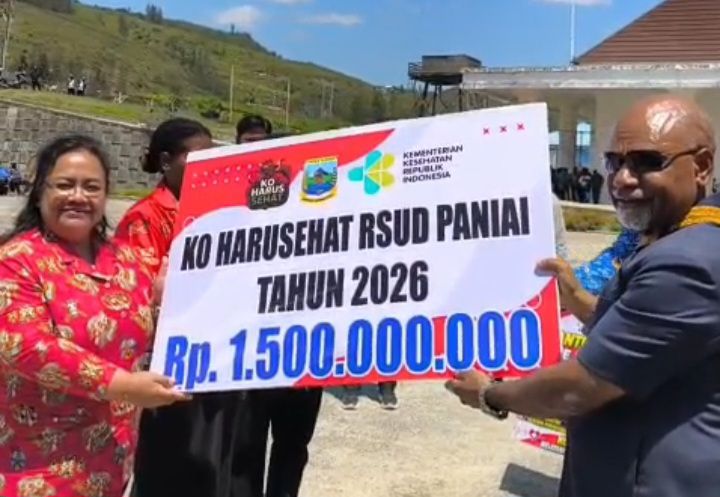
A separate intervention took place in Paniai, where Papua Tengah Deputy Governor Deinas Geley formally handed over Rp1.5 billion in assistance to RSUD Paniai on September 10, 2026.
During Geley’s working visit to Paniai, he symbolically handed over the assistance to the hospital director.
Papuapos Nabire reported that the assistance consisted of Rp1.5 billion together with 11 types of medical equipment.
The support was described as part of the provincial government’s commitment to strengthening healthcare facilities and services, particularly for people who depend on RSUD Paniai for medical treatment.
Geley said the assistance should be managed properly, transparently, and according to its intended purpose so that it produces a positive impact on healthcare services in Paniai.
“Hopefully this assistance can be managed properly, transparently, and appropriately so that it has a positive impact on the advancement of healthcare services in Paniai,” Geley said.
His remarks underline a second element of the provincial government’s strategy: funding and equipment must be accompanied by responsible management.
42 Units of Equipment Also Support Puskesmas
Jubi provided additional detail on the medical equipment component of the Paniai assistance.
During the same visit, Geley said the provincial government was also supporting community health centers, or puskesmas, with 42 units of medical equipment, including ultrasound equipment and other supporting items.
“We also help the puskesmas below. Here there is medical equipment, there is ultrasound, and there are educational facilities; basically everything is there,” Geley said.
The reference to puskesmas is important because healthcare access does not begin at a district hospital.
Community health centers are often the first point of contact for residents seeking basic medical services.
Strengthening them can therefore complement support provided to the main regional hospital.
In practical terms, the provincial government’s approach in Paniai combines hospital-level support with equipment intended for lower-level healthcare facilities.
Health as Part of Papua Tengah’s Development Agenda
Geley presented the assistance as part of a broader development philosophy.
He said the provincial government’s vision and mission placed education and healthcare among its main priorities. Ko Harus Sehat was described as one component of that healthcare agenda.
For Geley, development should not be measured only through roads, buildings, or other physical infrastructure.
The ultimate objective is also to ensure that residents are able to live healthy lives and access adequate public services.
“We want the people of Papua Tengah to be healthy, because if people are healthy, they can work, children can go to school, and family life can continue properly,” he said.
That statement connects healthcare with education and household welfare.
A healthy population is more able to participate in economic activity, while children who can access healthcare are better positioned to stay in school.
This argument holds particular relevance in remote areas, where the availability of basic public services closely links social and economic activities.
From Infrastructure to Human Services
The two hospital interventions illustrate a significant shift in the discourse surrounding development in Papua.
Infrastructure remains essential, particularly in a province where geography can make transportation difficult. But buildings and roads alone do not provide medical treatment.
A functioning health system also needs equipment, trained personnel, funding, and institutions capable of using resources effectively.
The provincial government has therefore framed the Intan Jaya and Paniai assistance as part of service delivery rather than simply construction or procurement.
Nawipa stated that the Intan Jaya program aimed to provide more equitable support for medical facilities in remote and disadvantaged areas.
Geley similarly described the Paniai assistance as an effort to ensure that communities could obtain healthcare that was easier to access, faster, and appropriate to their needs.
This approach places healthcare closer to the daily concerns of communities.
Transparency Becomes Part of the Challenge
With additional public resources going into regional healthcare, transparency and accountability become increasingly important.
Geley explicitly called for the Paniai assistance to be managed transparently and appropriately.
The same principle is relevant to Intan Jaya, where Nawipa emphasized the optimal use of equipment by hospitals and health workers.
The message from both provincial leaders is therefore similar: government support is only the beginning.
Hospitals and health centers need to use the equipment effectively, maintain it properly, and ensure that the assistance reaches patients.
For a remote healthcare system, such support can be as important as the initial procurement itself.
A Broader Effort to Improve Health Access
The interventions in Intan Jaya and Paniai come against the backdrop of Papua Tengah’s wider effort to strengthen basic public services.
The provincial government has described healthcare as one of its core priorities, alongside education. Geley’s comments in Paniai also linked better health with people’s ability to work, children’s ability to attend school, and the stability of family life.
That makes the latest support relevant not only to hospitals but also to the province’s wider development agenda.
For communities in remote districts, the value of a health program is often felt in very practical ways: whether a child can receive treatment locally, whether a pregnant woman can obtain appropriate care, or whether a patient can receive diagnostic support without immediately having to travel elsewhere.
The sources do not provide data showing how many additional patients will be treated as a result of the assistance.
Such figures will need to be measured after the equipment has been integrated into services.
Looking Beyond the Handover Ceremony
The symbolic handovers in Intan Jaya and Paniai are important milestones, but they should also be viewed as the beginning of a longer process.
Medical equipment requires trained personnel, maintenance, electricity, supplies, and proper management.
The provincial government’s own statements recognize this point by emphasizing optimal utilization and responsible management.
In Intan Jaya, Nawipa specifically hoped health workers would use the facilities optimally so that communities could receive faster treatment, particularly during emergencies.
In Paniai, Geley stressed that the assistance should be managed transparently and directed toward public needs.
These expectations provide a clear benchmark for future evaluation.
The next question is not simply how much equipment has been delivered, but whether the equipment remains operational and whether residents experience meaningful improvements in access and quality of care.
Conclusion
The Papua Tengah provincial government’s latest healthcare interventions in Intan Jaya and Paniai represent two concrete steps in its effort to strengthen medical services across the province.
In Intan Jaya, Governor Meki Nawipa handed over medical equipment and Rp500 million in supporting funds for the Ko Harus Sehat program. The equipment included ultrasound, an incubator, phototherapy, infant bubble CPAP, and ECG equipment, as well as reagents for puskesmas.
In Paniai, Deputy Governor Deinas Geley handed over Rp1.5 billion and 11 types of medical equipment to RSUD Paniai. Jubi also reported support involving 42 units of equipment for community health centers.
The two initiatives share a common objective: bringing healthcare support closer to communities that need it.
The provincial government’s approach also highlights an important lesson for development in Papua. Public investment becomes significant when it directly impacts people’s lives.
For Intan Jaya and Paniai, that frontline is the hospital, the puskesmas, the medical worker, and ultimately the patient.
The next stage will be to ensure that the new resources remain functional, are managed transparently, and are integrated into daily healthcare services.
If that process is sustained, the latest assistance can become more than a symbolic government handover. It can form part of a longer effort to build a healthcare system in Papua Tengah that is increasingly accessible, better equipped, and more responsive to the needs of its communities.
Read Also
Ko Harus Sehat Programme Expands Health Access in Papua Tengah
18 Health Centers Expand HIV Care in Papua Selatan