
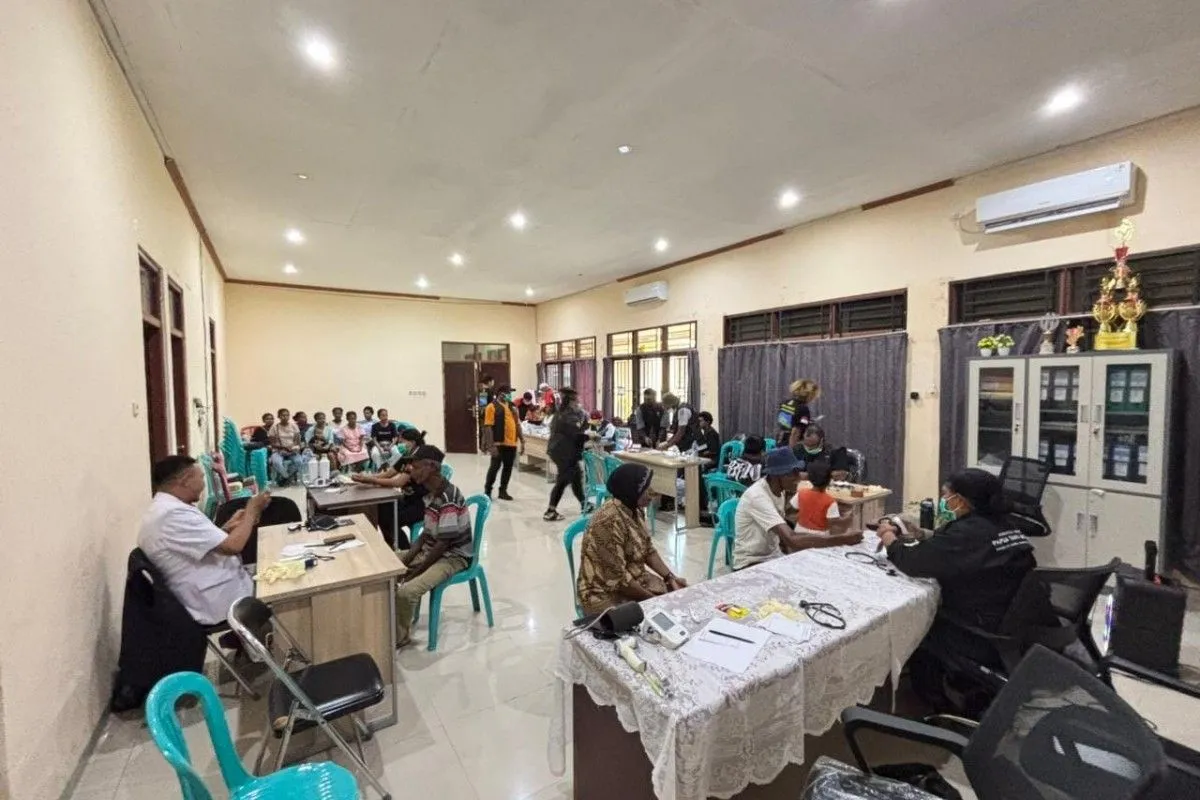
A community health initiative in two locations in Merauke has brought national recognition to Indonesia’s state-owned electricity company, PT PLN (Persero). Through a programme combining nutritional support, clean water infrastructure, sanitation facilities and maternal and child health education, PLN’s Merauke unit has reached 162 beneficiaries and received a Gold award at the GENTING Collaboration Summit 2026.
The PLN stunting prevention programme in Merauke was implemented through the Gerakan Orang Tua Asuh Cegah Stunting (GENTING), or Foster Parents Movement for Stunting Prevention. The initiative focused on families considered at risk of stunting, particularly pregnant women, breastfeeding mothers and young children during the first 1,000 days of life, a critical period for physical growth and development.
The programme was carried out in Kampung Sota and Kamahedoga Urban Village, Papua Selatan (South Papua), from November 2025 to April 2026. During that period, PLN provided assistance extending beyond its conventional role in electricity services. The interventions included the construction of wells and clean-water towers, communal sanitation facilities, simple nutrition gardens, free electricity connections for selected households, nutritional supplements and regular health checks.
The recognition was presented at the GENTING Collaboration Summit 2026, organised by the Ministry of Population and Family Development, also known as Kemendukbangga, together with the National Population and Family Planning Board (BKKBN). The summit recognised organisations and partners that contributed to Indonesia’s efforts to accelerate stunting prevention.
For Merauke, the award highlights how cooperation between public institutions, state-owned enterprises and local communities can bring essential services closer to families. It also illustrates a broader development approach in which electricity infrastructure is complemented by practical interventions addressing health, nutrition and living conditions.
From Electricity Services to Community Health
PLN’s main responsibility is to provide electricity, maintain the reliability of power supply and support the development of energy infrastructure. In Papua, where geography and access conditions can complicate public service delivery, the company’s presence also creates opportunities to contribute to wider community development.
The GENTING initiative in Merauke reflects this expanded social role. Rather than treating electricity access as an isolated development objective, the programme linked basic household infrastructure with health and nutrition support.
General Manager of PLN’s Papua and West Papua Regional Main Unit, Roberth Rumsaur, said the intervention was part of the company’s commitment to supporting the acceleration of stunting prevention while delivering wider social benefits.
He explained that PLN wanted its contribution to be felt not only through electricity services but also through improvements in residents’ health and quality of life.
The programme was implemented by PLN’s Merauke Customer Service Implementation Unit, known as UP3 Merauke, under the company’s Papua and West Papua Regional Main Unit.
According to Roberth, the initiative reached 162 beneficiaries in two priority locations: Kampung Sota and Kamahedoga Urban Village. The six-month implementation period, from November 2025 to April 2026, combined physical infrastructure development with direct assistance to families.
The approach recognised that the risks associated with stunting cannot be addressed through food assistance alone. Access to safe water, adequate sanitation, hygiene practices and maternal health monitoring also influence the conditions in which children grow.
Two Locations Receive Direct Intervention
Kampung Sota: Supporting Nutrition and Household Needs
In Kampung Sota, the programme included the development of a simple nutrition garden designed to support access to nutritious food.
The garden formed part of a wider effort to encourage families to pay attention to food quality and household nutrition. Access to a source of nutritious food can complement additional nutritional assistance while also encouraging greater awareness of balanced diets.
PLN also provided basic infrastructure support, including wells and clean-water towers, alongside sanitation facilities. These interventions were intended to improve access to essential household services and support healthier living conditions.
The provision of free electricity connections to selected homes was another part of the initiative. Although electricity is not itself a direct treatment for stunting, reliable household power can support daily activities and improve the conditions in which families live.
The programme therefore brought together several practical forms of assistance rather than relying on a single intervention.
Kamahedoga: Clean Water, Sanitation and Health Monitoring
In Kamahedoga Urban Village, PLN’s activities included the construction of clean-water infrastructure and bathing, washing and toilet facilities, commonly known in Indonesia as MCK.
The company also worked with health personnel to conduct health examinations for residents. These checks were intended to help identify potential health risks among pregnant women and monitor the development of foetuses and young children.
Photographs released by PLN and published by ANTARA showed health personnel working alongside the company in conducting community health examinations in Kamahedoga.
Regular monitoring is particularly important for families with pregnant women, breastfeeding mothers and children under two years of age. Early identification of potential health concerns can help families seek appropriate assistance and follow guidance from health workers.
The programme also included nutritional supplements, education on clean and healthy living practices, and counselling on nutrition and sanitation.
By combining physical facilities with health education, the initiative sought to address both the environmental and behavioural factors that can influence family health.
Why Nutrition and Sanitation Matter in Stunting Prevention
Stunting is a condition in which children experience impaired growth and development, commonly associated with chronic undernutrition and other factors affecting health during early childhood.
The first 1,000 days, beginning with pregnancy and continuing through a child’s second birthday, are widely recognised as a critical period. Nutritional deficiencies, inadequate maternal health care, repeated infections and poor sanitation can all contribute to risks during this stage.
This is why the GENTING programme places particular emphasis on pregnant women, breastfeeding mothers and young children.
In Merauke, PLN’s intervention demonstrated this understanding by combining nutritional assistance with enhanced access to water and sanitation. Clean water and proper sanitation can help families maintain hygiene and reduce exposure to conditions that contribute to illness. Health education can also help carers understand the importance of balanced nutrition, maternal care and monitoring child development.
The programme’s design is therefore broader than just distributing food packages. It seeks to improve some of the conditions that influence a child’s health from pregnancy through early childhood.
However, the reported figure of 162 beneficiaries refers to the number of people reached by the intervention. The available reports do not provide a before-and-after stunting prevalence rate or clinical data showing how many cases were prevented or resolved as a direct result of the programme. Its contribution is best understood as support for prevention and early intervention, rather than evidence of a measured reduction in stunting across the two communities.
Gold Recognition at the 2026 GENTING Collaboration Summit
PLN UP3 Merauke received the Gold award at the GENTING Collaboration Summit 2026, organised by Kemendukbangga/BKKBN.
The summit carried the theme “One Movement, A Million Hopes: Building a Stunting-Free Generation”. It was designed to strengthen cooperation between institutions and recognise partners who had made practical contributions to the GENTING movement and Indonesia’s broader family development agenda.
The event brought together representatives from government institutions, state-owned enterprises, regional enterprises, private companies, media organisations and other partners.
Minister of Population and Family Development and Head of BKKBN Wihaji attended the summit and expressed appreciation for the organisations and individuals involved in supporting families at risk of stunting.
He described GENTING as a practical expression of cooperation, emphasising that government institutions could not address the challenge alone.
According to Wihaji, approximately 1.3 million beneficiaries had received assistance through the programme by the time of the summit. He also thanked the participating partners, including state-owned and regional enterprises, corporations and media organisations, for acting as foster parents and contributing to the movement.
“We cannot work alone. We need a pentahelix approach, involving cooperation with all stakeholders, and we hope this collaboration will continue,” Wihaji said.
The pentahelix approach brings together five broad elements: government, business, academia, communities and media. Its purpose is to combine different capabilities and resources to address development challenges that cannot be solved by one institution acting independently.
Wihaji’s remarks placed PLN’s Merauke programme within a national framework of shared responsibility. The Gold recognition was not simply an acknowledgement of corporate social responsibility but also a recognition of the role that non-government partners can play in supporting public development priorities.
Roberth Rumsaur: The Award Is a Bonus, Not the Main Goal
For PLN’s Papua and West Papua regional management, the award represents recognition of work intended to produce benefits beyond the company’s core electricity business.
Roberth Rumsaur said the Gold award was a bonus arising from PLN’s commitment to contribute to the welfare of communities in Papua.
“The Gold award is a bonus from our sincere intention to be present and bring benefits to the people of Papua,” he said.
He added that PLN’s contribution should be measured not only by the reliability of electricity supply but also by its ability to create sustainable social benefits and improve people’s quality of life.
Roberth also highlighted the importance of the programme’s long-term health objectives. For PLN, seeing healthier pregnant women and children receiving adequate nutrition in Sota and Kamahedoga represented a meaningful achievement.
He expressed hope that the combination of basic infrastructure and health interventions would help reduce stunting risks and support the development of a healthier and more capable future generation in Papua.
His comments reflected a wider understanding of the relationship between infrastructure and human development. Roads, electricity and public facilities are important foundations for economic activity, but improvements in health and nutrition are equally essential to building a productive population.
GENTING and the Importance of Cross-Sector Cooperation
The GENTING programme encourages state-owned enterprises, regional enterprises, private businesses, universities and individuals to participate as foster parents for families at risk of stunting.
Its interventions are directed towards families that need additional support, with particular attention to mothers and children during the first 1,000 days of life.
The model is based on direct involvement from partners who provide assistance according to identified needs. In Merauke, PLN’s contribution included infrastructure, nutritional support and health education.
The national summit also demonstrated the scale of cooperation being developed through the programme. Wihaji’s reported figure of approximately 1.3 million beneficiaries illustrated the reach of the movement, while his emphasis on pentahelix cooperation pointed to the importance of maintaining partnerships beyond a single event or award ceremony.
For Papua, such cooperation can be especially valuable. Development needs in the region are diverse, and solutions often require coordination between government agencies, service providers, businesses and local communities.
A company with an established operational presence can contribute resources and organisational capacity, while health workers provide professional guidance and communities help ensure that assistance responds to local needs.
The Merauke programme offers an example of how those contributions can be brought together in a focused initiative.
Building on the Award Through Sustainable Community Benefits
The Gold recognition gives PLN’s Merauke unit an opportunity to strengthen its role in community development. But the value of the programme will ultimately depend on whether the facilities and support continue to benefit residents after the formal intervention period.
Wells and water towers require maintenance. Sanitation facilities need to remain functional and accessible. Nutrition gardens need continued care, while health education must be reinforced through regular engagement with families and local health personnel.
The same principle applies to electricity connections. Their long-term value depends on reliable service and the ability of households to use electricity safely and productively.
The available reports do not specify a new expansion target, a further funding commitment or a continuation schedule for the Merauke programme. Nevertheless, Roberth’s statement that PLN intends to continue delivering direct and sustainable social benefits indicates the company’s intention to maintain its wider community role.
For residents of Sota and Kamahedoga, the most meaningful outcome will be the continued availability of clean water, better sanitation, access to health information and stronger awareness of children’s nutritional needs.
Conclusion
PLN’s Gold award at the GENTING Collaboration Summit 2026 recognises a practical contribution to stunting prevention in Papua Selatan. By reaching 162 beneficiaries in Kampung Sota and Kamahedoga, the company has demonstrated how a state-owned enterprise can support public development priorities through more than its core business.
The combination of nutrition assistance, clean-water infrastructure, sanitation facilities, household electricity connections and health education reflects an integrated approach to improving family welfare. It also supports the government’s broader effort to involve businesses and communities in addressing challenges that affect the quality of Indonesia’s future generations.
The award is an important milestone, but the work does not end with recognition. Sustained maintenance, continued health monitoring and cooperation with local communities will be essential to ensuring that the benefits remain meaningful over time.
For Papua, where improving access to essential services is an important part of inclusive development, the Merauke initiative offers a useful example of collaboration in action. Its lasting success will be measured not by the Gold trophy alone, but by healthier mothers, better-supported families and children who have a stronger foundation for growth.
Read Also
PLN Wins Gold for Asmat Water Desalination
Papua Links Local Farmers to Free Nutritious Meal Programme

