
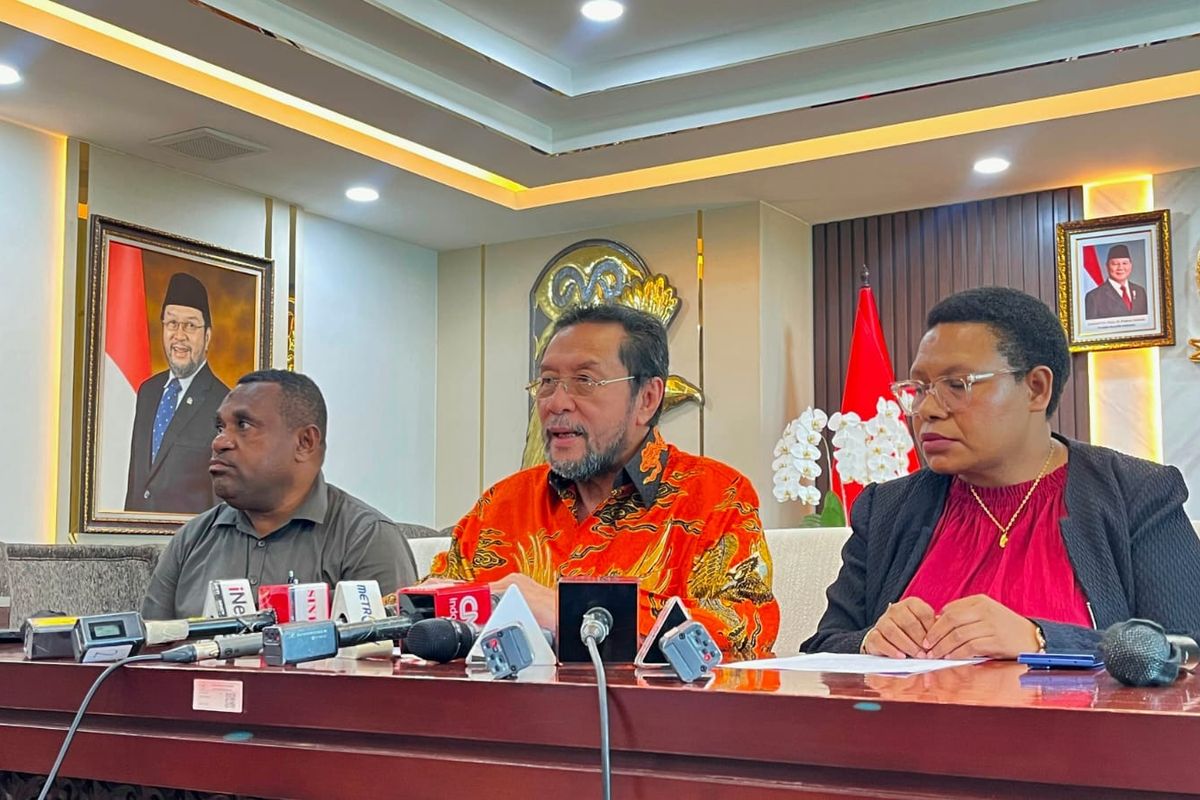
The Regional Representative Council (DPD RI) of Indonesia has established a Special Committee on Papua as part of a larger parliamentary initiative to address longstanding issues across the country’s easternmost region. The committee has been tasked with the assessment of the implementation of national strategic projects, reviewing humanitarian and human rights concerns, and formulating comprehensive policy recommendations to strengthen peace, governance, and sustainable development in Papua.
The initiative reflects growing recognition among Indonesian policymakers that development in Papua needs a multidimensional approach. Infrastructure investment and economic growth remain important priorities, although members of the newly created committee emphasized that long-term stability also depends upon improving public welfare, strengthening dialogue, ensuring legal certainty, and enhancing public confidence in government institutions.
The new Special Committee has a mandate to look at cross-cutting issues ranging from development to governance, security, public services, and humanitarian conditions, rather than particular parliamentary reviews done in earlier years for sectors. The initiative is an attempt to give Parliament a more integrated picture of Papua’s changing challenges and opportunities, officials say.
For international observers, the formation of the committee is a sign of Indonesia’s continued use of constitutional and parliamentary mechanisms to assess public policy while seeking wider solutions to complex regional issues.
Indonesia’s Regional Representative Council Launches the Papua Special Committee
The committee was established following extensive discussions among senators from provinces across Indonesia, and the decision was announced during a plenary meeting of the Regional Representative Council (DPD RI).
The committee is expected to consult ministries, regional governments, community representatives, customary institutions, academics, security agencies, and civil society organizations before preparing recommendations for the national government.
DPD leaders said, “The aim is not only to identify problems but also to formulate practical recommendations that can support more effective governance and accelerate equitable development across Papua.”
The committee’s work will probably include field visits, policy reviews, hearings with stakeholders, and evaluations of current government programs that have direct local community impacts.
As observers note, parliamentary oversight is an important element of Indonesia’s democratic system by ensuring that major public policies continue to be subject to ongoing evaluation and public accountability.
The creation of a special committee that focuses only on Papua is expected to improve coordination among institutions and give policymakers a more complete picture of the conditions on the ground, lawmakers hope.
The Regional Representative Council (DPD RI) is responsible for representing the interests of the provinces at the national level and for providing policy recommendations, oversight, and regional perspectives on issues that concern local government, rather than the legislative authority of the House of Representatives (DPR) of Indonesia. Therefore, the establishment of the Papua Special Committee serves as a means of institutional accommodation to channel regional concerns into national policymaking through constitutional processes.
A Comprehensive Approach Beyond Security
One thing that distinguishes the committee is that it does not just look at security issues but also examines the problems in Papua from various angles.
Members of the committee said the future of Papua should not only be seen in the context of a broader development framework covering economic growth, education, healthcare, infrastructure, investment, environmental sustainability, reform of governance, and humanitarian welfare but also efforts to maintain public security.
For many years, a lot of public policy experts have argued that sustainable stability is best achieved when development initiatives are coupled with upgrades to public services, stronger local institutions, and more opportunities for community participation.
In this regard, the Special Committee plans to review the interrelation of various government programs and the extent to which existing policies meet the needs of local communities.
Papua’s substantial natural resources, cultural diversity, and strategic geographical position also offer major opportunities for long-term development, provided that these are supported by effective governance and inclusive public policies, officials noted.
Rather than focus on individual issues in isolation, the committee aims to understand how multiple policy sectors collectively affect regional development outcomes.
Reviewing National Strategic Projects
The committee’s primary mandate is to review the implementation of the National Strategic Projects (PSN) across Papua.
Recently, the Indonesian government has invested heavily in infrastructure to improve connectivity, reduce logistics costs, expand healthcare access, strengthen education, and stimulate regional economic growth.
Projects including roads, bridges, ports, airports, telecommunications infrastructure, hospitals, schools, and public facilities have targeted the reduction of disparities between Papua and other parts of Indonesia, while encouraging a more balanced national development.
Committee members said evaluation of these projects does not suggest opposition to development per se. The objective is to make sure that implementation is effective, transparent, accountable, and responsive to local community needs.
The committee plans to look into whether strategic investments have led to measurable improvements in public welfare, job opportunities, access to basic services, and regional economic development.
Development specialists generally note that big infrastructure projects have their greatest long-term impact when combined with investments in education, health care, institutional capacity, and local human resources.
Ongoing assessment is vital for maximizing the effectiveness of public investment in Papua, where geographical conditions often pose significant logistical challenges. Ongoing assessment is vital for maximizing the effectiveness of public investment in Papua, where geographical conditions often present major logistical challenges.
Strengthening Public Welfare Through Better Governance
But aside from infrastructure, lawmakers said better governance is still the key to achieving sustainable development in Papua.
The committee seeks to look into the manner of coordinating development programs by government institutions and to identify opportunities to improve public administration, service delivery, and interagency cooperation.
Several senators said good governance required policies that were sensitive to local conditions and developed through a continuing dialogue with the provincial governments, traditional leaders, religious bodies, youth representatives, women’s groups, and community stakeholders.
Improved coordination between central and regional authorities is likely to improve policy implementation and reduce bureaucratic hurdles that can stall development projects.
Governance experts often say that the effectiveness of institutions is an important factor in whether public investment actually results in improved living standards.
The work of the committee will therefore go beyond financial oversight to include broader assessments of policy implementation, institutional performance, and community participation.
Listening to Local Voices
Committee members have also emphasized the importance of basing successful policy recommendations on direct engagement with communities throughout Papua.
The committee plans to hear from Indigenous peoples, local governments, academics, religious leaders, business representatives, youth organizations, and civil society rather than from official reports.
The committee believes that inclusive dialogue with people who have different experiences and perspectives can enhance sustainable public policy. The committee believes that sustainable public policy can be achieved through inclusive dialogue with people who have different experiences and perspectives.
Development practitioners generally agree that community participation lends policy legitimacy and improves the quality of decision-making by bringing local knowledge into government planning.
By blending parliamentary scrutiny with direct public consultation, lawmakers hope to come up with recommendations that are both practical and responsive to conditions across Papua’s diverse provinces.
Addressing Humanitarian and Human Rights Concerns
Alongside a review of development policies, the Papua Special Committee has also been mandated to review humanitarian and human rights issues that continue to impact public confidence and long-term stability throughout Papua.
Members of the committee stressed that protection of citizens’ rights and enhancement of public welfare should be the integral parts of national development policy. They argued that rather than separating economic progress and humanitarian concerns into two different agendas, lawmakers should work to advance both simultaneously through more governance, accountability, and institutional cooperation.
The committee intends to gather information from relevant ministries, regional governments, Komnas HAM, academics, religious organizations, customary institutions, and civil society representatives to gain a thorough understanding of the situation in Papua.
This consultative way is in line with the constitutional system in Indonesia, where parliamentary institutions perform supervision by evaluating public policies and providing recommendations for improving government performance.
Policy experts tend to agree that sustainable peace is more likely when development initiatives are accompanied by transparent governance, responsive institutions, legal certainty, and continuous dialogue with affected communities.
Yorrys Raweyai Calls for a Comprehensive Peace Strategy
Yorrys Raweyai, a senior member of the Regional Representative Council and one of Papua’s most prominent national political figures, was one of the strongest voices in favor of the establishment of the Special Committee.
Raweyai argued that Papua needs a comprehensive policy framework to address multiple dimensions at once, rather than isolated approaches.
All of these, development, security, governance, human rights, education, healthcare, infrastructure, investment, and community participation should be viewed as “interconnected elements of long-term peace,” he said.
Papua has huge strategic potential with natural resources, cultural diversity, a young population, and geographical position in the Pacific region, he said. However, to reap those benefits, policies that build public trust and deliver development to communities across Papua’s diverse provinces are essential. that build public trust while getting development to communities across Papua’s diverse provinces.
Raweyai also said violence should not be a permanent feature of the future of Papua. Instead, he advocated for more cooperation between government agencies, regional administrations, traditional leaders, religious organizations, youth representatives, and local communities to provide an enabling environment for sustainable development.
His comments reflect a growing consensus among policymakers that sustainable peace depends on strengthening both physical development and institutional resilience.
Integrating Development, Dialogue, and Public Participation
The establishment of the committee also indicates an effort to strengthen dialogue as part of Indonesia’s wider governance approach to Papua.
Lawmakers said useful policy recommendations should come not just from government data but also from direct consultation with local stakeholders with diverse backgrounds and perspectives.
Consultations are scheduled with provincial governments, regency administrations, indigenous customary councils, church leaders, women’s organizations, youth groups, business representatives, academics, and development practitioners.
Such engagement aims to ensure that the recommendations of parliamentarians are rooted in local realities and to identify practical solutions that can be implemented through cooperation between central and regional institutions.
Governance specialists often point out that inclusive policymaking enhances institutional legitimacy as communities become active participants in development, rather than passive recipients of government programs.
The committee therefore aims to foster a policy process rooted in listening, consultation, evidence-based evaluation, and institutional collaboration.
Why the Initiative Matters for Papua’s Future
Over the past decade, Papua has undergone substantial transformation through expanding infrastructure, healthcare services, educational investment, digital connectivity, and economic development initiatives.
Recent government programs have included the construction of new hospitals, expansion of fiber optic networks, improvements to transportation infrastructure, agricultural development projects, scholarships for indigenous Papuan students, and the improvement of border connectivity.
Such investments have created new opportunities, but policymakers understand that development results must always be monitored to ensure that they truly enhance community welfare and reduce regional disparities.
Thus, the Special Committee functions as an institutional mechanism for evaluating successes and challenges and for proposing policy improvements informed by field observations and stakeholder input.
Most international development experts would agree that the continual review of policies improves public administration, as it enables governments to adapt programs to changing conditions and measurable results.
In Papua, where geography, culture, and socio-economic conditions differ widely between provinces, adaptive policymaking is still important.
Parliamentary Oversight Supports Democratic Governance
Parliamentary oversight is an important aspect of democratic governance in the Indonesian constitutional system.
Legislative bodies hold hearings, review policy implementation, and solicit input from a range of stakeholders to ensure government programs are transparent, accountable, and responsive to the public.
This institutional function is exemplified in the Papua Special Committee, which offers a unique forum for legislators to discuss problems facing one of Indonesia’s most strategically important regions.
Its recommendations are expected to make a contribution to future policymaking on infrastructure development, public services, investment, governance reform, humanitarian protection, and regional economic growth.
Observers note that wide-ranging parliamentary evaluations often yield wider policy perspectives because they bring together information from government agencies, independent experts, local communities, and civil society organizations.
Such collaborative policymaking can help strengthen institutional coordination while improving the effectiveness of future government initiatives.
Looking Ahead
The Papua Special Committee is an important parliamentary initiative to assess development, humanitarian issues, and governance with a more integrated policy framework. The lawmakers are expected to develop recommendations as consultations continue that will enhance coordination between government institutions while promoting sustainable development, better public services, and wider community participation across Papua. The committee’s work is a positive example of Indonesia’s continuing efforts to address regional challenges through constitutional institutions, evidence-based policymaking, and inclusive national dialogue.
Conclusion
The decision of the Regional Representative Council to establish a Papua Special Committee is a recognition of the growing awareness that sustainable peace cannot be achieved through security measures alone. Through the analysis of national strategic projects, humanitarian issues, governance, and public welfare, the committee strives to make comprehensive recommendations that can serve as the foundation of long-term stability and fair development. The program represents an institutional commitment to deepening dialogue, improving public policy, and advancing development, justice, and community participation in tandem as complementary pillars for the future of Papua, with calls from senior Papuan leader Yorrys Raweyai for integrated and inclusive solutions.

